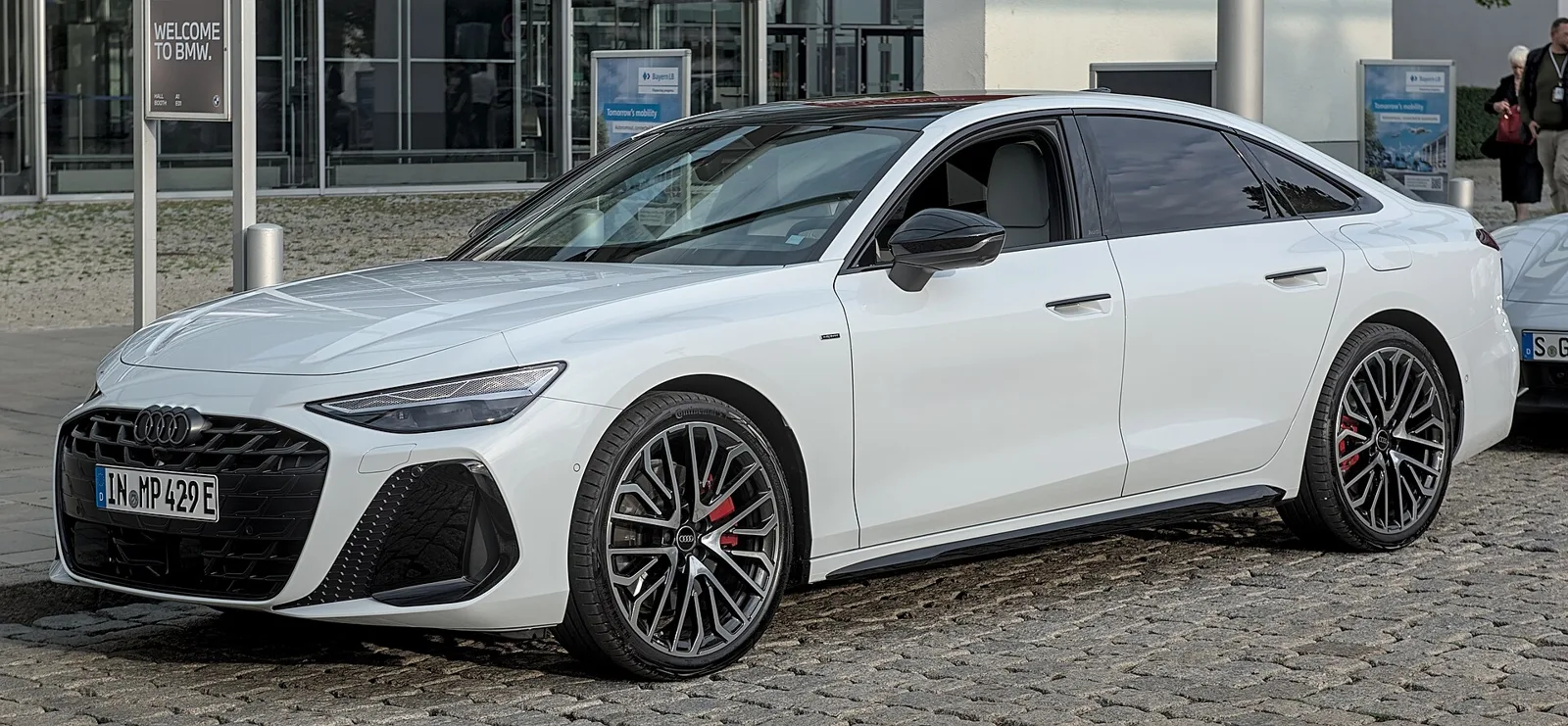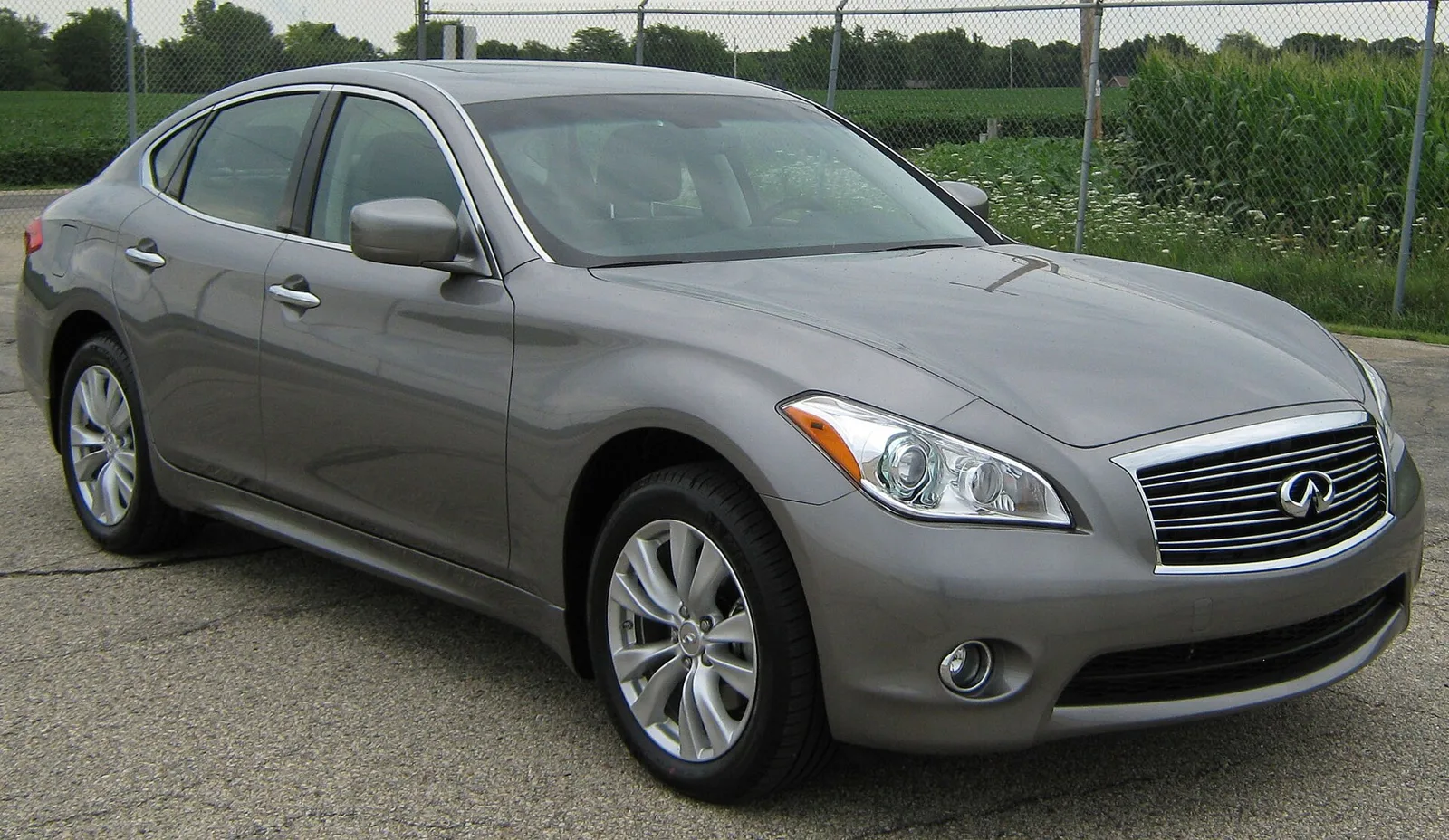
Infiniti's M never found the sales of the German E-Class, but its V8 and V6 choices and mid-life updates kept it in the luxury conversation.
The Infiniti M was a mid-size luxury car from Nissan's Infiniti division, first sold as the M30 coupe in 1989. The Mercedes-Benz E-Class (W212) was the fourth-generation executive range, built from 2009 to 2016. The E-Class sold far more widely, while the M was never a major seller for Infiniti.
The Infiniti M and the Mercedes-Benz E-Class (W212) both sold mid-size luxury saloons to buyers who could have bought a German car instead. The M was Nissan's luxury division's executive car line, which became the Q70 from 2013. The E-Class was Mercedes-Benz's fourth-generation executive range, built from 2009 to 2016 and facelifted in 2013.
Where did the M and the E-Class come from?
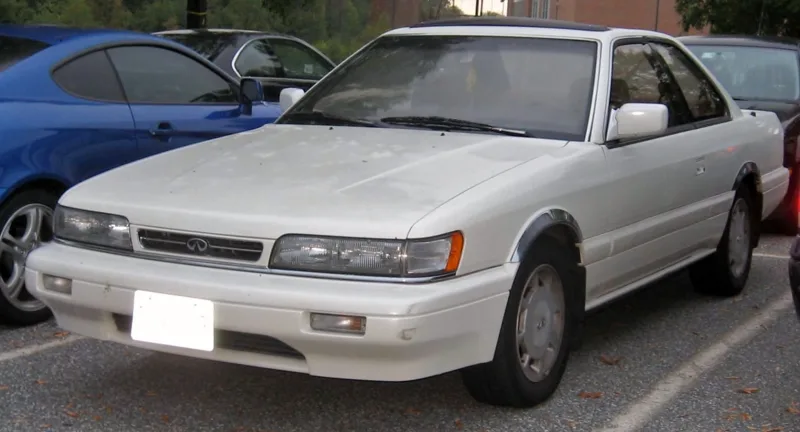
The M's first version was the M30 coupe and convertible, which was a rebadged Japanese Nissan Leopard. It debuted in 1989 as the 1990 model, priced below the Infiniti Q45, and it was aimed at the Acura Legend coupe.
The W212 E-Class followed the W211 and was introduced in March 2009 in Europe and July 2009 in North America. The saloon made its debut in Detroit in 2009, and the S212 estate appeared at the Frankfurt show the same year.
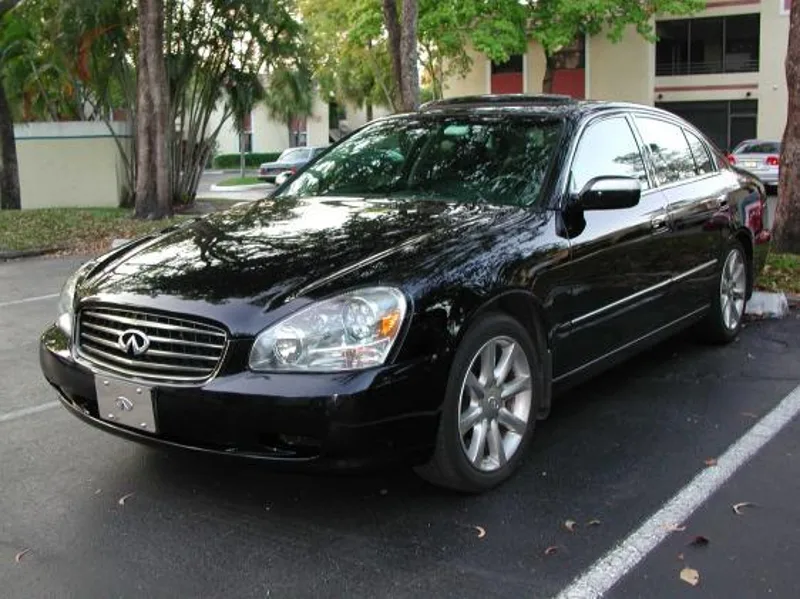
The M nameplate went through several generations after the M30. The M45 was a V8 sedan based on the Nissan Gloria, and the later M35 and M45 were based on the Japanese Nissan Fuga. The fourth-generation Y51 M was designed by Hideo Komuro between 2006 and 2008.
Hideo Komuro drew the Y51 between 2006 and 2008, working under Shiro Nakamura. It went on sale globally in spring 2010 as a 2011 model, reached US showrooms on 1 March 2010, and Europe got it at Geneva that year, after a debut at the 59th Pebble Beach Concours d'Elegance.
A Japanese luxury saloon that sold a fraction of the volumes of the German E-Class, which reached 550,000 sales in under three years.
Why did Infiniti build a coupe in 1989?
The M30 was a lower-priced alternative to the Q45 and a rival to the Acura Legend coupe. It was also an answer to the Lexus LS400, though the Lexus ES 250 was only offered as a four-door sedan.
Underneath, the car used a dated platform that had been designed for Japan. When the Leopard came to America, its exterior changed little, and its interior was revised for American tastes, with leather upholstery standard. A centre-mounted television and a digital instrument cluster were left out as gimmicks.
The M30's angular design and on-road performance were seen as outdated, especially after a redesigned Acura Legend coupe arrived in 1991. The interior drew criticism for its ergonomics and a lack of room.
How did the M30 price itself against its rivals?
The M30 made up for its dated looks with price. The Legend coupe listed at $27,325 in 1990 and the 325i at $24,650, while the M30 began at $23,500 with no factory options.
Dealers offered an in-car cellular telephone and an in-dash CD player as optional accessories. Standard equipment included a driver's airbag, anti-lock brakes, an engine immobiliser, Sonar Suspension II and leather upholstery.
A convertible joined the range for 1991. Every convertible started life as a coupe sent to California for conversion by American Sunroof Corporation, and it used a plastic rear window that removed the coupe's defroster.
What powered the M30 and later Ms?
Nissan's VG30E V6 delivered 162 hp (121 kW; 164 PS), peaking at 6000 rpm, with torque of 244 N-m (180 lb-ft) at 3500 rpm. Its only transmission was a four-speed Jatco automatic, and there was no manual option.
Reviewers judged the M30 coupe to weigh 3,302 lb (1,498 kg) and the convertible 3,523 lb (1,598 kg). Their quoted 0-60 mph times were 9.4 and 9.7 seconds, so the car was seen as overweight and underpowered.
The third-generation M35 used a 3.5-litre VQ V6 with 280 hp (209 kW), and the M45 a 4.5-litre V8 with 335 hp (250 kW). The Y51 M brought a 5.6-litre V8 in the M56, which was competitive with the BMW 550i and Mercedes-Benz E550.
Which engines did the E-Class use?
The entry point was the E 200, a 2.0-litre turbo rated at 181 hp (135 kW). The E 250 turbo made 208 hp (155 kW), and the diesel line-up began with the E 200 CDI at 134 hp (100 kW).
The E 220 CDI produced 168 hp (125 kW) and the E 250 CDI 201 hp (150 kW). The E 350 used a 3.5-litre V6 giving 302 hp (225 kW), and the E 400 Hybrid added 27 hp (20 kW) from an electric motor.
The top engine was the 4.7-litre turbocharged V8 in the E 550, which produced 402 hp (300 kW). A high-performance E 63 AMG version was also available from 2009.
How did the two cars look?
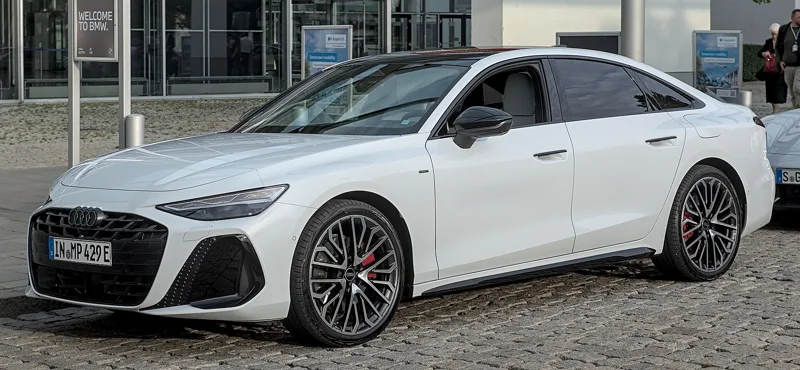
Mercedes' new design language, first seen on the C-Class, S-Class and CLS-Class, shaped the 2009 E-Class. It was more angular and aggressive than its predecessor, and it gave the rear haunch a bulge called the Ponton flare.
Design work on the W212 began in 2004, after the programme started in 2003. The exterior design by Winifredo Camacho and the interior design by Thomas Stopka were selected in 2005, and the final specifications were frozen in 2006.
The W212 had a drag coefficient of 0.25. Its interior had wood trim on the doors, dashboard and centre console, a leather steering wheel and an electrochromatic rear-view mirror,, along with Harman Kardon audio.
The C207 coupe premiered at Geneva in 2009, and the A207 convertible followed at the 2010 Detroit show. Both replaced the CLK-Class and were built on the W204 C-Class platform at the Bremen plant.
The W212 saloon came in Classic, Elegance and Avantgarde trims. Standard equipment included the Electronic Stability Program, airbags and automatic climate control, and the car used Direct Control adaptive suspension and active seats that changed shape in corners.
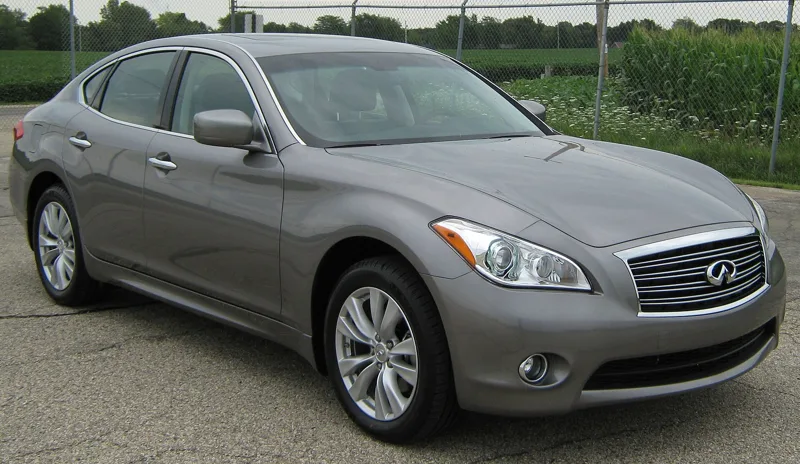
The Y51 M took a more fluid look, with a shape that recalled the coke bottle styling of the 1960s and 1970s. Its design was produced under the supervision of Shiro Nakamura.
Every M came with a driving mode selector offering Standard, Sport, Eco and Snow settings, which changed the transmission, engine and other systems. Active Noise Control was included to keep exhaust noise out of the cabin, and double-piston shock absorbers from Kayaba replaced the earlier Hitachi units.
What changed in the mid-life updates?
The W212 facelift was unveiled to the media in December 2012 and went on sale in 2013 as the 2014 model. Mercedes reportedly spent close to 1 billion euros on the mid-cycle refresh, which its makers said was their most significant model revision.
The front was completely restyled, with a single front light replacing the twin headlamps. Low beam and daytime running lamps had partial LED lighting as standard, and full LED was optional for the first time.
The Infiniti M's mid-life changes came in 2008 and 2009. The 2008 update added optional all-wheel drive on the M45x and new navigation, and the 2009 M35 received a new V6 with 303 hp (226 kW) and a 7-speed automatic.
A 2008 refresh reworked the bumpers and rear lamps and switched the gauges from orange to blue. Infiniti also offered an S type version of the M45 and M45x.
Reviewers praised the M35 and M45 for their driving involvement and handling against the GS and E-Class, while noting that the M had superior ergonomics to the 5 Series. Consumer Reports named the M35x its top luxury pick for 2006, displacing the 2005 Lexus LS 430.
The M did not win much of the mid-luxury market. The G37 accounted for half of Infiniti's sales in 2009, and only 10,000 of the 81,000 Infiniti cars sold that year were M models.
Which safety and assistance systems did they offer?
Driver drowsiness detection, lane departure warnings and traffic sign recognition came with the E-Class. The 2010 model earned five stars out of five in Euro NCAP for occupant protection.
Three suspension set-ups were offered. The comfort-biased Direct Control system had selective damping, a sportier version sat 15 mm lower, and AIRMATIC air suspension used electronically controlled damping. The estate had self-levelling air suspension on the rear axle as standard.
For infotainment, the 2014 E-Class had the COMAND system with a 7-inch display and a colour instrument display. Options included a rear-view camera, COMAND navigation, SiriusXM, Harman Kardon Logic 7 surround sound and KEYLESS-GO.
Intelligent Drive gave the 2014 E-Class as many as eleven new or upgraded assistance features. These included Attention Assist, Distronic Plus with Steering Assist, Active Lane Keeping Assist and Cross Traffic Assist.
For the M's Lane Departure Prevention, a camera above the rear-view mirror measured the car's distance from the lane markers. It could lightly brake selected wheels to ease the car back into its lane, but it gave control to the driver at all times.
Mercedes-Benz E-Class (W212) and Infiniti M side by side
| Feature | Infiniti M (Y51, 2010 to 2019) | Mercedes-Benz E-Class (W212) |
|---|---|---|
| Production span | 2010 to 2019 for the Y51 | 2009 to 2016, succeeded by W213 |
| Body styles | Saloon, with M37x and M56x AWD options | Saloon, estate (S212), coupe (C207) and convertible (A207) |
| Base engine | None described | 2.0-litre turbo E 200 (181 hp; 135 kW) |
| Top engine | 5.6-litre V8 in the M56 | 4.7-litre turbo V8 in the E 550 (402 hp; 300 kW) |
| Diesel | None described | 2.1-litre turbodiesel from 134 hp (100 kW) |
| Drag coefficient | None described | 0.25 |
| Driving modes | Standard, Sport, Eco and Snow | Direct Control suspension; airmatic on some models |
| Facelift | 2008 and 2009 updates | 2013 facelift, 2014 model year |
| Euro NCAP | None described | Five stars, 2010 model |
| Sales | About 10,000 M models in 2009 | 550,000 global E-Class sales by July 2011 |
| Successor | Q70 from 2013 | W213 E-Class from 2016 |
Which buyer suits each car?
The M suits a buyer who wanted a Japanese luxury saloon with a V8 option and good interior dimensions, and who was happy with a car that sold in smaller numbers. The E-Class suits a buyer who wanted a large German executive car with a broad engine range and a recognised safety record.
Neither car wins outright on the facts given. The M was praised for handling against its rivals and for interior dimensions, but the E-Class sold far more widely. The M was near the top of its class for almost every interior dimension, and with some option packages it reached the US EPA large category.
A buyer looking at a used M should check the model year and the driving modes, while an E-Class buyer should check which facelift the car has and which engine it uses, since the W212 range was broad.
What became of the M and the E-Class?
The Infiniti M name was carried by the Q70 from 2013 onwards. The M30 had been replaced by the J30 sedan after the 1992 model year, and about 17,000 M30s were built.
The W213 replaced the W212 from 2016, becoming the 2017 model. The W212's estate, the S212, was available in Europe from August 2009 and in the United States from June 2010.
The Infiniti M's flagship role grew after the Q45 stopped being exported from Japan after the 2006 model year, which left the M45 as the marque's top model.