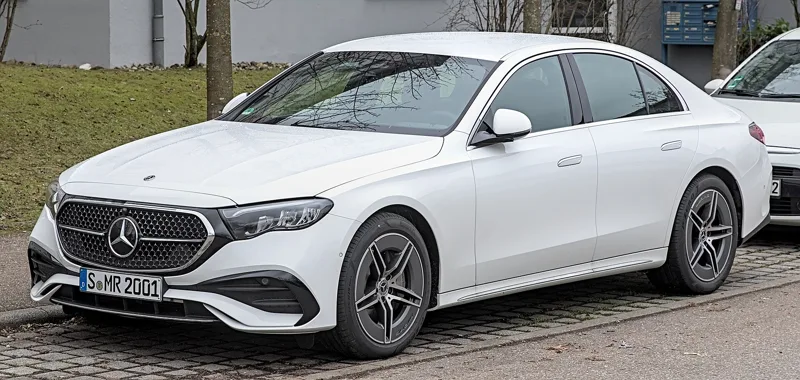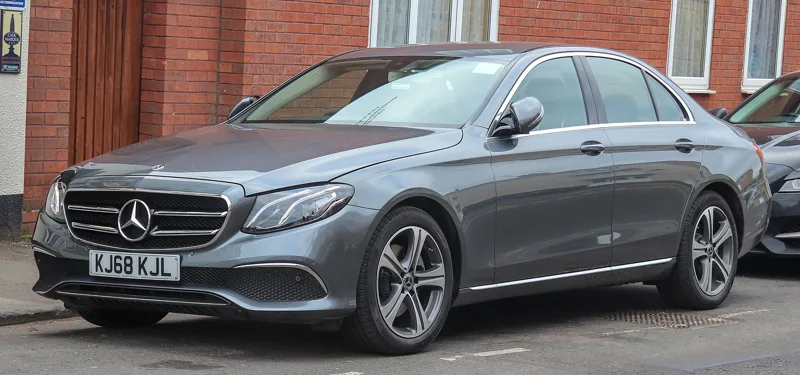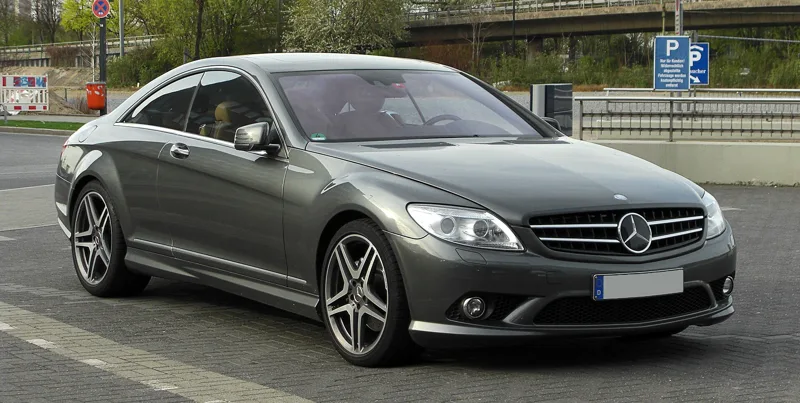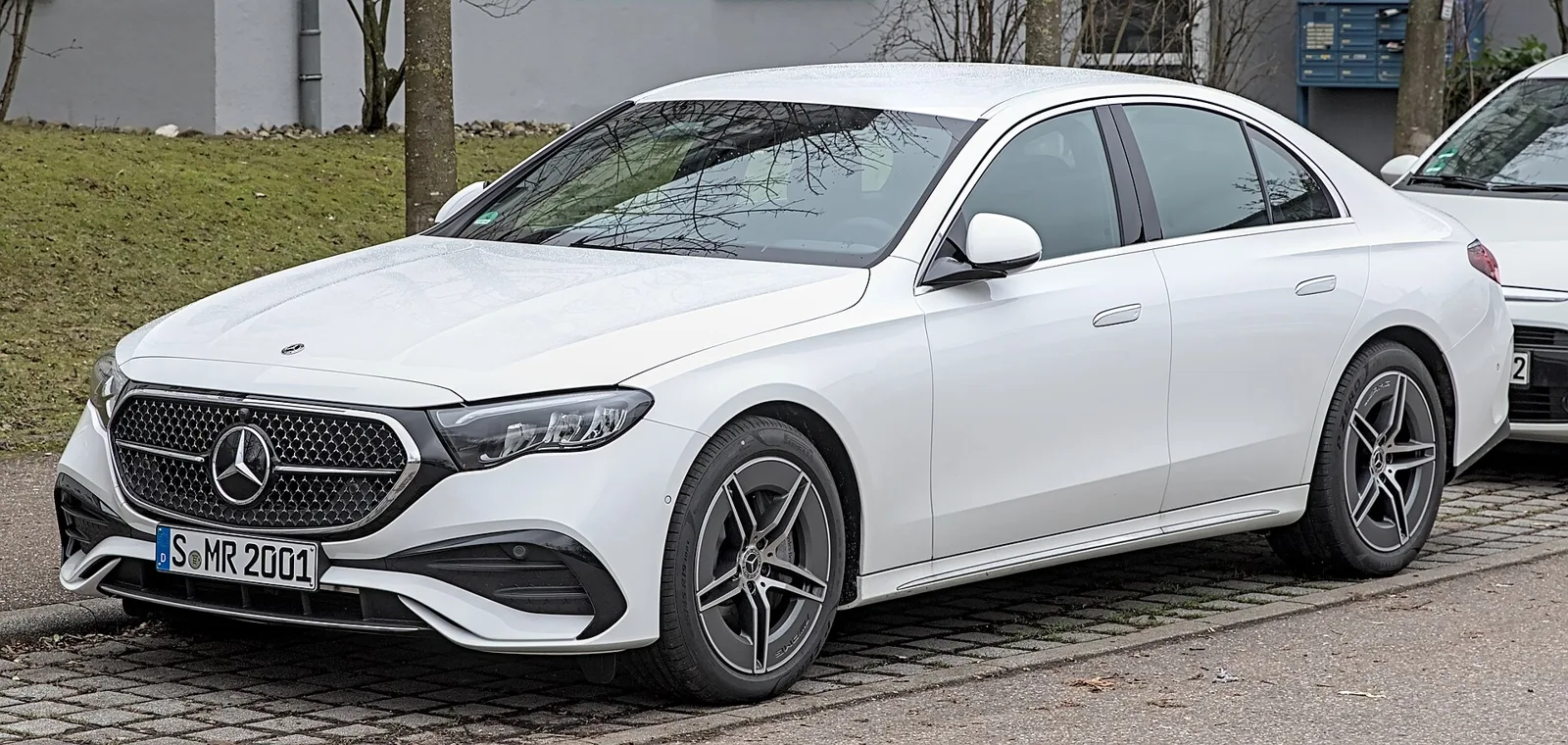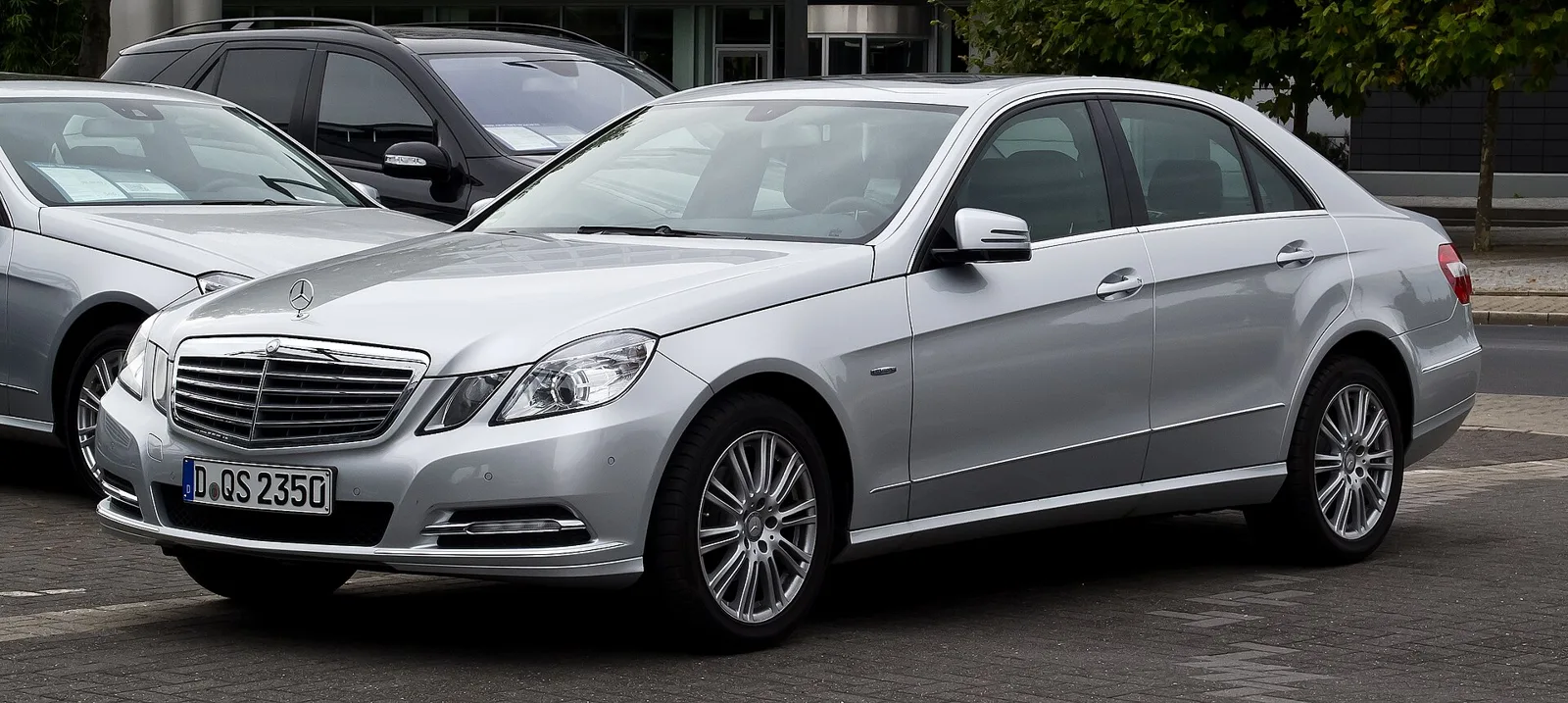
Mercedes-Benz's fourth-generation E-Class, sold as a saloon and estate from 2009, with a 2013 facelift and a 518 hp E 63 AMG at the top of the range.
Produced between 2009 and 2016 after the W211, the W212 came as a saloon and estate, with C207 coupe and A207 convertible versions based on the W204 C-Class. A 2013 facelift updated styling, engines and safety, and the E 63 AMG sat at the performance top.
Built from 2009 to 2016 as the successor to the W211, the Mercedes-Benz W212 gave the E-Class executive car its fourth generation. Saloon (W212) and estate (S212) bodies made up the range, and a facelift in 2013 updated the styling, engines and safety kit. The car also helped restore the nameplate after a rough patch in the late 1990s and early 2000s.
When did the W212 go on sale?
The saloon was unveiled at the 2009 North American International Auto Show and went on sale in Europe in March 2009, reaching North America that July. The estate followed on 5 August 2009 in Europe and reached all markets in 2010. The W213 replaced the car for the 2017 model year.
The range reached a milestone of 550,000 cumulative global sales in July 2011. Saloon production passed 500,000 units in March 2012.
A fourth-generation E-Class that restored the name for build quality, with a 518 hp E 63 AMG at the top.
How was the W212 styled?
The 2009 E-Class took its look from the new design language Mercedes had adopted for the C-Class, S-Class and CLS-Class. It was sharper and more angular than its predecessors, and its drag coefficient of 0.25 showed how much effort went into the shape.
The most talked-about detail was the rear haunch. Mercedes gave it a bulge it named the Ponton flare, a reference to the Ponton cars of the 1950s. The rising character line and wheel-arch extensions came from the S-Class, while the squarer teardrop headlights owed something to the CLS-Class.
Other changes included a wider-framed grille, new air intakes and a wedge-shaped profile. The interior offered a more spacious cockpit, with height-adjustable bucket front seats, wood trim on the doors, dashboard and centre console, and a leather steering wheel.
How did the W212 come to be developed?
Design work began in 2004, after the development programme had started in 2003. The exterior was designed by Winifredo Camacho and the interior by Thomas Stopka, both chosen in 2005, and the final specifications were frozen in 2006. The design was previewed in September 2008 by the ConceptFASCINATION study.
Some exterior details drew on the W204 C-Class and the W221 S-Class, both designed in 2002 and 2003. The bulging rear wheel arches were meant to recall the fender flares of the historic Ponton models, which gave the car a link to the marque's past.
What trims and kit came with the saloon?
The saloon came in three trim levels: Classic, Elegance and Avantgarde. The E-Class brought driver drowsiness detection, lane departure warning and traffic sign recognition to the range, while standard kit included the Electronic Stability Program, airbags and automatic climate control.
Comfort and handling kit included Direct Control adaptive suspension, active seats that change shape to support occupants in corners, and movable radiator louvers that improved aerodynamics. The entertainment side was built around a Harman Kardon audio system, TeleAid telecommunications and Bluetooth hands-free phone links.
How did the estate and coupe fit in?
The estate, chassis code S212, was unveiled at the 2009 Frankfurt Motor Show. Its early engines ran from four-cylinder E 220 and E 250 CDI BlueEFFICIENCY units to the V6 E 350 and the V8 E 500. US buyers got it from June 2010 as a 2011 model.
The coupe, C207, was first shown at the 2009 Geneva Motor Show, and the convertible, A207, premiered at the 2010 North American International Auto Show. Both replaced the CLK-Class (C209 and A209). They were built on the W204 C-Class platform and produced side by side at the Bremen plant.
What changed in the 2013 facelift?
The 2013 facelift was the most extensive change the W212 received. Mercedes-Benz reportedly put close to 1 billion euros into the mid-cycle refresh, which brought new engines, styling and safety features, and the updated car went on sale in early or mid 2013 as a 2014 model.
The reason was commercial. Sales of the E-Class had dropped to SUVs and crossovers in Europe and America, but demand in emerging markets more than made up for that. The facelift added about the same amount of new features that a clean-sheet model would bring.
Which engines did the 2014 E-Class offer?
The entry point was the E 200, with a turbocharged 2.0-litre petrol engine of 181 hp (135 kW), while the E 250 turbo produced 208 hp (155 kW). Diesel buyers could choose the 134 hp (100 kW) E 200 CDI or the 201 hp (150 kW) E 250 CDI.
The E 220 CDI used the same 2.1-litre turbodiesel, tuned to 168 hp (125 kW). The V6 was the 3.5-litre E 350 at 302 hp (225 kW), and the E 400 Hybrid added an electric motor worth 27 hp (20 kW) to the same V6. At the top of the petrol range sat the 4.7-litre twin-turbo V8 of the E 550, with 402 hp (300 kW).
How did the facelift restyle the front?
The front was restyled to look more aggressive, a response to the newer BMW 5 Series and Audi A6. The twin headlamps gave way to a single light unit, marking the end of Mercedes-Benz's dual headlamps, and the light elements kept the four-eyed appearance.
Lights were partly LED as standard, with full LED available as an option for the first time. The taillights gained a horizontal LED design, and Sport models showed dual exhaust pipes at the rear.
The side profile changed too. A lower crease line replaced the chrome side trim of the earlier car and ran from the rear door to the front fender, so nearly every side panel except the rear quarter panel was restyled. The wheel-arch bulge disappeared in favour of a more traditional character line in the sheet metal.
Two design packages arrived. The Luxury grille kept the classic saloon look with three louvres and a star on the bonnet, while the Sport grille had an integrated star, a first for the model. Sport cars also took the AMG styling package, with larger air intakes and an aluminium trim line along the lower bumper.
Inside, the facelift brought a new three-tube instrument cluster, a trapezoidal head-unit display and two-part dashboard trim in a wood or aluminium look. The centre console lost its selector lever, which had gone from the saloon at launch, and a DIRECT SELECT lever on the multi-function steering wheel took its place. Manual shifts reverted to automatic after a set period.
How safe was the W212?
The 2010 E-Class earned five stars for occupant and pedestrian protection in the Euro NCAP tests, and the 2010 model became the first E-Class to win the IIHS Top Safety Pick award. The 2014 facelift earned the IIHS Top Safety Pick+ award, after passing the small front overlap test.
Euro NCAP also gave two Advanced rewards for the optional PRE-SAFE and PRE-SAFE Brake systems. Standard kit included Collision Prevention Assist, Attention Assist, adaptive braking, daytime running lamps and rain-sensing wipers.
In the United States, the 2014 model earned four stars for the driver and passenger in the NHTSA frontal test, five for side impact and five for rollover. Mercedes packed the car with up to eleven new or enhanced driving aids, including Distronic Plus with Steering Assist and Cross Traffic Assist.
A stereo multi-purpose camera, derived from the 2014 S-Class, could spot oncoming traffic, pedestrians and traffic signs up to 50 metres away. The Intelligent Light System used radar and stereo cameras to keep the high beam on while blanking out the light around oncoming cars.
Why did the E 63 AMG matter?
The E 63 AMG took the SL 63's naturally aspirated 6.2-litre V8 and produced 525 PS (386 kW; 518 hp), with a 0-100 km/h time of about 4.5 seconds. Its SPEEDSHIFT MCT 7-speed automatic offered four modes, including a fully manual one, and the car was shown at the 2009 New York International Auto Show.
The E 63 was more heavily modified than the standard car, with a new, wider front axle, revised suspension and more distinct body panels. The Performance Pack added forged 19-inch wheels, a limited-slip differential and a raised electronic top speed of 300 km/h (186 mph), up from 250 km/h (155 mph).
In 2011 the naturally aspirated engine was replaced by a twin-turbo 5.5-litre V8, with power unchanged at 518 hp. The Performance Pack version went to 557 PS (410 kW; 549 hp), and the car reached 0-60 mph (97 km/h) in 4.4 seconds. With the limiter off, top speed was around 320 km/h (200 mph).
The 2013 facelift brought 4Matic four-wheel drive to the E 63 for the first time, along with a 5.5-litre M157 of 5,461 cc with output raised from 525 bhp to 550 bhp. The AMG S Performance Package lifted output to 585 PS (577 bhp; 430 kW) at 5500 rpm and 800 Nm (590 lb ft) of torque, with a top speed limited to 299 km/h (186 mph). The S model replaced the Performance Pack in October 2013.
Did the E 63 race?
Erebus Motorsport raced E 63 AMGs in the Australian V8 Supercars Championship from 2013 to 2015. Only the bodywork was shared with the road cars, so the race entries should not be read as a guide to the showroom model's engineering. The programme lasted three seasons.
How did critics and buyers receive the W212?
Buyers and critics responded well to the W212, which restored the E-Class's name for solid build quality and refined elegance after a weak period in the late 1990s and early 2000s. The design also stood apart from the C-Class and S-Class, though the facelift's new single headlamp drew mixed opinions.
The design of the facelift had a clear purpose. It moved the front onto the same design language as the A-Class, B-Class, C-Class, S-Class, CLS-Class and M-Class, and that gave the range a unified look across the line-up.
Were there armoured and special-edition W212s?
The E-Guard armoured version, with VR4 protection, went on sale in April 2009. It used steel and aramid armour, bullet-resistant windows and run-flat tyres rated for 240 km/h (149 mph), and a 2011 Edition 125 marked 125 years since Karl Benz built the first combustion-engined car.
In Mexico the E-Guard listed at 1,954,900 Mexican pesos, roughly US$143,000 as of 2011. The 2009 E 250 BlueTEC concept added BlueTEC selective catalytic reduction and the 7G-Tronic Plus transmission to the E 250 CDI saloon, and it was unveiled at the 2009 New York Auto Show.
W212 specifications at a glance
| Specification | Detail |
|---|---|
| Generation | Fourth E-Class, built 2009 to 2016 |
| Body styles | Saloon (W212), estate (S212), coupe (C207), convertible (A207) |
| Successor | W213 for the 2017 model year |
| Drag coefficient | 0.25 on the 2009 model |
| Entry petrol | E 200 turbocharged 2.0-litre, 181 hp (135 kW) |
| Entry diesel | E 200 CDI 2.1-litre turbodiesel, 134 hp (100 kW) |
| Top petrol after facelift | E 550 4.7-litre twin-turbo V8, 402 hp (300 kW) |
| E 63 AMG (2009) | 6.2-litre V8, 525 PS (386 kW; 518 hp), about 4.5 seconds to 100 km/h |
| E 63 AMG S (2013) | 585 PS (577 bhp; 430 kW) at 5500 rpm |
| Euro NCAP (2010) | Five stars for occupant and pedestrian protection |
| NHTSA (2014, US) | Four stars frontal, five stars side, five stars rollover |