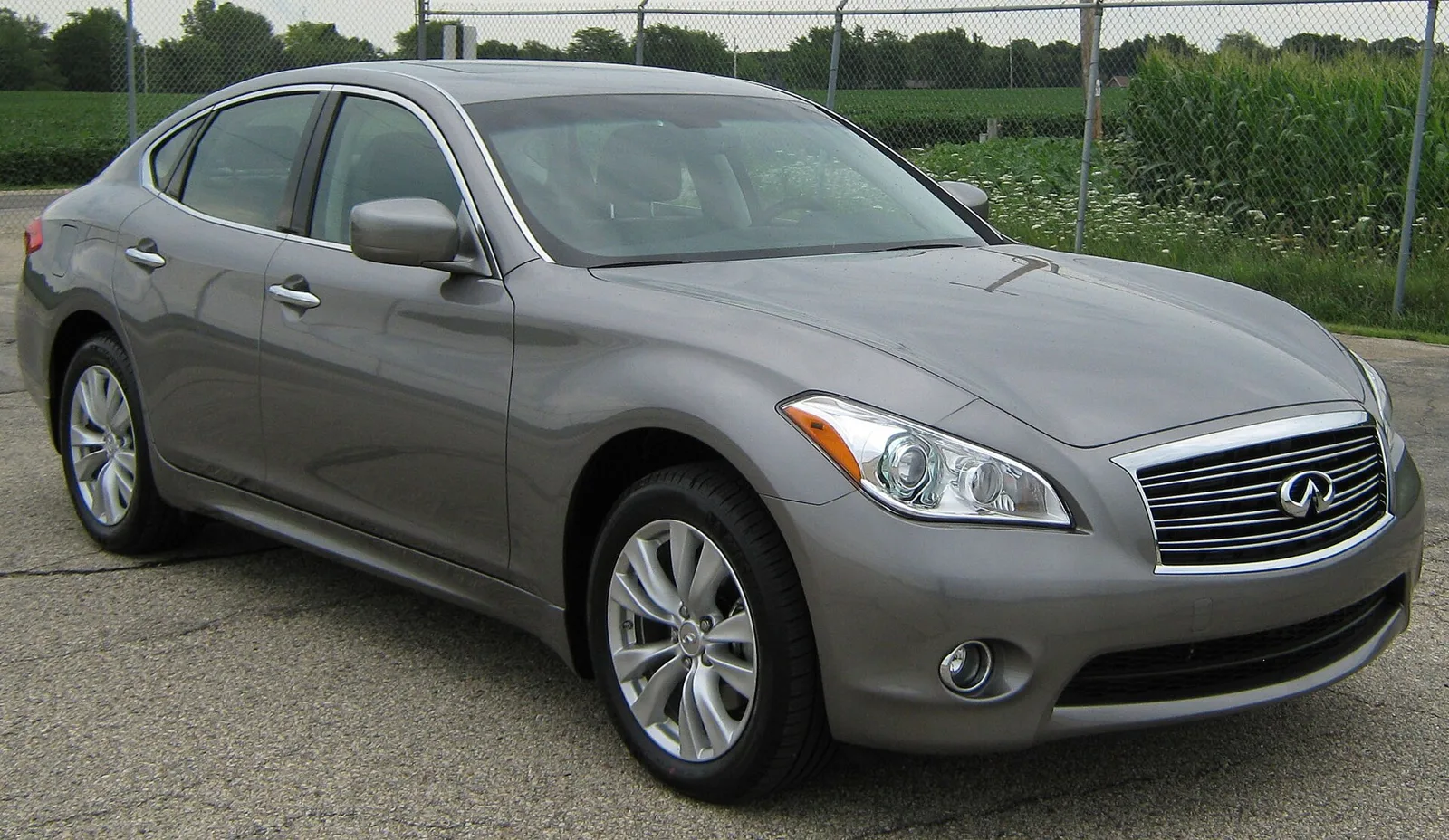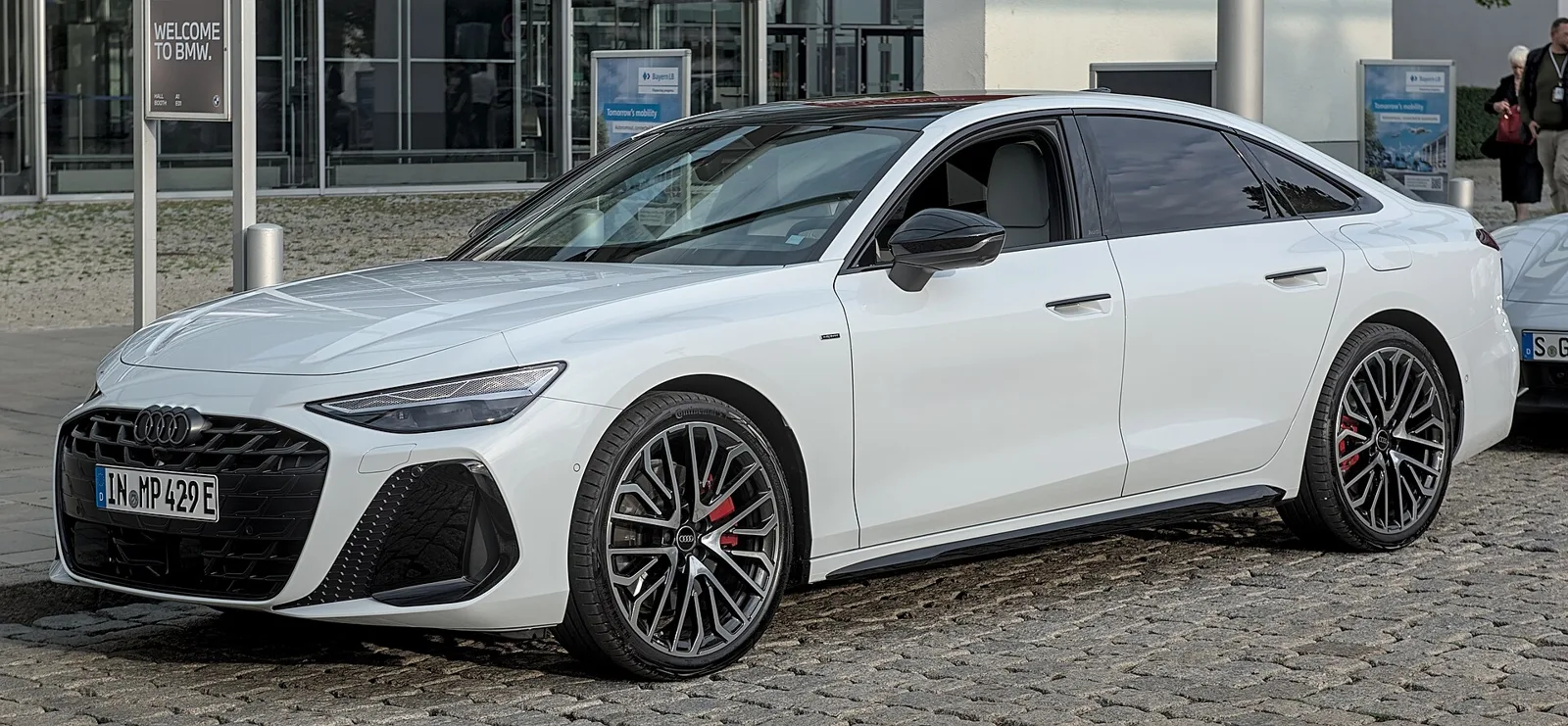
Audi's A6 offered quattro traction and a 450 PS RS 6 at the top, while Infiniti's M never won the volumes of its German rivals.
The Audi A6 was an executive car from Audi since 1994, offered as a saloon and Avant with quattro all-wheel drive. The Infiniti M was a mid-size luxury car from Nissan's Infiniti division, first sold as the M30 coupe in 1989. Audi's executive car earned a 2005 title for the world's best new car, while the M struggled for volume in the mid-luxury market.
The Audi A6 and the Infiniti M were both executive saloons sold to buyers who wanted something larger than a compact luxury car. The A6 came from Audi's long line of executive cars and offered Torsen-based quattro four-wheel drive. The M came from Nissan's luxury division and was built on Nissan platforms adapted for the market.
Where did the A6 and M come from?
The A6 was born in 1994, when the latest C4 Audi 100 was facelifted and renamed to fit Audi's new alphanumeric naming. The full-size A8 had just arrived, so the executive car took the A6 name, and Britain got it before mainland Europe.
The second generation of the A6, the C5, arrived in February 1997 on the Volkswagen Group C5 platform. It was shown at the Geneva Motor Show in March 1997, and BMW's 5 Series and Mercedes' E-Class were its targets.
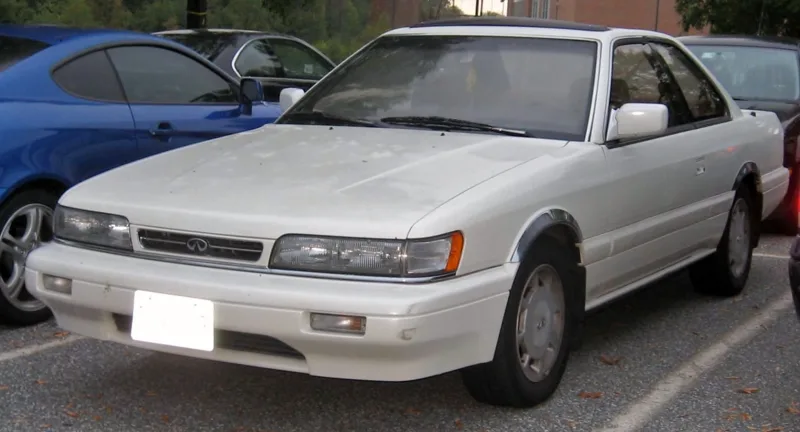
The Infiniti M began with the M30, a coupe based on the Japanese Nissan Leopard. It was launched in 1989 for the 1990 model year. The M nameplate later returned on a V8 sedan based on the Nissan Gloria, and then on the Japanese Nissan Fuga.
Under Infiniti's pricing structure of the time, the M30 had no factory options. Dealers could add an in-car cellular telephone and an in-dash CD player as optional accessories, and leather upholstery was standard.
An Audi executive car with quattro traction and a 450 PS RS 6 at the top, set against an Infiniti whose V8 never found the volumes of the German rivals.
Why did the A6 get quattro and the M get a V8?
Among enthusiasts, the Torsen-based quattro system was favoured for its handling and consistent full-time all-wheel drive. Most A6 engine options could also be fitted with quattro, and among enthusiasts the Torsen-based system was the superior choice.
The M used the Nissan FM platform, which was shared with the G35, the 350Z and the FX. The M35 came with the VQ 3.5-litre V6 producing 280 hp (209 kW), while the M45 used the Q45's 4.5-litre V8 producing 335 hp (250 kW).
At 5,069 mm, the car sat 177 mm shorter than the last Q45, yet it offered greater interior space, a rear multilink suspension, front double wishbones and a 30 mm longer wheelbase.
The third-generation M was released for the 2006 model year, with the all-wheel-drive M35x and M45x using the ATTESA-ETS system. The M45 became Infiniti's flagship once the Q45 stopped being exported from Japan after the 2006 model year.
What did the C5 A6 engine line-up include?
The C4 engines had been the 1.8-litre 20v four, the 2.0-litre 8v four, the 2.6-litre V6 and the 2.8-litre 30v V6. The 1.9 TDI and the 2.5 TDI R5 with 103 kW (140 PS; 138 bhp) were the diesels.
The C5 brought 30-valve 2.4 and 2.8-litre V6 engines, and a five-speed tiptronic automatic was offered as an alternative to the manual. North American models were given the 2.8-litre V6, the 2.7-litre biturbo V6 with 250 PS (184 kW; 247 hp) and the 4.2-litre 40-valve V8 with 221 kW (300 PS; 296 hp).
The 2002 facelift changed the line-up again. The 1.8-litre was replaced by a 2.0-litre with 96 kW (130 PS; 128 hp), the 2.8-litre V6 gave way to a 3.0-litre with 162 kW (220 PS; 217 bhp), and a new V6 diesel offered 132 kW (180 PS; 178 hp).
Multitronic continuously variable transmission arrived as well, in most front-wheel-drive models. Every model except the 2.0-litre petrol and the 1.9 TDI could be ordered with quattro.
The 2008 M gained touch-screen hard-drive navigation, iPod integration and a music hard drive, and the M45 and M45x were offered in an S type version similar to the previous Sport model.
How quick were the performance A6 models?
The S6 was based on the A6 C4 and used a 2,226 cc turbocharged inline-five producing 169 kW (230 PS; 227 bhp) at 5,900 rpm. It delivered 350 N-m (258 lb-ft) at around 1,950 rpm, and it reached 100 km/h in 6.7 seconds with a top speed of 241 km/h (149.8 mph).
A six-speed manual came as standard (five-speed in North America) and Audi's Torsen T-1 quattro system. The 4.2-litre V8 option, rated at 213 kW (290 PS; 286 bhp), came with a four-speed automatic and kept quattro.
Built for the 1997 model year only, the S6 Plus pushed output to 240 kW (326 PS; 322 bhp) from a revised 4.2-litre V8. Only 952 cars were built, of which 855 were Avants and 97 were saloons, and the saloon reached 100 km/h in 5.6 seconds. Its front discs were enlarged to 323 mm, and the standard wheels were 8Jx17 Avus alloys. The revised six-speed manual had a final drive ratio of 4.111.
The C5 RS 6 was the most extreme version. It weighed over 1,840 kg (4,057 lb) and produced 331 kW (450 PS; 444 bhp) and 560 N-m, with 0-100 km/h in 4.5 seconds and 200 km/h in under 17 seconds.
A modified 4.2-litre V8 gave the C5 S6 250 kW (340 PS; 335 bhp) and 420 N-m. It was offered as a saloon and an Avant, though only the Avant was sold in North America.
How did the M's engines compare?
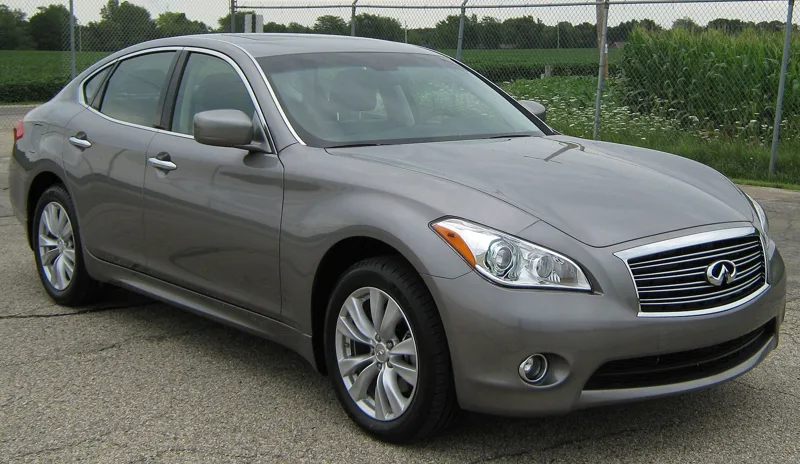
The Y51 M was designed by Hideo Komuro between 2006 and 2008 under Shiro Nakamura, and it took a more fluid, coke bottle inspired look. It went on sale globally in spring 2010 as a 2011 model, and it reached US showrooms on 1 March 2010.
The 2011 M debuted at the 59th Pebble Beach Concours d'Elegance, and at a media event in Beverly Hills in December 2009 to coincide with the Los Angeles Auto Show.
The 2009 M35 received a new V6 producing 303 hp (226 kW) and a 7-speed automatic transmission. The 5.6-litre V8 VK56VD in the M56 was competitive with the BMW 550i and Mercedes-Benz E550.
Every M had a driving mode selector with Standard, Sport, Eco and Snow settings. Active Noise Control reduced exhaust noise in the cabin, and the shock absorbers were double-piston units developed by Kayaba.
What about the allroad and the Avant?
The allroad quattro was a semi-off-road version of the C5 Avant, launched in 1999. Its air suspension gave 208 mm (8.2 in) of ground clearance, and it could drop to 142 mm (5.6 in) for sporty driving.
The allroad's launch engines were a biturbo V6 rated at 250 PS (184 kW; 247 hp), with 350 N-m, and a 2.5-litre TDI with 180 PS (132 kW; 178 hp) and 370 N-m. A V8 variant followed in 2003.
Subframe spacers of 25 mm were fitted to the allroad, which also had and reinforced welds on its subframe mounts and pillars, and its floor pan used 20 per cent thicker steel. It was the only car-based SUV proven capable of completing an official Land Rover test course, and it stopped production in July 2005.
Avant models of the C5 arrived in 1998, after the saloon had gone on sale in Europe in mid-1997 and in North America in late 1997. Canadian models received daytime running lights as standard, and North American bumpers protruded further than the European ones.
How did the reviewers rate the A6 and M?
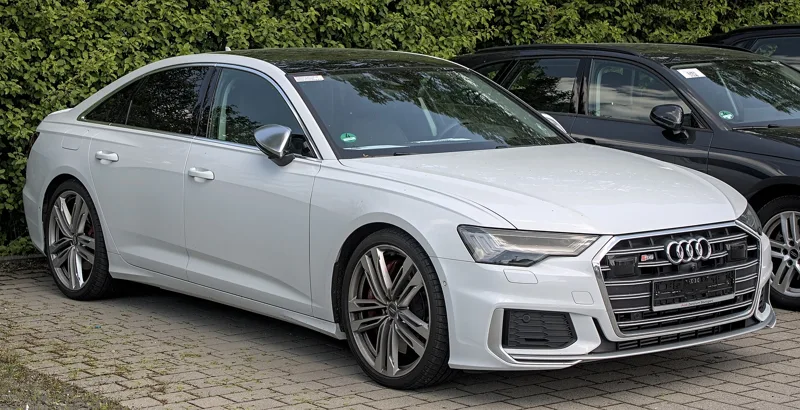
The C5 A6 appeared on Car and Driver magazine's Ten Best list in 2000 and 2001. The 2005 A6 won the World Car of the Year award, and a facelifted 3.0T won two Car and Driver comparisons against rivals including the BMW 5 Series, the Jaguar XF and the Infiniti M.
The M35 and M45 were praised for their driving involvement and handling against the Lexus GS and the E-Class, while their ergonomics were judged superior to the 5 Series. The M35x won Consumer Reports' top luxury car pick for 2006, taking the spot from the 2005 Lexus LS 430.
The RS 6 saloon finished first in a May 2003 Car and Driver test against the BMW M5 (E39), the Mercedes-Benz E 55 AMG and the Jaguar S-Type R.
Which car sold more widely?
The M did not gain much share in the mid-luxury market. The G37 accounted for half of Infiniti's sales in 2009, and only 10,000 of the 81,000 Infiniti cars sold that year were M models.
The 2009 update also left the M35 and M45 in awkward places in the lineup, because the 2009 G37 coupe and sedan with the VQ37VHR engine outpowered them. Infiniti's G37 had 7-speed automatics across its range, while the M35 RWD was the only M to get one.
No A6 sales total is set out here, so no sales ranking can be drawn. The A6 did collect strong awards and comparison-test results across its generations.
Audi A6 and Infiniti M side by side
| Feature | Audi A6 (C5 era) | Infiniti M (third generation) |
|---|---|---|
| Launch | Shown March 1997; saloon in Europe mid-1997 | Released February 2005 for the 2006 model year |
| Body styles | Saloon and Avant estate; allroad quattro | Saloon; M35x and M45x all-wheel drive |
| Drive | Front-wheel drive or Torsen quattro | Rear-wheel drive, all-wheel drive on some models |
| Base engine | 2.4 or 2.8-litre 30-valve V6 (C5) | 3.5-litre VQ V6, 280 hp (209 kW) |
| Top engine | RS 6 V8, 331 kW (450 PS; 444 bhp) | 4.5-litre V8, 335 hp (250 kW) in the M45 |
| Performance | RS 6: 0-100 km/h in 4.5 seconds | None described |
| Transmissions | Five-speed manual, tiptronic, multitronic on some models | Automatic, with 7-speed on the 2009 M35 |
| Drag coefficient | 0.28 for the C5 | None described |
| Awards | Ten Best 2000 and 2001; World Car of the Year 2005 | Consumer Reports top luxury pick for 2006 |
| Facelifts | 2002 | 2008 and 2009 |
| Successor | Later A6 generations | Y51 M, 2010 to 2019 |
Which buyer suits each car?
The A6 suits a buyer who wanted a German executive saloon with quattro traction and a wide range of petrol, diesel and V8 choices. The M suits a buyer who valued a Japanese luxury saloon with generous interior dimensions and a V8 option.
Neither car settles the question on the facts given. The A6 collected more formal awards in these years, while the M was praised for its interior room and handling against its rivals. The M was near the top of its class for almost every interior dimension, and some option packages took it into the EPA large category.
A used C5 buyer should check the engine and transmission history carefully, since the RS 6 and S6 Plus are rare. An M buyer should check which generation the car is, because the M30, third-generation and Y51 cars differ widely.
What became of the A6 and M?
The Infiniti M name was carried by the Q70 from 2013, for model year 2014. The M30 had been replaced by the J30 sedan after the 1992 model year.
The A6 name continued with later generations, and the allroad stopped production in July 2005. The C5 was followed by later A6 generations.
The Y51 M was the fourth-generation car, with a 5.6-litre V8 and all-wheel-drive options. Its M37x and M56x versions extended the range for buyers who wanted extra grip.