How Dodge's front-drive hatchback grew from a 142 hp Turbo I to Shelby Z, IROC and Turbo III R/T versions, and what became of its Chrysler Laser twin.
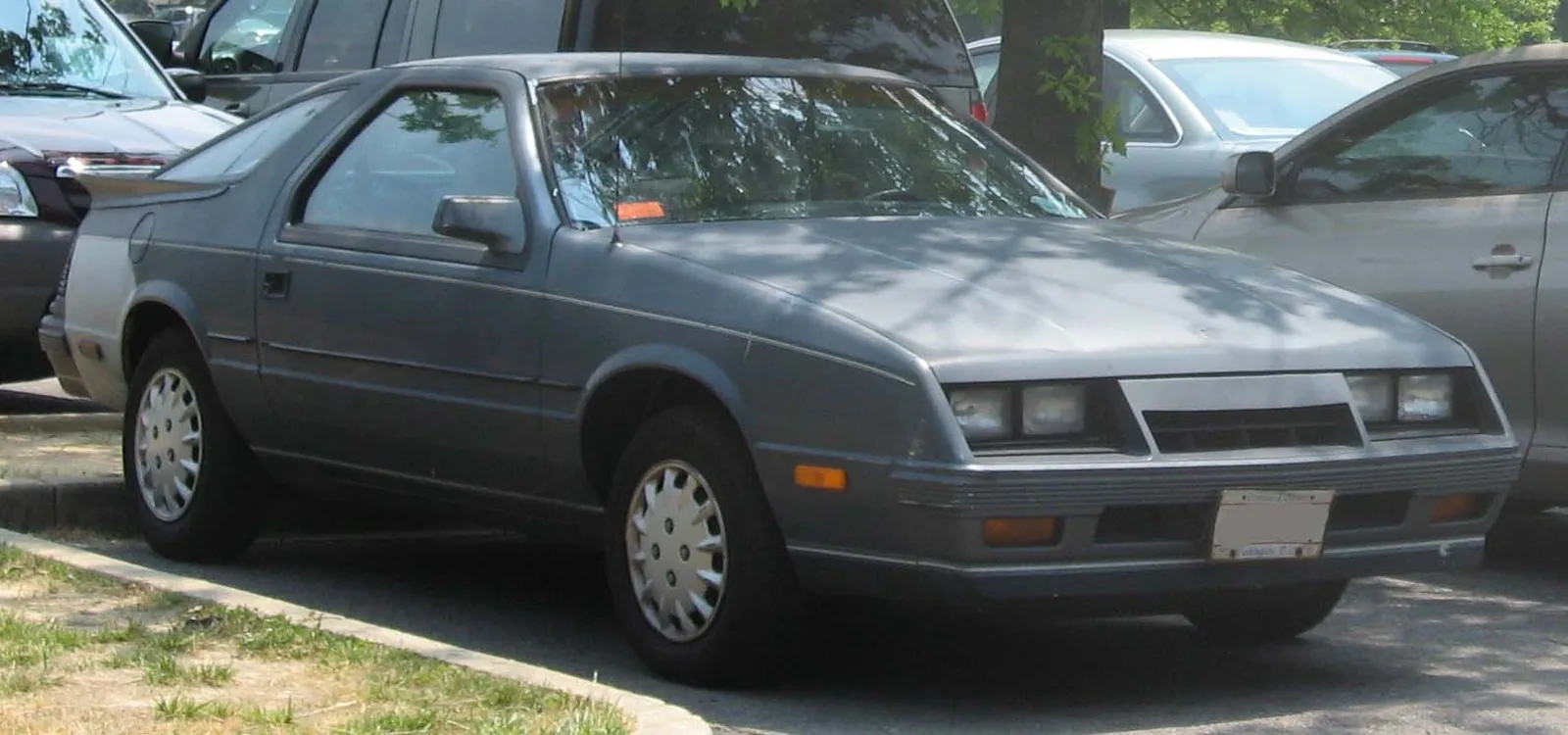
Dodge sold the Daytona from 1984 to 1993 as a turbocharged, front-drive hatchback on the Chrysler G platform. Versions ranged from the 106 kW Turbo I to the Shelby Z, the IROC and the 167 kW Turbo III, with an upscale Chrysler Laser twin early on. It ended on 26 February 1993; the Avenger followed in 1995.
Chrysler once tried to drop a Lamborghini Jalpa V8 into a Dodge Daytona and send the power to all four wheels through a Lotus-designed system. The project, called the Decepzione, died over a sump that hung 1.5 inches (38.1 mm) off the road, but it says a good deal about the car. The Daytona was a front-wheel-drive hatchback built by Dodge from 1984 until 1993, and it spent its life being turbocharged, tuned by Carroll Shelby and restyled twice, always on the same compact platform.
What was the Dodge Daytona?
The Daytona sat on the Chrysler G platform, itself derived from the K-car platform that underpinned so many Chrysler products of the decade. It succeeded the Challenger, a car derived from the Mitsubishi Galant, and fitted into Dodge's range as a rung above the Charger and below the Conquest. An upscale twin, the Chrysler Laser, ran alongside it for a short time, and Mitsubishi's Dodge Avenger eventually took the Daytona's place in 1995.
The name was borrowed. Dodge took it mainly from the Charger Daytona, which in turn was named after the Daytona 500 held at Daytona Beach, Florida. That earlier car was built for one reason, and the story of its name is worth a short detour before the hatchback's own history.
A turbocharged front-drive hatchback that once nearly received a Lamborghini V8.
Where did the Daytona name come from?
The 1969 Dodge Charger Daytona was a limited-edition aero special made in the summer of that year with the sole aim of winning big NASCAR races. Dodge needed it after the Charger 500 failed on the track and Plymouth's star driver Richard Petty left for Ford. Its first victory came at the inaugural Talladega 500 that autumn, though many leading drivers had boycotted the event.
On 24 March 1970 Buddy Baker took the No. 88 car past 200 mph (322 km/h) at Talladega, the first driver in NASCAR history to do so. The aero bodywork was extreme: a 23-inch (584 mm) stabiliser wing on the rear deck, a pointed nose cone in place of the upright grille, a flush rear window and stainless steel A-pillar covers. Underneath was the R/T specification, whose standard engine was the 440 cu in (7.2 L) Magnum, and only 70 of the 503 cars carried the optional 426 cu in (7.0 L) Hemi. It won two races in 1969 and four in 1970, while its Plymouth Superbird cousin won eight, all in 1970. NASCAR then changed the rules, and by the end of 1970 the winged cars had been effectively banned.
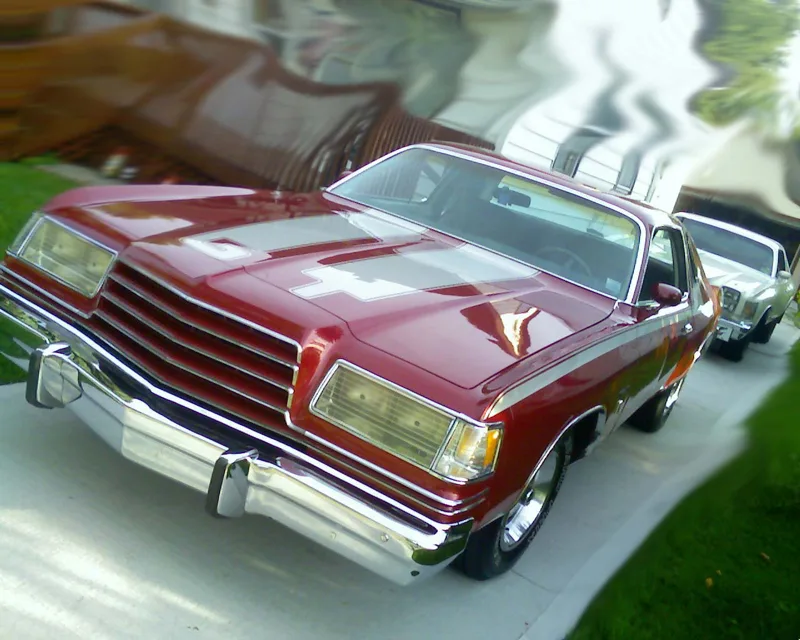
The name came back several times on the Charger. A two-tone stripe-and-decal package appeared for 1975 to 1977 on a Charger that was by then a re-badged Chrysler Cordoba, with a 400 cu in (6.6 L) engine optional. Later Charger Daytonas came in 2006, 2013, 2017 and 2020; the 2013 run was limited to 3,000 units, and the 2020 car used the 717 hp Hellcat engine in a run of 501. The hatchback shared the badge with these cars and little else. The 2006 to 2009 package, for instance, added a freer-flowing exhaust that lifted the Hemi by 10 hp (7 kW) to 350 hp, then 368 hp (274 kW) once the variable camshaft timing engine arrived for 2009.
How did the first Daytonas drive and sell?
The 1984 car was offered with the 2.2-litre Chrysler K engine, either naturally aspirated at 69 kW (93 hp) or turbocharged at 106 kW (142 hp). Three trim lines were available at launch: standard, Turbo and Turbo Z. Production in that first year was 49,347 units. Car and Driver put the Daytona Turbo on its 10Best list for 1984, and both Daytona and Laser could be ordered with Chrysler's electronic voice alert system through 1987.
The Turbo Z of 1984 was the luxury one, with Mark Cross leather, speakers that lit up and rear amplifier switches. Those items were dropped after the first year. In 1985 the Turbo Z became a model in its own right instead of a package, and the wraparound spoiler that had been exclusive to it was offered across the range. The turbocharged 2.2 gained four horsepower to reach 109 kW (146 hp), with a new shift linkage. Wheels changed too: the optional Swiss cheese pattern gave way to a pizza design, and all wheels now used five lug nuts rather than four. Production slipped to 47,519.
What changed in 1986?
The range was thinned out for 1986. The middle Turbo model went, leaving a base car and the Turbo Z, and the base car gained a new 2.5-litre four-cylinder engine rated at 75 kW (100 hp). A T-roof package joined the option list and 5,984 owners chose it. The most important addition was the C/S suspension, short for Carroll Shelby, which could be ordered only on the Turbo Z. The kit comprised anti-sway bars of 32 mm (1.3 in) at the front and 28 mm (1.1 in) at the rear, tuned struts and 225/50VR15 Goodyear Eagle Gatorback tyres. Some 7,704 buyers specified it, and it pointed the way to the Shelby cars of the following year. Production for 1986 fell to 44,366.
How did the Shelby Z change things in 1987?
For 1987 the Daytona was restyled and gained pop-up headlights. The headline was the new Shelby Z, which used an intercooled Turbo II version of the 2.2 developed by Chrysler. It made 130 kW (174 hp) and 271 N-m (200 lb-ft) of torque and was matched with a heavy-duty A555 transaxle carrying Getrag gears. It also got a bigger front anti-roll bar, discs at every corner and a longer list of suspension upgrades. In Europe it was sold as the Chrysler GS Turbo II.
Luxury got its own trim. The Pacifica was added to replace the Laser, which had been dropped in mid-1986, and its options included leather, a driver's seat with eight power adjustments plus mechanical thigh and lumbar controls, digital instruments and a twelve-button trip computer that gave instant fuel ratings, trip averages and estimated journey times.
The C/S package returned in 1988, but this time on the base car alone. Shedding the Shelby's ground effects and other trim made it lighter, and the AGB C/S came with the 2.2-litre Turbo I and a choice of automatic or manual gearbox.
What were the 1989 to 1991 cars?
The ES of 1989 was an appearance and equipment group for base models, with silver contrasting ground effects and snowflake-pattern alloy wheels, aimed at the average Daytona buyer without a big price rise. The 2.2 Turbo I was replaced by a 2.5-litre Turbo I rated at 150 hp and 180 lb-ft of torque. Two C/S models appeared that year. The AGS C/S Competition used the intercooled 2.2 Turbo II and came only with a manual gearbox, and it stayed on sale until 1991. The AGB C/S Performance used the non-intercooled 2.5 Turbo I with a five-speed manual or a three-speed automatic. A driver's airbag was standard on US cars and optional on those for Canada.
In 1990 every Daytona received a revised interior with a modern cockpit-style dashboard that wrapped around the driver. The Shelby model could be ordered with a variable nozzle turbocharger, the Turbo IV, which had first appeared on the 1989 Shelby CSX VNT. It produced the same 130 kW (174 hp) as the Turbo II but removed turbo lag and improved drivability. A 3.0-litre SOHC Mitsubishi V6 also became available.
The 1991 model year saw the 2.2 turbo retired in favour of a new 2.5-litre high-torque turbo engine. It gave up some power at 152 hp but offered 210 lb-ft, more than the Turbo II. The year also brought the IROC, available with the V6 or the turbocharged 2.5, with a ground effects kit and alloy wheels. Shelby Daytonas of 1991 were counted as IROCs, and apart from the decals the only difference lay in the VIN, which read G74J on Shelbys and G743 on IROCs.
Sales drifted down in the early years, from 49,347 cars in 1984 to 47,519 in 1985 and 44,366 in 1986. The Laser fell faster, from 59,858 in its first year to 36,672 in its last, a year in which the car was dropped partway through.
What did the 1992 facelift bring?
Production moved from St. Louis, Missouri to Sterling Heights, Michigan for 1992, and the car was thoroughly restyled. The Dodge Daytona R/T concept of 1990 had previewed the look. Flush, rounded headlamps replaced the pop-ups, the grille and rear fascia were new, and the window mouldings were rounder than the sharp-edged ones fitted from 1984 to 1991. The Dodge ram head emblem went on the bonnet and beneath the taillamps.
The 3.0-litre V6 spread to lower-spec cars and was standard on the IROC. The 2.5 High Torque Turbo remained a very rare option on the IROC, with fewer than 230 made. The new R/T package used the Turbo III, a 167 kW (224 hp) take on the 2.2 whose DOHC head was designed by Lotus. It also dropped the distributor for direct ignition, and the Dodge Spirit R/T used the same engine.
Shelby's involvement with Chrysler had ended, so the Shelby trim was discontinued after 1991. A small number of 1992 IROCs still carried Shelby decals, added at the dealership or afterwards to help sales. All were 2.5 Turbo cars, with the Shelby Performance Package sales code, and they were mainly Chrysler-branded Daytonas sold overseas from an early batch of IROCs. They were the last production vehicles from Chrysler to carry the Shelby name. Daytona production ended on 26 February 1993 without an immediate replacement.
What was the Chrysler Laser?
Chrysler billed the Laser as the first sports car to wear its own badge, which it described as an executive personal luxury coupe with a European slant. It was a virtual clone of the Daytona that came only in upscale trim. The shape was low and aerodynamic, with a drag coefficient of 0.35, a large rear hatch and a deck-lid spoiler. The Laser was built from 1984 to 1986.
The 1984 car came in standard and XE trim, and the XT arrived in mid-1985 as the top version. Turbo cars wore black hood louvers. The 2.2 Turbo I was standard on the XE and XT and optional on the standard model. XE owners got a digital dashboard with readouts for speed, engine speed, mileage, temperature, oil pressure, voltage and fuel, plus a monitoring system near the top of the centre console that checked 22 functions and spoke warnings in a synthesised voice. An electronic navigator reported fuel economy, distance travelled, distance to destination and elapsed time.
Fuel use was estimated at 22 mpg-US for the city (11 L/100 km) and 35 mpg-US on the highway (6.7 L/100 km). Chrysler backed the car with a five-year or 50,000-mile (80,000 km) warranty. Laser output was 59,858 in 1984, 50,866 in 1985 and 36,672 in 1986. In 1984 that meant 33,976 standard cars and 25,882 XEs; in 1985 it was 29,221 standard, 18,193 XE and 3,452 XT; and in 1986 14,134 standard, 15,549 XE and 6,989 XT.
The Mitsubishi-built Chrysler Conquest took over from the Laser; it drove its rear wheels and was aimed at the Toyota Celica Supra. When the LeBaron coupe was restyled as a proper sports car for 1987 there was no longer a need for the Laser. The name returned for 1990 on the Plymouth Laser from Diamond Star Motors, the Chrysler-Mitsubishi joint venture, whose body and chassis it shared with the Eagle Talon and the Mitsubishi Eclipse. After 1986 the Daytona went to Canada as the Chrysler Daytona, ending sales there under the Dodge name.
Daytona versions at a glance
| Year | Model or engine | Output and notes |
|---|---|---|
| 1984 | 2.2 L K engine | 69 kW (93 hp) naturally aspirated; 106 kW (142 hp) Turbo I; 49,347 built |
| 1985 | Turbo I | 109 kW (146 hp); Turbo Z becomes a model; 47,519 built |
| 1986 | 2.5 L four-cylinder | 75 kW (100 hp) base engine; C/S suspension on Turbo Z; 44,366 built |
| 1987 | Shelby Z, Turbo II | 130 kW (174 hp), 271 N-m (200 lb-ft); A555 transaxle; pop-up headlamps |
| 1989 | 2.5 L Turbo I | 150 hp, 180 lb-ft; ES package; AGS C/S Competition with Turbo II |
| 1990 | Turbo IV, 3.0 L V6 | Turbo IV 130 kW (174 hp); Mitsubishi SOHC V6 available |
| 1991 | 2.5 L high-torque turbo | 152 hp, 210 lb-ft; IROC introduced |
| 1992 | R/T Turbo III | 167 kW (224 hp); Lotus DOHC head; facelift; Sterling Heights |
| 1984-1986 | Chrysler Laser | Upscale twin; drag coefficient 0.35; 59,858, 50,866 and 36,672 built |