A full-size sedan on the LX platform with Mercedes-derived parts, a 425 hp SRT8, Daytona and Super Bee specials, and a police version that ran for years.
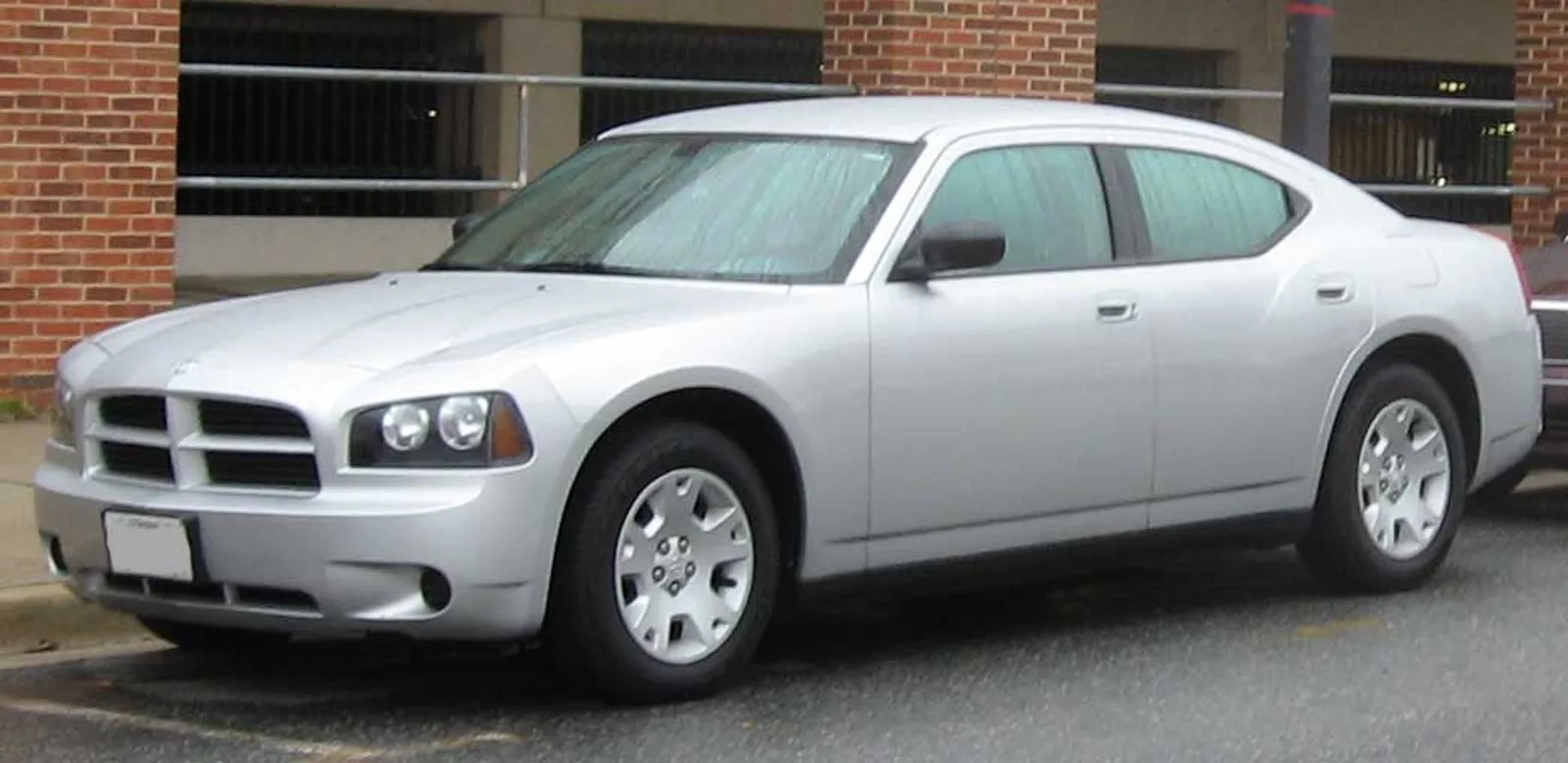
The 2006 Dodge Charger was a full-size four-door sedan built on the Chrysler LX platform, with rear-wheel drive or optional all-wheel drive. It used Mercedes-derived parts and offered V6 and HEMI V8 engines, including the 425 hp SRT8, until the seventh generation arrived for 2011.
The sixth-generation Dodge Charger is a full-size four-door sedan that first appeared at the North American International Auto Show in 2005. It rode on the rear-wheel-drive Chrysler LX platform, could be ordered with all-wheel drive, and replaced the Dodge Intrepid as the brand's full-size sedan. The car was built in Brampton, Ontario, and it carried the Charger name into a new era of muscle-car styling for four doors.
What was the 2006 Charger?
The car revived the name for a rear-driven four-door sedan, a layout Dodge had not offered since the mid-size Diplomat ended in 1989. It was sized as a full-size car. The seventh generation replaced it for the 2011 model year.
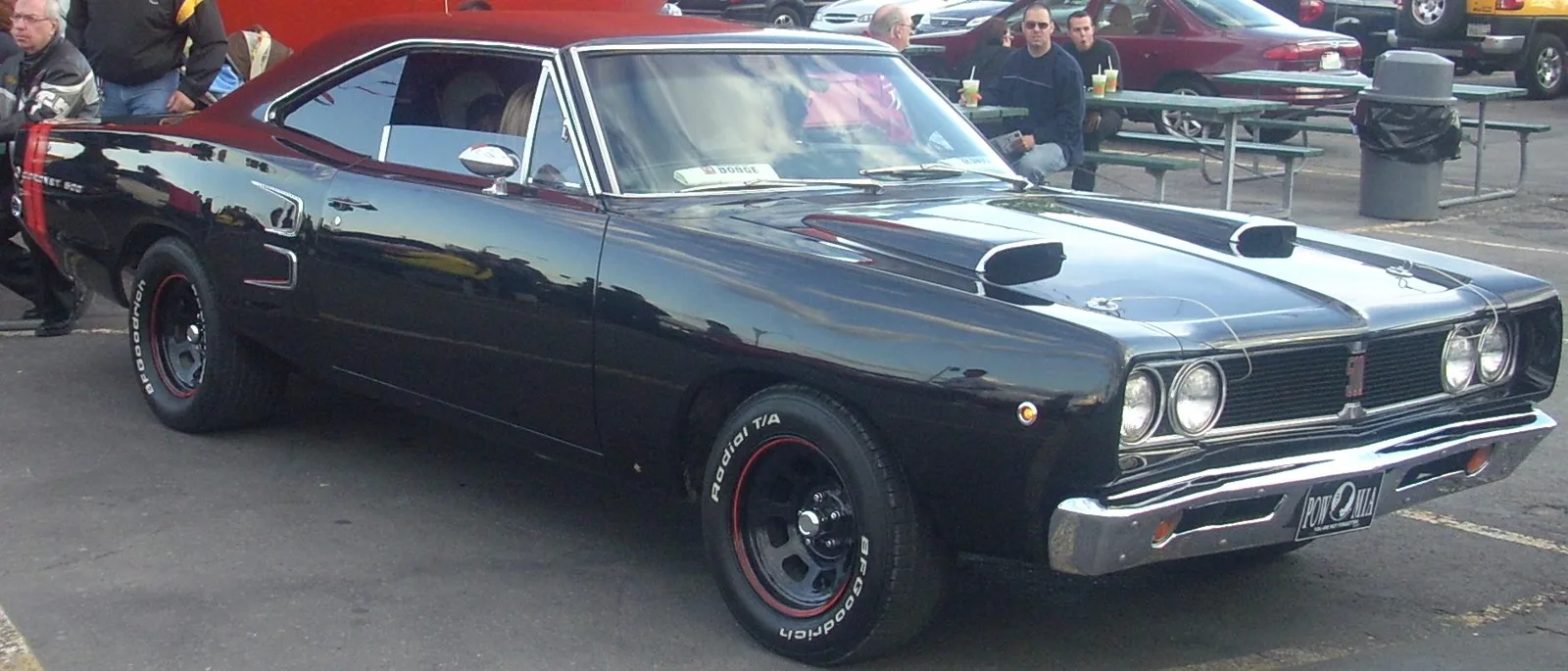
Its shape owed a debt to the earlier Chargers. A 1999 Charger R/T concept had previewed the idea, with a long nose and a rearward cab, though at 187 in (4,750 mm) it was shorter than the 203 in (5,156 mm) 1966 Charger. The concept was also 650 lb (295 kg) lighter than that car.
The sixth-generation Charger brought rear-wheel drive and V8 muscle back to a Dodge four-door, and the police fleet made it a familiar sight.
Where did the Charger name come from?
The original Charger began as a 1964 concept built on the Polara, fitted with a 426 Wedge V8. The first production Charger followed in 1966, built on the Dodge Coronet. The name later appeared on a late-1970s personal luxury coupe and on 1980s front-wheel-drive hatchbacks. The sixth-generation car revived it for a new platform.
Dodge described the car as a continuation of the line's muscle-car heritage.
What did the Charger borrow from Mercedes-Benz?
The LX platform was shared with the Chrysler 300, and the car was developed while Chrysler worked with Mercedes-Benz as a partner. Chrysler executives said the toe board, safety cage design and load-path approach came from that partnership. Several components were also derived from Mercedes models.
The rear suspension cradle and five-link independent rear suspension came from the E-Class, and the double-wishbone front suspension with dual pivot steering geometry drew on the S-Class W220. The five-speed NAG1 W5A580 automatic, rear differential, driveshaft, ESP and ABS systems, steering and CAN bus architecture were shared too. Switchgear, seat frames and the wiring harness also came from the Mercedes parts bin.
Later Charger models added a Mercedes-derived laser key ignition in place of a metal key. AWD versions used Mercedes' 4MATIC system, including transfer case components. Rivals included the Ford Taurus and Five Hundred, the Pontiac G8, the Chevrolet Impala, the Nissan Maxima, the Hyundai Azera and the Toyota Avalon.
Which trims did the sixth-generation Charger offer?
The car started with a base model powered by a 2.7-litre Magnum V6 from 2008, or a 3.5-litre Magnum V6 in 2006 and 2007. Those cars were rear-drive only, with a four- or five-speed automatic depending on engine and year. Equipment included seventeen-inch steel wheels, power windows and locks, remote entry and air conditioning.
SE Plus, SXT and R/T
The SE Plus lasted one model year, 2008, and added the 3.5-litre V6, a six-speaker audio system, cruise control, four-wheel ABS and aluminium alloy wheels. The SXT was the volume seller, first as an appearance package on the base car until 2007 and then as its own trim from 2008. It added a chrome grille, SiriusXM, steering wheel audio controls, a security alarm and a power-adjustable driver's seat, and it could be had with rear or all-wheel drive.
SXT buyers could also specify eighteen-inch tyres and alloy wheels, a six-disc CD and MP3 changer, a touchscreen infotainment system from 2008, a Uconnect Bluetooth phone system and a pair of Boston Acoustics audio systems, one of which had a subwoofer. GPS navigation, a rear camera, a remote starter, leather seating, dual power front seats, a five-speed automatic and a power sunroof were all available.
The R/T brought the 5.7-litre HEMI V8 with Multi-Displacement System, a five-speed automatic, a 276-watt Boston Acoustics system, eighteen-inch polished wheels, leather seats and heated exterior mirrors. Most SXT options were also available on the R/T. Its Road/Track Performance Group, available on rear-drive cars, added a different steering rack, a stiffer suspension, performance tyres and HEMI-style R/T badging. From 2007 the Road/Track cars also wore a chin spoiler and rear wing.
SRT8
The SRT8 was the top of the range. It used the 6.1-litre HEMI V8 without Multi-Displacement, Brembo brakes with painted calipers, sport front seats and a performance body kit. Forged aluminium wheels measured twenty inches, and the interior had simulated carbon-fibre trim. It was rear-drive only.
The version first showed in New York in 2005, with 425 hp (431 PS; 317 kW) from the 6.1-litre V8 and 569 Nm (420 lb ft) of torque at 4,800 rpm. Its 425 SAE net rating compared favourably with the 425 SAE gross figures of muscle-era Chrysler engines, so the 6.1-litre HEMI became the most powerful V8 Chrysler had put in a production car at that point. The car ran 0-97 km/h (0-60 mph) in 4.8 seconds.
Buyers could add a touchscreen, SiriusXM for 2006 and 2007, a navigation system, a Uconnect phone system and a thirteen-speaker Kicker system, its powered amplifier and digital sound processing, plus a rear-mounted subwoofer. The seats were leather with perforated microfibre suede inserts, and the grille carried black honeycomb inserts.
How powerful were the Charger's engines?
The SE and SXT used the 3.5-litre High Output V6, rated at 250 hp (186 kW) and 339 Nm (250 lb ft), while the Canadian base car ran a 2.7-litre V6 with 178 hp (133 kW) and 258 Nm (190 lb ft) of torque.
The 2.7 was offered in the United States for fleet sales in 2006 only. The SE package could also take the 2.7 in 2007, while the Canadian SXT carried the 3.5-litre engine.
The R/T used the 5.7-litre HEMI V8, which produced 254 kW (340 hp) and 529 Nm (390 lb ft) from 2006 to 2008. The 2009 update added variable camshaft timing, lifting output to 274 kW (368 hp) and 536 Nm (395 lb ft). The SRT8's 6.1-litre HEMI remained the most powerful engine in the range.
What changed for 2009?
After three years of production, the sixth generation received a 2009 update. The CHARGER badge moved from the left of the rear deck to the right, leaving room for a DODGE badge on the left. Tail lamps were revised, and the 2008 cars had already been given a new centre console and switchgear.
The AWD system also changed. The 2009 car used BorgWarner Torque-on-Demand, which disconnected the front axles until extra traction was needed. The result was a small gain in fuel economy, with front-axle power delivered only when traction demanded it. The system routed about 60 percent of power to the rear wheels and 40 percent to the front.
Which special editions did the Charger get?
Three editions stood out, each with its own look and output, and each was produced in a limited run. The Daytona was a retro-coloured R/T with a 350 hp V8, the Super Bee shared the SRT8's 425 hp engine, and the DUB Edition was a tuned SXT built with a magazine.
Daytona R/T
The 2006 Daytona R/T was revealed at the Chicago Auto Show with a high-output 350 hp version of the 5.7-litre HEMI. It came with a special front fascia and chin spoiler, a black rear spoiler and black HEMI badges on the hood and rear fender. The colours were Go ManGo! orange, Top Banana yellow and Tor Red, with production of 4,000 each for the orange and yellow cars and 2,000 for the red. Each car carried a numbered badge on the right of the dash.
Later years brought twenty-inch chrome-clad wheels in 2007, when 2,900 cars were built in Sub Lime Green and Plum Crazy Purple. Power rose to 372 hp (277 kW) for 2009 through variable camshaft timing, and no Daytona R/T was offered for 2010.
Super Bee
The Super Bee was unveiled in New York in 2006, for the 2007 model year. It used the SRT8's 425 hp 6.1-litre HEMI and came in Detonator Yellow paint with black decals. Only 1,000 were built, and a B5 Blue version shown at the 2007 Detroit show went on sale in early 2008 in a second run of 1,000 cars.
Hemi Orange Super Bees numbered 425 in 2009.
DUB Edition
Developed with DUB Magazine, the DUB Edition was based on the SXT. It had a body-colour spoiler and fog lamps, twenty-inch alloys shod in 245/45R20 tyres and a thirteen-speaker Puncher surround system with a Kicker amplifier. Brakes came from the R/T, with dual-piston front calipers. Buyers chose among five shades, dark titanium, silver, black, red and cool vanilla, and 2,180 cars were built for the US market.
How did the Police Package work?
The police version was introduced in early 2006 as the Charger Police Package, with heavy-duty brakes, a severe-duty cooling system and police performance electronic stability control. Its steering was tuned for police use, and the gear selector moved to the steering column instead of the centre console.
The V8 version carried the 370 hp (276 kW) HEMI, rated at 395 lb ft (536 Nm) of torque, and it reached 97 km/h (60 mph) in 6.0 seconds and topped out at 152 mph (245 km/h). Michigan State Police testers found the V8 ahead of rival pursuit cars in acceleration, cornering and braking, except that the Magnum and the V6 Charger stopped slightly faster in some tests. For 2009 the base Police Package came with the 3.5-litre V6 and a five-speed automatic, and the rear badge changed to read DODGE on the left.
Customers outside North America included agencies in Chile and the Czech Republic, as well as several Gulf states such as Kuwait and the UAE. Its design was largely shared with the civilian car.
How did the Charger do in safety tests?
The IIHS gave the Charger a Good overall rating in frontal crash tests. In side impacts, cars with optional side airbags scored Marginal overall, while cars without them received the lowest Poor rating. Electronic stability programme came standard on most models, with ABS and traction control on all.
NHTSA gave the car five stars for driver, passenger and rear passenger protection, and four stars for side impact. The 2.7-litre V6 cars were the only ones where stability control was optional.
Did the Charger race in NASCAR?
Dodge fielded Charger-silhouette NASCAR cars from 2005, replacing the Intrepid body used before. Unlike the Intrepid, the Charger offered a rear-wheel-drive layout with a V8, which matched the configuration of the NASCAR machines. The team entries were campaigned through 2012.
In 2007 the Charger ran in every race outside the Car of Tomorrow series, where the Dodge Avenger was used instead. Penske Racing's Dodge won the 2012 Sprint Cup championship with Brad Keselowski at the wheel, and the team then moved to Ford for 2013.
How was the sixth-generation Charger built?
The Charger was assembled at the Brampton Assembly in Ontario, Canada. Platform-mates included the Chrysler 300, a third-generation Dodge Challenger and the discontinued Magnum, and all four shared the same basic architecture. Building them on one structure kept the family's engineering consistent across the range.
Sixth-generation Charger specifications at a glance
| Specification | Detail |
|---|---|
| Platform | Chrysler LX, rear-wheel drive with optional AWD |
| Debut | 2005 New York International Auto Show |
| Base V6 | 2.7 L or 3.5 L Magnum |
| R/T V8 | 5.7 L HEMI, 340 hp (254 kW) to 2008, 368 hp (274 kW) from 2009 |
| SRT8 V8 | 6.1 L HEMI, 425 hp (317 kW), 569 Nm (420 lb ft) |
| SRT8 0-97 km/h | 4.8 seconds |
| AWD split | About 60 percent rear, 40 percent front |
| DUB Edition | 2,180 cars, US market |
| Assembly | Brampton Assembly, Ontario |