A hidden hatchback, a cab-forward sedan, a Jeep in disguise and a crossover that ended as Dodge became a performance brand.
The Dodge Shadow (1987-1994), Stratus (1995-2006), Nitro (2007-2012) and Journey (2009-2020) were Chrysler-built compacts, sedans and SUVs that shared platforms and badges with Plymouth, Chrysler, Jeep and Fiat models, and the last of them ended as Dodge shifted to a performance brand.
A Dodge sedan that Chrysler stopped building in 2006 reappeared in Russia from late 2007 as the Volga Siber. The Russian maker GAZ paid about US$151 million for the licence and production facilities of the second-generation Stratus and its Chrysler Sebring twin, and had projected 40,000 cars a year. The Siber arrived just as the 2008 financial crisis struck, and 8,933 were built before it was dropped after the 2010 model year.
That odd afterlife is one of several stories hidden in four Dodge names: the Shadow, Stratus, Nitro and Journey. Each shared its platform or its body with at least one other model, and together they show different ways Chrysler spread one design across several badges.
What was the Dodge Shadow?
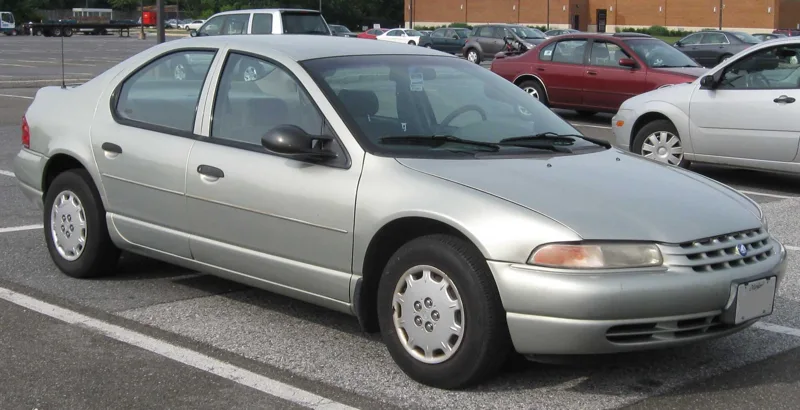
The Dodge Shadow and its twin, the Plymouth Sundance, were compact hatchbacks introduced for the 1987 model year to replace the Omni and Horizon. Chrysler built them on a shortened K-car platform called the P-body and sold them until March 1994, when the Neon replaced them.
The first one left the Sterling Heights Assembly line on 25 August 1986. Chrysler had meant the car as a straight Omni replacement, but with Hyundai and Yugo entering the American market and the economy class getting crowded, it chose to make it more substantial. The result was a little heavier than its rivals and better equipped than expected, at least until the stripped-down America model of 1991. Its suspension came from the Dodge Daytona and its body was a shortened Lancer. Though the Shadow looked like a notchback, it was a hatchback, and Chrysler advertised the large load space as hidden hatchback versatility.
The two badges differed in their grilles, Dodge using a crosshair pattern and Plymouth an egg-crate design, and in their tail lamps. Engines were four-cylinders of 2.2 or 2.5 litres, some turbocharged, tuned for torque rather than power, and a Mitsubishi-built 3.0-litre V6 arrived in 1992 to replace the turbo options. The three-door Shadow ES was the sporty one, only available with the turbo and wider wheels. A convertible joined in 1991.
Safety was a selling point. In 1990 a driver airbag became standard on all US-market domestic Chrysler cars, and the Shadow was the cheapest car sold with a standard driver airbag. By 1994 a motorised passenger belt was added to meet passive-restraint rules, though it did not meet Canadian standards. In Europe the car was sold from April 1988 as the three-door Chrysler ES. European sales were very poor, the ES ended in mid-1991, and Chrysler left the segment until the Neon of 1995.
Carroll Shelby's company turned the Shadow into the Shelby CSX, with a turbocharged 2.2-litre engine of 130 kW (174 hp), quick enough to match many contemporary muscle and sports cars. A 112 kW version without the intercooler was sold to Thrifty as the CSX-T. The Sundance gained an RS (Rally Sport) model in 1988 and, from 1992, a Duster with the V6, which cost about $2,000 more than a base car.
Four Dodge names, one habit: stretching a single Chrysler platform across several badges until the brand changed course.
What was the Dodge Stratus?
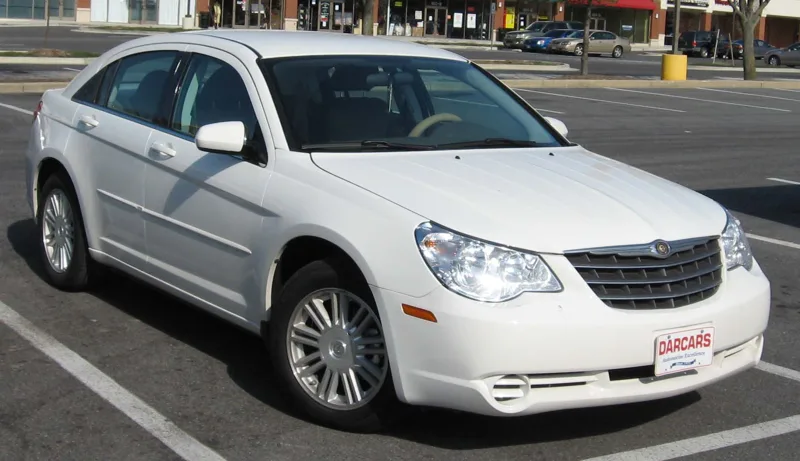
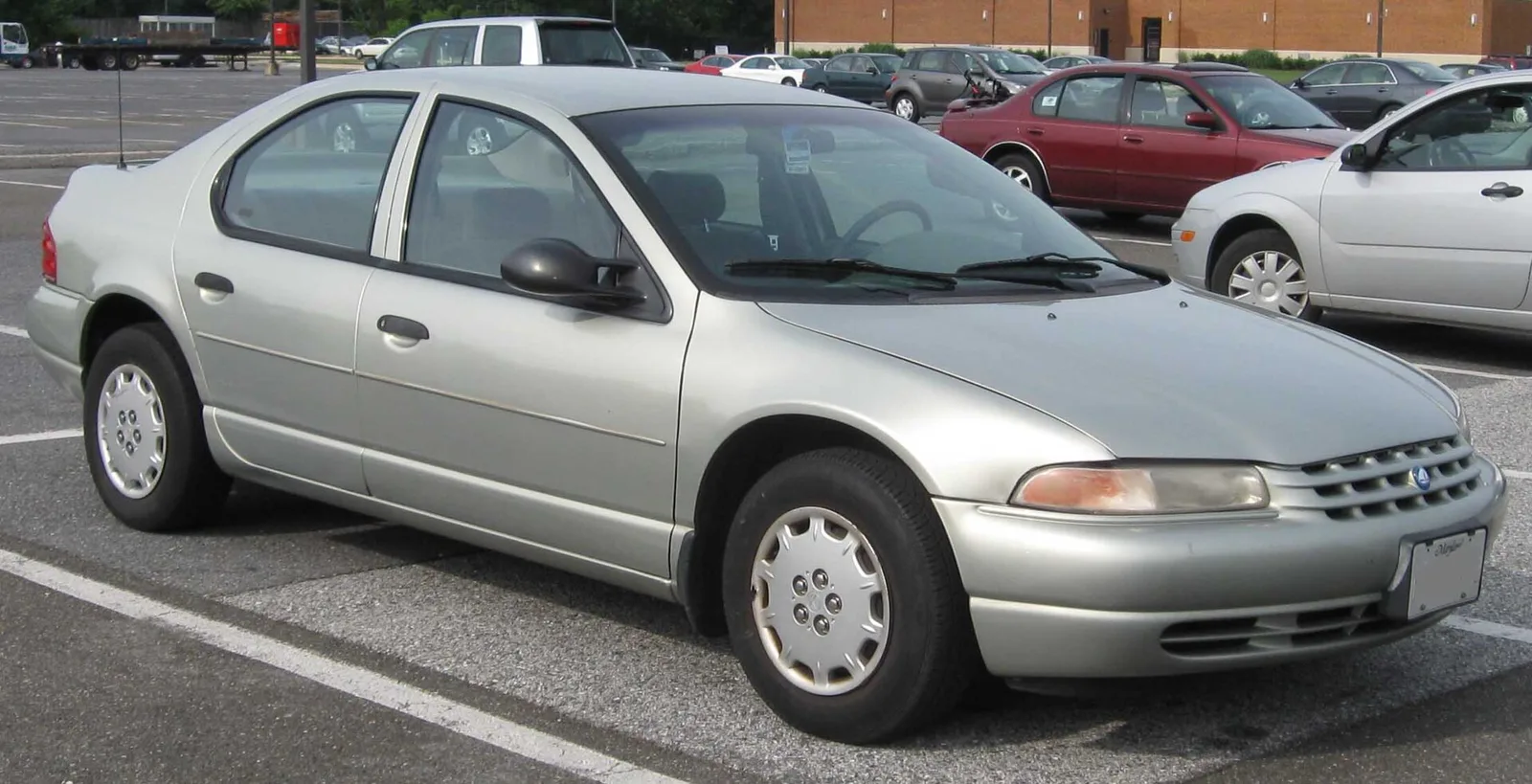
The Stratus was a mid-size sedan introduced in December 1994 on Chrysler's JA platform. It was one of three near-twins with the Chrysler Cirrus and Plymouth Breeze, and earned a place on the Ten Best lists of Car and Driver magazine for 1996 and 1997.
The three were called cab-forward sedans, with the Stratus sitting between the more luxurious Cirrus and the value-oriented Breeze. They replaced the Spirit and Dynasty. The base engine was a 2.0-litre single-cam four, with a 2.4-litre twin-cam four as an option and, on the ES trim, a 2.5-litre V6. Publications such as Consumer Reports compared it with the fifth-generation Chevrolet Malibu and praised its interior room, noting it was roomier than the 1995 Ford Contour. Suspension was independent at all four corners, with double wishbones at the front and multi-link at the rear, and handling was widely praised.
Differences between the three were skin deep. Front ends mirrored each brand's minivans, with unique rear bumpers and tail lamps, while interiors were almost identical. A five-speed manual was offered only with the 2.0-litre engine, reportedly because the 2.4's torque was feared likely to cause wheelspin with a manual gearbox. Mexico got a turbocharged 2.4 of 125 kW (168 hp). In Europe the car was a Chrysler Stratus, since Dodge was mostly reserved for commercial vehicles there, and it raced in the Swedish Touring Car Championship. David Donohue won the 1997 North American Touring Car Championship in a Dodge Stratus. Brazil's Chrysler Stratus had higher ground clearance, and in the Gulf States it was sold under both Dodge and Chrysler names.
The second generation came in 2001, when the Cirrus became the Chrysler Sebring and the Plymouth brand disappeared. It used a revised platform called JR. The Stratus Coupe was a different car altogether: assembled by Mitsubishi in the old Diamond-Star factory on the Eclipse platform, it replaced the Dodge Avenger two-door and ended after 2005. The Mexican Stratus R/T used a turbocharged 2.4 that reached 160 kW (215 hp) in 2001 and 168 kW (225 hp) from March 2004, an engine that went on to power the Dodge SRT-4 and PT Cruiser GT.
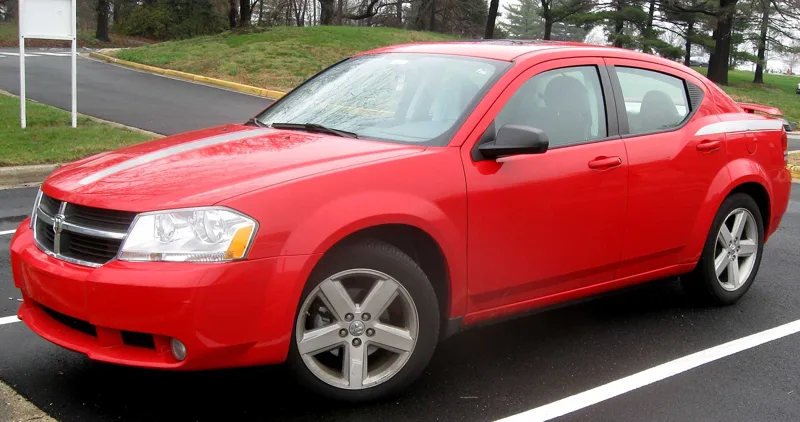
Sales of the sedan declined as ratings from consumer and car magazines fell and competition grew, and as Dodge's larger Intrepid and later Charger posted record sales. A 2004 refresh did not help, and production ended at Sterling Heights in 2006 after 1,308,123 Stratus and Sebring sedans and convertibles had been built since 2000. The Avenger replaced the Stratus name for the 2008 model year. In crash testing the first-generation car, tested as a Cirrus by the IIHS, earned a Poor frontal rating, and the second-generation sedan an Acceptable frontal offset rating but Poor in the side test without optional side airbags.
The Russian afterlife: Volga Siber
GAZ acquired the licence and production facilities in April 2006, in a deal valued at about US$151 million (124 million euros), and began making slightly modified versions from late 2007 to 2010. Plans called for 14,000 Sibers in 2008, 45,000 in 2009 and capacity of up to 65,000 across both models, with four-cylinder engines supplied from Chrysler in Mexico. The 2008 financial crisis hit just as sales began, and the 40,000-a-year forecast was far out of reach.
What was the Dodge Nitro?
The Nitro was a compact SUV sold for the 2007 to 2012 model years, a near-twin of the second-generation Jeep Liberty. It was built at Toledo North in Ohio from August 2006 in one four-door body, and production ended in December 2011.
Counts of cars built differ, from approximately 200,000 down to 175,510. The Nitro grew from a concept shown at the Chicago Auto Show in February 2005. It was Dodge's first compact SUV since the Raider ended in 1990 and its first modern model sold in Europe, where it was the brand's only SUV until the Journey arrived in 2009. It used the Liberty's mechanicals and much of its bodywork on a slightly longer wheelbase.
Its party piece at launch was an SUV-class-leading towing capacity of 5,000 pounds (2,300 kg), along with a sliding cargo floor called Load 'N Go that pulled out 18 inches (457 mm) to ease loading. Standard safety kit included roll mitigation, traction control and curtain airbags for the sides. The 2007 car offered 3.7-litre and 4.0-litre V6 engines in SXT, SLT and R/T trims, and a four-cylinder was sold only in Europe. In 2008 the 3.7 made 210 hp and the R/T's 4.0 made 260 hp. By 2010 the trims were Heat, Detonator and Shock, the Load 'N Go floor was discontinued, and for 2011 Heat 4.0 added Uconnect Phone. Chrysler built 2012 Nitros for fleet customers only. Australia received the 3.7 V6 SXT, with diesels on sale until the 2010 model year.
A European television advert from early 2007 used the line "charged with adrenaline" over a scene in which a dog is electrocuted after lifting its leg on the Nitro's front wheel. The advert drew a bad reaction and was withdrawn.
What was the Dodge Journey?
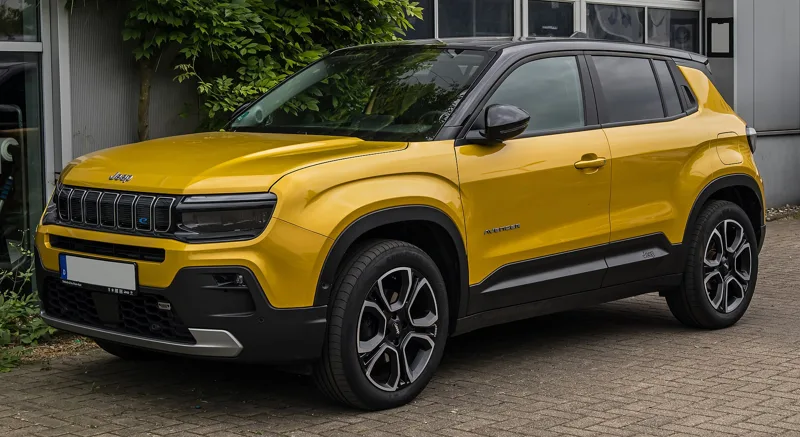
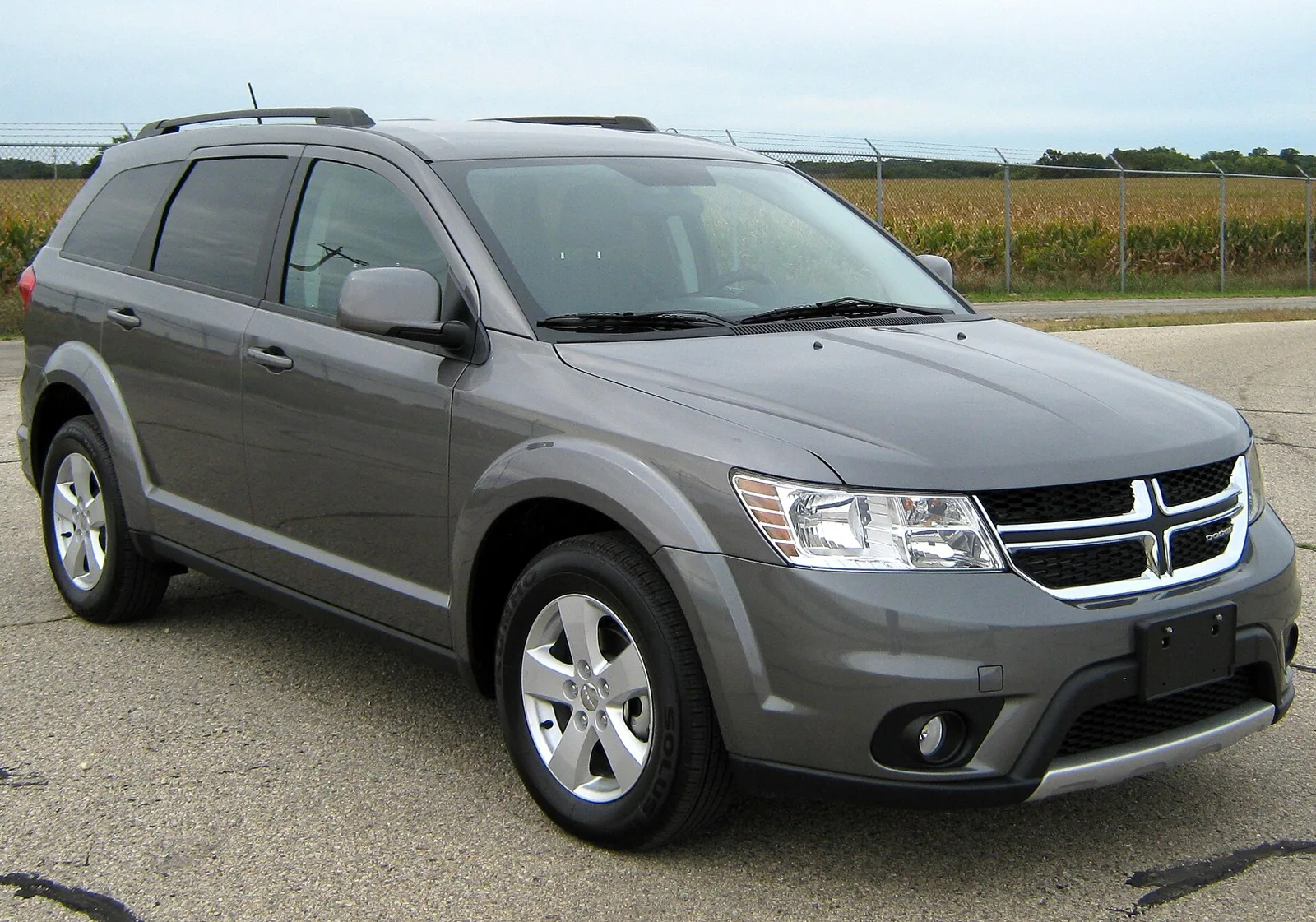
The Journey was a mid-size crossover SUV sold from the 2009 to 2020 model years, with a facelift for 2011. Styled by Ryan Nagode, it was built entirely at Toluca in Mexico and also sold as the Fiat Freemont. Just over 1.1 million were built.
Internally the JC49, it used the platform of the Dodge Avenger and had nearly the same wheelbase as the short-wheelbase Caravan. It debuted at the 2007 Frankfurt show and went on sale in early 2008 in North America. Seating was a strength: five or seven seats, a second row set 1.6 inches (40 mm) higher than the front, under-floor bins and rear doors that opened to 90 degrees. A Chinese version, the JCUV, appeared at Auto China in 2008, Russia began selling the Freemont in 2013, and in Japan it was the Dodge JC.
The four-cylinder was a 2.4-litre of 129 kW (173 hp). Through 2010 North American V6 buyers had a 3.5-litre of 175 kW (235 hp), replaced in 2011 by the 3.6-litre Pentastar of 211 kW (283 hp). Some markets had a Volkswagen diesel with a dual-clutch gearbox, which Chrysler engineered with Getrag, but the planned US factory for the transmission never happened because of funding. Trims churned: Express and Mainstreet for 2011, Blacktop in 2013, the Crossroad in 2014 and the GT in 2017. For 2012 the Journey became Dodge's smallest SUV once the Nitro had gone.
Why did the Dodge Journey end in 2020?
By 2020 the line was down to two trims, SE Value and Crossroad, both with the 2.4-litre engine of 173 hp and front-wheel drive. The V6 and all-wheel drive were gone, and the Journey could not be sold in states following California emissions rules. Dodge gave its move towards being a performance brand as the reason for ending the model.
Since 2022 Mexico has had a second-generation Journey, which is really a GAC GS5 with a new badge and unrelated to the original. In Europe the Fiat Freemont debuted at the 2011 Geneva show and reached Italy at the end of May 2011 with 103 kW and 125 kW turbodiesels, and it was discontinued after the 2015 model year. Dodge promoted the Journey in 2008 by painting a Journey scheme on Dario Franchitti's Charger at the Daytona 500.
The four Dodge models side by side
| Model | Years | Body | Built on |
|---|---|---|---|
| Shadow | 1987 to 1994 | Compact hatchback and convertible | P-body, a K-car variant |
| Stratus | 1995 to 2006 | Mid-size sedan; coupe from 2001 | JA, then JR; coupe on Mitsubishi ST-22 |
| Nitro | 2007 to 2012 | Compact SUV | Shared with the Jeep Liberty |
| Journey | 2009 to 2020 | Mid-size crossover SUV | JC49, shared with the Avenger |
How do the four fit into Dodge's range?
Each filled a gap in Chrysler's line with a shared platform: the Shadow as a compact hatchback, the Stratus as a mid-size sedan, the Nitro as a compact SUV and the Journey as a crossover. The Avenger replaced the Stratus, and the Journey inherited the smallest-SUV role from the Nitro.
Each also had a twin or sibling, whether the Plymouth Sundance, the Chrysler Sebring, the Jeep Liberty or the Fiat Freemont, so the Dodge badge always shared its car with at least one other brand. The last of the four ended with the brand's own pivot: Dodge said it was moving to become a performance brand when it dropped the Journey.