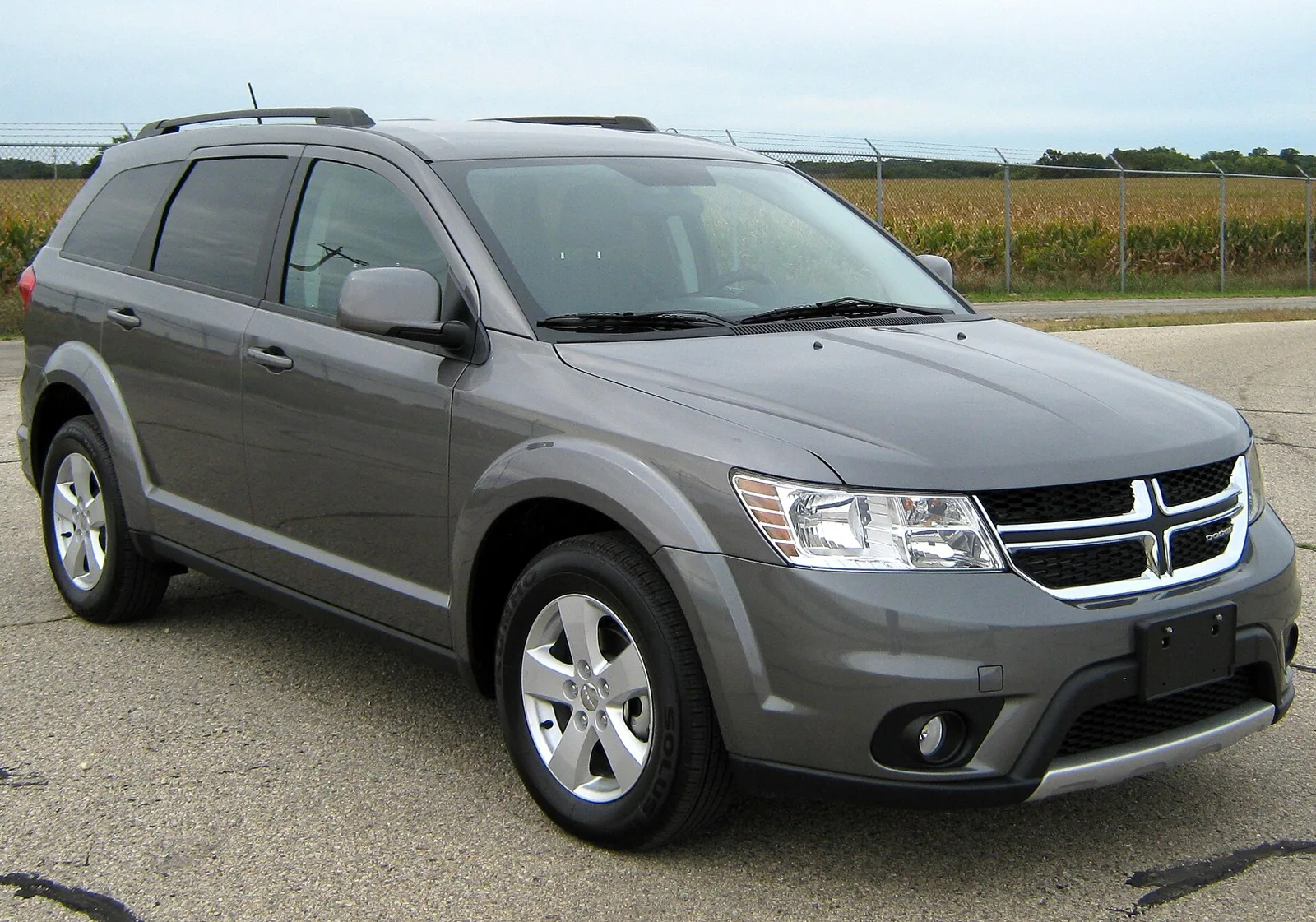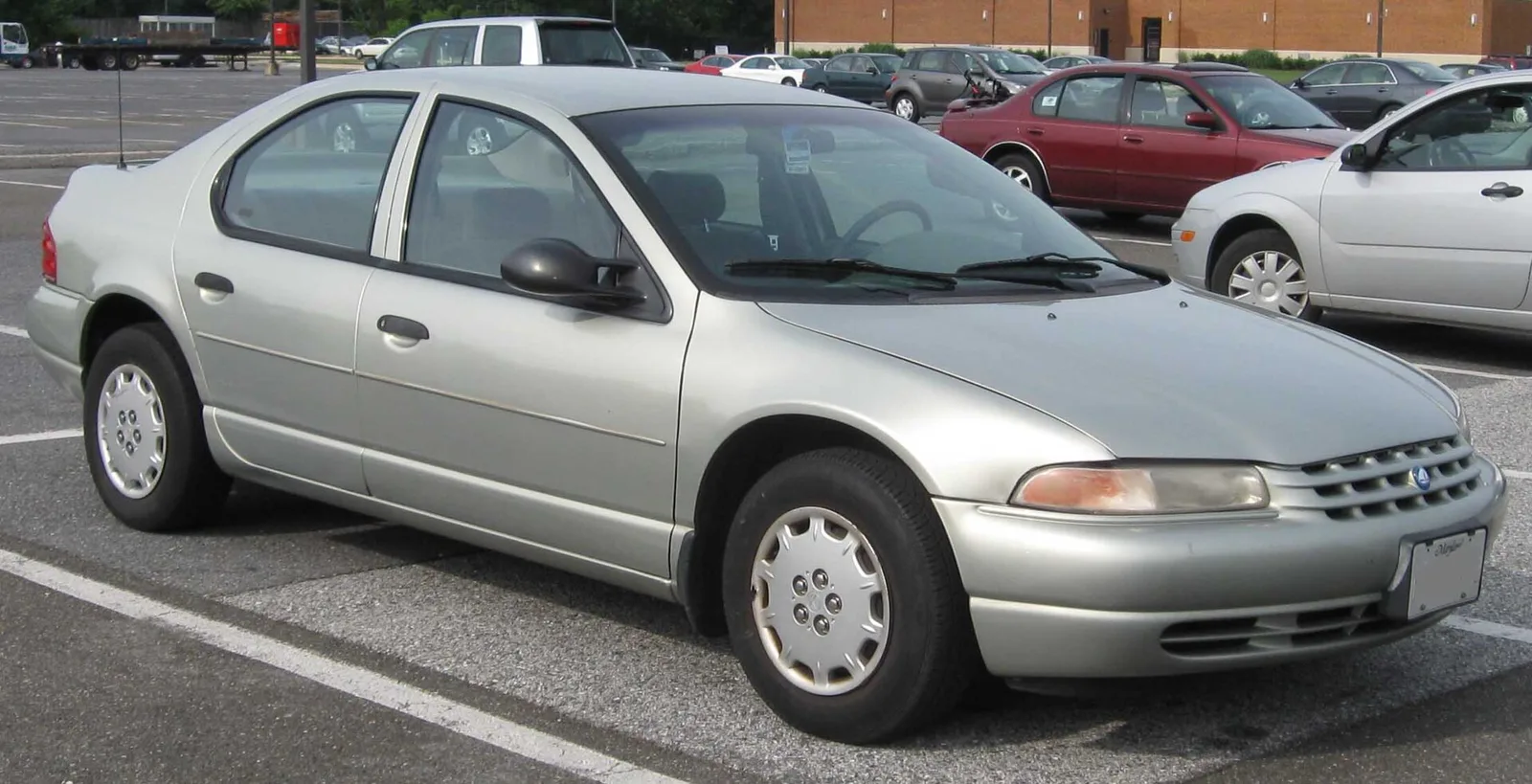
The cheapest member of Chrysler's JA family, sharing its body with the Dodge Stratus and Chrysler Cirrus, and ending with the Plymouth brand.
The Plymouth Breeze was a 1996 model-year four-door sedan from Chrysler's JA family, built on the same body as the Dodge Stratus and Chrysler Cirrus. It was the entry-level car of the group, sold with a 2.0 L engine as standard, and it ended production in January 2000 with the Plymouth brand.
The Plymouth Breeze was a four-door notchback sedan that Plymouth sold from 1996 until early in the 2000 model year. It was the cheapest member of Chrysler's JA family, sharing its body with the Dodge Stratus and Chrysler Cirrus, and it sold more than 230,000 units before the Plymouth brand was phased out. Its equipment was deliberately sparse, which set it apart from its siblings.
Where did the Plymouth Breeze come from?
The Plymouth Breeze was launched in 1995 as a 1996 model to replace the Plymouth Acclaim. It was the low-priced version of Chrysler's JA platform, alongside the mid-priced Dodge Stratus and the Chrysler Cirrus, and it was built from the same basic four-door notchback sedan.
The JA cars belonged to a family that Chrysler's Cloud Car models took their names from meteorological terms. The Cirrus launched in late 1994 for the 1995 model year as the replacement for the LeBaron sedan, and the Stratus followed in February 1995. The Breeze arrived a year after the Cirrus, giving the family its entry-level member.
Development of the family began in 1991, with the aim of building an affordable, expressive and fun-to-drive car that was still safe enough to carry an everyday family. A concept shown on the 1992 auto show circuit even used rear suicide doors and a turbocharged two-stroke engine running on alcohol, although the production cars used conventional four-cylinder and V6 engines.
Plymouth had been Chrysler's low-price brand for almost its entire existence. When the company tried to stop its brands treading on each other's marketing ground, Plymouth was told to focus exclusively on value. The Breeze therefore became the entry-level JA car, while the Stratus and Cirrus carried the extra equipment buyers expected from a step up.
The Breeze was the value car in a family named after clouds, and it ended with the Plymouth brand.
How did the Breeze's design relate to its siblings?
The Breeze shared its body and most of its interior with the Cirrus and Stratus. Its front fascia, rear bumper, tail lamps and wheels were the main points of difference, and its interior was nearly identical save for the name on the steering wheel and a few optional features.
All three cars used the cab-forward three-box design that Chrysler had launched on its larger LH sedans in 1992. That layout put a large passenger cabin between a comparatively short hood and trunk, with a long, sharply raked windscreen and short overhangs. The four-door body had flowing lines, and the Cirrus concept of 1992 had even hinted at a hood with almost no break to the windscreen.
Each brand's front fascia echoed the design of its own minivan, which helped the three cars look distinct from one another. Chrysler's engineers gave all of them four-wheel independent suspension, with double wishbones at the front and a multilink arrangement at the rear.
Magazines compared the family with the Chevrolet Malibu and the Ford Contour. Many, including Consumer Reports, judged the Cirrus roomier than the Contour, a claim that applied to the shared body the Breeze was built on.
What engines and equipment did the Breeze offer?
The Breeze came with a 2.0 L four-cylinder as standard, paired with a five-speed manual. A 2.4 L four-cylinder was offered from 1998 with an automatic only. The car had no V6, alloy wheels, leather trim or fog lights, all of which were available on the Stratus and Cirrus.
Standard equipment included air conditioning, tilt steering, an AM/FM stereo, and driver and front-passenger airbags. Options were a four-speed automatic, anti-lock brakes, cruise control, power windows, power door locks, power mirrors, a cassette or CD player and a power sunroof. The Chrysler Autostick transmission was not offered on the Breeze at all.
Across the family the engine line-up was the 2.0 L four-cylinder, the 2.4 L four-cylinder and the 2.5 L V6. The 2.4 L was never offered with a manual gearbox, because its high torque caused excessive wheel spin and made it hard to drive.
Base trim (1996 to 2000)
The Base was the least expensive Breeze from 1996 to 1999, and it was the only trim in the final year of production. It came with the 2.0 L engine, a five-speed manual, black steel wheels with plastic wheel covers, an AM/FM stereo with six speakers, air conditioning, cloth seats, and manual windows and door locks.
Expresso trim (1998 to 1999)
The Expresso was the top of the Breeze range for two model years. It added power windows and door locks, a cassette stereo with six speakers, premium cloth seats, colour-keyed mirrors and door handles, and the 2.4 L engine with a four-speed automatic. An Expresso decal appeared on both front doors and on the trunk lid.
Expresso content also included special badging, unique wheel covers, an upgraded audio system and a cloth interior in a 'Rhythm' pattern. The same kind of package was offered on the Voyager and Neon, and it was discontinued after the 1999 model year.
How did the Breeze change from year to year?
The Breeze changed in small steps. A sunroof became optional in 1996, a new centre console arrived in 1997, the 2.4 L engine and Expresso trim came in 1998, and suspension tuning was revised in 1999 for a smoother ride. Production was halted early in 2000.
- 1996: the Breeze went on sale to replace the Acclaim, with new window tints, and a sunroof was added as an option during the middle of the year.
- 1997: a new centre console with storage space, an integrated armrest and rear-seat cupholders.
- 1998: the 2.4 L engine became an option, and the Expresso trim was introduced.
- 1999: revised suspension tuning for a smoother ride.
- 2000: production stopped early in the year because of the Plymouth phaseout, and only the base model remained.
Why did Breeze production end in 2000?
Production ended because Chrysler was phasing out the Plymouth brand name. The last Breeze rolled off the Sterling Heights Assembly line on 7 January 2000, after the model had sold more than 230,000 units. Only the base model was available in its final months.
Because the Breeze was sold only under the Plymouth name, it was the JA car most directly affected by the brand's end. The Cirrus was replaced by the 2001 Dodge Stratus sedan, which kept the sibling name within Dodge.
Even so, the Breeze's total production was greater than that of the Cirrus, which was built for nearly two more years. The Breeze's build run was short, but it was not a small one.
In Canada the Stratus had its last year of sales in 2000, when the Chrysler Sebring took over as the company's only lower mid-size sedan. Dodge did not sell an equivalent version there.
How did the Breeze sell and how was it reviewed?
The Breeze did not match the sales of the Acclaim it replaced, but it still sold more than 230,000 units over its run.
Motor Trend named the Cirrus its Car of the Year for 1995, and the Cirrus LXi appeared on Car and Driver's Ten Best list for 1995. The Cirrus and Stratus were on that list again for 1996, and the Cirrus, Breeze and Stratus all made it onto the 1997 list.
The Breeze's recognition was therefore limited to the 1997 Ten Best list, shared with its two siblings.
How did the Breeze compare with the Stratus and Cirrus?
Next to the Breeze, the Stratus and Cirrus offered more equipment and more engine choice. The Stratus ES could be specified with a 2.4 L engine and power features, and the Cirrus LXi added alloy wheels and keyless entry. By 1999 the Stratus ES used the V6 as standard.
The Stratus base trim, sold from 1995 to 1999, had a 2.0 L engine and a five-speed manual, much like the Breeze. The SE, the renamed base trim for 2000, kept the same standard equipment, while the ES carried the 2.4 L engine and a four-speed automatic.
The Cirrus kept a separate identity through its LX and LXi trims. The LXi was the luxury model from 1995 to 2000, with a premium stereo, keyless entry and wood-grain interior trim. The Cirrus was also the only one of the JA cars to receive any form of facelift during its production, in 1999.