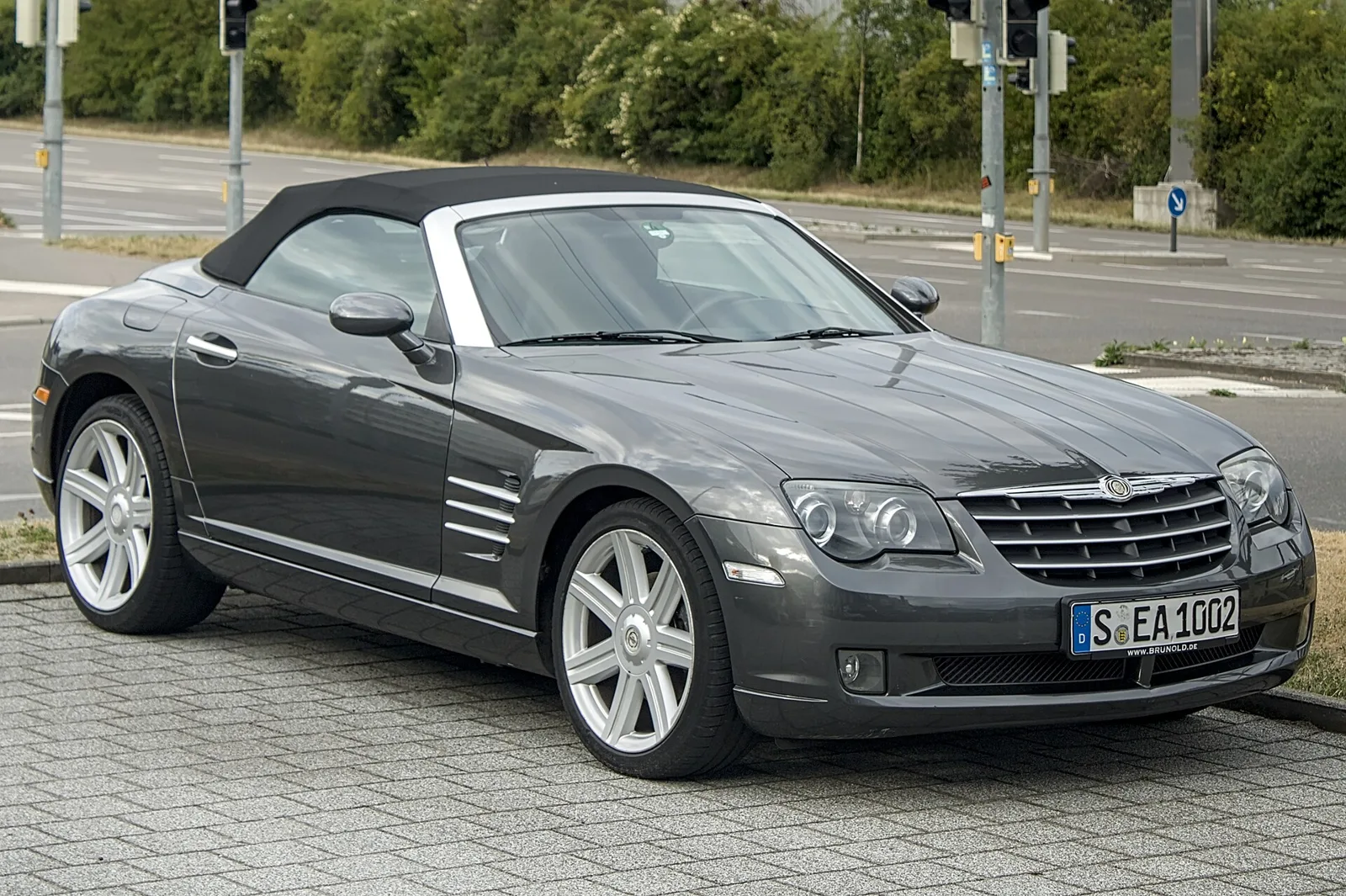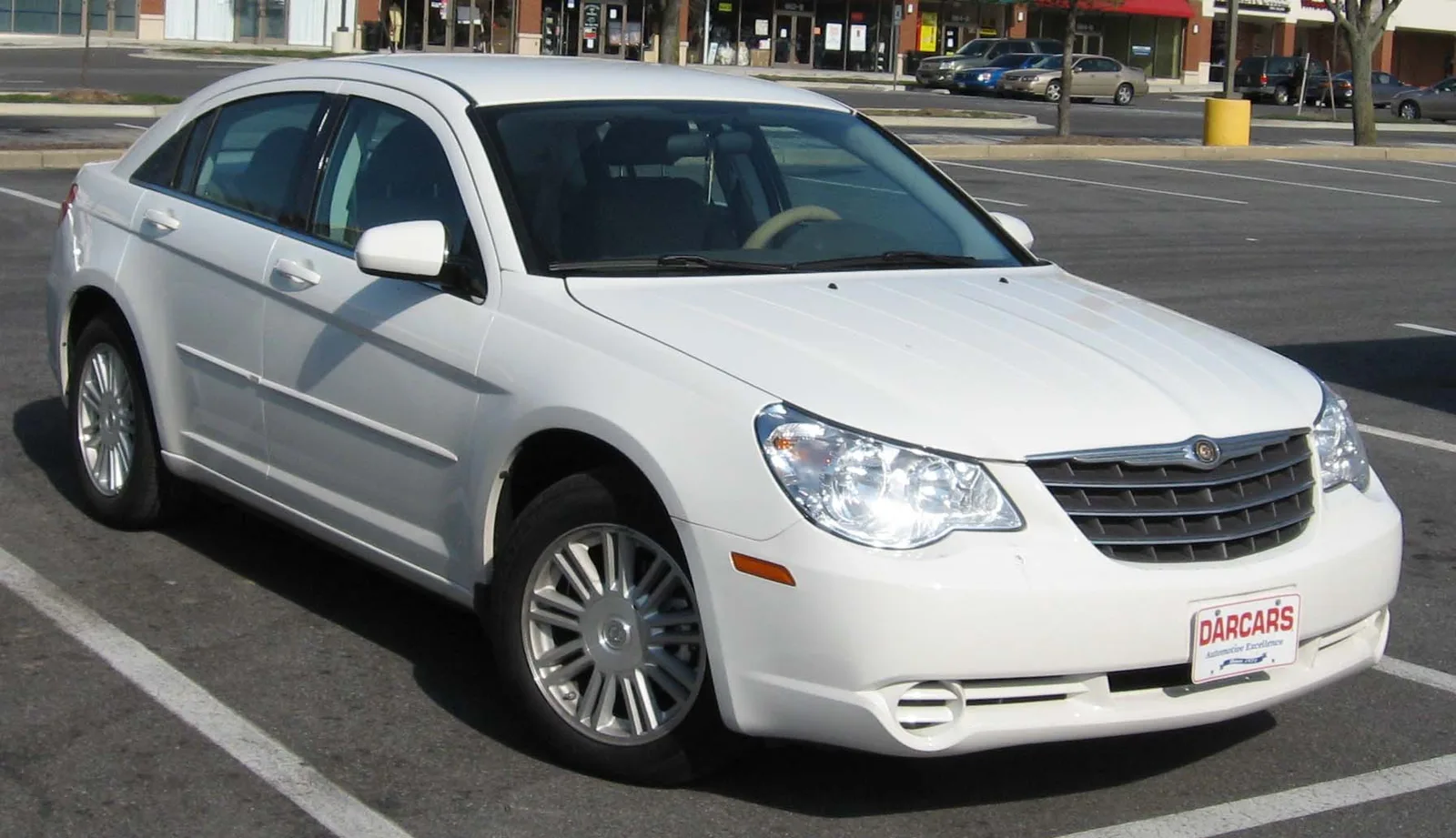
Mitsubishi-built coupes, a Cirrus-based convertible, a Russian licence deal and a name change in 2010 that tried to shed a reputation.
Chrysler built the Sebring between 1995 and 2010 in three body styles. The coupe drew on Mitsubishi engineering, the convertible on the Cirrus, and the Chrysler 200 replaced the whole range for the 2011 model year, ending the Sebring name.
The Chrysler Sebring was a mid-size car that Chrysler sold from 1995 to 2010 as a coupe, convertible and sedan. Its coupe grew out of a Mitsubishi design, its first convertible borrowed the Cirrus sedan's underpinnings, and its final form was the Chrysler 200. Few Chrysler nameplates changed shape so often.
Where did the Sebring name come from?
The name honours Sebring, Florida, home of the 12 Hours of Sebring endurance race. Chrysler's Plymouth division had used the badge first, as a trim on the Satellite mid-size coupe during the 1970s. Chrysler revived it in 1995 for a new coupe, and the car carried the name through its life. The badge therefore came from a race track, not from the engineering of any particular model.
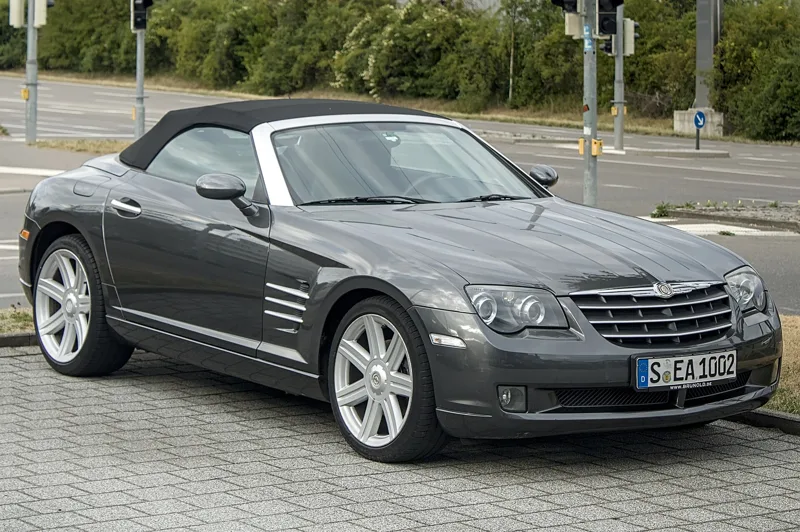
A Mitsubishi-built coupe, a Cirrus-based convertible and a Russian sedan made the Sebring Chrysler's most varied mid-size car.
How did the first-generation coupe work?
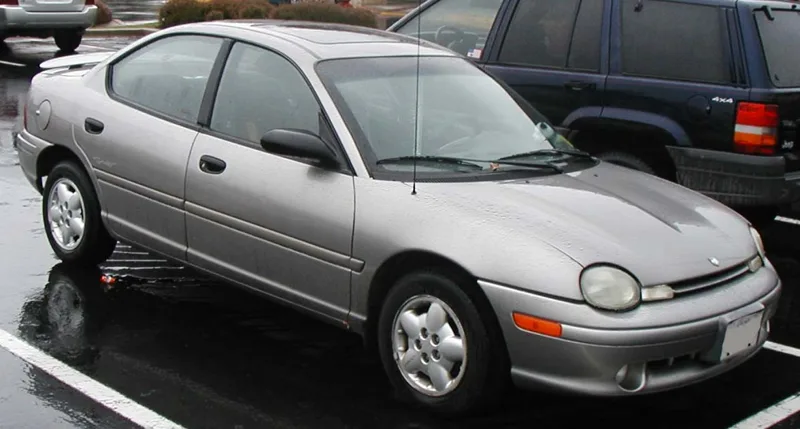
The first coupe was styled by Chrysler and built at Mitsubishi's plant in Normal, Illinois, on the same platform as the Mitsubishi Eclipse. It arrived in April 1995 and replaced the LeBaron coupe. It sat alongside a sedan and convertible that shared almost nothing with it.
Chrysler tuned the suspension more softly than on the Dodge Avenger, which had appeared a few months earlier with the same underpinnings. The LXi trim added rear sway bars, a slightly different fully independent suspension and 17-inch wheels wrapped in Goodyear Eagle performance tyres. Four-wheel disc brakes with ABS were among the options.
The coupe seated five and gave buyers a trunk comparable to contemporary mid-size coupes, with room for a full set of golf bags. A power accessory delay let occupants keep using the power windows after the ignition was switched off.
What changed in the first-generation facelift?
A minor facelift reached the coupe for 1997. The grille became a slightly larger black mesh, ribbed cladding appeared along the lower body, and fresh wheels followed. That update also gave the Sebring the distinction of being the first car with Chrysler's wings badge.
Extras on the coupe ran long. Customers could specify independent double wishbones on all four corners, one-touch windows, a one-touch sunroof, a compass in an electrochromic mirror and a universal remote transmitter. The coupe also earned the highest frontal crash rating then available, five stars. First-generation coupes continued to be sold in select export markets past the 2000 model year.
How did the first-generation convertible differ?
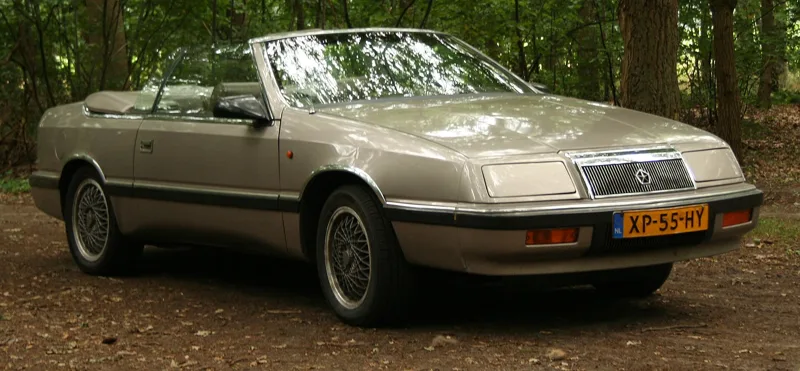
The convertible arrived in 1996 to replace the LeBaron convertible. It was built on the Cirrus sedan's platform rather than the coupe's, reportedly because the Mitsubishi production technology was hard to transfer. In Mexico and Europe it was sold as the Stratus, and Mexican plants assembled it alongside the Cirrus sedan. Its body had little in common with the coupe's.
Trim levels were JX, JXi and, from 1998, a JXi Limited. The convertible carried its Cirrus-based layout into the late 1990s, and its trim line-up stayed small.
What changed for the 2001 model year?
Chrysler, then part of DaimlerChrysler, presented the redesigned line at the 2000 New York Auto Show. The sedan and convertible used the JR platform, successor to the Cirrus, while the coupe stayed with a platform derived from the Mitsubishi Eclipse ST.
The 2001 convertible had its front end restyled to resemble the sedan, and it kept the sedan's platform with many interior and exterior parts carried over from the first car. The convertible's body was also reinforced in anticipation of tougher crash standards.
Grille, headlight and rear-deck updates reached the sedan for 2004. Mexican buyers saw this generation badged as a Cirrus, and only that version carried the turbocharged 2.4 L DOHC engine, marked by a High Output badge.
The Cirrus was also offered in fewer trims than the Sebring: the sedan came in two and the convertible in one, and every version had an automatic transmission.
The Insurance Institute for Highway Safety rated the 2001 to 2006 sedan Acceptable in frontal crash tests. Cars without side airbags scored Poor in the side impact test, and Chrysler declined a test with airbags fitted.
How did the second-generation coupe differ?
Chrysler designed the second coupe, but Mitsubishi Motors North America engineered and assembled it at Normal, Illinois. Underneath, it was a reworked third-generation Eclipse and borrowed that car's dashboard.
Under the hood sat a 2.4 L four rated at 147 hp, or a V6 good for 200 hp (149 kW), with peak torque of 205 lb ft (278 N m) reached at 4,500 rpm. The LXi added traction control, leather seats, rear disc brakes and a seven-speaker sound system. Door seals were improved, and stiffness improved by 90 percent under bending loads and 9 percent under twisting loads.
The coupe's rear suspension used independent double wishbones with coil springs and stabilizer bars.
The base coupe came with manual air conditioning, cruise control, a six-speaker stereo, a four-speed automatic and tilt steering, plus power windows, locks and mirrors. Extras included a four-disc CD changer mounted in the dash, curtain airbags, ABS and a sunroof that slid outside the roofline rather than inside the cabin.
Canadian buyers got the coupe from the 2001 model year, and a light refresh for 2003 preceded its departure. It was discontinued after the 2005 model year, while the sedan and convertible carried on in the Chrysler line.
What were the European versions like?
Chrysler built export sedans and convertibles for mainland Europe between 2001 and 2006. They were left-hand drive only, with European lights, orange turn-signal indicators and Euro 3 emissions controls, later upgraded to Euro 4.
European engines were a 2.0 L DOHC 16-valve four, later replaced by a 2.4 L in some countries, and a 2.7 L DOHC 24-valve six. Only the six was automatic-only. Trim names were translated, with LE standing in for the North American LX and LX for the LXi, and Touring and Limited replaced those from 2004.
Chrysler UK imported only 50 convertibles, fitted with the 2.7 L engine and sold through selected dealers in 2001 and 2002. Sales in France were so weak that the sedan was imported only in 2001 and 2002, and the convertible ended in 2004 there.
How did the Volga Siber come about?
In 2006 Chrysler sold the production rights, dies and assembly line for the second-generation sedan to GAZ, a Russian manufacturer, for roughly US$151 million (124 million euros). The car became the Volga Siber, a Russian version of a Chrysler and Dodge design.
Output started in March 2008 at the Gorky plant in Nizhny Novgorod. The economic downturn hit sales hard, and output ended in 2010 after 9,000 examples had been built. The venture is a small chapter, but it shows how far the platform travelled.
What did the third generation bring?
The third-generation Sebring used the JS platform and arrived for the 2007 model year. It was assembled in Sterling Heights, Michigan, with over 82 percent of its parts sourced in North America. Chrysler offered three engines, and the largest came with Chrysler's first six-speed automatic.
The engine line-up was a 2.36 L GEMA four, a 2.736 L EER V6 that could run on E85, and a 3.518 L EGF V6 paired with the six-speed unit. Its Autostick shifting was part of the package. Cars for export could instead take a turbocharged 2.0 L diesel of the PDTDI type, built by Volkswagen.
Third-generation trims began with a base model in 2007, which the LX replaced for 2008. The Touring ran from 2007 to 2010, and the Limited, offered with all-wheel drive for 2008 alone, ran from 2007 to 2010 in its standard form.
Buyers of the 3.5 L V6 sedan could add all-wheel drive for 2008 alone, at extra cost. MyGIG multimedia arrived in 2008, and the Limited took on the 2.4 L four that year and was priced level with the Touring.
For 2009 the rear badges were moved. For 2010 the hood lost its longitudinal grooves. For 2010 the institute graded the models Good in its frontal, side impact and roof strength tests, and the car earned a Top Safety Pick.
Sebring generations at a glance
| Generation | Body styles | Years | Platform or base |
|---|---|---|---|
| First generation (FJ/JX) | Coupe and convertible | Coupe 1995 to 2000; convertible 1996 to 2000 | Mitsubishi Eclipse for the coupe; Cirrus-based convertible |
| Second generation (ST-22/JR) | Sedan, convertible, coupe | Sedan and convertible 2001 to 2006; coupe to 2005 | JR for sedan and convertible; Eclipse ST for the coupe |
| Third generation (JS) | Sedan and convertible | 2007 to 2010 | JS platform, built in Michigan and Beijing |
| Chrysler 200 | Sedan and convertible | 2011 model year | Refreshed JS platform and body |
Why did the Sebring become the Chrysler 200?
The 2010 refresh turned the car into the Chrysler 200. For buyers who knew the Sebring, the 200 looked familiar, since its body and platform were unchanged. Its JS underpinnings and body carried over, though the cosmetic and powertrain changes went deep. The Sebring name ended there, since both remaining bodies gave way to the Chrysler 200 from the 2011 model year. Chrysler hoped the new name would help the car start fresh in showrooms. The new name also distanced the car from the Sebring's reputation for quality problems and its heavy use in fleets.
Sales of the convertible were strong. It ranked second among four-seat open-tops sold in America, behind only the Ford Mustang convertible.
For 2008 the convertible gained hood strakes that echoed the Chrysler Crossfire, and the model made its debut at the Los Angeles show in 2007. Karmann supplied the roofs. The LX wore a vinyl top, the Touring and Limited wore cloth, and a retractable metal hardtop could be ordered.
A power tonneau cover hides the folded top in the trunk, and the roof can be operated from the remote, with nobody inside the car and the engine off. The LX used a new 2.4 L four, the Touring a retuned 2.7 L V6, and the Limited a new 3.5 L V6. The convertible was never offered with all-wheel drive.
Where else was the Sebring built and sold?
Chinese production started in 2007 at the Beijing-Benz DaimlerChrysler plant, a joint venture between Beijing Automotive Industry Holding and Chrysler. Other models from that plant included the Chrysler 300C, Mercedes-Benz E-Class and Mitsubishi Outlander, and its spare assembly capacity made the Sebring a natural fit.
Four-cylinder engines for the Chinese cars came from the GEMA plant in Dundee, Michigan, a venture begun by Chrysler, Mitsubishi and Hyundai. Chrysler wholly owned GEMA from 2009. South Korea bought the sedan from March 2007 until 2010.
In Europe the third generation was Chrysler's first competitor in the D segment, and it was offered in right-hand drive markets too. European journalists were unimpressed by it. Several countries, France among them, lost the model before production finished in 2006.
The earlier European cars had no diesel and no right-hand drive, which kept the Sebring from becoming a genuinely pan-European model, unlike ChrysGler's 300M, PT Cruiser or Voyager. In the third generation, though, UK and Irish dealers did receive right-hand drive versions.