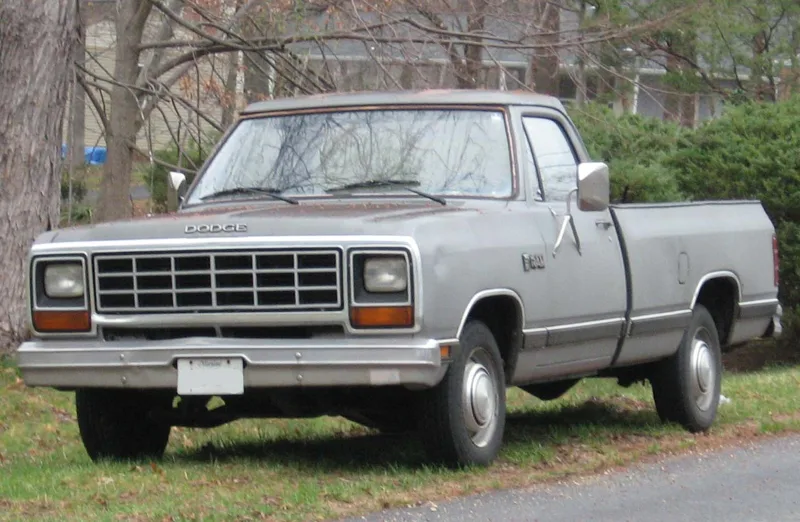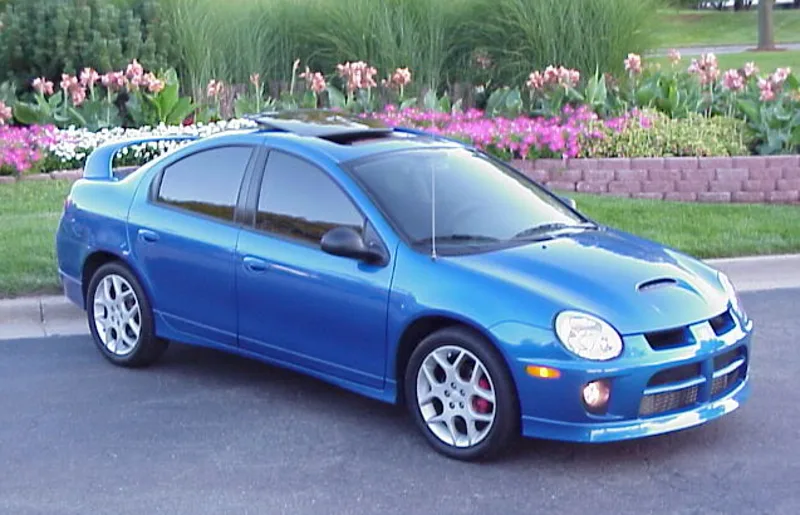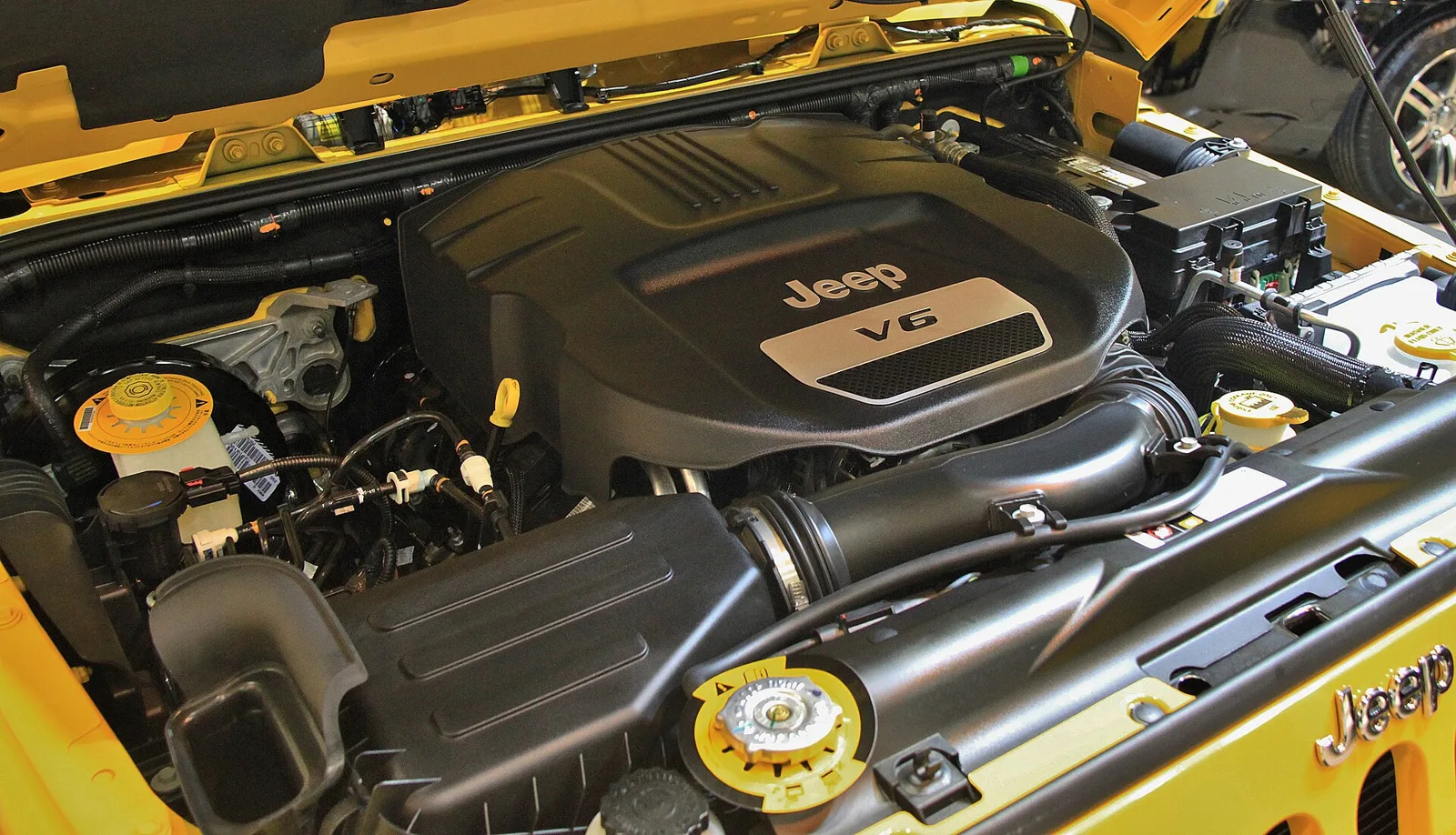
A 3.6-litre V6 that began as the Phoenix and now works as a generator, set beside the 1.8, 2.0 and 2.4 fours that gave way to the World engine.
Chrysler's Pentastar is a V6 range with aluminium blocks and 24 valves, launched for the 2011 model year in Chrysler, Dodge, Ram and Jeep vehicles. The World engine is a separate four-cylinder family that, from 2005, took over from Chrysler's Neon-era 1.8, 2.0 and 2.4 fours.
In the 2026 Ram 1500 REV, the Chrysler Pentastar V6 never turns a wheel. It sits there as a generator while two 400V electric motors supply the 647 hp of main drive. That is far from its 2011 debut, and further still from Chrysler's Neon-era 1.8, 2.0 and 2.4 fours, which began giving way to the World engine in 2005.
What is the Chrysler Pentastar engine?
The Pentastar is a family of 24-valve, dual overhead cam petrol V6 engines with a die-cast aluminium block. It arrived for the 2011 model year across Chrysler, Dodge, Ram and Jeep vehicles, and the 3.6-litre version is the one that carries the bulk of the story.
Chrysler first showed it at the 2009 New York Auto Show. Inside, it runs dual variable valve timing and is designed to accept either E85 or ordinary 87-octane petrol. Three factories build it: the Dundee Engine Plant, the Trenton Engine Plant and the Saltillo South Engine Plant.
The Pentastar began as the Phoenix, and in the newest Ram 1500 REV it has no connection to the axles at all.
Why was the Pentastar nearly called Phoenix?
The engine was originally going to be called Phoenix. A trademark conflict forced a rethink before the official launch, and Chrysler reached back into its own history instead. The Pentastar name was borrowed from a trademark of the old Chrysler Corporation that goes back to 1963.
It is an odd twist for an engine that is, in due course, meant to give way to something else. Its likely successor is the Hurricane 4 EVO, which Stellantis North America expects to adopt as its core engine.
How big did the Pentastar get, and what stayed on the shelf?
Early reports from insiders spoke of four sizes: 3.0, 3.3, 3.6 and 4.0 litres, each offered in several states of tune. The 3.3 and 4.0 fell out of the plan, and a 3.2 was added. By December 2011 Fiat's investor website listed a 3.0-litre version using Fiat's MultiAir technology.
The 3.6 became the workhorse. Its rating changes from one vehicle to the next, and the Dodge Challenger carried a higher-output tune of 305 hp (227 kW; 309 PS) and 365 Nm of torque.
More ambitious plans never reached the factory. Forced induction and cylinder deactivation were engineered into the design from the start but were not fitted, and as of 2016 both were still sitting "on the shelf". Single and twin-turbocharged versions had been planned for 2015, projected at around 420 and 370 hp (313 and 276 kW; 426 and 375 PS), along with direct injection. Those were projections, not production figures.
Under the new ownership structure, Fiat also gained the right to use these engines, and it put them into larger Lancia and Fiat models.
Where was the Pentastar 3.6 used?
Almost everywhere in the group. The 3.6 went into the Chrysler 200, the Town and Country and the 300, the Dodge Avenger, Challenger, Charger, Durango, Grand Caravan and Journey, and the Jeep Grand Cherokee. Volkswagen's Routan minivan used it from 2011 to 2014, and Ram fitted it to the Cargo Van, the 1500 and the ProMaster.
The Jeep Wrangler took it in JK form in 2012 and kept it into the JL generation from 2019, and the Gladiator pickup has used it since 2020. The Lancia Voyager and Thema and the Fiat Freemont carried it between 2012 and 2015.
The smaller sizes were regional. The 3.0 went into Jeep Grand Cherokees for China and Russia, the Wrangler in China and the Chrysler 300C in China, while the 3.2 powered the Jeep Cherokee from 2014 to 2022.
A few power figures
- Chrysler 200, 2014 to 2017: 295 hp and 262 lb ft.
- Chrysler Pacifica, from 2017: 287 hp and 262 lb ft, or 260 hp combined in the hybrid, with 230 lb ft.
- Chrysler Voyager, from 2020: 287 hp and 262 lb ft.
What changed in the 2016 Pentastar upgrade?
For 2016 FCA released a heavily revised 3.6. It brought upgraded variable valve timing, a two-stage variable valve lift system, a new intake manifold and new valve springs, piston rings, fuel injectors and ignition coils. Cooled exhaust gas recirculation arrived too, along with lower internal friction and lower weight.
Compression went up from 10.2:1 to 11.3:1. The gain was in both power and efficiency, but it came with a trade: the revised engine can no longer run on flex-fuel. Its 2015 predecessor made 295 hp and did support it.
The updated engine reached the Jeep Grand Cherokee and Dodge Durango in 2016 at 295 hp, then the Pacifica, the JL Wrangler Unlimited, the Ram 1500 and the Voyager. The Gladiator is rated at 280 hp, as is the Ram ProMaster from 2022. The Jeep Grand Wagoneer joined the list in 2026.
Does the Pentastar still drive the wheels?
In most vehicles, yes. In the 2026 Ram 1500 REV, in plug-in hybrid and extended-range form, no. The 3.6 works there as a 130 kW generator, converted to the Atkinson cycle for efficiency rather than being worked at its full rated output of 205 to 227 kW.
The V6 has no direct connection to the axles. The main drive is the pair of 400V electric motors, with a combined figure of 647 hp.
What did Chrysler fit before the World engine?
Before the World engine arrived, Chrysler's small-car power came from a family of inline-fours designed for the Dodge and Plymouth Neon. They are known as the Chrysler 1.8, 2.0 and 2.4 engines, and they were loosely based on the older 2.2 and 2.5, sharing the same 87.5 mm bore.
The engineers had help from the Chrysler-Lamborghini team that had built a Formula 1 V12 in the early 1990s. From 2005, the fours were phased out in favour of the World engine, a product of a joint venture called the Global Engine Manufacturing Alliance.
Production was split between Mexico and the United States. The 2.0 and 2.4 came from Saltillo Engine at Ramos Arizpe in Coahuila, and the 1.8 and 2.0 also came from Trenton Engine in Michigan.
How good was the Chrysler 2.0 four?
The 2.0 was the first of the family, and production began at Trenton in 1994. It came in SOHC and DOHC forms, both with four valves a cylinder, and used a cast iron block, light shallow-crown pistons and a bedplate with transverse webbing for durability and quiet running at high revs.
Its connecting rods are fracture-split forged powder metal units, and a gerotor oil pump sits directly on the front of the crankshaft. A timing belt drives the valvetrain and also the water pump, whose housing is cast partly into the block. The bore and stroke are 87.5 mm by 83 mm, redline is 7000 rpm and compression is 9.6:1.
What went wrong with the Neon-era 2.0?
The 2.0 had real faults, and they are a fair guide to what to look for in a used one. Until late 1999 the engines suffered oil leaks and head gasket failures. Chrysler tried several composite gaskets before finding the cause: one head bolt hole had been drilled too shallow at the factory, so the bolt bottomed out and could never clamp properly. A thicker multi-layer steel gasket, introduced in 1998, ended it.
The belt tensioner was the other weak point. Early engines used a hydraulic tensioner. The engines of 2000 and 2001 got a spring-loaded mechanical one that tended to wear out early, and because this is an interference engine, a snapped belt meant serious damage to valves and pistons. From 2002, a different mechanical tensioner was used.
Small changes tell the model years apart. The 1995 engines used a plastic oil separator box in the crankcase ventilation, where later ones had it moulded into the valve cover. SOHC engines from 1996 had a bigger cam profile, introduced to cure a rough idle with the air conditioning on. From 2003 the crankshaft became a two-piece unit with its tone wheel moved to the rear and held on with three bolts, so parts do not swap between the 2002 and 2003 engines.
What were the Chrysler 2.0 variants?
The A588 SOHC was the standard Neon engine from 1995 to 2005, with a compression ratio of 9.8:1 and an aluminium head. It is rated at 132 hp (98 kW) and 176 Nm, though published figures place the power peak at 5600 rpm in one listing and 6000 rpm in another. Some 1995 and 1996 engines got an aluminium intake manifold because of a shortage of plastic ones, and enthusiasts prize them because they are easy to port and polish.
The Magnum SOHC, code ECH, went into the Dodge Neon R/T and ACR. It had a cam tuned for higher revs, a welded short-tube exhaust header and a two-piece intake with runners of unequal length. An electric actuator opens butterfly valves in the short runners. The long runners work as a mild supercharger between 3000 and 4800 rpm, and above 4800 rpm the short ones take over.
The DOHC ECC made 150 hp (112 kW) and 180 Nm of torque, with roller rocker arms and an aluminium intake. The related 420A, with its intake ports facing the rear, was fitted to the Dodge Avenger, the Chrysler Sebring and the Mitsubishi Eclipse, rated a little lower.
Was there a 1.8 version?
There was, though only for export. The EBD is an under-bored 2.0 with a 1796 cc capacity and a square 83 mm bore and stroke, built at Trenton for non-US Neons. It makes 86 kW (115 hp) at 5750 rpm and 151 Nm at 4950 rpm, meets Euro III emissions limits, and was fitted to the 1997 to 1999 Chrysler Neon.
What was the Chrysler 2.4 four?
The naturally aspirated 2.4, code EDZ, made 150 hp (112 kW) and went into the JA, JX and JR cars between 1995 and 2006, the Dodge Caravan and Plymouth Voyager of 1996 to 2000, and the Jeep Liberty between 2002 and 2005. In the Liberty it carried the PowerTech name. The list also takes in the PT Cruiser, the Wrangler from 2003 to 2006 and, further afield, the GAZ-31105 Volga and the Volga Siber.
The first turbocharged 2.4 came from Chrysler's Mexican division for the Dodge Stratus R/T and Chrysler Cirrus sold in Mexico, replacing the old single-cam 2.2 and 2.5 turbos that had been very popular there.
The better-known turbo four started life for the PT Cruiser GT, and engineers found they could drop it into the Neon platform for the SRT-4 with only minor, inexpensive changes.
The SRT-4 engine in detail
Coded A855, it produces 230 hp (172 kW) at 5300 rpm and 339 Nm from 2200 to 4400 rpm. The block is cast iron with a partly open deck and a split crankcase, the compression ratio is 8.1:1, and the pistons are Mahle cast eutectic aluminium. Forged rods with cracked caps use 9 mm bolts, and the aluminium head has a 48-degree pent-roof shape.
A reverse-rotation Mitsubishi TD04LR-16Gk turbocharger feeds the engine through an eight-row Valeo intercooler. Boost runs between 11 psi (0.76 bar) and 15 psi (1.0 bar) depending on the engine computer's torque target and temperatures, and is cut if the engine detects knock, for instance on petrol below 91 octane. The PT Cruiser's Turbo-Lite option softened the engine to 180 hp (134 kW) so that it could run on ordinary 87-octane fuel.
How do the Neon-era fours compare?
| Engine | Power | Fitted to |
|---|---|---|
| 2.0 A588 SOHC | 132 hp (98 kW) | Neon, Stratus, Breeze |
| 2.0 Magnum SOHC | 150 hp (112 kW) | Neon R/T and ACR |
| 2.0 ECC DOHC | 150 hp (112 kW) | Neon, PT Cruiser outside the US |
| 2.4 EDZ | 150 hp (112 kW) | Sebring, Stratus, Caravan, PT Cruiser |
| 2.4 Turbo-Lite | 180 hp (134 kW) | PT Cruiser |
| 2.4 Turbo A855 | 230 hp (172 kW) | Neon SRT-4 |
What comes after the Pentastar and the Neon fours
For the Pentastar, the stated direction is replacement. The Hurricane 4 EVO is slated to become the core engine for the company's North American arm. In the meantime, the 3.6 is still being fitted in the Jeep Wrangler, Gladiator, Grand Cherokee, Durango and Ram 1500 range, and it has found a second job as a range-extender generator.
For the Neon fours, the story turned in 2005, when Chrysler began phasing them out in favour of the World engine from the Global Engine Manufacturing Alliance.