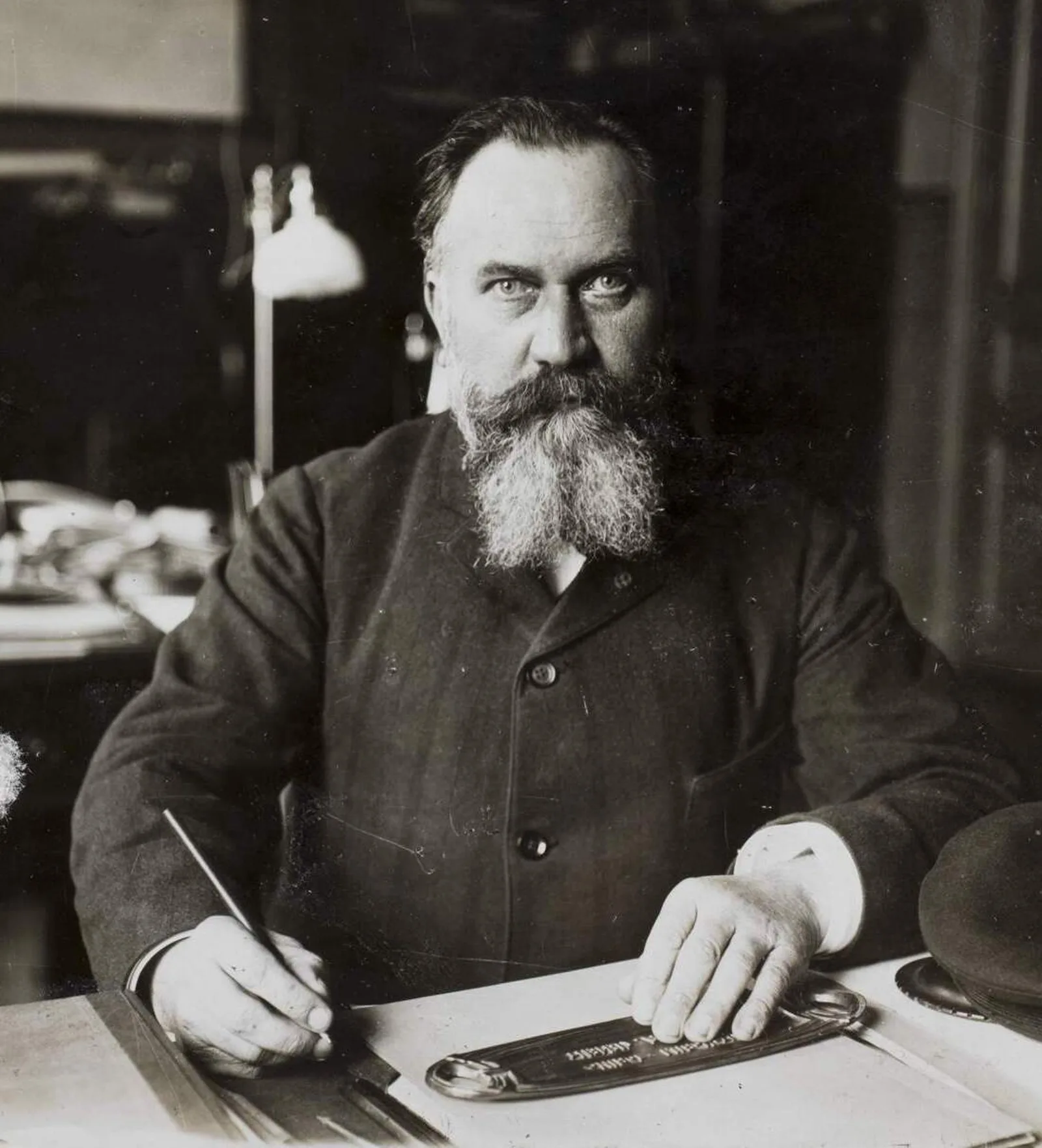
A self-taught French industrialist who began with bicycles, moved into tyres, cars, aircraft and airships, and watched his company pass to Citroen.
Adolphe Clement-Bayard was a French industrialist born in 1855 who started out in bicycles and tyres. He later built cars under the Clement-Bayard name, raced them and made airships. His company was sold to Andre Citroen in 1922, and he died in 1928.
Gustave Adolphe Clement, later known as Adolphe Clement-Bayard, was a French entrepreneur who rose from a rural childhood to lead one of the country's best-known manufacturing groups. He built his fortune on bicycles and tyres, then turned to motor cars, racing, aircraft and airships before the First World War shattered much of his empire.
Who was Adolphe Clement-Bayard?
Gustave Adolphe Clement was born on 22 September 1855 in Pierrefonds, in the Oise department. He died on 10 March 1928 in Paris, on his way to a board meeting. Between those dates he worked as a blacksmith, a bicycle maker, a tyre licensee, an automobile builder and an airship manufacturer, and his restless ambition shaped each change of trade.
He took the name Clement-Bayard in 1909, after the Conseil d'Etat approved a change of surname for himself and his descendants. The Bayard element had already been used for the company since 1903, honouring the Chevalier Pierre Terrail, who saved Mezieres from an Imperial army in 1521.
From a grocer's son and travelling craftsman to an industrialist whose airships crossed the Channel within two years of the first flight.
How did Clement's early life shape his career?
Clement was the son of a grocer and the second of five children. His mother died when he was seven, and his father died two years later. He was brought up by a stepmother, went to school in Pierrefonds and the college at Villers-Cotterets, and began delivering groceries at 13 before apprenticing as a farrier and blacksmith.
In the winter of 1871 to 1872 he set out at the age of sixteen as a Compagnon du Tour de France, a craftsmen's brotherhood with medieval roots. He had saved 30 francs for the trip. He worked in forges belonging to the Compagnons as he travelled, shoeing horses and repairing metal, and in Tours he came across Truffault cycles, which led him to build an iron bicycle frame of his own.
In 1873 Truffault lent him an iron bicycle with solid rubber tyres for a race at Angers. Clement finished sixth, a result that left him delighted to see his name in the newspapers.
How did his cycle business grow?
Clement's cycle business grew quickly after he set up on his own. He opened a bicycle repair works in Bordeaux at the age of 21, moved to Marseille to learn how to make steel tubes, and then to Lyon, where he began building complete bicycles under the Clement name. He then settled in Paris.
His Paris firm, A. Clement et Cie, operated from rue Brunel near the Place de l'Etoile. It ran a cycling school and a showroom on rue du 4-Septembre, and it used a poster campaign that was new for the trade. By 1880 the rue Brunel works employed about 150 people, and by 1890 Clement was the leading cycle brand in France.
In 1896 he joined a syndicate led by Harvey du Cros, the founder of Dunlop, to buy out the Gladiator Cycle Company. The combined group included Clement, Gladiator and Humber, and it was valued at 22 million francs. Its range soon spread to tricycles, quadricycles and, in 1902, a motorised bicycle.
What did the Dunlop tyre rights bring him?
In 1889 Clement saw a Dunlop pneumatic tyre in London and bought the French manufacturing rights for 50,000 francs. That purchase turned him into a millionaire, because the new company paid a 100 per cent dividend in its first year on a capital of 700,000 francs.
The Dunlop business also made Clement a regular backer of racing teams. The French arm was sometimes marketed as Clement-Dunlop and entered both motor and cycle races. His tyre interests continued after the Dunlop rights, and his Clement Pneumatics brand became a leading supplier of bicycle tyres in Italy through much of the twentieth century.
When did Clement start building motor vehicles?
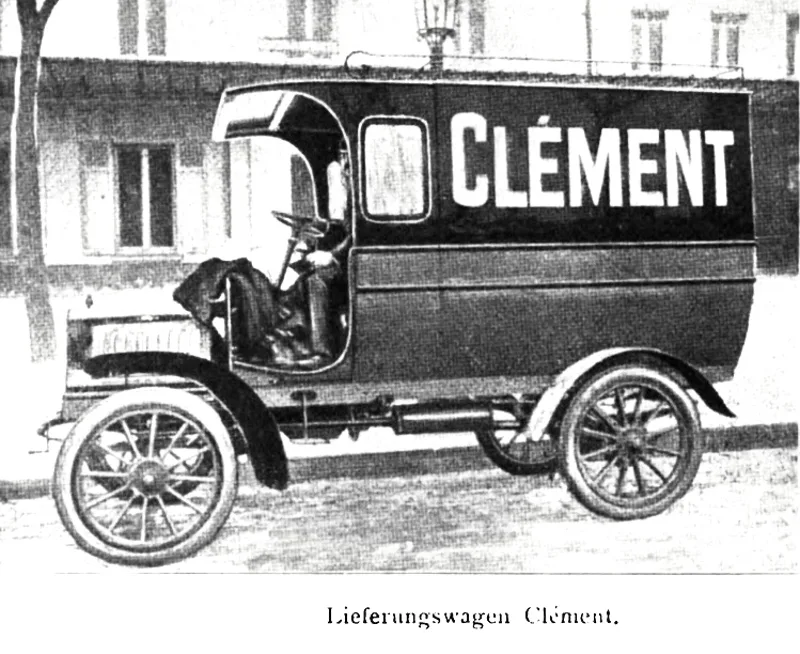
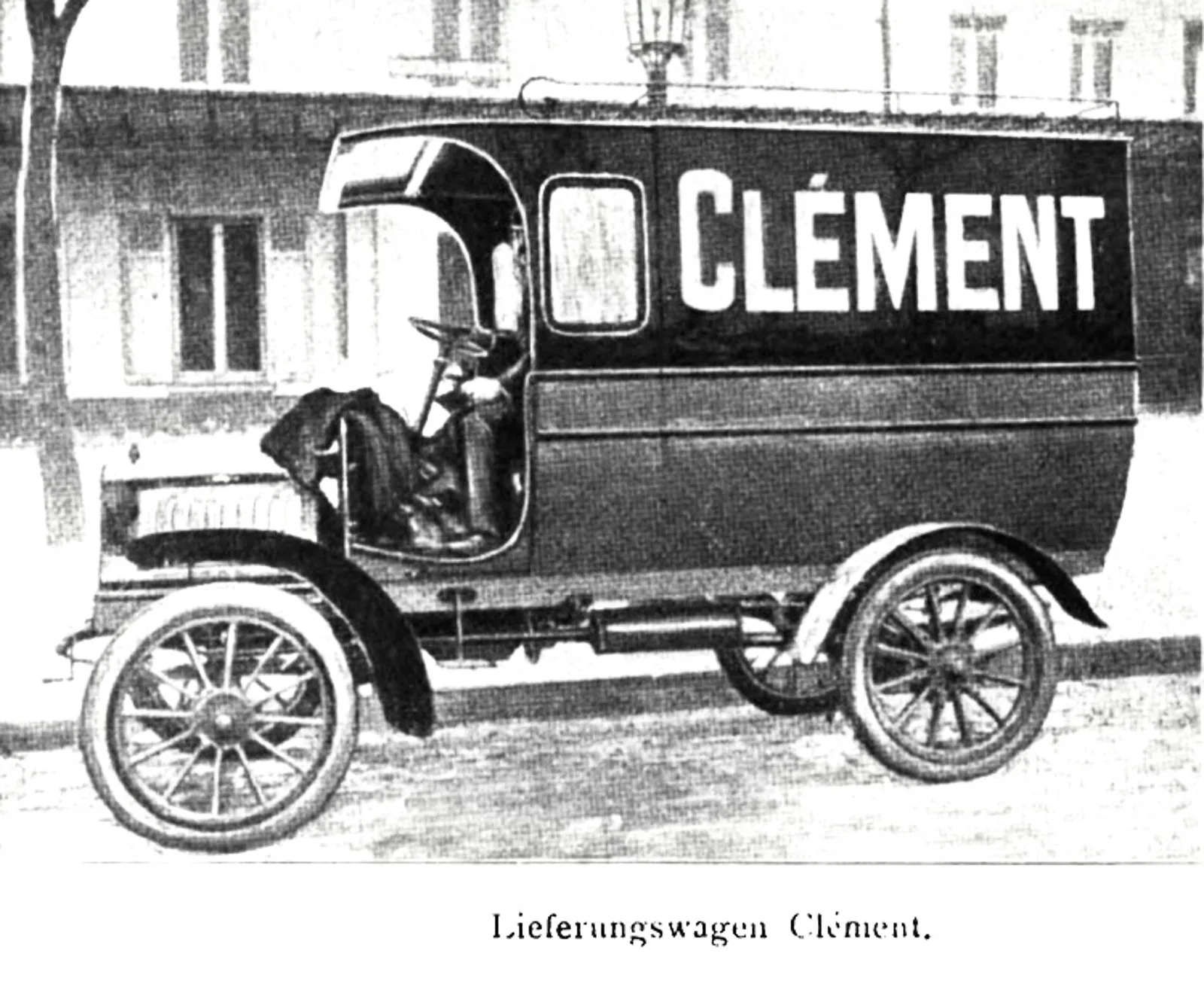
Clement moved from bicycles into motorised vehicles from 1895, when his firm introduced a naphtha-powered tricycle. By 1902 the group offered a motorised bicycle with a 142 cc engine bolted to the frame. The design was sold on both the Clement and Gladiator names, and in Britain it became known as the Clement-Garrard.
Car production began in earnest around the turn of the century. Clement-Gladiator cars were built at the new Levallois-Perret factory from 1901. By 1902 output had passed 1,000 cars a year, and more than 800 of them were sold in England. Herbert Austin later built Clement-Gladiator cars at Longbridge, which is another sign of how far the marque reached.
The company split in 1903. Charles Chetwynd-Talbot founded the English arm, Clement-Talbot, while Clement set up Clement-Bayard at a former military site in Mezieres. The Mezieres factory was known as La Macerienne, and the Bayard name honoured the seigneur who had saved the town in 1521. The two marques built similar cars at first, but their specifications gradually diverged.
Did Clement-Bayard compete in motor racing?
Yes. In 1894 Clement was a passenger in Albert Lemaitre's Peugeot, which was judged the winner of what is regarded as the world's first motor race. Clement-Bayard began building racing cars in 1904, and its drivers competed in the Gordon Bennett elimination rounds, the Vanderbilt Cup and the Circuit des Ardennes.
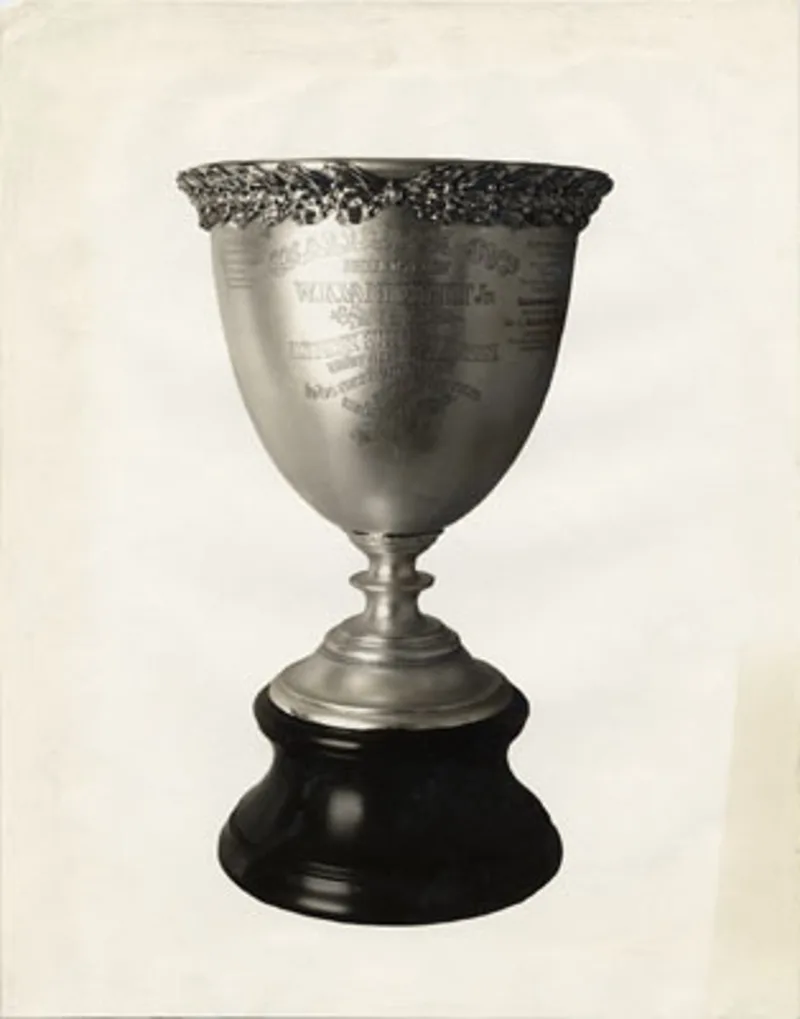
The 1906 French Grand Prix at Le Mans brought the company a notable result. Albert Clement took third place in a 100 hp car over a distance of 1,238 km, finishing in 12 hours 49 minutes, while Felice Nazzaro of FIAT took second. In the same year Clement-Bayard finished fourth at the Vanderbilt Cup, in a 100 hp car that completed the ten laps at an average of 59.0 mph.
Tragedy struck in 1907. Albert Clement died on 17 May while practising for the French Grand Prix, and the company's remaining entries were driven by Pierre Garcet and Elliott Shepard. In 1908 the team fielded three cars with a 12,963 cc six-cylinder engine, and Victor Rigal finished fourth.
How did aircraft and airships fit into the business?
Clement-Bayard built aircraft engines and lighter-than-air craft, and its earliest flights took place in 1908. Its engineers worked with Alberto Santos-Dumont on the Demoiselle No 19 monoplane. The company planned 100 units but built 50 and sold only 15 of them, at 7,500 francs per airframe. The Demoiselle is recorded as the first series production aircraft.
Engines were a steady side line. By 1909 the Demoiselle was offered with a choice of three powerplants, and the company also built Wright engines under licence. Pierre Clerget designed a range of Clement-Bayard engines, including a seven-cylinder supercharged radial and a V8 airship engine rated at 200 hp.
The airship business was as ambitious. In 1908 Astra Clement-Bayard began making airships at a new factory in La Motte-Breuil, responding to a French Army decision to begin airship operations. The company completed seven airships in all, and in 1910 the No.2, piloted by Maurice Clement-Bayard, became the first airship to cross the Channel.
Which Clement-Bayard airships were built?
The seven Clement-Bayard airships ranged from a 56.25 metre first machine to the 89 metre Dupuy de Lome. The table below sets out the main airships with their length, engines and first flight, so the growth of the design over five years is easy to follow.
| Airship | Length | Engines | First flight |
|---|---|---|---|
| No.1 | 56.25 m | 2 x 115 cv | 28 October 1908 |
| No.2 | 76.50 m | 2 x 120 cv | 1 June 1910 |
| No.3 Dupuy de Lome | 89 m | 2 x 120 cv | 1 May 1912 |
| No.4 Adjudant Vincenot | 88.5 m | 2 x 120 cv | 1911 |
| Adjudant Vincenot, modified | 87.3 m | 2 x 120 cv | 13 August 1913 |
| No.5, delivered to Russia | 86 m | 2 x 130 cv | 9 February 1913 |
| Montgolfier | 73.5 m | 2 x 90 cv | 31 July 1913 |
How did the First World War affect the company?
Clement had warned about German military ambitions by 1910, and in 1912 he was assaulted by a hostile German mob. When war came in 1914, the Mezieres factory fell to the Germans in the opening weeks and its machinery was shipped back to Germany. The Levallois-Perret plant stopped car production in August 1914 and turned to military work.
Clement handed control of Clement-Bayard to his son Maurice in 1914, shortly before the war began. At Levallois-Perret, automobile production stopped in August 1914, and the plant switched to military vehicles, aero engines, airships and aircraft. The Pierrefonds properties also suffered, and German forces shelled the Domaine du Bois d'Aucourt in September 1914.
After the war Maurice tried to rebuild the Mezieres works, which by 1928 were producing excavators, tractors and forklifts under contract with an American machinery company.
What happened to the company after the war?
In 1922 Clement-Bayard was sold to Andre Citroen, in whom Clement had also invested. The Levallois-Perret factory then became the centre of Citroen 2CV manufacturing for nearly forty years, which secured its place in motoring history well beyond the Clement name.
In 1922 Clement was also appointed a director and vice-president of the newly founded Bank of Ardennes. The bank was established in Charleville in April of that year.
What was Clement's role in the Dreyfus affair?
The Dreyfus affair divided France at the end of the nineteenth century. Clement was one of the leading anti-Dreyfusard industrialists in 1900. Together with Count Jules-Albert de Dion he cancelled advertising in the paper Le Velo, and de Dion then founded a rival daily sports paper, L'Auto-Velo.
When Dreyfus was officially exonerated, the stance of Clement and de Dion was seen as having been wrong for a decade.
How was Clement honoured and remembered?
Clement was appointed a Commander of the Legion d'honneur in 1912, and he was elected mayor of Pierrefonds in 1913. He died in 1928 of a heart attack while driving to a board meeting in Paris. His tomb at the Domaine du Bois d'Aucourt has been a protected historic monument since 2004.
His tomb is at the Domaine du Bois d'Aucourt in Pierrefonds, which has been a protected historic monument since 2004. A rue Clement-Bayard runs through the centre of the town, and in 2005 a 50 CHF gold coin was minted to mark the centenary of the Geneva Motor Show, with the theme Clement 1905.