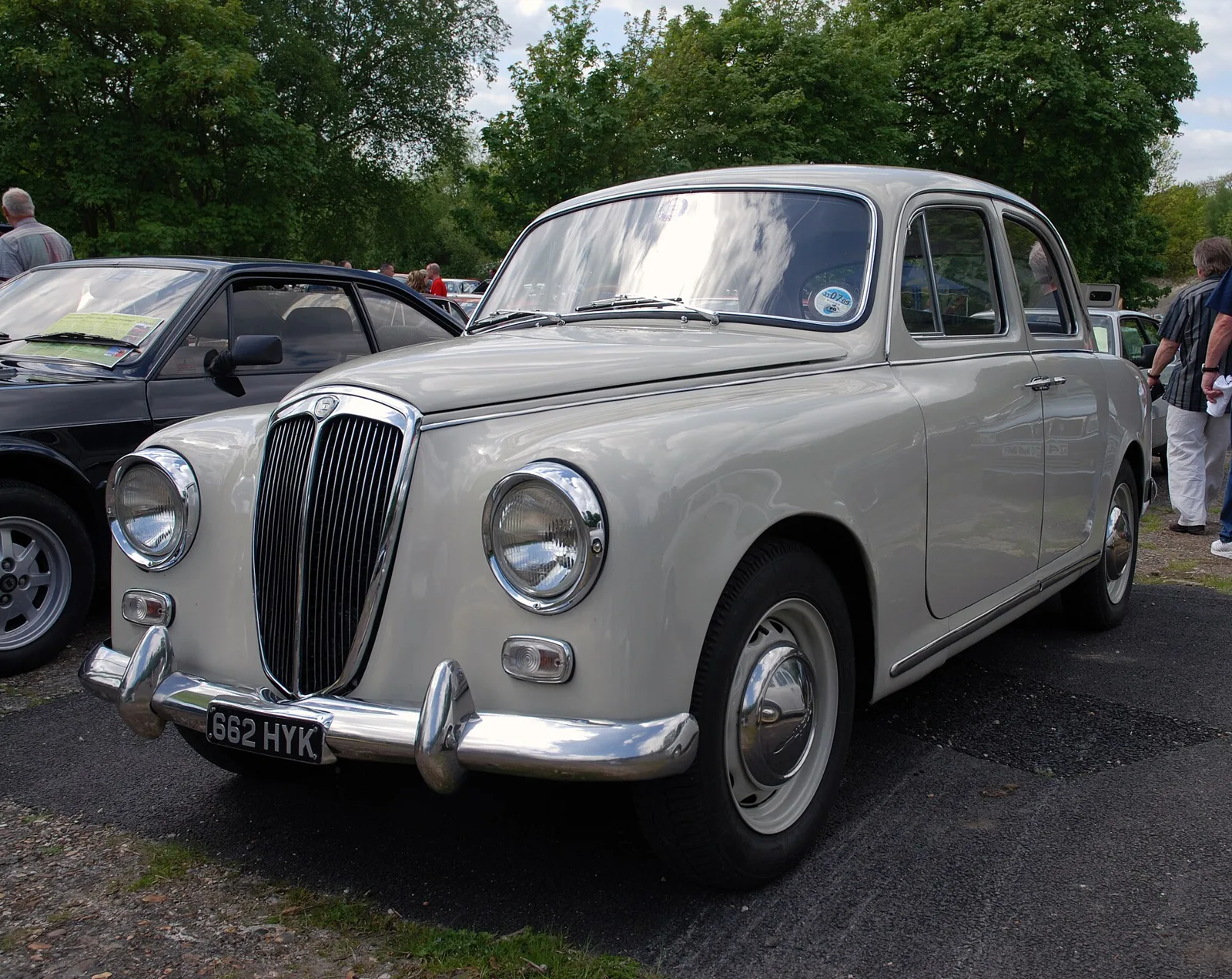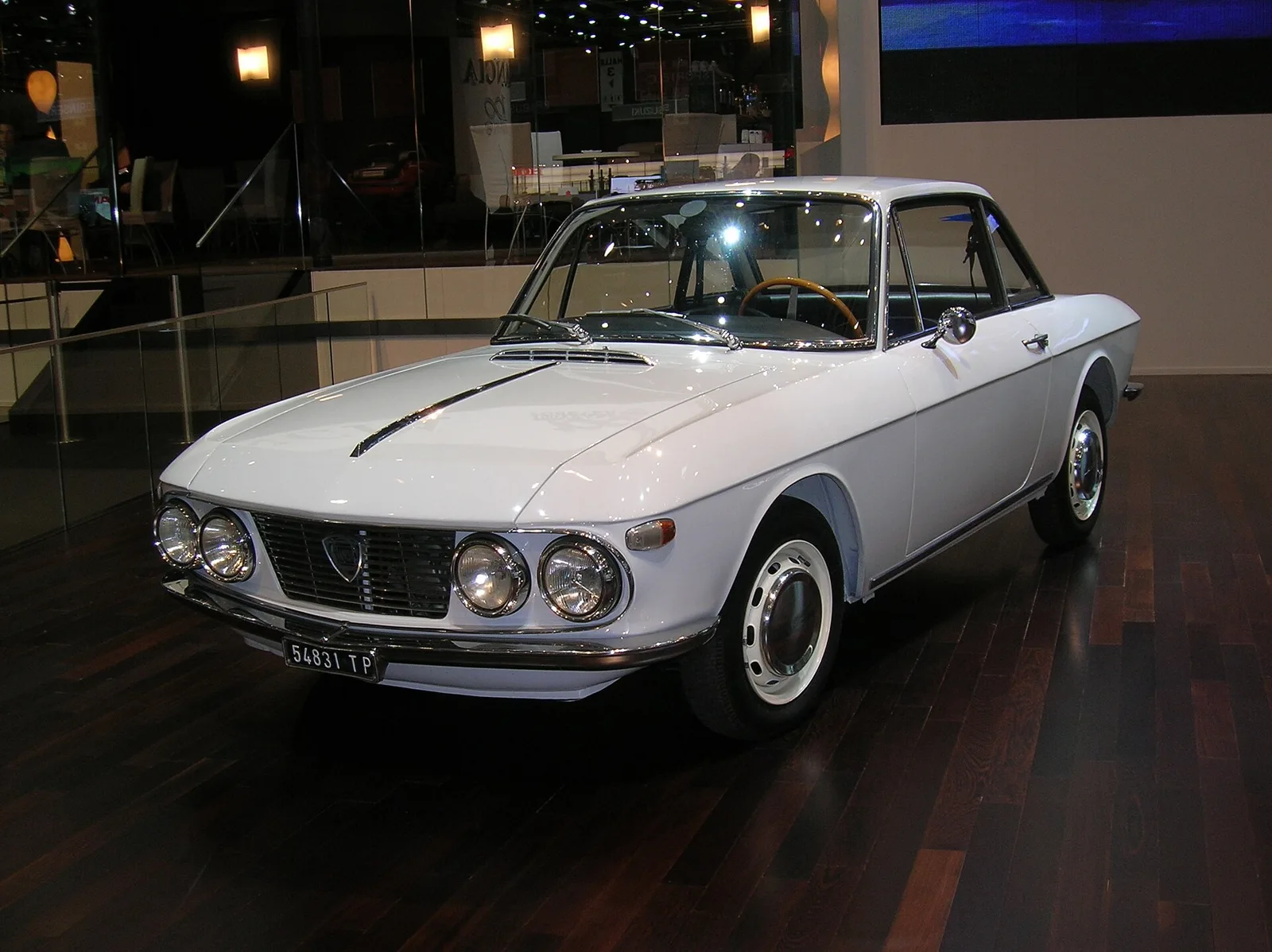
Lancia's Tipo 818 compact from 1963 to 1976, with its narrow-angle V4, Zagato Sport and a rally record that peaked with the 1972 manufacturers' title.
The Lancia Fulvia was a front-wheel-drive compact built from 1963 to 1976, with a narrow-angle V4 engine and three bodies: the Berlina saloon, the Coupe and the Zagato-built Sport. It won the Italian Rally Championship in most seasons from 1965 to 1973.
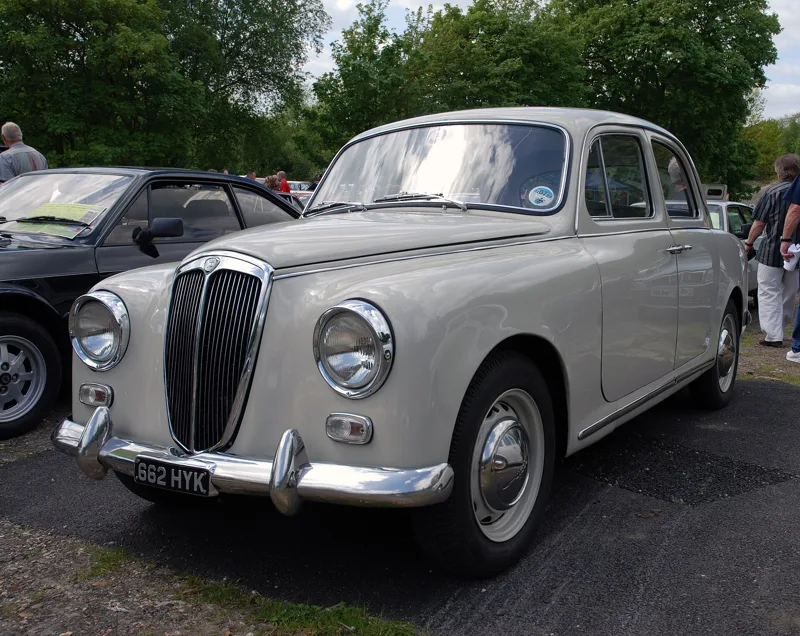
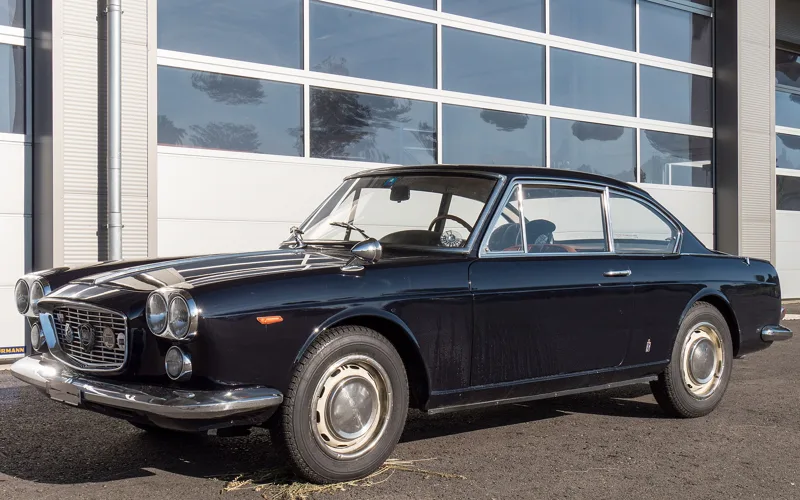
The Lancia Fulvia, coded Tipo 818, was a compact front-wheel-drive car that Lancia built from 1963 to 1976. It took its name from a Roman road between Tortona and Turin, and it appeared in three forms: the Berlina saloon, the two-door Coupe and the Sport fastback.
The car is remembered as much for rallying as for its road manners. Fulvias also took the Italian Rally Championship in most seasons of that era, and Lancia took the International Championship for Manufacturers in 1972.
Where did the Fulvia come from?
Antonio Fessia created the Berlina as the successor to the Lancia Appia, though the two shared very little mechanically. Unlike the rear-drive Appia, the Fulvia put its drive to the front wheels, the layout already used by the Flavia. The car was shown at the 1963 Geneva Motor Show.
The major difference from the Flavia was the engine. The Flavia used a horizontally opposed four, while the Fulvia used a narrow-angle V, the configuration found on most production Lancias from the Lambda onward.
The engine sat lengthways in front of the transaxle, which drove the front wheels.
A narrow-angle V4, front-wheel drive and a rally record that peaked with the 1972 manufacturers title.
How was the Fulvia's chassis built?
At the front, wishbones and one leaf spring located each wheel. At the rear, a beam axle used a Panhard rod and leaf springs. Four-wheel Dunlop disc brakes were fitted to the first series, and the second series from 1970 gained larger Girling calipers and a brake servo.
The handbrake was also redesigned, with separate drums and shoes working on the rear wheels. That change arrived alongside the uprated brakes of the second series.
The coupe rode on a shorter wheelbase, 150 mm (5.9 in) less than the saloon's, and Piero Castagnero designed it in-house. It therefore carried the saloon's engineering in a shorter, sportier body.
What was the Fulvia's V4 engine?
Zaccone Mina designed the narrow-angle DOHC V4, which sat well forward at 45 degrees. Its very narrow 12 degree vee meant one cylinder head could serve every cylinder, and the engine used one camshaft each for intake and exhaust valves.
The original 1091 cc unit had a 72 mm bore and a 67 mm stroke. One carburettor gave 58 CV (43 kW; 57 hp).
Raising the compression to 9.0:1 and fitting twin Solex carburettors pushed the figure to 71 CV, or 52 kW and 70 hp, within a short time of launch.
The HF version bored the engine to 76 mm for 1216 cc, and tuning raised output to between 80 and 88 CV.
By 1967 the bank angle had narrowed slightly and the stroke had grown to 69.7 mm. Three displacements followed: 1199 cc with a 74 mm bore, 1231 cc with a 75 mm bore and 1298 cc with a 77 mm bore.
The 1298 cc unit appeared in two guises. The 818.302 gave 87 bhp, or 65 kW, at 6000 rpm, and the 818.303 was rated at 92 CV, with the later version giving 90 CV (66 kW; 89 hp).
The 1.6 HF had a completely reworked engine with a narrower angle still, a longer stroke and a bore of 82 mm, giving 1584 cc. Power ran from 115 CV up to 132 CV, or roughly 85 to 97 kW, depending on tune.
What were the Berlina models?
The Berlina was a compact four-door saloon in several forms. The first car of 1963 to 1964 had a 1091 cc engine producing 58 bhp (43 kW), and the Berlina 2C of 1964 to 1969 raised output to 71 bhp (53 kW) with double twin-choke Solex carburettors.
The Berlina 2C was identified by an enamelled 2C badge on the grille and Fulvia 2C script at the rear. It also used 155R14 Michelin X radial tyres and had revised front subframe mountings.
The Berlina GT, shown at the 1967 Geneva salon, borrowed the Coupe's 1216 cc unit, later enlarged to 1231 cc, and made 80 bhp (60 kW). It carried a GT badge on the grille and Fulvia GT script at the rear.
The Greek-only Grecia ran a 1,199 cc unit, rated at 79 PS, or 58 kW and 78 hp, at 6200 rpm. It used 145R14 Pirelli Cinturato CA67 radial tyres.
The Berlina GTE of 1968 to 1969 used the 1298 cc unit and gave 87 bhp (65 kW) at 6000 rpm. Its brakes were uprated with a servo, and it wore larger Michelin ZX radial tyres.
In August 1969 the saloon received a reshaped body, its wheelbase stretched by 20 mm (0.8 in), plus new interior fittings. The altered roofline gave rear passengers more room.
What were the Coupe models?
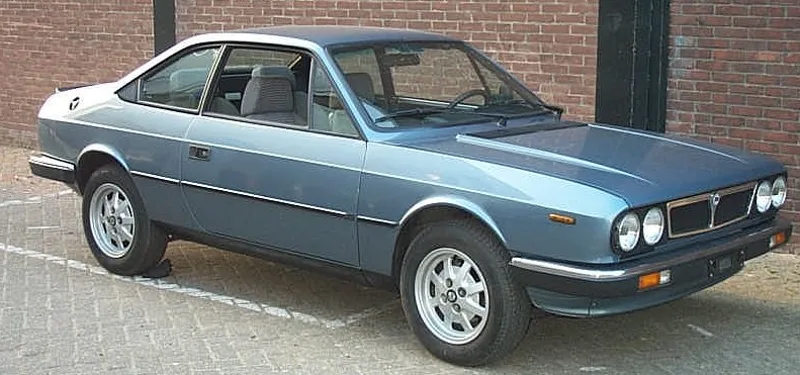
The Coupe was a two-door, three-box design unveiled in 1965, with Piero Castagnero as its in-house designer. It was the final Fulvia model to be discontinued, in 1977, when a 1.3-litre Beta Coupe replaced it. Its engine and body evolved through several series and special editions.
The first Coupe used the 1216 cc unit, giving 80 CV, or 59 kW and 79 hp, at 6000 rpm. The 1966 to 1967 competition HF shed weight with alloy panels for the bonnet, doors and boot, Plexiglas side glass and bare steel wheels.
The Rallye 1.3 of 1967 to 1968 used a 1,298 cc unit making 87 CV, or 64 kW and 86 hp, at 6000 rpm. An updated version, the Rallye 1.3 S of 1968 to 1970, used a new 818.303 unit producing 92 CV.
The Rallye 1.3 HF of 1967 to 1969 took a new 1,298 cc engine rated at 101 CV, which is 74 kW or 100 hp, at 6,400 rpm. The Rallye 1.6 HF Fanalone of 1969 to 1970 used a 1,584 cc unit rated at 113 hp (85 kW) at 6,500 rpm.
The Fanalone name means big lamps, and it referred to the larger inner pair of headlights. It also had negative front camber, 13 inch light alloy wheels 6J wide, a close-ratio five-speed gearbox and wheel arch extensions.
The works rally car, variante 1016, was the strongest Fulvia, its 1,584 cc engine making as much as 132 CV, or 97 kW and 130 hp, depending on tune. The works team used it until 1974, and its Solex carburettors were later replaced by 45 DCOE Webers.
The Series II Coupe 1.3 S of 1970 to 1973 had a five-speed gearbox and 90 CV (66 kW; 89 hp), with larger Girling calipers replacing the Dunlop brakes of the first series.
The Coupe 1600 HF of 1970 came with a face-lifted all-steel body, flared wheel arches and a 1,584 cc engine with a Solex C42DDHF carburettor. The Montecarlo special of 1972 and 1973 marked the 1972 Monte Carlo win, with a matte black bonnet and bucket seats with headrests.
The Coupe 3 of 1974 to 1976 added emission control to the Solex carburettors and new seats with headrests. The Safari limited edition of the same years celebrated the Fulvia's Safari Rally involvement, with denim and leatherette seats and no bumpers.
What was the Fulvia Sport?
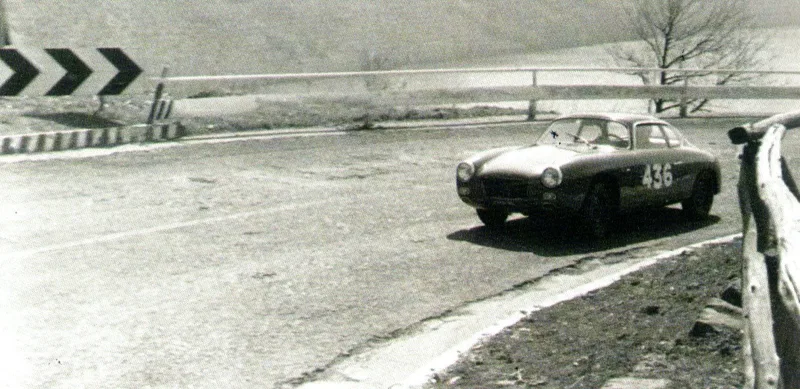
The Fulvia Sport was a fastback two-seater built by Zagato on Coupe mechanicals. Ercole Spada designed it, and Lancia commissioned it as a more aerodynamic and sportier coupe for use on road and track. The first Sport, introduced at the 1965 Turin Motor Show, had an all-aluminium bodyshell.
Just 202 of these first cars were made, and they were homologated as two-seaters.
Three features set the first-series body apart. The engine bonnet hinged on the right, the rear hatch could lift a few centimetres to aid ventilation, and the spare wheel lived in its own compartment behind a panel that also carried the rear number plate. NSU Prinz 4 tail lights completed the look.
The Sport 1.3 of 1966 to 1969 used the 1,298 cc unit with 87 hp (65 kW) at 6,000 rpm. Around 700 cars were built with both engine sizes, and later examples switched to steel bodies with alloy bonnet, doors and spare wheel hatch.
The Sport 1.3 S of 1968 to 1969 offered 92 hp (69 kW) and normally came with brake servos. It can be recognised by its larger hubcaps, which carry Lancia flag logos.
The second series debuted in 1970 at Turin, bringing a five-speed gearbox, revised suspension, a taller ride height and wider tyres. The body was now all steel and seated 2+2 passengers, while the bonnet hinged at the front.
Some of Zagato's most unusual details were lost in the second series, including the spare wheel hatch. New driving lights, a door-mounted mirror and Peugeot 204 tail lights also arrived.
The Sport 1600 of 1971 to 1972 borrowed the HF's 1,584 cc engine. Output was 115 hp (86 kW), and the car could reach 118 mph (190 km/h), making it the fastest production Fulvia.
Which concept cars used the Fulvia name?
Several concepts used Fulvia mechanicals or the name, including the Zagato Sport Spider of 1968, the Ghia Berlinetta Competizione of 1969, the Dunja 1.6 HF of 1971 and the 2003 Fulvia Coupe Concept. Each was a one-off or a prototype rather than a production car.
Zagato showed the Sport Spider at the October 1968 Turin Motor Show. The two-seater roadster was finished in red, with leather to match, and its soft top folded beneath a flush tonneau cover.
Ghia displayed the Berlinetta Competizione at the March 1969 Geneva Motor Show. Its fastback body was designed by Tom Tjaarda, and it used the floorpan and mechanicals of the Fulvia Rallye 1.6 HF Fanalone.
The Dunja 1.6 HF was a kammback coupe on Fulvia 1600 HF mechanicals, commissioned by Glasurit and shown at Turin in 1971. Aldo Sessano designed it, and Coggiola built it on a Fulvia Coupe 1600 HF chassis, type 818.740.
In 2003 the Fulvia name returned on a concept inspired by the 1965 Coupe. Based on the Fiat Barchetta and penned by Centro Stile Lancia under Flavio Manzoni, it had a 1.8 L VVT engine of 140 PS (103 kW). It sprinted from 0 to 100 km/h in 8.6 seconds and topped out at 213 km/h (132 mph), but it never progressed beyond the prototype stage.
How did the Fulvia perform in rallying?
Lancia returned to racing with the Fulvia after leaving Formula 1 in 1955, focusing on rallying. Its works team, under Cesare Fiorio, was built around the HF Squadra Corse, a privateer team that Lancia absorbed in 1965. Fulvia cars took the Italian title in each season from 1965 through 1973, bar 1970.
The Coupe's first race was the Tour de Corse in 1965, where it finished eighth overall. The 1965 Rallye HF was lightened and more powerful, and special HF versions went on sale to homologate the rally improvements.
The Rallye 1.6 HF competed unhomologated until August 1969, when the FIA approved it. The 1967 car needed a new 1.6-litre V4, since the older unit could go no further.
1972 was the high point: Lancia clinched the International Championship for Manufacturers with two rounds to spare. Sandro Munari and Mario Mannucci won at the Monte Carlo Rally, while other crews placed at additional rounds of the same season.
Lancia did not score a podium in 1973, the first year of the World Rally Championship. Munari did bring the Fulvia its second European Rally Championship that year, after the 1969 title won by Harry Kallstrom.
The Stratos HF took over Lancia's rallying duties in 1974, the same season the company won its second World Championship. The Fulvia had helped that result with points from the first rallies, including a third place for Munari in the East African Safari Rally.
How did the Sport race in endurance events?
Privateers entered the Sport in track events. Zagato's 1968 output included 27 Sport Competizione cars, plus two specials that became known as Sport Daytona. In 1969 those specials finished 18th at Sebring and took a class win at the 24 Hours of Daytona.
The Sport Daytona cars used twin round headlamps of different sizes behind Plexiglas covers, a mesh grille, wider wings and Plexiglas side and rear glass. They also carried a 155 PS engine and a fuel filler designed for fast refuelling.
At Daytona the pair took a class victory among sports prototypes and finished 11th overall.
What was the HF F&M Special?
The HF F&M Special was a barchetta conversion of three competition 1.6 HF cars, carried out in 1969 by Claudio Maglioli. Its name joined the initials of Cesare Fiorio and Maglioli, and the roofless result weighed 200 kg (441 lb) less than the coupe.
The roof and roughly 28 cm (11.0 in) of rear bodywork went, the heating and inner headlamps were removed, and the fuel tank took the place of the rear seat.
Bracing had to be added to keep the chassis rigid, and the suspension was retuned. The front spring lost one leaf.
Its first big race was the Targa Florio of 1969, where Munari and Aaltonen took one to ninth overall and won the class.
How did the press judge the Fulvia?
Road & Track judged the Fulvia a finely engineered machine. Its rally record, its narrow-angle V4 and its front-wheel-drive layout set it apart, and the three bodies totalled 192,097 Berlina, 139,797 Coupe and 7,102 Sport cars over the model's life.
The saloon was by far the highest-volume model, with the Coupe a clear second and the Sport a small-run car by comparison.
What are the Lancia Fulvia specifications?
| Specification | Detail |
|---|---|
| Type and built | Tipo 818, 1963 to 1976 |
| Launch | Geneva Motor Show, 1963 |
| Engine | Narrow-angle DOHC V4, 1091 cc at launch |
| First output | 58 CV (43 kW; 57 hp) with one carburettor |
| Largest road engine | 1,584 cc, 115 CV (85 kW; 113 hp) on the Rallye 1.6 HF Fanalone |
| Works rally | Up to 132 CV (97 kW; 130 hp) depending on tune |
| Sport 1600 | 115 hp (86 kW); top speed 118 mph (190 km/h) |
| Front suspension | Wishbones with a single leaf spring |
| Brakes | Dunlop discs; larger Girling calipers and servo from 1970 |
| Berlina production | 192,097 |
| Coupe production | 139,797 |
| Sport production | 7,102 |
| Coupe successor | 1.3-litre Beta Coupe, 1977 |
| 2003 concept | 1.8 L VVT, 140 PS (103 kW); 0-100 km/h in 8.6 seconds |