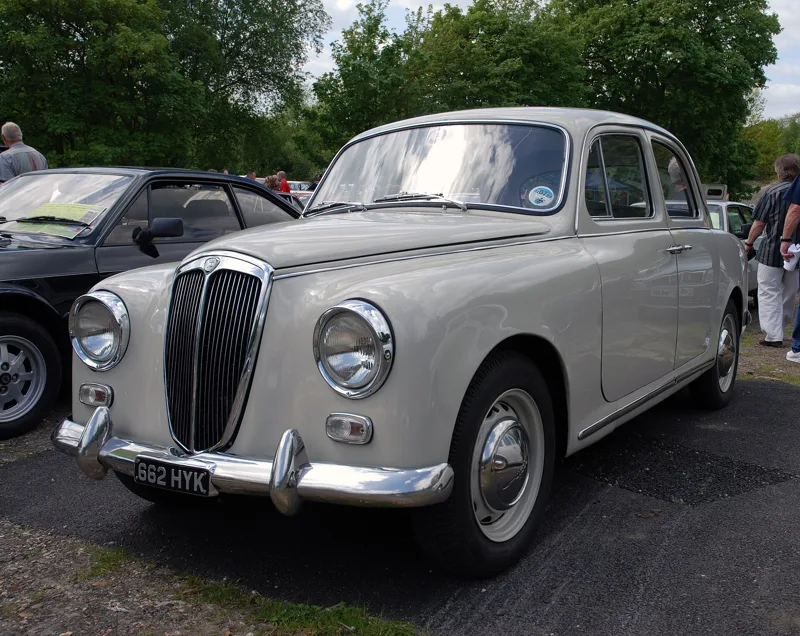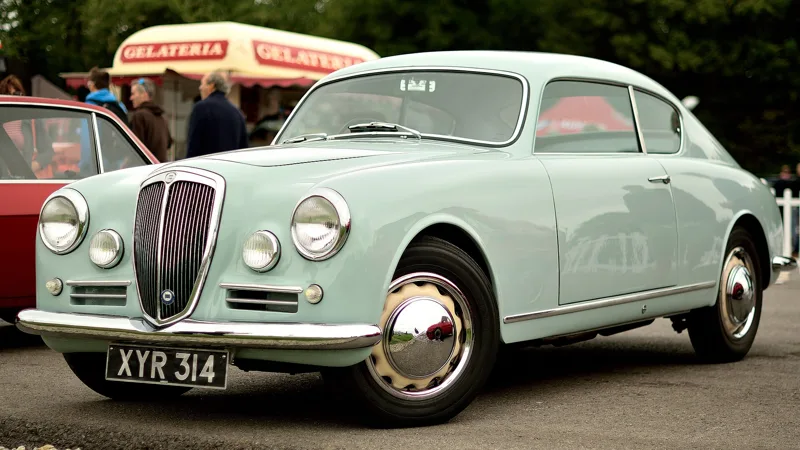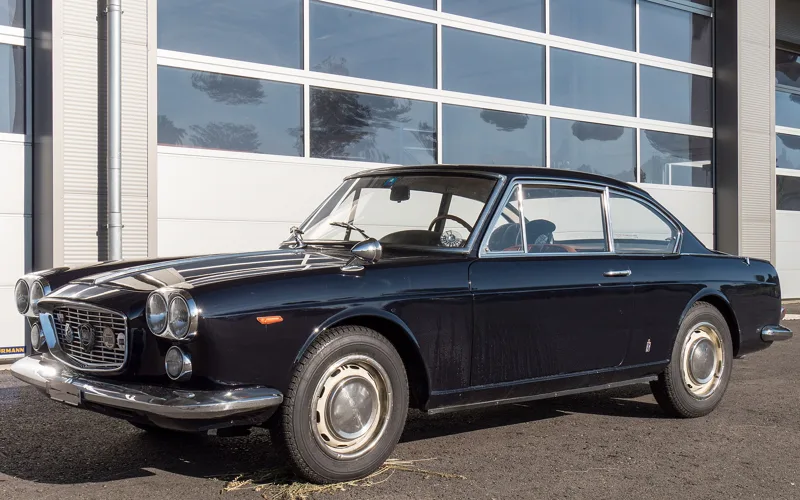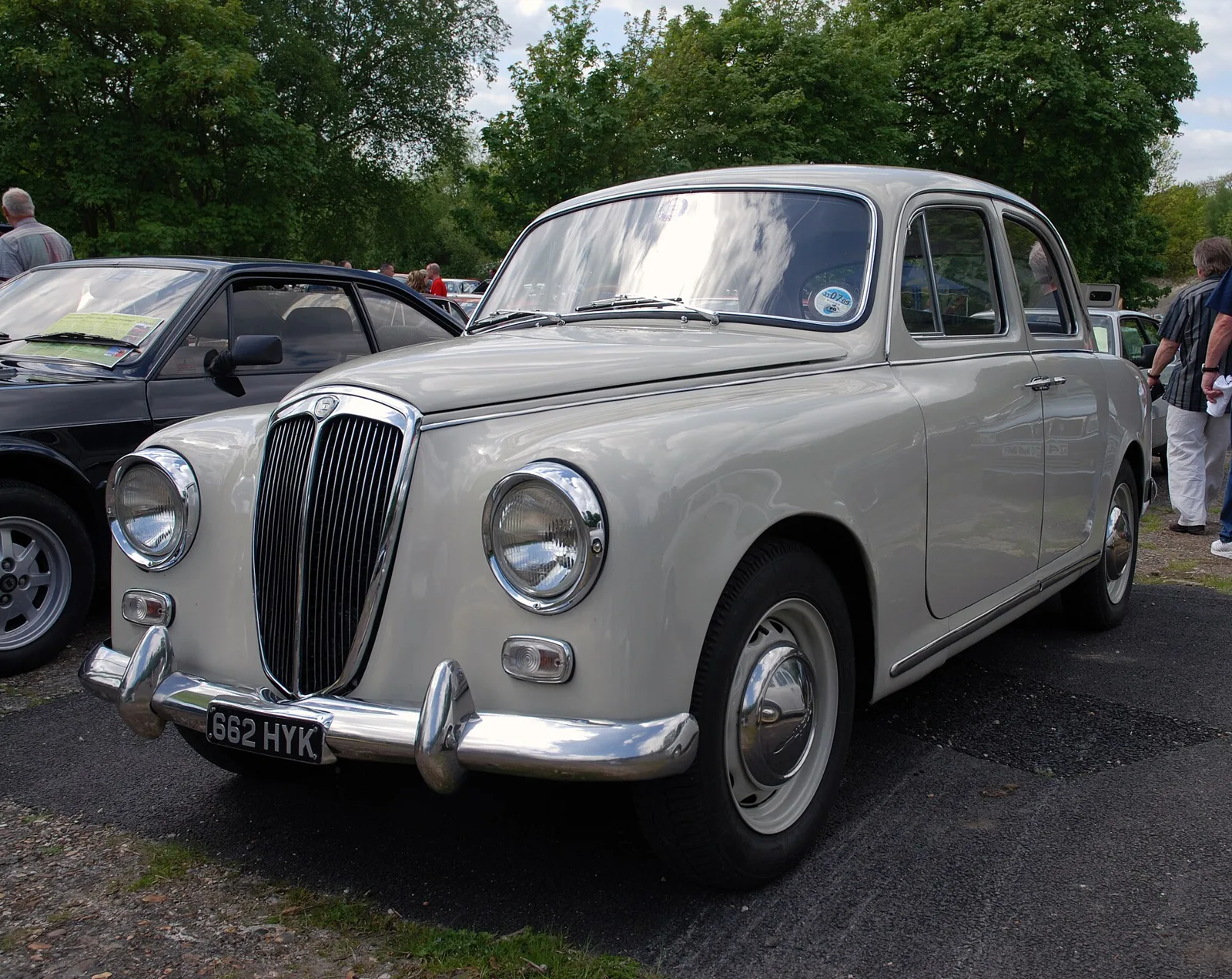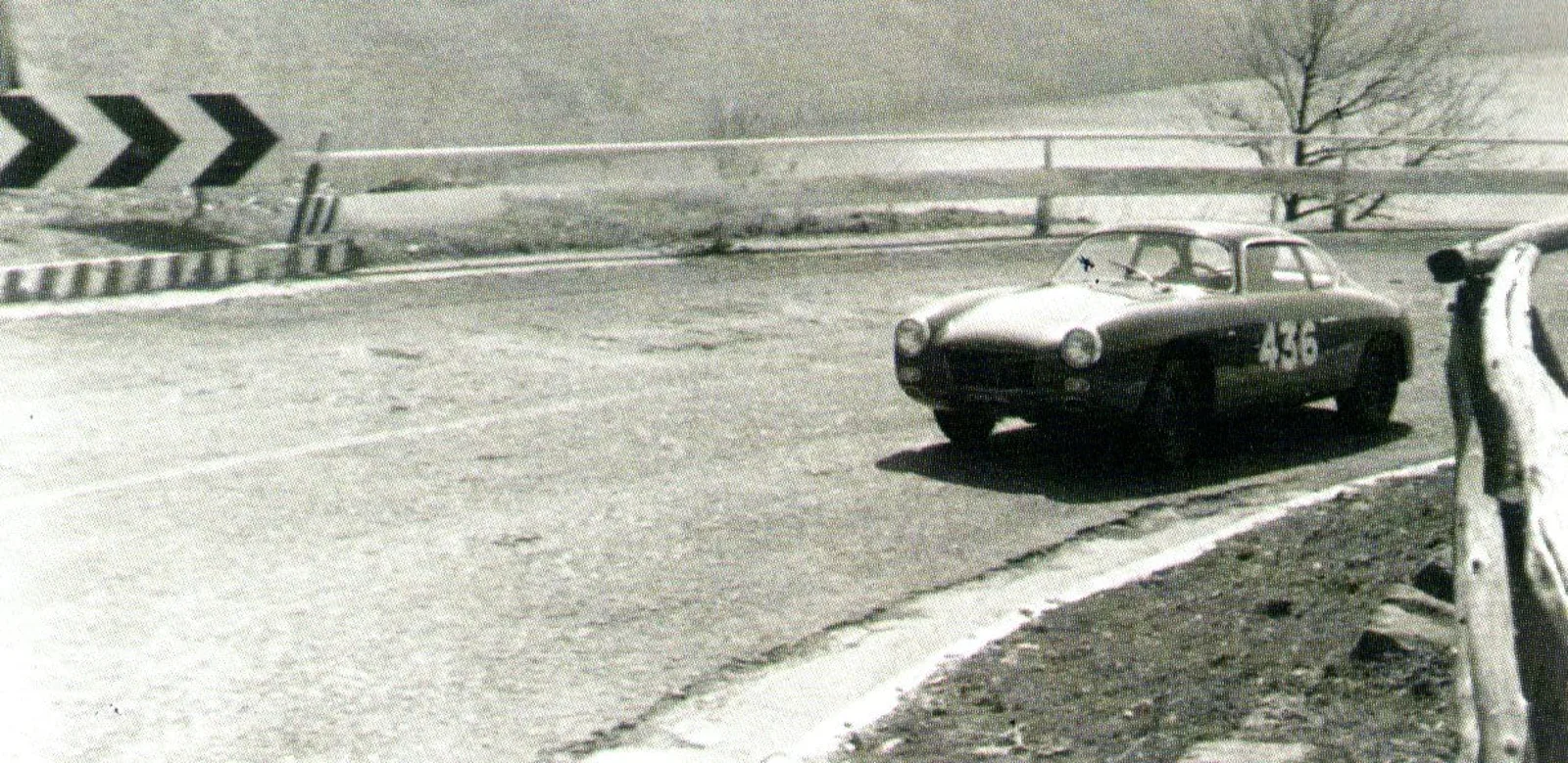
From the camel-backed prototype to the GTE, and the 1957 Mille Miglia results that drew gentleman drivers to Zagato's Appia coupe.
The Lancia Appia Zagato was a sporty coupe version of the Lancia Appia, built from 1956 to 1963. It began with a one-off camel-backed prototype and continued through the GT, GTS and GTE coupes, which were sold through the coachbuilder before Lancia listed the GTE.
Lancia's Appia Zagato was produced from 1956 to 1963, with coupe bodywork by the Milan coachbuilder Zagato. The first cars, until December 1958, were not yet a model built or sold by Lancia. Its story begins with a single camel-backed prototype and runs through the GT, GTS and GTE coupes. Results at the 1957 Mille Miglia drew the interest of gentleman drivers who had been buying older Fiat coupes from the same coachbuilder.
What was the Appia-cammello of 1956?
The Appia-cammello was a one-off coupe shown at the Turin Motor Show in April 1956. Painted in two blues, it wore humps on its roof, bonnet and boot lid, which earned it the camel nickname. It is the forerunner of every Appia bodied by Zagato.
Its platform was one of the first that Lancia made available with an upgraded engine of 53 PS (39 kW; 52 hp) and a gearbox with a centre lever. The car carries chassis number 812.01-1005, and it is the starting point for the whole series that followed.
Berlinettas descended from it remained prominent, particularly in competition, for close to ten years. The prototype itself was modified in its body and probably in its mechanics before racing, and Giorgio Lurani drove it in the 24th Mille Miglia in May 1957, where it finished third in its class.
Four Zagato coupes reached the finish together and took first, second, third and fifth in their class.
How did the Zagato coupe differ from the Lancia-listed cars?
Zagato's coupe was not part of Lancia's official range at first. From May 1957 the Pininfarina 2+2 coupe and the Vignale convertible were included in the price list, while the Zagato was sold directly by the coachbuilder as a one-off. Its body was far more conventional, with humps only on the roof, and the arrangement had Zagato buying the chassis.
The arrangement gave the Milan coachbuilder real freedom over the body, with only weight and bulk as limits. In some cases the final customer bought the chassis personally and passed it on to Zagato, which then built the car around it.
The first cars reached the market in the early months of 1957, and they were built by hand in small series.
What set the GT and GTS apart?
The GT was the 2+2 road version, with a 53 PS engine and extra fog lamps. The GTS was a two-seat racing version with a stronger engine, and it appeared in March 1957 at the Geneva Motor Show. Both were built from January 1957, the GTS from March, until December 1958.
The GTS engine produced 58 PS (43 kW; 57 hp) at 5,400 rpm, against 53 PS (39 kW; 52 hp) at 5,200 rpm for the GT. Its bodywork had shaped wheel arches, fins on the rear wings and front lamps set more deeply, plus a more spartan interior and slightly different bumpers.
The GTS was meant for racing or for customers wanting more performance, and its non-standard preparations raised power to the threshold of 60 hp and beyond. The overall shape stayed much the same across the cars, although the individual examples often differed in equipment.
How fast was the Appia Zagato in the 1957 Mille Miglia?
In the 1957 Mille Miglia, four Zagato coupes started from Brescia and reached the finish together. They took first, second, third and fifth places in their class, the Gran Turismo class from 1,001 to 1,100 cc, and outclassed the already quick Fiat 1100-103 Zagato.
The quickest of them was Luciano Mantovani, helped by an engine preparation done by Facetti. His time over the 1,597 km route was 13 hours, 20 minutes and 22 seconds, averaging 119.72 km/h (74.4 mph).
The most striking figures came on the hard stages. Across the 107 km of Apennine road between Bologna and Florence, Mantovani averaged more than 89 km/h (55 mph), roughly matching the averages of a Ferrari 2000 Testa Rossa Sport and a Porsche 1500 sport. On the flat, the car also held up well, averaging almost 143 km/h (89 mph) between Bologna and Brescia.
What made the GTE different?
The GTE, short for Gran Turismo Esportazione, appeared at the Turin Motor Show at the end of 1958. It had a longer, more aerodynamic line, a roof without humps and a nose with deeply set headlamps behind a Perspex fairing. Lancia listed it from January 1959.
Its nose closely resembled that of the contemporary Flaminia Sport, also presented by Zagato. Some called the low, long GTE a bassotto, or dachshund, partly because a dog of that breed appeared in the first brochures.
At least one car with a very similar line had already been built and raced at Monza on 4 November, in the Coppa Sant'Ambroeus. The first GTE, derived from the second series, kept the mechanics unchanged, while the third-series saloon brought updates to the GTE in 1959.
Those updates lifted power from 53 to 54 PS (40 kW; 53 hp), and new double-wrap front brake drums improved the brakes. Dual-circuit brakes arrived during 1960, and from spring 1960 a new cylinder head, separate intake ducts and a new carburettor pushed power to 60 PS (44 kW; 59 hp).
Which coachbuilders built the one-off Appias?
Zagato was not the only coachbuilder working on the Appia. Estimates credit 21 one-offs to other firms: ten by Motto, four by Vignale, four by Allemano, and one each by Boano, Ghia and Pininfarina. Two of the three estimates in the production figures give that same total of 21.
Thirteen second-series chassis went to genuine one-offs, while the rest of that series went to Zagato berlinettas, 2+2 Pininfarina coupes and Vignale convertibles. The Giardinette estates by Viotti and the Lusso saloons by Vignale were built in smaller numbers, at 300 and 478 units. Those two figures are among the few that count as certain.
How were the second-series chassis numbered?
Besides five platforms made available to coachbuilders in 1956, numbering ran from 1015 to 2756, giving 1,747 chassis in total for the second series. Of those, 13 were used for genuine one-offs, and the other 1,734 identified the first Zagato berlinettas and the 2+2 Pininfarina coupes and Vignale convertibles derived from the second series.
Numbering then ran on from 2757 to 5662, a total of 2,906 units. Within that span, chassis code 812.01 covered most of the GTE berlinettas, which were later coded 812.03, along with all the Vignale convertibles and the first 2+2 Pininfarina and Viotti coupes of the third series.
How many Appia cars did Lancia build?
The Appia family totalled 103,161 units, of which 5,161 were specials such as coupes, spiders, Zagato berlinettas, Giardinette and Lusso models. Italian registrations of new Appias from 1953 to 1963 came to 97,026, excluding commercial vehicles. This is the whole Appia family, and the coupes were only a small part of it.
Exports absorbed a little over 6,000 units, or about 6% of production. By series, the first built 20,025 saloons with 1.6% exported, the second built 24,180 with 8.6% exported, and the third built 58,956 with 6.3% exported.
Only four figures in the records are firm: the total, the 200 short-wheelbase Berlinetta Sport, the 478 Lusso saloons and the 300 Giardinette. Everything else for the Zagato cars is an estimate, and the split between models depends on those estimates.
What did the annual sales totals show?
Two annual totals in the records are treated as certain. One is 5,250 units, split by estimate into 849 first-series and 4,401 second-series cars. The other is 9,455 units, split by estimate into 1,569 second-series and 7,886 third-series cars, and the splits are believed to be close to reality.
The first series counts 20,025 cars, all saloons, with 19,700 sold in Italy and 325 exported. The second series shows 2,080 exports, and the third series 3,730.
What happened to the coupes after production?
The GTE in particular was often tuned and uprated. A 1971 classified column in an Italian motoring magazine offered an Appia GTS fitted with an engine developed by Dagrada, which had powered the Junior single-seaters of that period.
The advertised car was credited with a top speed of 220 km/h (137 mph) and had an electric fuel pump and a side exhaust. It was offered for sale by an enthusiast from Messina, and its trace was lost afterwards.
Appia Zagato specifications by version
| Version | Engine output | Size and weight | Top speed | Units |
|---|---|---|---|---|
| Appia-cammello (1956) | 53 PS (39 kW; 52 hp) at 5,200 rpm | 251 cm wheelbase, 415.0 cm long, 146.0 cm wide, about 800 kg (1,764 lb) | About 145 km/h (90 mph) | 1 (one-off) |
| GT (1957) | 53 PS (39 kW; 52 hp) at 5,200 rpm | 415.0 cm long (approximate), about 830 kg (1,830 lb) | About 150 km/h (93 mph) | Roughly twenty |
| GTS (1957) | 58 PS (43 kW; 57 hp) at 5,400 rpm | 403.0 cm long without bumpers, about 780 kg (1,720 lb) | About 160 km/h (99 mph); 170 km/h (106 mph) with long axle | Some thirty |
| GTE, second-series base (1958 to 1959) | 53 PS (39 kW; 52 hp) at 5,200 rpm | 142.0 cm wide, 419.0 cm long, about 840 kg (1,852 lb) | About 150 km/h (93 mph) with 10/41 axle; about 160 km/h (99 mph) with 10/39 | About a hundred |
| GTE, third series (1959 to 1962) | 54 PS (40 kW; 53 hp), then 60 PS (44 kW; 59 hp) from 1960 | 142.0 cm wide, 419.0 cm long, about 840 kg (1,852 lb) | About 150 km/h (93 mph) with 10/41 axle; over 150 km/h with 11/46 from May 1960 | 368 (estimated) |
How long did the GTE stay in production?
The GTE was built until April 1962, when its last example, chassis 812.03.5245, left the factory. It remained in the price list until September, probably until the stocks ran out. Across less than four years it received the mechanical changes common to all the sporty Appias.
Bodywork changes were small and covered the lamps, side repeaters and door handles. Trim varied so much between cars that some had bumpers without ram bars, others had no Perspex windows, and others fitted a three-spoke wheel with a wooden rim in place of the black one used on the saloon.
Owners often modified their cars too. The GTE was frequently tuned and uprated, which gave customers a machine able to race successfully.
Why does the chassis numbering matter?
Chassis numbering shows where each car sits in the sequence. The 1956 car was number 812.01-1005, and the second-series cars ran on from 1015 to 2756. The third series continued from 2757 to 5662, and within that range the GTE used the 812.03 code from 5022 to 5245.
The short-wheelbase Berlinetta Sport had its own run, starting again from 1001 as in the Lancia tradition, from 1001 to 1200. Because the chassis codes were not always used strictly by model, the numbers are best read as a guide rather than a precise register.
Engine numbering followed a simpler rule. The cammello, GT, GTS and GTE all used engine type 814.00, with numbers running from 1001 onward, and the prototype's own engine number is not on record, although it must lie between 1001 and 1015.