A 1,089 cc V4 saloon from 1953, later joined by Pinin Farina, Vignale and Zagato coachwork across a production run of 107,000 cars.
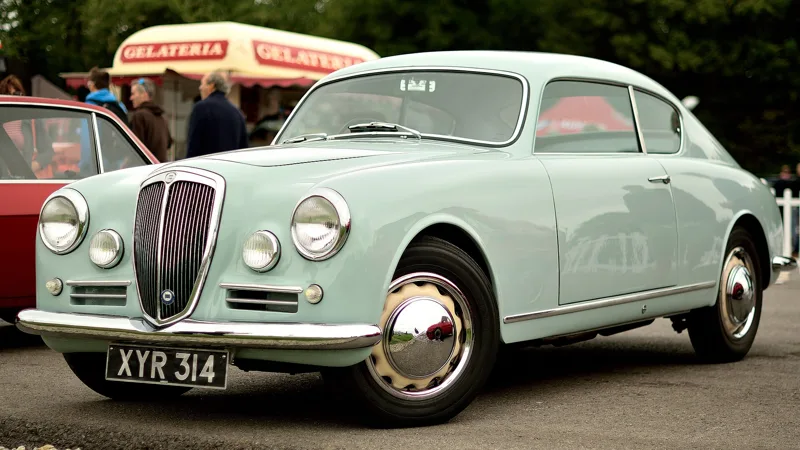
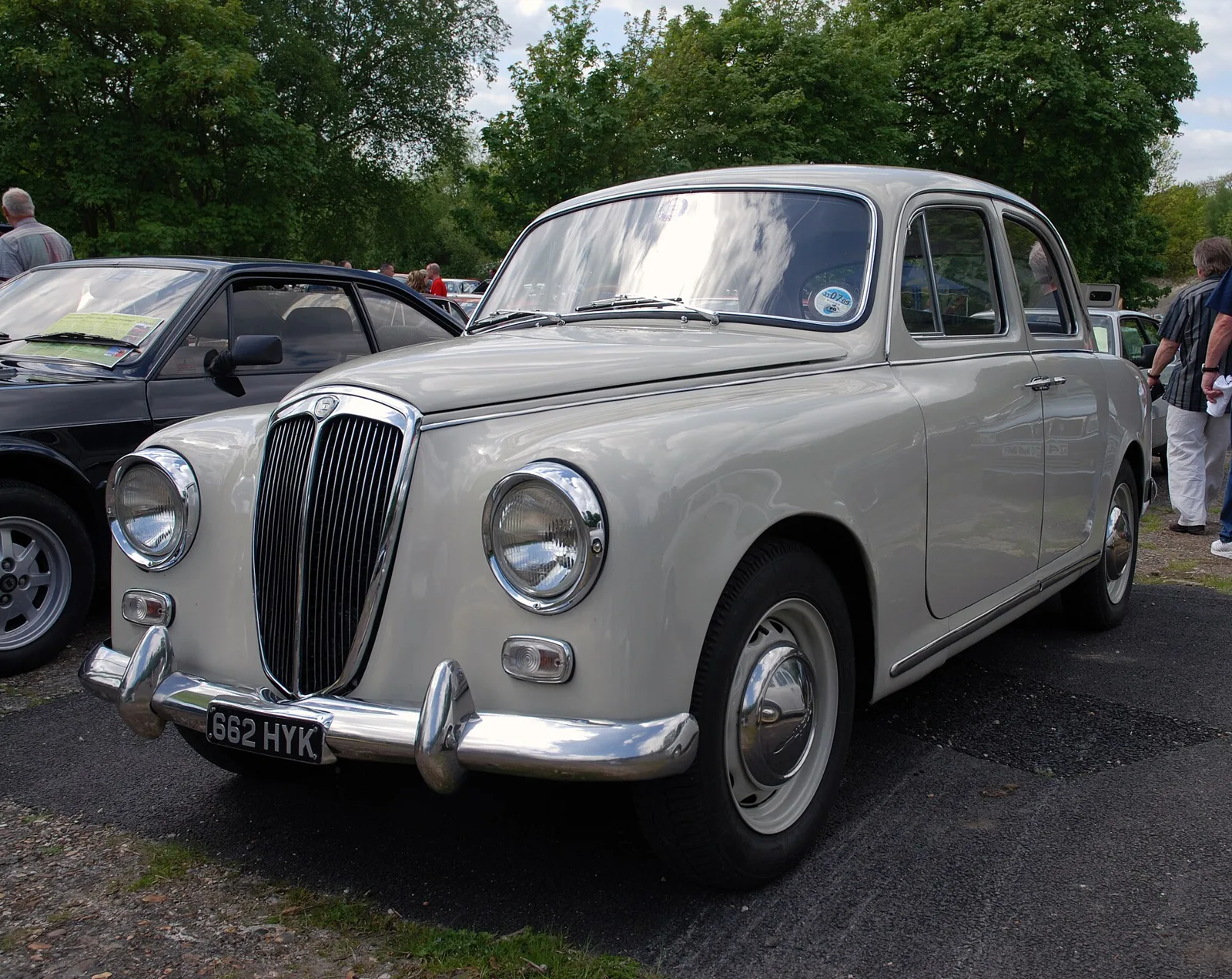
Lancia's Appia was a small saloon launched in 1953 to succeed the Ardea. It used a 1,089 cc V4 and was built for ten years, with series revisions and coachbuilt versions by Pinin Farina, Vignale and Zagato. Total production reached 107,000 cars.
Italian maker Lancia introduced the Appia in 1953 as the successor to the Ardea, a compact rear-wheel-drive saloon powered by a 1,089 cc V4. Production ran for ten years, and the total across saloons, commercial vehicles and coachbuilt cars reached 107,000 units. Its mechanical layout tied it to a line of Lancias stretching back to the Lambda.
Where did the Lancia Appia come from?
Lancia launched the Appia in April 1953 at the Turin Motor Show as a replacement for the Ardea. Engineer Vittorio Jano led its design. It was the last Lancia to use sliding pillar front suspension, a layout that ran back to the 1922 Lambda.
Lancia had launched the Aurelia in 1950 as its first all-new postwar model. That car was a small but costly luxury saloon, with a V6, inboard rear brakes and a transaxle layout. Lancia still built the pre-war Ardea alongside it, and that older design needed replacing.
The new car was not a simple update. Lancia first considered reusing the Ardea engine, but a clean-sheet V4 was chosen instead. The Appia took its look from the Aurelia while swapping exotic parts for cheaper ones, including a solid rear axle and a gearbox built into the engine block. The name followed a custom begun in the postwar years, and the Via Appia is a Roman consular road.
A small V4 saloon that Lancia refined through three series into coupes, convertibles and Zagato racers.
What engine did the Appia use?
The Appia used a 1,089 cc V4 with a 10.14 degree angle between banks and a single cylinder head. Power rose from 38 PS in the first series to 48 PS in the third, and later cars with a Weber carburettor reached 60 PS. The engine drove the wheels through a four-speed gearbox.
The narrow bank angle was the engine's defining feature. At 10.14 degree, the bank angle was the tightest of any V4 engine built, and its designers used dual in-block camshafts instead of overhead ones. The left camshaft operated all the exhaust valves and the right one all the intake valves, driven by a chain with a hydraulic tensioner.
Cylinder heads, crankcase and oil pan were cast in aluminium, and each cylinder had two angled poppet valves operated by pushrods. The bore measured 68 mm (2.7 in) and the stroke 75 mm (3.0 in), giving the engine its 1,089 cc capacity. The basic V4 layout stayed in place through all three series.
How did the three series differ?
The first series, built from 1953 to 1956, had bucket front seats and, on its earliest cars, aluminium doors. The second series of 1956 gained a bigger boot, a longer wheelbase and 43 PS. The third series of 1959 brought a new grille, 48 PS and the largest run of saloons.
Antonio Fessia joined Lancia as technical director in April 1955 and set about fixing the Appia's shortcomings. He lowered the compression ratio, reshaped the cylinder head with hemispherical combustion chambers and fitted new pistons and a new carburettor. Output climbed to 43 PS, and the top speed rose to 120 km/h (75 mph). Quattroruote later judged the second series accomplished and convincing, a reversal of its earlier criticism.
The second series also stretched the wheelbase by 3 cm (1.2 in), lengthening the car by 14.5 cm (5.7 in) and enlarging the boot. Steel bumpers with overriders replaced the aluminium ones, and a bench seat took the place of the two front buckets. A heavier body largely cancelled out the extra power.
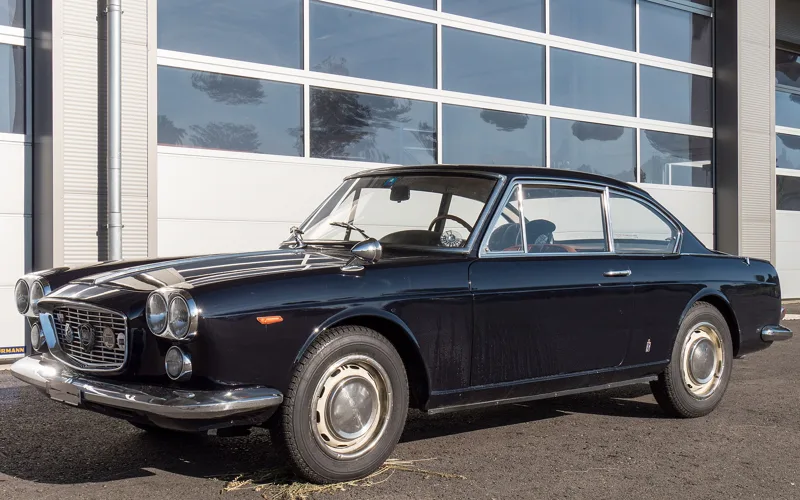
The third series took a horizontal grille inspired by the Lancia Flaminia flagship in place of the traditional shell-style radiator grille. Output went to 48 PS and the top speed to 132 km/h (82 mph). From the 1960 model year, the brakes gained twin leading shoe front drums and a Duplex dual hydraulic circuit.
Which coachbuilders made Appia bodies?
From late 1955 Lancia handed chassis to a group of coachbuilders: Zagato, Vignale, Pinin Farina, Motto, Ghia Aigle, Boano and Allemano. Pinin Farina and Vignale later produced the coupe and convertible sold through Lancia dealers, while Zagato built race-bred coupes. Lancia went on to supply 5,161 such chassis in total.
The first batch comprised 14 chassis handed over in late 1955, and five of them received the more powerful 53 PS engine with a floor-mounted shifter. Coachbuilders showed their interpretations at Turin and other motor shows through 1956 and 1957. Lancia then selected Pinin Farina for a coupe and Vignale for a convertible, and both entered the official catalogue.
Later additions to the catalogue were Vignale's Lusso, the Zagato GTE and Sport models, and the Viotti Giardinetta estate. The 60 PS engine arrived in early 1960, using a Weber carburettor and an inlet manifold that gave each cylinder its own duct. Coachbuilt Appias were built on the more powerful chassis designs.
What was the Appia Zagato?
Zagato built four coupe versions of the Appia between 1957 and 1962, totalling 721 cars. Each one used an aluminium skin stretched over a boxed steel frame, and the models catered to owners who raced their cars privately. The Sport of 1961 to 1963 was the most standardised of the group.
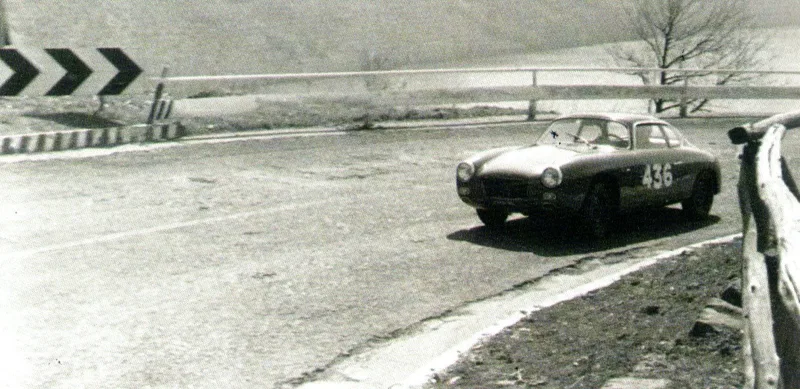
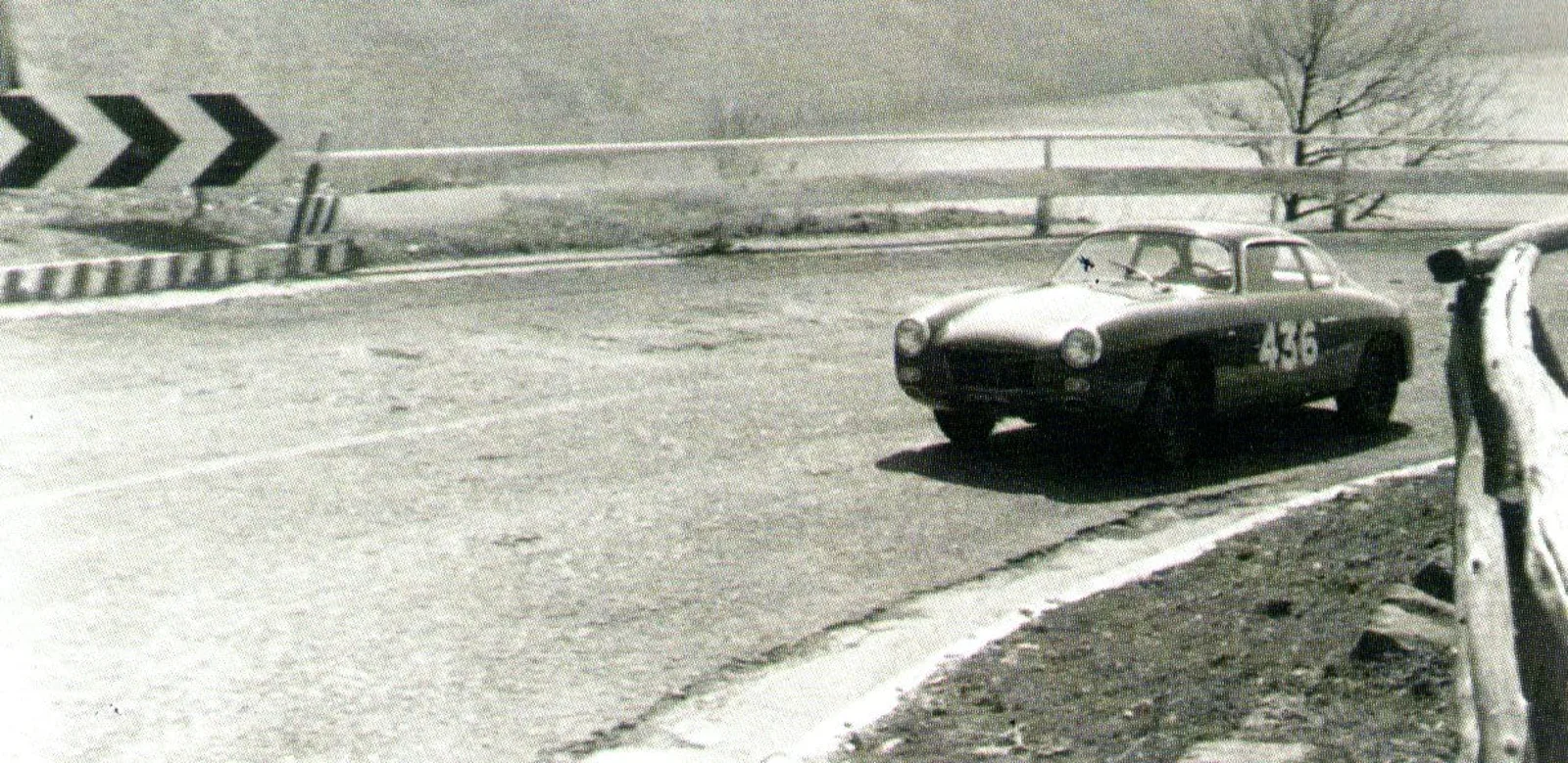
The first prototype, chassis 1005, was shown at the 1956 Turin Motor Show and nicknamed Cammello, meaning camel, for the humps on its roof, bonnet and boot lid. It won the Cortina concours d'elegance that year before being prepared for racing and entered in the 1957 Mille Miglia.
About 30 more cars followed in early 1957. Two models then became more or less standard, the GT with open headlights and the sportier GTS with faired-in headlights and a tuned engine. Roughly 150 of the pair were built. At the 1957 Mille Miglia, Zagato Appias took a 1-2-3 class finish, with Luciano Mantovani and Enrico Anselmi on GTS cars and Giorgio Lurani in the Cammello.
The GTE, introduced at the November 1958 Turin Motor Show, was the first Zagato car included in Lancia's price lists and sold through Lancia dealers. Its bodywork was lower and more streamlined, with a continuous waistline. Estimates put 167 cars with the earlier 53 PS engine and 134 with the 60 PS unit, and the last GTEs left the factory in April 1962.
The Sport arrived in 1961 on a short 2,350 mm (92.5 in) wheelbase, 160 mm (6.3 in) shorter than the GTE, and it was produced until 1963. Its chassis ran from 1001 to 1201, and the 200th car was completed in January 1963. From the front it resembled an open-headlight GTE, but the tail was much rounder and the roofline a fastback.
An Appia Zagato took part in the 1959 12 Hours of Sebring, where newsman Walter Cronkite was among the drivers. Zagato began keeping detailed production registers only in 1960, which is why the Sport's numbers are the most reliable of the range.
Was there an Appia estate?
Yes. Carrozzeria Viotti built the Appia Giardinetta, a three-door estate based on the third series and shown at the Turin show in November 1959. Only 300 were made, and the list price sat about 25% above the saloon's. Unlike the saloon, it had a centre pillar.
Viotti added the centre pillar to strengthen the body and lowered the boot opening by altering the rear of the platform. Viotti also widened the body by 6 cm (2.4 in), so the dashboard, bumpers, grille and windscreen all changed. Leatherette and rubber mats replaced the wool cloth and carpets, and the rear seats folded flat to form a loading floor 1.5 m (4 ft 11 in) long.
Development was complex, and with few cars to spread the cost, the price reflected that. Giardinetta was Viotti's trademark name for its estate cars.
Did Lancia build commercial Appias?
Yes. From 1954, Lancia built light commercial bodies on the Appia chassis to replace the earlier Ardea versions. The range comprised the Furgoncino panel van, the Camioncino pick-up and the Autolettiga ambulance, and it was phased out during 1959 in favour of the forward-control Lancia Jolly.
The commercial models had shorter final drives, lower-output engines, wider axle tracks and larger tyres. Their bodywork was altered to suit those changes. Lancia later brought them into line with second series saloon upgrades but never raised them to third series specification.
Across the range, Lancia built 3,863 commercial vehicles. The Furgoncino used chassis code C80, the Camioncino C83 and the Autolettiga C86, with left-hand drive versions carrying an S suffix.
How many Appias were built?
Lancia built 107,000 Appias in total. That figure covers 98,000 saloons, 3,863 commercial vehicles and 5,161 chassis supplied to coachbuilders. The third series alone accounted for 55,577 saloons, most of them left-hand drive. Sales ran below plan for much of the run, and the car spent ten years on sale.
Early sales were weak. In May 1958, daily output was still 27 cars, against the 50 that development had anticipated. Series one produced 20,025 saloons from 1953 to 1956, of which 10,257 were right-hand drive and 9,768 left-hand drive.
Series two added 22,425 saloons, only 3,180 of them right-hand drive C10 cars. In 1956 Quattroruote blamed the high price, the Fiat 1100/103 and Alfa Romeo Giulietta as rivals, and assorted minor faults. The magazine's view pointed to hasty, low-priority development at a time when Lancia was investing heavily in racing.
What are the Lancia Appia specifications?
The Appia used unibody construction, sliding pillar front suspension, a solid rear axle on leaf springs, a four-speed manual gearbox and drum brakes on all four wheels. The table below lists the core figures, and the engine values change between series as Lancia revised the car.
| Specification | Detail |
|---|---|
| Body and chassis | Unibody saloon, rear-wheel drive, sliding pillar front suspension |
| Engine | 1,089 cc V4, two angled valves per cylinder, aluminium heads |
| Bore and stroke | 68 mm (2.7 in) bore, 75 mm (3.0 in) stroke |
| Transmission | Four-speed manual, dry single plate clutch |
| Series one output | 38 PS; claimed 120 km/h (75 mph) |
| Series two output | 43 PS; top speed 120 km/h (75 mph) |
| Series three output | 48 PS; top speed 132 km/h (82 mph) |
| Later engine | 60 PS with Weber carburettor, early 1960 |
| Brakes | Drums on all four wheels; dual circuit on series three |
| Rear axle | Solid axle on leaf springs |
| Tyres | 155HR15 Pirelli Cinturato |
| Production | 107,000 built in total |
A 1954 road test by The Motor magazine recorded 122.5 km/h (76.1 mph) for a series one saloon, with 0-97 km/h (0-60 mph) taking 32.5 seconds. Fuel use came out at 9.7 L/100 km (29.0 mpg-imp; 24.1 mpg-US). The car was not on sale in the United Kingdom at the time, and the reported Italian price was 1,328,600 Lire, or about GBP 780 when converted.