A French newspaper rally, a New York publisher's trophy, a ban on road racing and a two-day contest near Le Mans. How early motor racing turned into the Grand Prix.
Early motor racing began with city-to-city contests such as Paris-Rouen in 1894. The Gordon Bennett Cup and Vanderbilt Cup added national and international rivalry, while deaths in the 1903 Paris-Madrid race pushed organisers to closed circuits, producing the first Grand Prix near Le Mans in 1906.
British racing green, so the story goes, was a courtesy to Ireland. The 1903 Gordon Bennett Cup was held there because the law banned racing on public roads in Britain, and the British team is reputed to have chosen shamrock green in thanks.
How did early motor racing begin?
Motor racing started in France, a direct result of the public's enthusiasm for the motor car. Manufacturers shared it, since a race let them show their cars off. Le Petit Journal, a Paris newspaper, organised the first contest on 22 July 1894. The Paris-Rouen rally was 126 km (78 mi) long, starting at Porte Maillot, crossing the Bois de Boulogne and finishing in Rouen.
Count Jules-Albert de Dion reached Rouen first after 6 hours 48 minutes, averaging 19 km/h (12 mph), 3 minutes 30 seconds ahead of Albert Lemaitre in a Peugeot. Yet the official winners were Peugeot and Panhard. Cars were being judged on speed, handling and safety, and the De Dion steam car carried a stoker, something the judges felt fell outside what they were trying to assess.
Speeds soon topped 100 mph (160 km/h). Because early races used open roads, crashes were frequent, and drivers and spectators died.
The first Grand Prix was built on a lesson learned in blood: after the deaths in the Paris-Madrid race of 1903, road racing from town to town was banned.
What was the Gordon Bennett Cup?
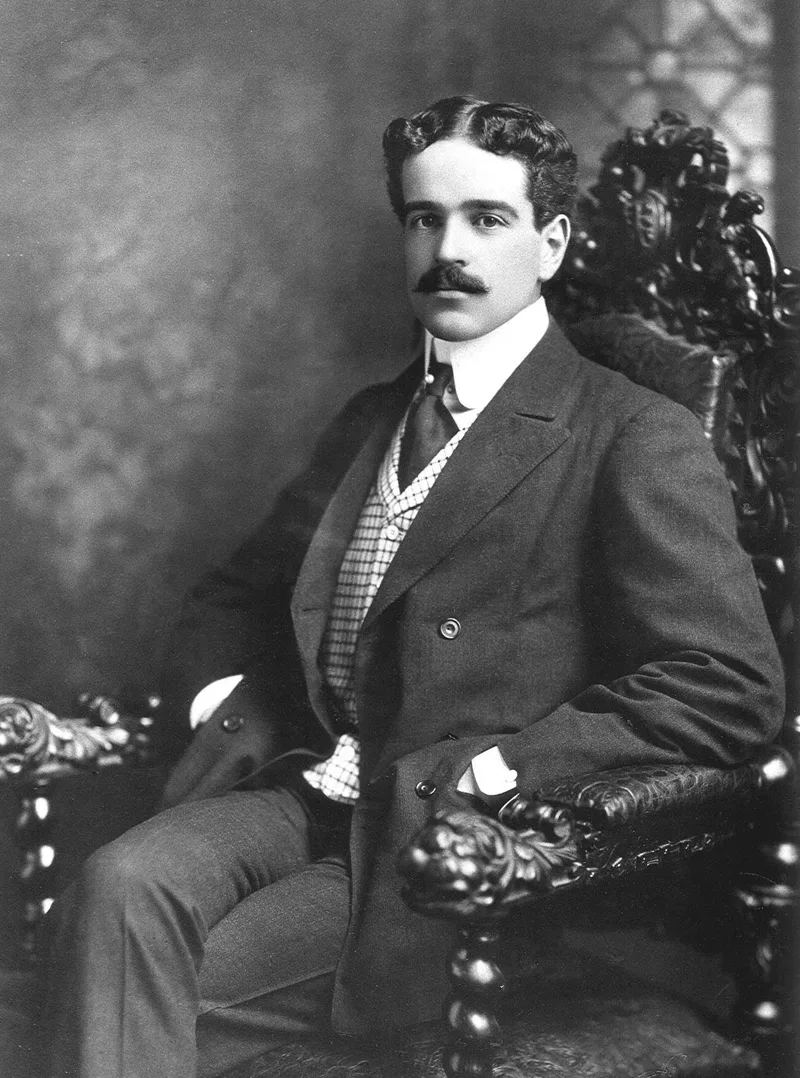
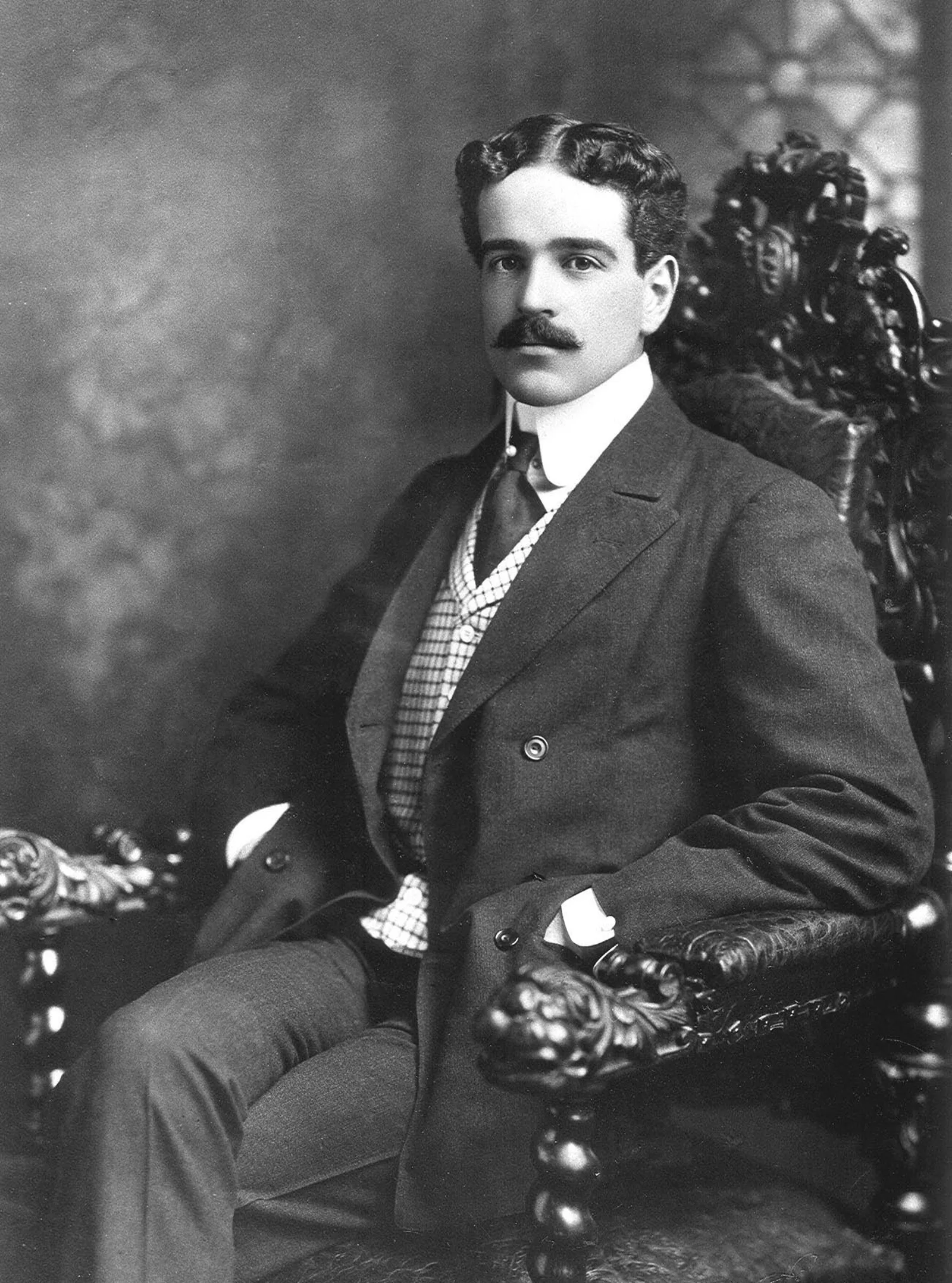
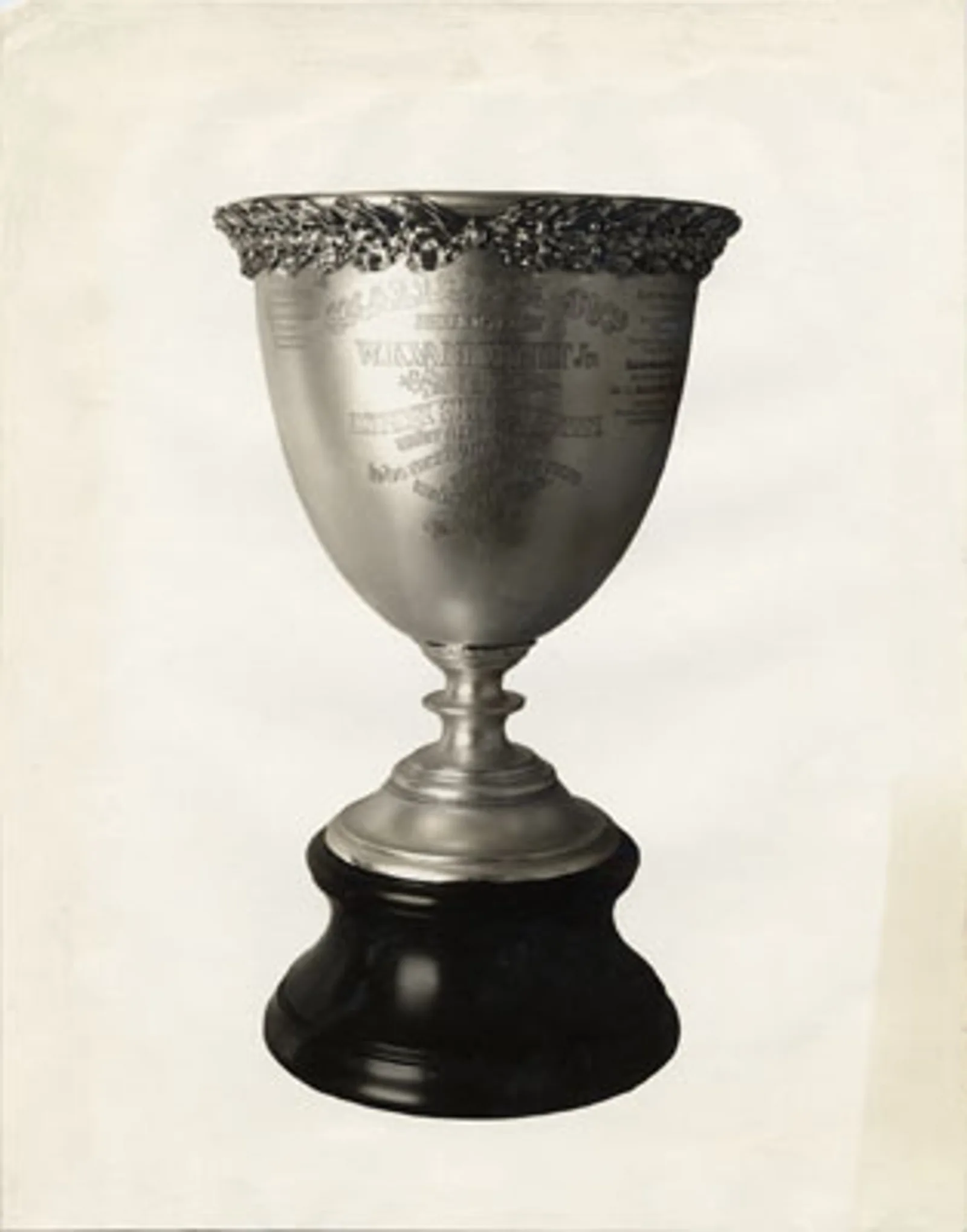
James Gordon Bennett Jr., owner of the New York Herald, offered the Automobile Club de France a trophy in 1899, to be contested every year by clubs from different countries. He hoped an international event would push manufacturers to improve their cars. The competition ran from 1900 to 1905, and the ACF held the first Grand Prix after it ended.
The rules set it apart. Entries came from national automobile clubs, not individuals, and each club could send up to three cars for an entry fee of Fr3000. Eight countries began: Italy, Belgium, Switzerland, Austria, Germany, the United States, Great Britain and France. Every car had to be wholly home-built, carry two seats side by side, and weigh at least 400 kg (882 lb) empty. Driver and riding mechanic had to weigh 60 kg (132 lb) each at least. A race had to take place between 15 May and 15 August, over 550 to 650 km (340 to 400 mi), and the following year's host was the previous winner's country.
The trophy showed a Panhard racer piloted by the Genius of Progress and accompanied by the Goddess of Victory.
| Year | Course | Result |
|---|---|---|
| 1900 | Paris to Lyons, 14 June | Charron first to Lyons at 12:23 p.m. |
| 1901 | Run with Paris-Bordeaux, 527.1 km | Leonce Girardot (Panhard), 8h 50m 59s |
| 1902 | Paris to Innsbruck, 565 km | Selwyn Edge (Napier); only six entries |
| 1903 | Athy, Ireland, 328 miles (528 km) | Camille Jenatzy (Mercedes) |
| 1904 | Near Homburg, Germany, 342 miles (550 km) | Thery (France), 5h 50m 3s |
| 1905 | Auvergne, France, 548 km | Leon Thery (Richard-Brasier), 7h 02m 42s |
Why did racing colours appear?
Races between national teams forced organisers to standardise colours. Count Eliot Zborowski, father of the inter-war racing figure Louis Zborowski, proposed giving each entrant a different one. Britain could not use its usual red, white and blue, since the United States, Germany and France had already taken them.
Reputedly as a concession to Ireland, the British team took shamrock green, the shade that came to be called British racing green. One caveat: the Napier that won in 1902 was already olive green, and green was an established colour for locomotives and machinery, fields in which Britain had led the world. The colours that settled were blue for France, green for Britain, red for Italy, white for Germany and yellow for Belgium.
The Germans stopped painting their cars from 1934, allegedly after paint was left off a Mercedes-Benz W25 to save weight, earning the nickname Silver Arrows. The story is disputed, and photographs of bare-metal Mercedes and Auto Union cars exist from as early as 1932.
What happened at the 1903 race in Ireland?
Safety fears hung over motor racing. At least eight people died in the 1901 Paris-Bordeaux event. Then, in the Paris-Madrid race of 24 May 1903, more than 200 cars set off over 800 miles (1,287 km), and fatalities among drivers and onlookers, Marcel Renault among them, led the French authorities to stop it at Bordeaux. Road-based events were banned.
The Gordon Bennett Cup of 2 July 1903 was the first international motor race held in Ireland, honouring Selwyn Edge's win the year before. The British and Irish motoring club wanted a venue in the British Isles, and its secretary Claude Johnson suggested Ireland, since racing on public roads in Britain was against the law. Richard J. Mecredy of the Dublin Motor News proposed County Kildare, and letters went to 102 Irish MPs, 90 peers, 300 newspapers and hundreds of others, including the Bishop of Kildare and Leighlin, who approved. The Light Locomotives (Ireland) Bill passed on 27 March 1903 to adjust local law, and Kildare was chosen partly because its straight roads would help safety.
Though run on public roads, the race used a closed course, the first closed-circuit motor race ever. It was marshalled by 7,000 police, backed by troops and club stewards, under strict orders to clear the roads of spectators and keep them away from the bends. The route formed a figure of eight, a 52-mile loop plus a 40-mile loop, crossing at Athy. Competitors left at seven-minute gaps and were led by cyclists through the control zones in each town, timed with ninety-one chronographs supplied by Stauffer Son & Co. Camille Jenatzy won the 328 miles (528 km) in a Mercedes in German colours.
The 1904 race was held in Germany on 17 June near Homburg, over four laps totalling 342 miles (550 km), and Thery of France won in 5 hours 50 minutes 3 seconds, an average of 58.62 mph (94.34 km/h). Edge, in a Napier, was disqualified on lap three for outside help with tyre problems. The last race, on 5 July 1905, ran on a mountainous 137 km circuit in the Auvergne near Clermont-Ferrand. Leon Thery won again in a 96 hp Richard-Brasier, averaging 77.78 km/h. With the circuit on the doorstep of Michelin's Clermont-Ferrand headquarters, Michelin-shod cars filled the first four places.
What was the Vanderbilt Cup?
In 1904 William Kissam Vanderbilt II founded the Vanderbilt Cup, America's first major motor racing trophy. The first race, on 8 October, used 30.24 miles (48.7 km) of winding dirt roads around Nassau County, on Long Island in New York. The announcement caused controversy, a flood of legal action to stop it and public hearings, but Vanderbilt prevailed.
He put up a large cash prize to encourage American makers into racing, a sport already well organised in Europe. Top drivers and cars crossed the Atlantic, some of them Gordon Bennett Cup veterans. Seventeen vehicles started and the crowd hoped an American car would beat the European ones. George Heath won in a Panhard, and a French Darracq took the next two years.
Managing the crowds proved difficult from the outset, and the race was cancelled after spectator Curt Gruner was killed in 1906. Vanderbilt, told by his cousin how well the French Grand Prix had gone, built the Long Island Motor Parkway, a pioneering paved parkway, begun in 1907 and running 48 miles (77 km) as a toll highway. The 1908 race used parts of it, and 23-year-old local hero George Robertson won in a Locomobile, the first American winner and the first American-built car to win an international event.
The cup moved to Savannah in 1911, then Milwaukee, Santa Monica and San Francisco, and was cancelled in 1917 when the United States joined World War I. Louis Chevrolet, Vincenzo Lancia and Ralph DePalma were among those who took part. It returned in 1936, when George Washington Vanderbilt III sponsored a 300-mile (480 km) race at Roosevelt Raceway and Scuderia Ferrari entered three Alfa Romeos. A lack of American competition and a dull layout ended it after two years, both won by Europeans.
How did the first Grand Prix happen?
The driving force for racing on a circuit, not from town to town, was the 1903 Paris-Madrid disaster. In 1906 the Automobile Club de France organised the only race of the time that regularly carried the name Grand Prix. It was held on a roughly triangular circuit based in Le Mans, each lap covering 105 km (65 mi). Six laps were run each day, each taking about an hour in the primitive cars of the day.
From 32 entries representing 12 manufacturers, Ferenc Szisz, born in Hungary, took the 1,260 km (780 mi) race in a Renault. It was regarded as the first Grande Epreuve, "great trial", a term used afterwards for up to eight of the year's most important events. Detachable wheel rims developed by Michelin were held to be a key factor in Renault's win, since tyre changes no longer meant levering tyre and tube off the rim, and given the roads, repairs were frequent.
The rules of the time centred on maximum weights, a way of limiting power by limiting engine size indirectly. Engines of 10 to 15 litres were common, typically with four cylinders at most and below 50 hp. Cars carried mechanics, and only the driver and mechanic could work on them during the race. The contests were heavily nationalistic, with no formal championship linking them. The American Elliot Shepard was among the competitors.
Not everything with a Grand Prix label is as old as claimed. Some English-language sources list a 1901 Pau Grand Prix, apparently a mistranslation of French magazines. What actually ran was the Circuit du Sud-Ouest, with Grand Prix de Pau the name of the prize for the fastest class, which Maurice Farman won in a Panhard. In the early 1920s the ACF also numbered earlier French races retrospectively as its Grands Prix, so the 1895 Paris-Bordeaux-Paris became the first and the true 1906 race the ninth, a political trick some club members dismissed.
How did Grand Prix racing spread?
Most races used lengthy circuits of closed public roads rather than purpose-built tracks: Le Mans in 1906, the Targa Florio on 93 miles (150 km) of Sicilian roads, the German Kaiserpreis circuit of 75 miles (121 km) and Dieppe, a mere 48 miles (77 km), for 1907. The exceptions were Brooklands in England, completed in 1907, Indianapolis, first used in 1909 and the home of the first Indianapolis 500-Mile Race in 1911, and Monza in Italy, which opened in 1922.
In 1908 the United States held the first Grand Prix-titled race outside France, at Savannah. The first Grande Epreuve outside France was the 1921 Italian Grand Prix at Montichiari, followed by Belgium and Spain in 1924 and Britain in 1926. It was not yet a formal championship, only a loose collection of races under various rules. A body that became the Association Internationale des Automobile Clubs Reconnus was founded in Paris on 20 June 1904, and in 1922 its Commission Sportive Internationale was empowered to regulate the sport.
Rule changes arrived quickly. The 1922 French Grand Prix at Strasbourg introduced the mass start. From 1925 no riding mechanic was required, after Tom Barrett's death in 1924. In 1926 at the Solituderennen, Mercedes-Benz racing manager Alfred Neubauer first used flags and boards to give drivers tactical information. The 1933 Monaco Grand Prix was the first to set the grid by timed qualifying instead of a draw. Rules based on engine size and weight were virtually abandoned in 1928 in the Formula Libre era, as organisers ran events with almost no limits, and the number of Grand Prix status races rose from five in 1927 to nine in 1929 and eighteen in 1934.
| Era | Cars | Rules |
|---|---|---|
| 1906 | 10 to 15 L engines, usually four cylinders or fewer, under 50 hp, driver plus mechanic | Maximum weights, no formal championship |
| 1935 to 1939 | Single-seaters, 8 to 16 cylinder supercharged engines, upwards of 600 hp (450 kW) on alcohol fuels | Mercedes and Auto Union won all but three official Championship Grands Prix |
| 1950 | Formula One cars (Formula Two cars in 1952 and 1953) | World Championship for drivers, points system, seven races including the Indianapolis 500 |
How did Grand Prix racing become a World Championship?
French cars led by Bugatti, plus Delage and Delahaye, dominated until the late 1920s, when Alfa Romeo and Maserati began beating them regularly. The 1930s took nationalism further: the Nazis pushed Mercedes and Auto Union into racing for propaganda. Subsidies were exaggerated in the press, perhaps 10% or less of the cost of running the two teams, but the two German marques won all but three official Championship Grands Prix between 1935 and 1939.
A championship had been discussed as early as October 1923. The first World Championship in 1925 was for manufacturers only, over four races of at least 800 km (497 mi): the Indianapolis 500 and the European, French and Italian Grands Prix. It was officially cancelled in 1930. A European Drivers' Championship ran from 1931 until the war, except in 1933 and 1934.
After the war only four races of Grand Prix calibre took place in 1946. In 1947 the old AIACR reorganised as the Federation Internationale de l'Automobile, the FIA, in Paris and announced Formula 1, also called Formula A. At the end of 1949 it announced a World Championship for drivers for 1950, with seven races including the Indianapolis 500, though 1952 and 1953 were run in Formula Two cars because of economic difficulty. The first race was at Silverstone on 13 May 1950. Giuseppe Farina won the first title in an Alfa Romeo. Ferrari first appeared at the second round, in Monaco, and is the only manufacturer to have competed in every season, still racing in 2026.
What survives from this history today?
The name. Each Formula One World Championship event is still called a Grand Prix, and the sport is itself known as Grand Prix racing. A few IndyCar championship rounds carry the Grand Prix name too. The Vanderbilt Cup survives as a trophy name: CART used a copy for its championship from 2000, and the original, cast in silver, is stored at a Smithsonian Institution facility, not on public view. Racing colours persist, too, in the national hues that began with the Gordon Bennett Cup.