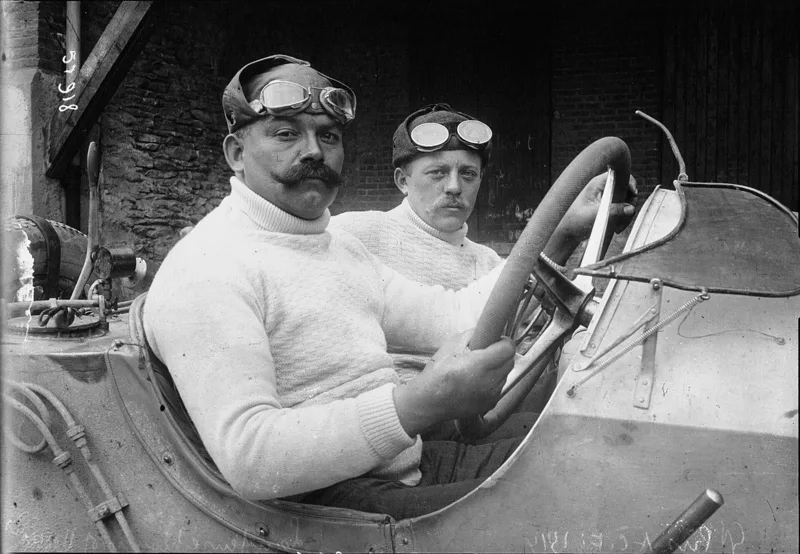
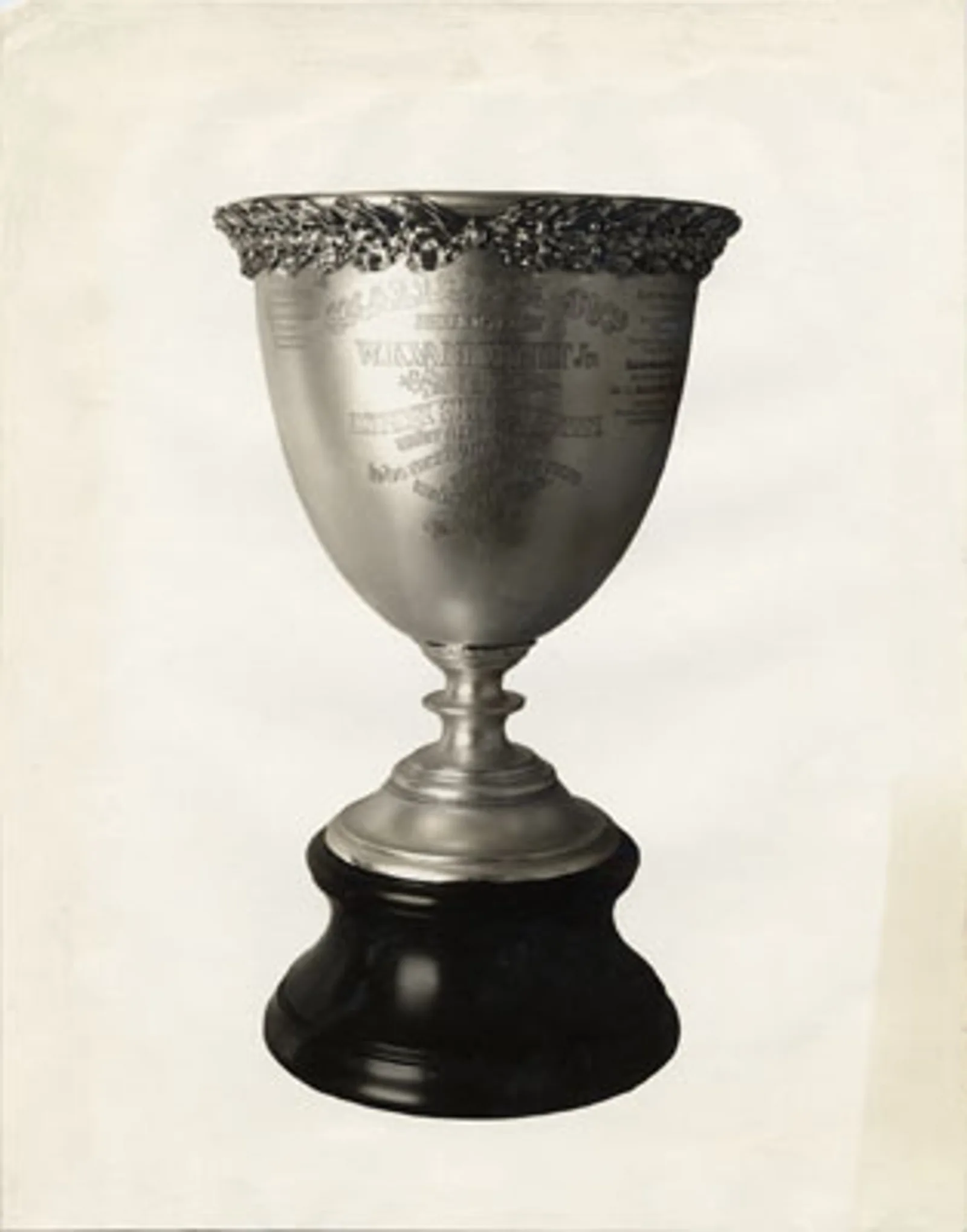
Ferenc Szisz, a Renault and a detachable tyre rim settled a two-day race of 1,238.16 km (769.36 mi) near Le Mans.
The 1906 French Grand Prix was a motor race run on 26 and 27 June 1906 near Le Mans, France. Ferenc Szisz won for Renault, covering 1,238.16 km (769.36 mi) over six laps a day in a combined time of 12:12:07.0.
The 1906 French Grand Prix took place on closed public roads outside Le Mans over two days in late June. Renault's Ferenc Szisz won it, and the race is commonly known as the first Grand Prix. It was created to replace the Gordon Bennett races, which had limited how many cars each country could bring.
Why was the 1906 French Grand Prix created?
The Automobile Club de France created the race as an alternative to the Gordon Bennett races, which capped each country at three entries. France had the biggest automobile industry in Europe, so the club wanted an event where that strength could show. The new race did not restrict how many cars any one country could enter.
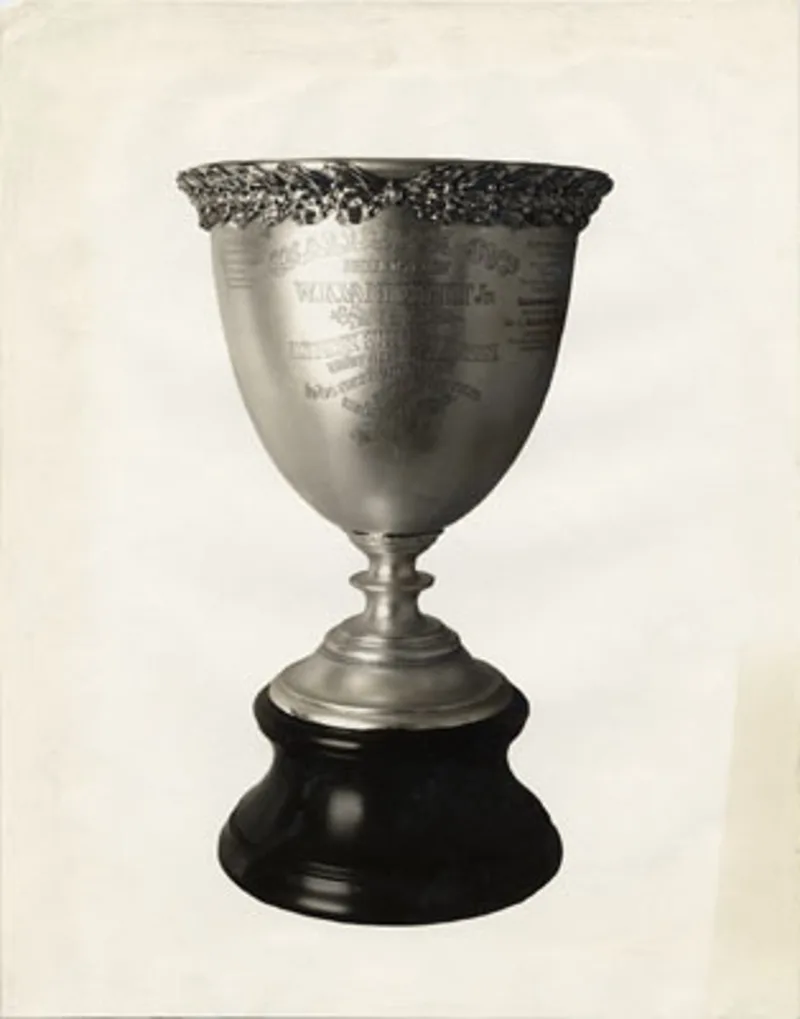
The Gordon Bennett races began in 1900, when the American millionaire James Gordon Bennett Jr. put up the prize. By 1903 they were among the most prestigious contests in Europe. Their closed-road format had replaced the older habit of racing unregulated cars between distant towns over open roads, and the winning nation earned the right to host the next race.
Under the three-car limit, French makers, who dominated the young European industry, were placed on the same numerical footing as Switzerland, which had only one manufacturer. The Automobile Club de France therefore held trials to choose its representatives. In 1904, twenty-nine entries competed for those places.
After Leon Thery won the 1904 race for Richard-Brasier, the French industry asked for change. The club proposed that a race without national caps run alongside the 1905 Gordon Bennett event. Its compromise scaled each country's cap to the size of its industry, giving fifteen cars to France, six to Germany and Britain, and three to each of five others. Other governing bodies pushed back hard. The delegates rejected the French model for 1905, though they agreed to use the new limits for 1906.
When Thery and Richard-Brasier won again in 1905, the club was handed the 1906 race and chose to end the Gordon Bennett series, running its own event instead. That new event dropped national caps entirely. The city council of Le Mans and local hoteliers then offered money to host it, which persuaded the club to stage the race on the outskirts of the city.
A detachable tyre rim and a steady Renault, not raw speed alone, decided the first Grand Prix.
How was the Le Mans circuit built?
The course was a 103.18 km (64.11 mi) triangle of country roads outside Le Mans, laid out by the Automobile Club de la Sarthe. Competitors completed six laps each day for two days, a combined 1,238.16 km (769.36 mi). The organisers sealed the whole route with tar, because loose dust and stones had caused poor visibility and frequent punctures.
The lap began at Montfort and headed south-west towards Le Mans. Drivers then met the Fourche hairpin, a sharp left turn that dropped the cars to about 50 km/h (31 mph). From there the road ran through Bouloire towards Saint-Calais, which was bypassed by a temporary wooden plank road. The track turned north, went around Vibraye on another plank road, and ran on to the edge of La Ferte-Bernard. A run of left-hand turns then brought the cars back towards Montfort, past a winding section near Connerre.
Because the route crossed farmland and forest, the organisers erected 65 km (40 mi) of palisade fencing. Most of it was concentrated around towns and villages and at the ends of lanes, footpaths and roads crossing the course. Footbridges spanned the track, and a canopied grandstand with 2,000 seats stood at the start and finish in Montfort, facing the pit lane across the road. A tunnel under the track linked the stand with the pits.
Practice exposed more problems. Cars running the bends broke up the surface, so more tar was laid there.
Which teams and cars entered the race?
Thirteen teams entered, ten from France, two from Italy and one from Germany. Most ran three cars, which produced a planned field of thirty-four entries. No British or American manufacturer took part, and British observers suspected the event was built as propaganda for the French motor industry.
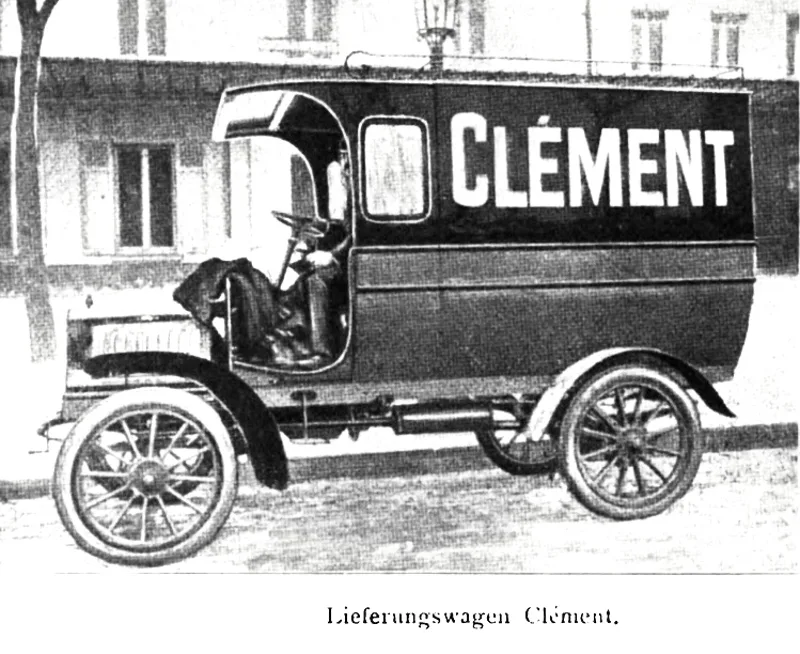
The French entrants were Clement-Bayard, Hotchkiss, Gobron-Brillie, Darracq, Vulpes, Brasier, Panhard, Gregoire, Lorraine-Dietrich and Renault. FIAT and Itala represented Italy, and Mercedes came from Germany. Gobron-Brillie and Vulpes each entered a single car, Gregoire entered two, and the remaining teams ran three apiece.
The rules were tight. The weight limit was 1,000 kg (2,205 lb), excluding tools, upholstery, wings and lights, with an extra 7 kg (15 lb) allowed for a magneto or dynamo. Fuel use was capped at 30 litres per 100 km (9.4 mpg-imp; 7.8 mpg-US). Every car had a four-cylinder engine, and displacement ran from 7,433 cc for the Gregoire up to 18,279 cc for the Panhard.
Tyres were the real technical story. Michelin brought a detachable rim with a tyre already fitted, which a crew could swap onto a car after a puncture. A conventional tyre change took around fifteen minutes, while a Michelin rim swap took less than four. Each rim added 9 kg (20 lb), and some teams, Itala and Panhard among them, could not carry them without breaking the weight limit.
The name Grand Prix referred to the prize of 45,000 French francs. That sum was worth 13 kg of gold.
How did the race unfold over two days?
The first cars were sent away at 6 am on 26 June, at 90-second intervals from Montfort. Heat softened the road tar, and passing cars sprayed it at the drivers. By the end of the first day Szisz had built a 26-minute lead over Clement, and that gap decided the order for the second day.
Roads were shut to the public at 5 am, and a draw among the thirteen teams set the starting order. Cars marked A and B formed two lines at the start, while the C-marked cars left last and waited at the side of the track so faster machines could pass them. Lorraine-Dietrich's Fernand Gabriel stalled on the line, which let Lancia's FIAT go first. Szisz, Renault's lead driver, followed soon after.
Maurice Fabry of Itala covered the first kilometre in 43.4 seconds, the quickest opening of any car. Paul Baras of Brasier then set the fastest lap of the race on his first circuit, 52:25.4, and held the lead until the third lap, when Szisz went ahead and kept the position to the finish.
The heat was the worst problem. As the day warmed, the tar began to melt, and it was kicked up into the faces of drivers and mechanics. Renault's Edmond Morelle, who raced under that single name, had broken goggles, and tar seeped in until he was nearly blind. Officials refused to allow a change of goggles at a pit stop, because equipment could not be replaced mid-race. He carried on for two more laps before he retired.
Seventeen cars completed the first day. Szisz finished it in 5:45:30.4, 26 minutes ahead of Clement, and Nazzaro was 15 minutes behind Clement. Lorraine-Dietrich's Henri Rougier finished last, 2 1/2 hours behind Szisz.
Each driver's first-day time set his start on the second morning. Szisz went off at 5:45 am, Clement at 6:11 am and Nazzaro at 6:26 am, so that positions on the road reflected the overall standings. Cars were towed from the overnight enclosure to the line by a horse that had been trained to tolerate engine noise. Neither driver nor mechanic could touch the car until the start signal, so Szisz and Clement went straight to the pits for new tyres. Clement's stop was quicker, and Nazzaro, who did not stop at all, began to close the gap.
Nazzaro passed Clement on lap ten, and a refuelling stop put Clement back in front for a while. Nazzaro went past again and led Clement into the last lap by less than a minute.
On lap ten, Szisz's Renault broke its rear suspension. His lead was more than 30 minutes, so he could afford to nurse the car home. He took the flag with a combined time of 12:12:07.0 and had also been the quickest car on the straights, reaching 154 km/h (96 mph).
Who finished where in the 1906 French Grand Prix?
Szisz won, Nazzaro finished second and Clement third. Jules Barillier was fourth for Brasier and Vincenzo Lancia fifth, while the last classified finisher, Mercedes driver Mariaux, was more than four hours behind the winner. The table below lists the leading places and the notable finishers.
| Place | Driver | Car | Result |
|---|---|---|---|
| 1 | Ferenc Szisz | Renault | 12:12:07.0 combined |
| 2 | Felice Nazzaro | FIAT | 32 minutes behind the winner |
| 3 | Albert Clement | Clement-Bayard | 3 minutes behind second place |
| 4 | Jules Barillier | Brasier | Fourth overall |
| 5 | Vincenzo Lancia | FIAT | Fifth overall |
| 6 | George Heath | Panhard | Sixth overall |
| 7 | Paul Baras | Brasier | Seventh, despite the fastest lap at 52:25.4 |
| 11 | Mariaux | Mercedes | Last classified finisher, more than four hours behind |
Only seven of the 23 French cars that started reached the finish. Heat, punctures and broken parts accounted for most of the retirements. Edmond was the only driver whose retirement came from an injury.
Why did the 1906 race matter?
The race is best remembered for Renault's victory, for the detachable tyre rim and for the name it gave to a whole family of events. The organisers and the media judged it a poor replacement for the Gordon Bennett races, even though Renault's sales rose sharply afterwards.
Renault sold about 1,600 cars in 1906, more than 3,000 a year later and more than 4,600 by 1908. The race did not prove French superiority, however, because an Italian car finished second. Organisers judged the race too long, felt the 90-second start interval left drivers racing alone, and thought the rim system had too much influence on the result.
Clement drove the only Clement-Bayard without the rims, and that was later thought to have helped Nazzaro overtake him on the second day. Even so, the Automobile Club de France decided to run the Grand Prix again in 1907, and German motoring interests organised the Kaiserpreis that same year as a rival event.
The race also connected to the wider governance of international motor sport. The 1904 conference that considered the French proposal led to the formation of the Association Internationale des Automobile Clubs Reconnus, the predecessor of the Federation Internationale de l'Automobile. Until the First World War, the 1906 race was the only annual race to be called a Grand Prix.