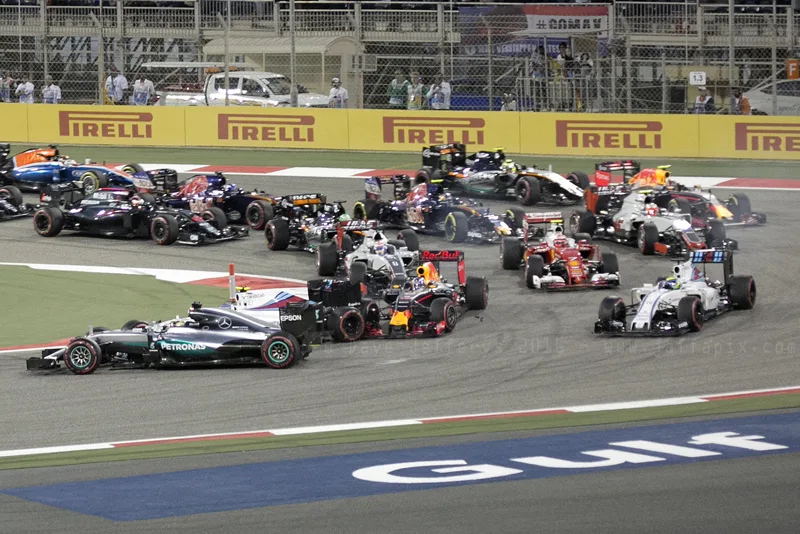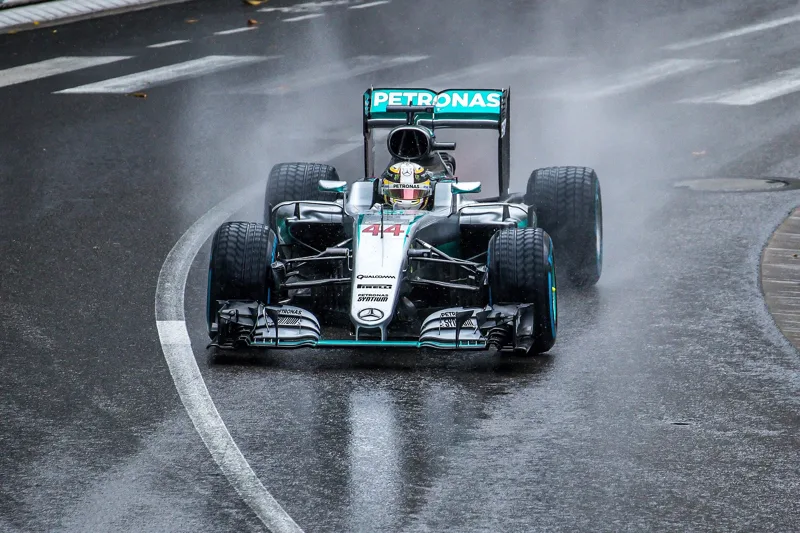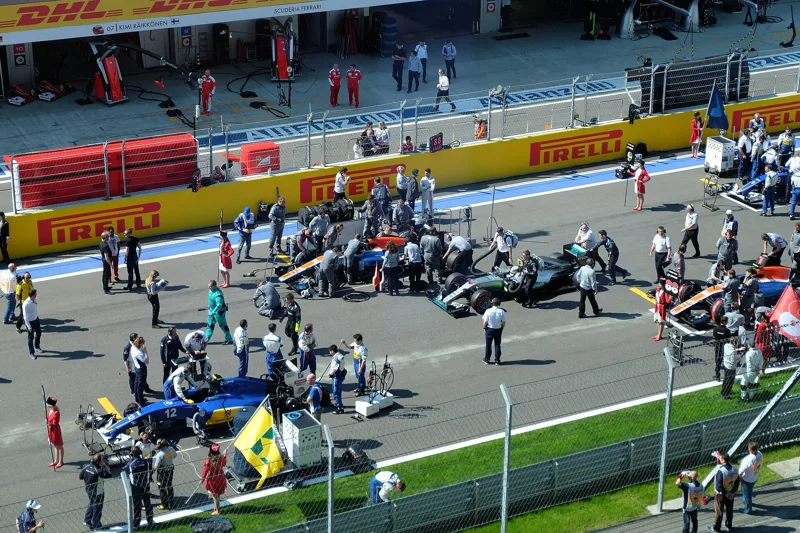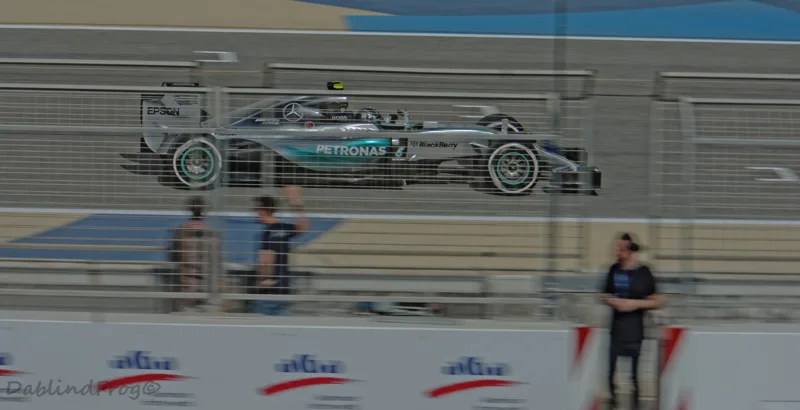
Wider cars and tyres, a title fight between Lewis Hamilton and Sebastian Vettel, and a clinch in Mexico with two races to spare.
Vettel's 317-point total left him 46 points adrift of Hamilton, whose fourth title arrived in Mexico. Mercedes took its fourth consecutive constructors' crown at the United States Grand Prix, and Bottas finished third in the standings.
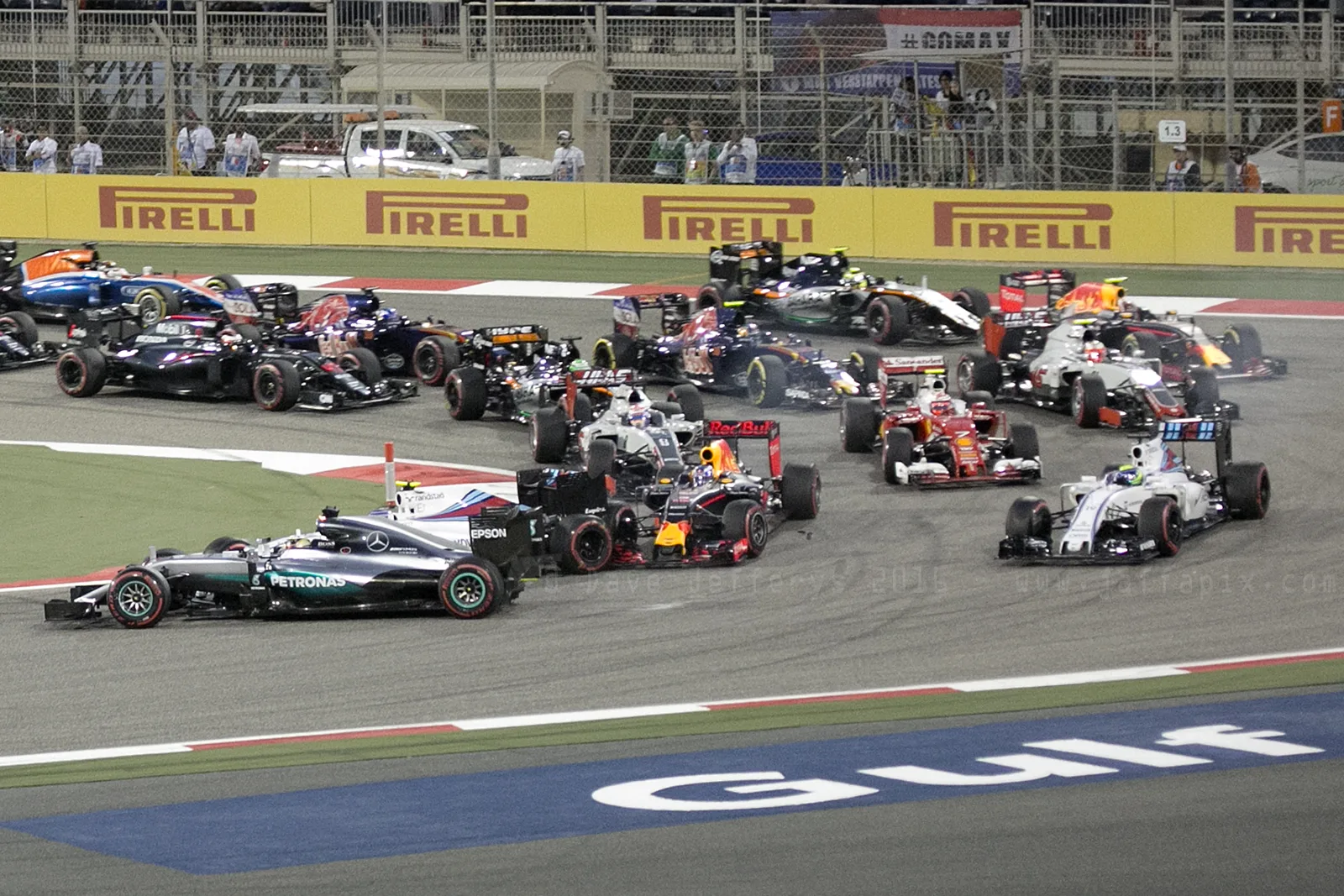
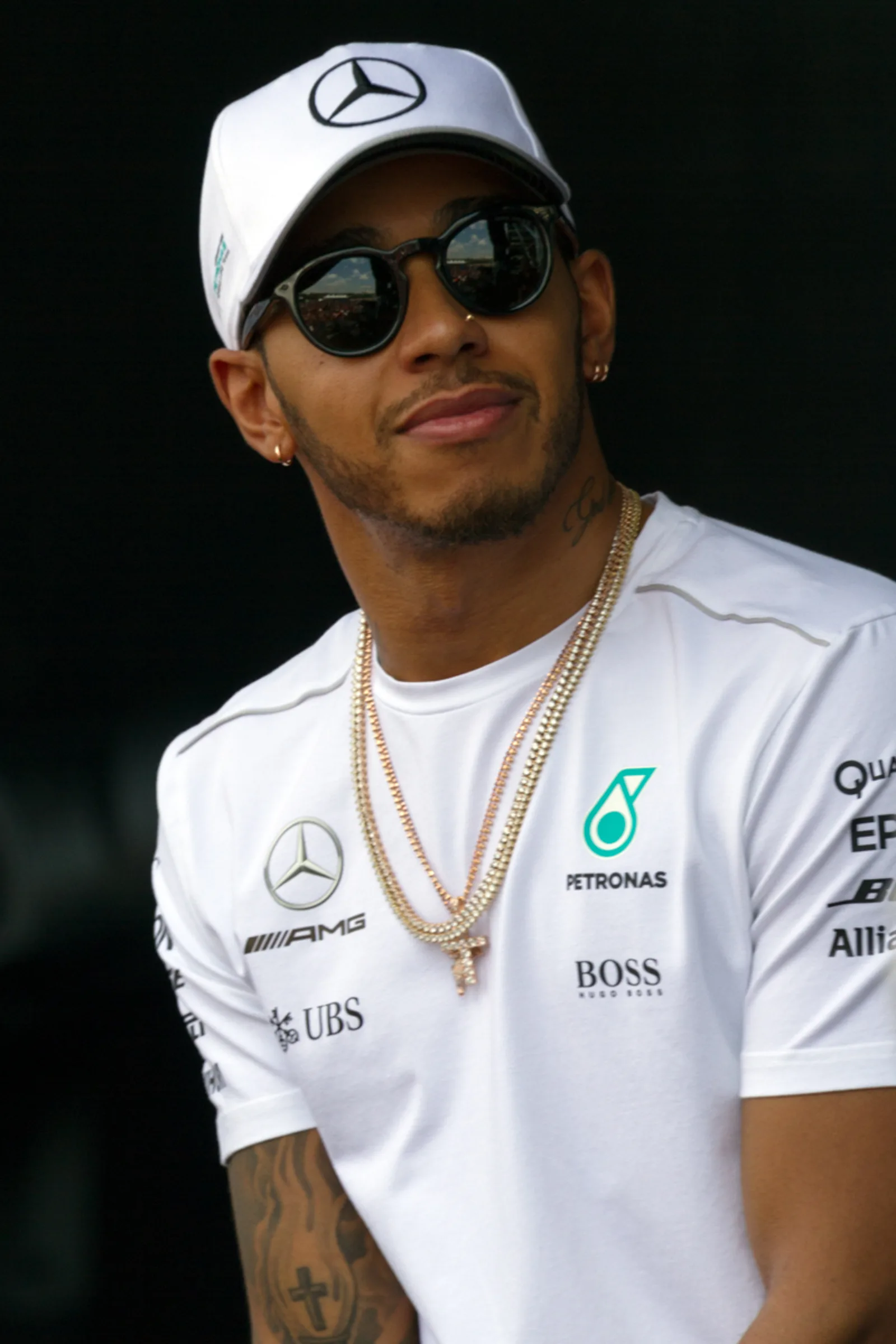
The 2017 season was the 71st in Formula One's history, contested over twenty Grands Prix from March to November. Lewis Hamilton won his fourth World Drivers' Championship, while Mercedes took its fourth consecutive constructors' title. It was the first genuine inter-team title battle for five years, and it was fought with much wider and faster cars than the year before.
The season was also the first since 1994 without the reigning champion, after Nico Rosberg announced his retirement five days after winning the 2016 title. Hamilton, who had lost that title to Rosberg, faced a resurgent Ferrari team and a championship lead that changed hands through the early and middle rounds.
What happened across the 2017 season?
Vettel led the championship for the first twelve rounds but never by more than 25 points. Hamilton overhauled him in the second half of the year, clinching the title at the Mexican Grand Prix with two races still to run, and he finished 46 points ahead of his rival.
Vettel's challenge began strongly. The Ferrari was seen as the more consistent car in race trim at the start of the year, and the German held the lead for more than half of the calendar. That early advantage made the title fight look like a genuine contest from the opening races.
The rivalry was intense. Vettel's most incendiary moment came in Baku, when he chose to barge Hamilton, a loss of self-control that stood out in a season that was otherwise marked by mutual respect between the two drivers. Ferrari's challenge then fell away at Singapore and Malaysia, two races the team had been expected to win.
The final standings put Hamilton 46 points ahead of Vettel, who had 317 points, while Valtteri Bottas finished third with 305 points. The season was a contest of steady points rather than a single dominant car, which is why the margin at the top was meaningful.
A wider, faster rulebook produced a title fight that Hamilton settled in Mexico with two races to spare.
Which teams and drivers changed for 2017?
Valtteri Bottas replaced Nico Rosberg at Mercedes after a $10 million buyout from Williams, and Kevin Magnussen joined Haas alongside Romain Grosjean. Esteban Ocon moved from Manor to Force India, filling the seat left vacant by Nico Hulkenberg's departure to Renault.
Bottas's move followed Rosberg's shock retirement at the end of the 2016 season, which ended his career. Felipe Massa signed a one-year extension with Williams to fill the gap left by his former teammate, and he was partnered by Lance Stroll, who had originally been hired to replace Massa.
Manor's administration was the main story at the back of the grid. The team went into administration in January 2017, and the company closed in March after administrators could not find a buyer. Pascal Wehrlein moved from the team to Sauber, replacing Felipe Nasr.
Rio Haryanto's contract was terminated after the 2016 German Grand Prix because of sponsorship issues, and Haas did not renew Esteban Gutierrez's contract. Those decisions meant that several drivers who had raced for the sport's smaller teams had to look elsewhere for a seat.
Mid-season changes added drama. Wehrlein stood aside from the Australian Grand Prix while he recovered from an injury, and Antonio Giovinazzi took over at Sauber. Alonso skipped Monaco to race at the Indianapolis 500, with Jenson Button replacing him, and Paul di Resta stood in for Massa at Hungary after Massa fell ill.
Toro Rosso rotated its drivers at the end of the year. Pierre Gasly replaced Daniil Kvyat before Malaysia, Brendon Hartley stood in for Gasly at the United States Grand Prix, and Kvyat was released by Red Bull after that race. Carlos Sainz Jr. left Toro Rosso early to join Renault, and Jolyon Palmer was dropped by Renault after the Japanese Grand Prix.
What changed in the engine and commercial structure?
Several teams changed their power supply. Sauber used year-old Ferrari power units, while Toro Rosso returned to Renault engines badged with its own name, after the relationship between Renault and Red Bull had broken down at the end of 2015.
Power unit suppliers were required to supply any team that lacked an agreement. That obligation followed the breakdown between Renault and its customer teams, which had left Red Bull and Toro Rosso in limbo until new deals could be arranged. Teams were restricted to four power units per season, and the cost of a supply fell by EUR 1 million.
The commercial side changed as well. Liberty Media bought a minority stake from CVC Capital Partners in September 2016 and completed the purchase ahead of the 2017 season. Bernie Ecclestone left as chief executive of Formula One Group after forty years, and Ross Brawn was appointed managing director in his place.
Liberty's long-term goal was a model similar to that of the US National Football League and Major League Baseball, with teams entitled to buy a stake in the sport. Teams were also given more control over creating and uploading content to social media, after years in which paddock footage had been tightly restricted.
Circuits were also asked to revise their safety features, since cornering speeds were expected to rise by as much as 40 km/h (24.9 mph). The change in car performance therefore reached well beyond the teams.
What were the technical regulations for 2017?
The bodywork regulations were rewritten with the goal of making laps four to five seconds quicker than in 2016. The minimum weight of the car rose by 26 kg (57 lb), and teams were allowed 105 kg of fuel per race rather than 100 kg, to account for the heavier, wider and faster cars.
The bodywork rules were the most visible part of the change. Overall car width grew from 1,800 to 2,000 mm (71 to 79 in), and bodywork width from 1,400 to 1,600 mm (55 to 63 in). The front wing was widened to 1,800 mm, and the rear wing was lowered and moved backwards, as the table below sets out.
| Specification | 2016 | 2017 |
|---|---|---|
| Overall car width | 1,800 mm | 2,000 mm (71 to 79 in) |
| Bodywork width | 1,400 mm | 1,600 mm (55 to 63 in) |
| Front wing width | 1,650 mm | 1,800 mm (65 to 71 in) |
| Rear wing height | 950 mm | 800 mm, lowered 150 mm (37 to 31 in) |
| Rear diffuser height | 125 mm | 175 mm (5 to 7 in) |
| Front tyre width | 245 mm | 305 mm (9.6 to 12.0 in) |
| Rear tyre width | 325 mm | 405 mm (12.8 to 15.9 in) |
| Minimum weight with driver | 702 kg | 728 kg (1,605 lb) |
| Maximum fuel | 100 kg | 105 kg (231 lb) |
| Power units per driver | Four, plus a fifth above twenty races | Four for the whole season |
The tyres were the other big change. Pirelli's wider tyres were designed to give the cars more mechanical grip, and the tyre diameters increased slightly, from 660 mm to 670 mm. Pirelli remained the sole supplier, beating a bid by Michelin.
The T-wing caused debate. Teams adopted a thin T-shaped wing above and ahead of the rear wing to generate extra downforce, and concerns about moveable aerodynamic devices followed when several were seen vibrating during pre-season testing. The stewards chose to review the wings case by case, and the device was later banned for the following season.
Power unit rules were tightened as well. Teams were limited to four power units a season, whatever the number of races, and the token system for development was abandoned in favour of limits on the dimensions, weight and materials of each component. Cameras were no longer allowed on stalks on the nose of the car.
What sporting rules changed in 2017?
Grid penalties for exceeding power unit quotas were tightened. Under the rules from 2015, penalties could carry over from race to race, which let teams stockpile spare components while serving only one grid penalty. From 2017 teams could use only one new component over quota per race, with further penalties for any extra.
The start procedures for wet races were clarified. When a wet race had to begin behind the safety car, the grid reverted to the usual order once the track was judged fit, and drivers took a standing start as the safety car left the track. Laps completed behind the safety car still counted towards the race distance.
The FIA abandoned its rule on driving standards under braking, replacing it with a broader rule against manoeuvres that could endanger other drivers. The change followed criticism of Max Verstappen's habit of changing direction before braking late to defend his position.
Scoring was adjusted so that a winner needed to cover at least three-quarters of the scheduled distance for full points, with half points for shorter races of at least two laps. Driver names and numbers also had to be clearly visible on the bodywork from the Spanish Grand Prix onwards.
Which moments shaped the title fight?
The title fight turned on a few flashpoints: Vettel's barge on Hamilton in Baku, Ferrari's setbacks in Singapore and Malaysia, and Hamilton's clinch in Mexico. Vettel led for the first twelve rounds, but Mercedes' consistency eventually told in the second half of the season.
Baku was the most controversial incident between the two title contenders. Vettel's decision to barge Hamilton was seen as a loss of self-control, and the rest of the rivalry was marked by a friendly mutual respect, which made that moment stand out.
Ferrari's late-season form dropped away at Singapore and Malaysia, two races where the team had been expected to win. Those results cost the team vital points in both championships, and Mercedes was the main beneficiary of the late-season swing.
Hamilton's clinch in Mexico came with two rounds still to run. Mercedes then clinched the constructors' title at the United States Grand Prix, its fourth in a row. The fight was the first genuine inter-team contest for five years, and the last comparable battle had been Alonso's challenge against Vettel.
Who won the 2017 Drivers' Championship?
Hamilton finished 46 points ahead of Sebastian Vettel to take his fourth title. He sealed the title in Mexico with two rounds left, having lost the 2016 title to Nico Rosberg. The result added to a record that already placed him among the sport's most successful drivers.
The final standings reflected a close battle at the top of the table. Vettel finished second with 317 points, and Bottas took third with 305 points, while Mercedes' 668 points and Ferrari's 522 points showed the gap between the two leading teams.
Ferrari finished second in the constructors' table with 522 points, and Red Bull Racing was third with 368 points. The results confirmed that the top three teams had pulled clear of the rest of the grid over the course of the year.
What the 2017 season left behind
Mercedes' fourth consecutive constructors' title and Hamilton's fourth drivers' crown showed how strong the team's engineering remained, even as the rules reshaped the cars. The new cars were faster and wider, and the sport's leading teams had to adapt quickly to the change.
The commercial direction set by Liberty Media began to take shape in the same season. Its long-term goal of a model similar to the American leagues, with teams buying into the sport, would shape the years that followed, and the change in leadership at the top of the sport marked a new era.
Rosberg's retirement and Bottas's arrival closed one chapter and opened another. Bottas moved from Williams to Mercedes, and Rosberg's decision to step away after winning the title remained one of the year's most memorable developments.