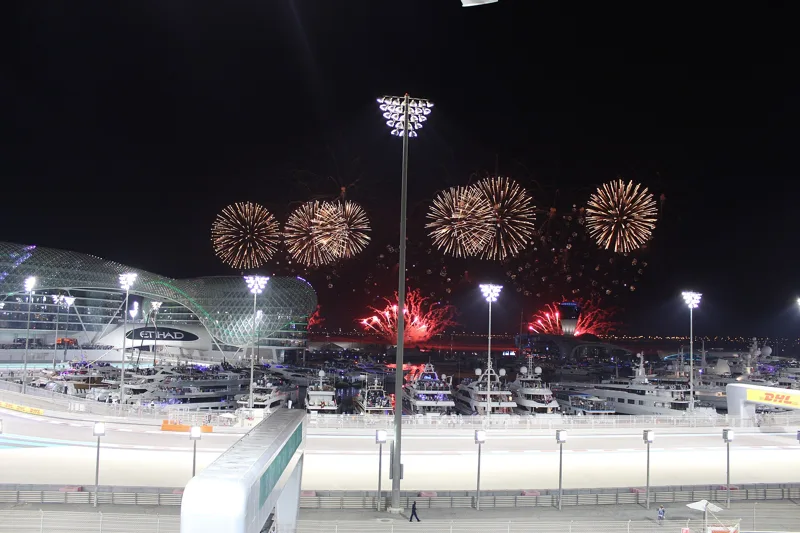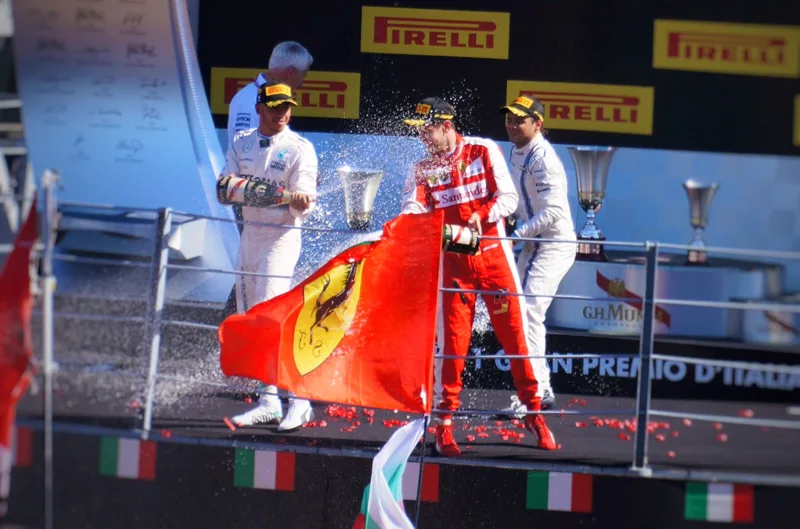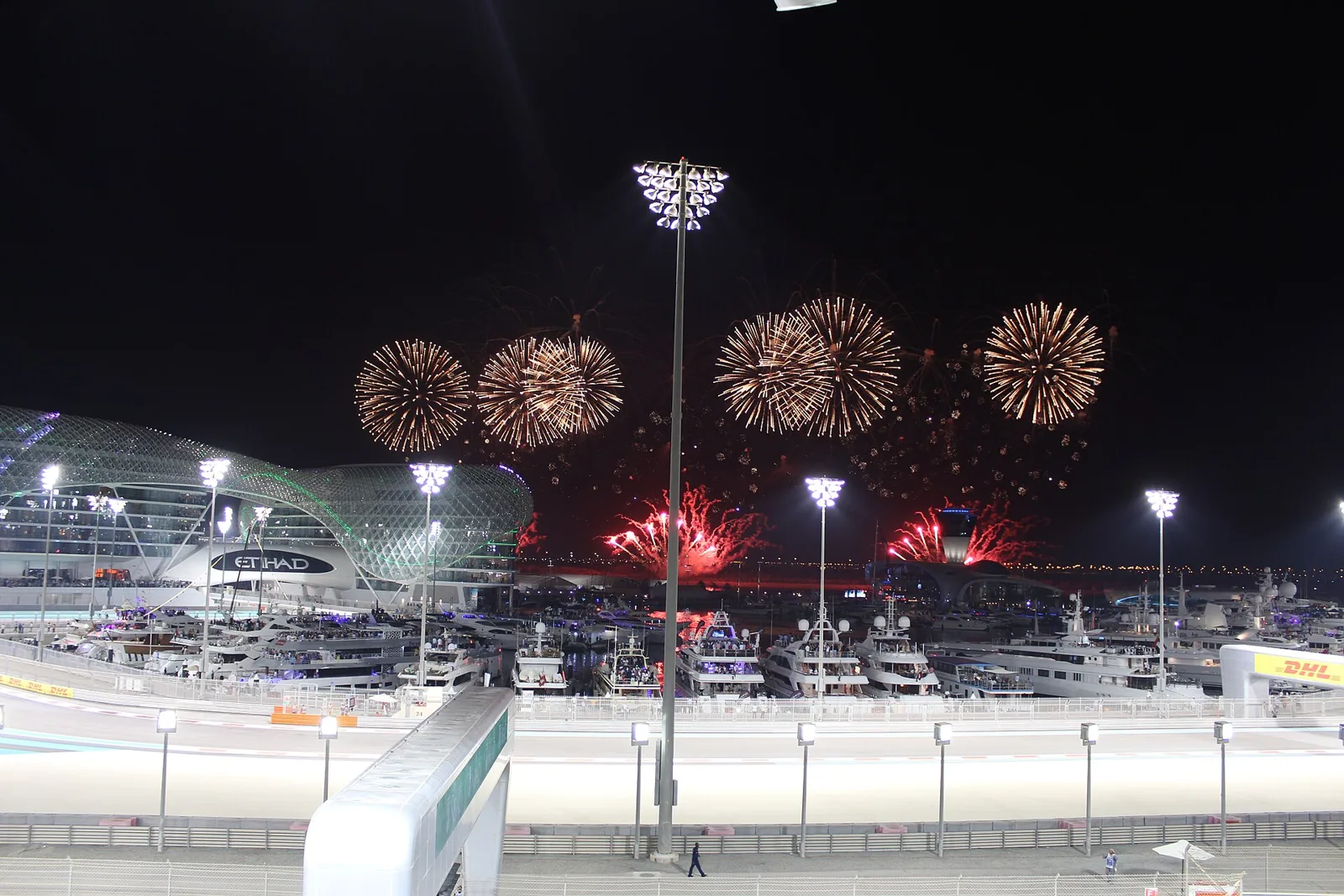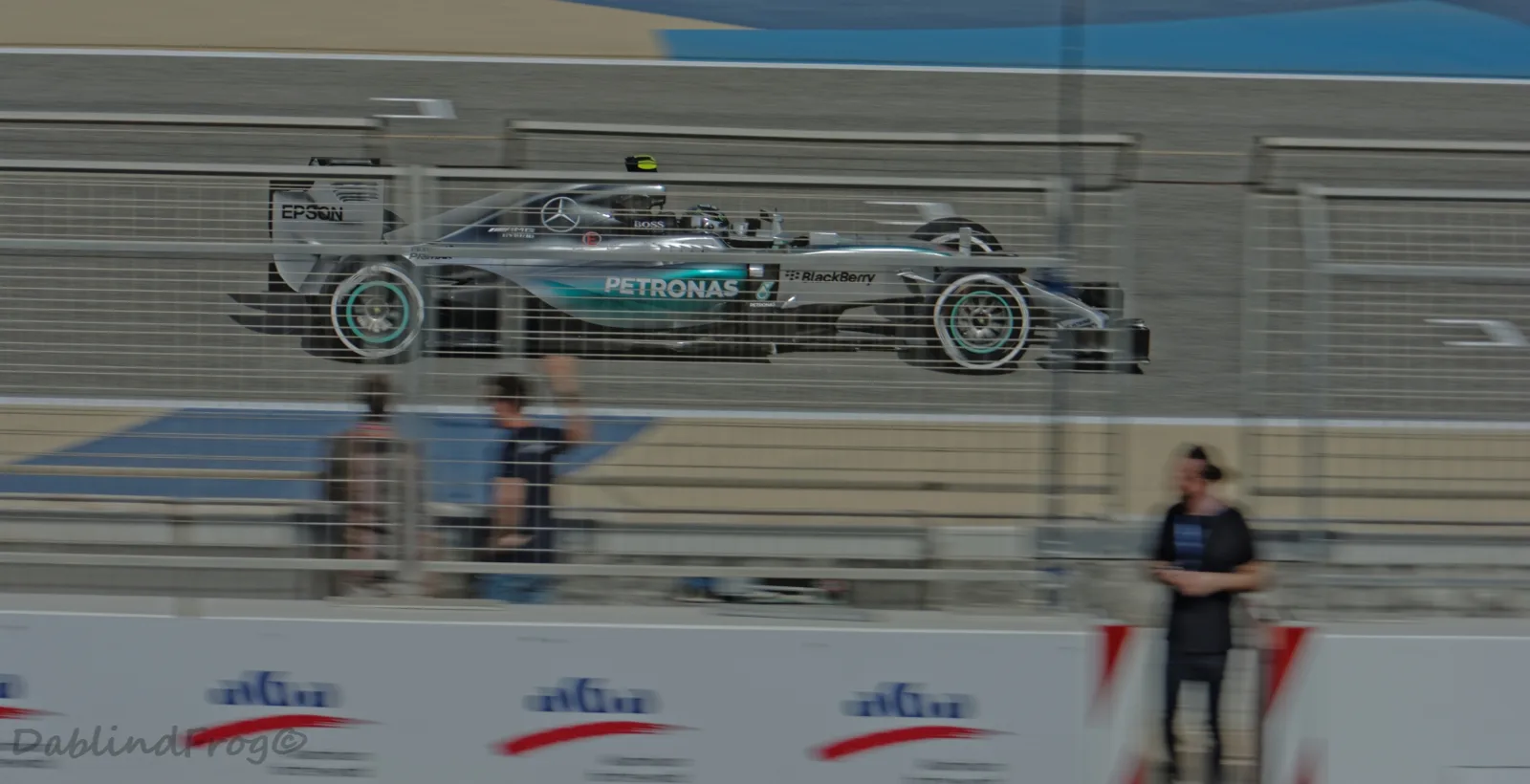
A night race in Sakhir, a team warning about driver tensions and a late Raikkonen charge that ended with a Mercedes brake failure at the front.
The 2015 Bahrain Grand Prix was a Formula One motor race held on 19 April 2015 at the Bahrain International Circuit. Lewis Hamilton won from pole for Mercedes, ahead of Kimi Raikkonen and Nico Rosberg, and it was the fourth round of the season.
Lewis Hamilton won the 2015 Bahrain Grand Prix on 19 April at the Bahrain International Circuit in Sakhir, a race run under the floodlights. Kimi Raikkonen took second, and Nico Rosberg finished third after a brake failure cost him a place. It was Hamilton's third win of the season and his 36th in Formula One.
What was behind the Mercedes tension?
Rosberg had said, the week before in China, that Hamilton had nudged him back into the Ferraris on purpose and compromised his race. Hamilton answered that Rosberg had never been near enough to mount an attack, a claim Rosberg dismissed by insisting he had tried.
The team responded with a warning that it would manage its drivers more closely if they did not race for the team on track. Hamilton also said that his contract talks were going slowly, and rumours spread that he had asked for clear number one status. Both driver and team denied that.
A night race in Sakhir, a Mercedes row that never fully went away, and a Raikkonen charge that caught a brake-hit Rosberg.
Why did protests surround the race?
Protests against the race were held again, as they had been in earlier years. The demonstrators pointed to the Shi'ite majority living under Sunni rule, called for political prisoners to be freed, and used the arrival of the sport to get their message seen.
The race came a week after an Amnesty International report described unabated human rights violations in Bahrain. Bernie Ecclestone had previously said in 2013 that F1 did not go anywhere to judge how a country was run. Before the 2015 event, however, the sport declared that it would uphold human rights in Bahrain and other countries where it operated, a stance widely read as a U-turn.
How did the weather and tyres shape the weekend?
The weather was typically hot and dry, with temperatures around 36 degrees Celsius (97 Fahrenheit) when the first practice session began on Friday. Lower temperatures were expected on race day, which was held at night, and Pirelli brought the medium tyre as the prime and the soft as the option, as it had in 2014.
How did practice and qualifying go?
Raikkonen and Vettel were quickest in the first Friday session, and Raikkonen was the only driver to lap the circuit in under 1:38. Mercedes focused on long runs with high fuel loads to check tyre wear, which left the team's cars 15th and 16th on the timesheets for that session.
Button went off at turn one on his first flying lap, and then sat out while the team tried to swap his battery. Fernando Alonso finished seventh, seven-tenths behind Raikkonen. Jolyon Palmer took over from Romain Grosjean for Lotus once again.
Rosberg topped the second session on Friday night, a tenth ahead of Hamilton, with the Ferraris about half a second behind. A red flag came out late on, after Vettel, slowing for turn one, was tapped by Sergio Perez in the Force India, and the contact tore off part of the Ferrari front wing endplate.
Hamilton was fastest in the third session on Saturday, with Vettel a tenth behind. Few cars went out early because of high temperatures and strong winds, and a brief red flag came out when Daniil Kvyat spun at turn four.
Qualifying was run in three parts of 18, 15 and 12 minutes, with five drivers eliminated after each of the first two. All teams, including Mercedes, used the soft tyre in the first part. Button broke down on his out lap and could not set a time, so he needed the stewards' permission to race, which they granted based on his practice times.
Button, Kvyat and Maldonado were among those out in the first part, along with both Manor cars. Alonso made the second part for McLaren for the first time that year, then missed out in 14th, one place ahead of Verstappen; Perez was the last car outside the top ten, alongside the two Saubers.
In the final part Hamilton took his fourth consecutive pole. Vettel took second on the grid and Rosberg had to settle for third, unable to beat Vettel's time. The Williams cars filled the third row, and Hulkenberg was eighth.
What happened at the start?
Button could not get his car to the grid because of electrical problems, and Massa did not get off the line on the formation lap and was forced to begin from the pit lane. The start lights came on after a long delay, because Maldonado had lined up in the wrong slot.
At the start Hamilton held his lead, while Rosberg tried to attack Vettel for second. Raikkonen went around the outside of the Mercedes to take third. Rosberg took third back from Raikkonen on lap four, then passed Vettel on lap nine, and Hamilton had extended his lead over Vettel to almost 8 seconds by the time Vettel pitted.
Massa, Nico Hulkenberg and Felipe Nasr came in first for new tyres as the stops started on lap eleven. Vettel was the first of the front runners to pit, on lap 14, and the undercut worked, because Rosberg emerged behind the Ferrari after pitting a lap later. Hamilton changed tyres the following lap, and came out close in front of the battling pair.
How did the race turn in the closing laps?
Raikkonen stopped last among the top four, on lap 18, and he ran the harder medium tyres when the leaders were on softer compounds. Even so, he worked his way back into the top three, and he later made a second stop on lap 40 for softer and faster tyres.
Massa's pit-lane start left him stuck in midfield. Carlos Sainz Jr retired after his front left wheel failed on lap 30, and Max Verstappen joined him on lap 34 with an electrical failure. Ericsson had a 27-second stop on lap 26, which dropped him out of reach of the points.
Both Hamilton and Vettel pitted for the final time on lap 34. On lap 36 Vettel went wide leaving the final corner, handing Rosberg a way past and bending his front wing. He had to pit unscheduled on the next lap and dropped to fifth.
Raikkonen closed on the leaders steadily. Fourteen laps from the end he was fifteen seconds down on Rosberg, but he was gaining more than a second a lap, and he reached the Mercedes with three laps to go. Rosberg was suffering from brake overheating through the whole race, and on lap 56 he outbraked himself at turn one, which let Raikkonen take second.
Hamilton also had brake problems late on, but he controlled the gap to the Ferrari and took his third win of the season. Massa used an early undercut to climb back to eighth from the pit-lane start, but once his tyres faded, Perez and Kvyat passed him, and he finished tenth for a single point.
The race ended with drama at the back of the field. On the last straight Ricciardo's Red Bull let go with its engine, and he rolled across the line under his own momentum.
| Driver | Result | Detail |
|---|---|---|
| Lewis Hamilton | Winner | Pole, his fourth in a row; third win of the season |
| Kimi Raikkonen | Second | Took second from Rosberg on lap 56 |
| Nico Rosberg | Third | Brake overheating; lost second to Raikkonen |
| Valtteri Bottas | Fourth | Vettel could not pass him for fourth |
| Sebastian Vettel | Fifth | Unscheduled stop after running wide on lap 36 |
| Felipe Massa | Tenth | Passed by Perez and Kvyat as his tyres degraded |
| Carlos Sainz Jr | Retired, lap 30 | Front left wheel |
| Max Verstappen | Retired, lap 34 | Electrical failure |
What did the drivers say after the race?
Jackie Stewart conducted the podium interviews. Hamilton said it had been a tough race, with the Ferraris giving Mercedes a real run for its money, and that looking after the tyres in those conditions had been hard. Raikkonen said he was disappointed not to win, but he praised how the team had worked and noted the large improvement Ferrari had made over the winter.
Rosberg was disappointed that the brake failure had cost him second place, but he said the car had been strong overall. Vettel admitted his error had let the team down, since it cost him the chance to fight Rosberg, though he took some comfort from a strong recovery and useful points.
The German daily Sueddeutsche Zeitung praised Raikkonen's composed drive as a calling card for a new contract beyond 2015. It was his first podium since the 2013 Korean race, some eighteen months before.
Why did the engine problems matter for Red Bull?
Ricciardo's engine failure left him with his last power unit of the season after only four races. Any further unit would bring grid penalties, which added to Renault's difficulties. Both Toro Rosso drivers failed to finish as well, and Verstappen called the engine a bit of a nightmare.
Christian Horner said the teams would stick to the plan agreed earlier in the year to lift the engine allocation from four units to five. That eased the strain on Red Bull and Ricciardo somewhat.