A small 15-car grid, a Manor non-start, a late Sauber legal fight and a Verstappen debut that rewrote the record books.
Hamilton won the 2015 season opener at Albert Park for Mercedes on 15 March, ahead of teammate Rosberg and Vettel in his first Ferrari race. The grid was cut to 15 cars after Manor failed to start, and a legal row at Sauber kept van der Garde out of the race.
Lewis Hamilton won the 2015 Australian Grand Prix at Albert Park on 15 March 2015, starting from pole and leading home his Mercedes teammate Nico Rosberg. The race opened the season with a grid of just 15 starters, after a Manor non-start and a late legal fight at Sauber had shaped the entry list. Max Verstappen's debut for Toro Rosso also set a record as the youngest driver in Formula One history.
Who won the 2015 Australian Grand Prix?
Lewis Hamilton won the 2015 Australian Grand Prix for Mercedes, from pole, and his 34th Grand Prix win came 1.3 seconds ahead of Nico Rosberg. Sebastian Vettel completed the podium on his first start for Ferrari, while Max Verstappen's debut ended with an engine failure.
Hamilton took pole by more than half a second, his 39th career pole and his fourth at Albert Park, a record for the venue. Rosberg, the defending winner, drifted onto the grass at turn 15 during his first quick lap, and that error cost him any chance to improve on the second.
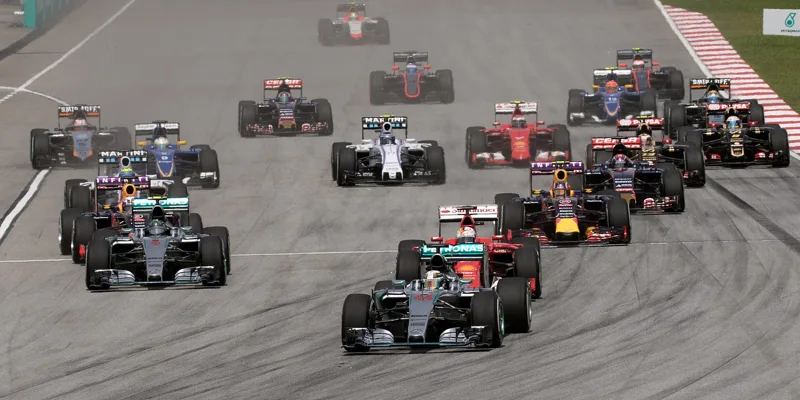
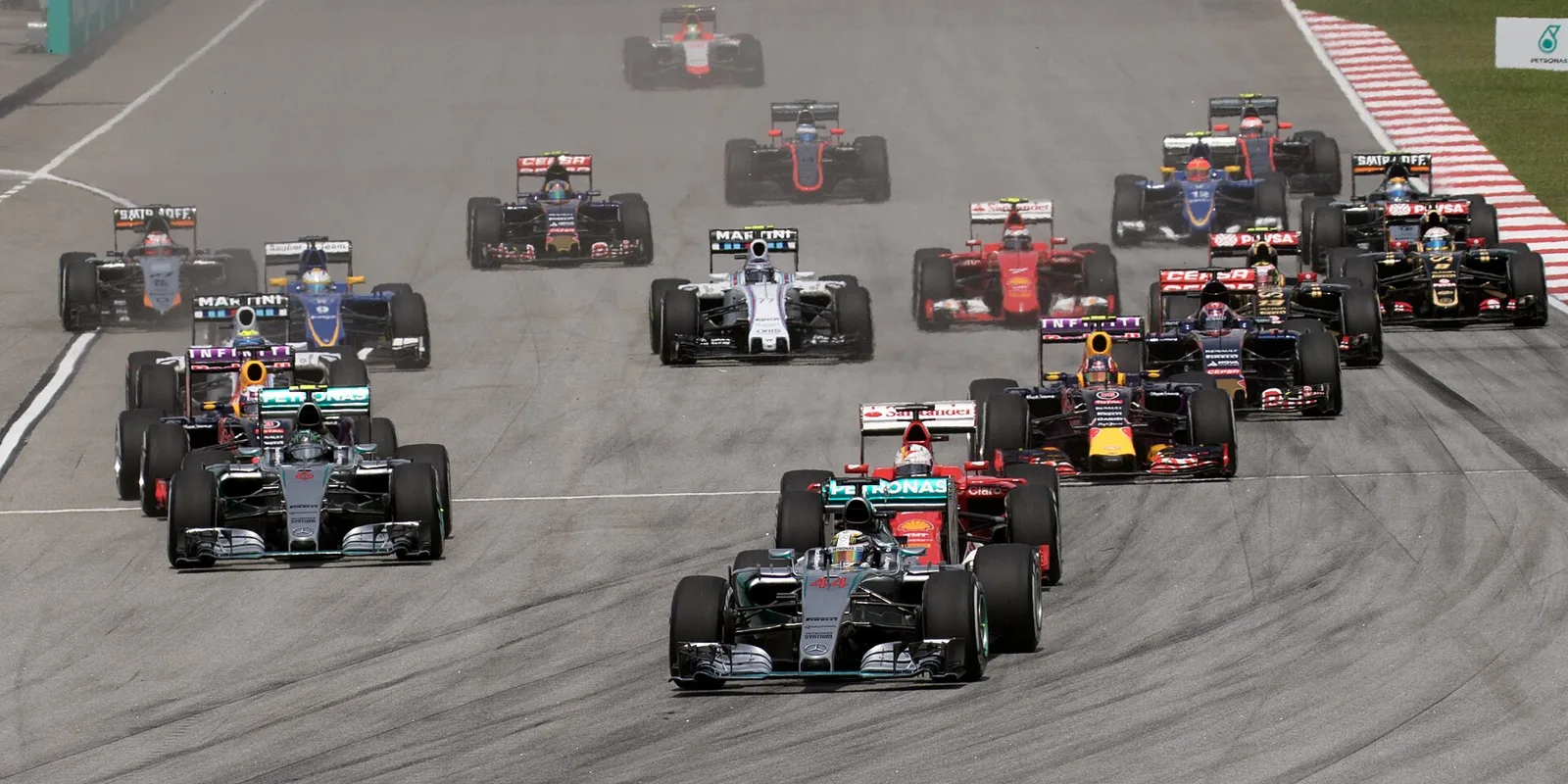
The race began with Hamilton leading into the first corner. A three-wide tussle at turn one, involving Kimi Raikkonen, Felipe Nasr and Pastor Maldonado, ended with Maldonado crashing out at turn two, and the safety car came out. On the next lap Romain Grosjean lost engine power, and both Lotus cars retired.
A 15-car grid, a Mercedes one-two and a debut that set the record book alight on day one of the season.
Why was the field so small?
Only 15 cars started the race, the fewest at a season opener since 1963. Manor Marussia did not set a qualifying time and could not start, Valtteri Bottas was ruled out by a back injury, and Kvyat and Magnussen both failed on their way to the grid.
Manor's problem was preparation. The team had come out of a turbulent pre-season, having been saved by late investment after going through administration. Its car had passed the mandatory crash tests but had completed no running, and a software glitch stopped the team starting its year-old Ferrari engines, so no practice or qualifying time was set.
Will Stevens drove full-time for Manor after a single start in 2014, and Roberto Merhi was signed for this race alone. The pair were left on the sidelines, a reminder of how fragile the smaller teams' weekends could be before a wheel had turned on track.
With only 15 cars on the grid, the race had fewer battles for position than a full field would have offered. Eleven cars reached the finish, with the field from sixth back all a lap adrift, so the contest for the top places was easier to follow than it would have been in a crowded pack.
What was the Sauber legal row about?
Dutch driver Giedo van der Garde took legal action in the Supreme Court of Victoria to enforce a contract he had signed in June 2014 to race for Sauber in 2015. He had won an arbitration award in Switzerland on 2 March 2015, after Sauber named Marcus Ericsson and Felipe Nasr as its drivers.
On 11 March the court ordered Sauber to let van der Garde drive in Melbourne, and the team responded by appealing the same day. Sauber said its C34 chassis had only been tailored to fit Ericsson and Nasr, and that putting van der Garde in the car would put the team and other drivers at risk. The team also argued that the contract had been ended in February with the approval of the FIA's Contract Recognition Board.
The appeal was dismissed the following day, and the hearing moved on to contempt proceedings against Sauber's team principal, Monisha Kaltenborn. Hours after the first judgment the FIA had published an entry list naming Nasr and Ericsson, and neither driver ran in the first practice session on Friday. They took part in the second session after media speculation about Bernie Ecclestone's intervention, and on 14 March van der Garde agreed to forgo the race while a longer-term answer was sought.
How did practice and qualifying go?
Mercedes set the tempo from the start of practice, with Rosberg fastest in both Friday sessions and Hamilton outpacing his teammate in Saturday's final session. In qualifying Hamilton was fastest in all three parts, while Rosberg's quick lap went wrong on turn 15.
The Friday sessions were thin on running. Only 16 cars took part in Friday morning's first session, because Sauber stayed in the garage over its legal troubles and Manor could not get its cars running. McLaren were also restricted to very few laps. Ferrari's new signing Sebastian Vettel was third in the Friday afternoon session, seven-tenths of a second down on Rosberg.
Qualifying ran in three parts of 18, 15 and 12 minutes, with five drivers eliminated after each of the first two. Button and Kevin Magnussen struggled after their lack of pre-season running, and both McLaren drivers failed to reach the second part, along with Ericsson. Bottas and the Mercedes drivers were the only ones who did not need the softer tyres to progress.
In the second part the Mercedes drivers each completed only one timed run, which was enough to go through. Red Bull and Toro Rosso were split apart, and Kvyat and Verstappen were both eliminated. Both Force India drivers and Nasr also dropped out, although Nasr's effort still put him eleventh on the grid.
In the final part Hamilton took pole. Massa was the best of the rest in third for Williams, while Vettel and Raikkonen took fourth and fifth for Ferrari. Hamilton's pole was his 39th, and it came by more than a second from the rest of the field.
How did the race unfold?
Hamilton led from the start, saving fuel before raising his pace, and he pitted at the end of lap 25 for a new set of medium tyres. Rosberg came in shortly afterwards, and Vettel gained a place by passing Massa during the stops. Verstappen retired on lap 34 with engine failure while running sixth, and Raikkonen went out on lap 41 after a wheel problem.
The safety car was withdrawn on lap four, and Carlos Sainz Jr. dropped from fifth to seventh after being passed by Nasr and Daniel Ricciardo. Nasr then lost track position after his team told him to hand back a place he had taken under safety car conditions. Those early shuffles set the pattern for the rest of the afternoon.
Raikkonen's problem was caused by a wheel that a mechanic could not fully tighten during a pit stop. A cross-threaded peg left the left-rear tyre loose. Button briefly moved into the final points place, but Sergio Perez passed him after a long duel that had begun at the start.
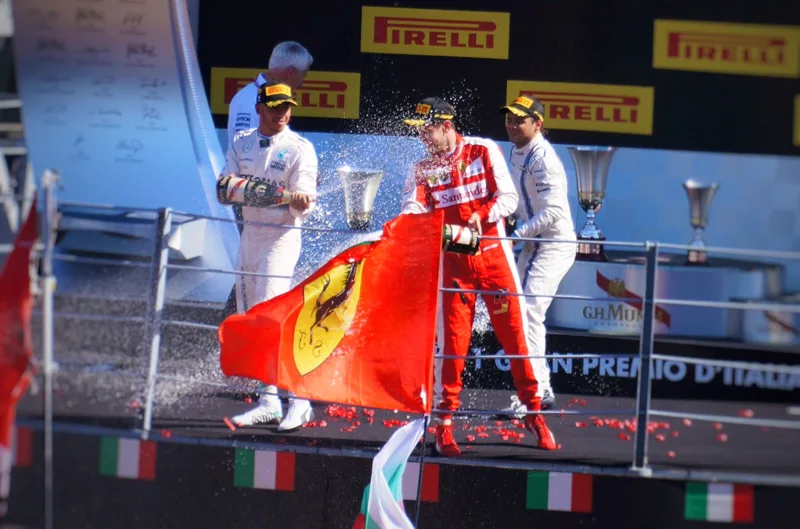
Hamilton won from Rosberg, with Vettel third, Massa fourth and Nasr fifth. Ricciardo, Hulkenberg, Ericsson, Sainz and Perez completed the points in sixth to tenth. Only eleven cars finished the race, and Button was the only one of those finishing outside the points. Everyone from sixth place down was a lap behind the winner.
Did any rookies score points?
Yes. Ericsson, Nasr and Sainz all scored their first Formula One points, and Nasr and Sainz did so on their debuts. Nasr's fifth place was the highest finish by a Brazilian driver making a Grand Prix debut, and Sauber collected 14 points for the weekend.
Verstappen's debut was the other headline of the day. At 17 years and 166 days he became the youngest driver in Formula One history, and he had been running sixth when his engine failed on lap 34. His Toro Rosso teammate Sainz had a more productive afternoon and finished ninth after an early drop to seventh.
Sauber was delighted with the weekend, because it had scored none in the whole of the previous season. The points were a strong return after a year without any, even in a race otherwise dominated by Mercedes.
Manor Marussia were summoned by the FIA to explain why they had not taken part in qualifying. The hearing found the team would have been unable to field its cars even if it had broken the curfew. Ecclestone nonetheless said Manor would have to pay the freight costs to and from Australia, which Formula One Management usually covered.
What was the post-race controversy about?
Mercedes' dominance sparked controversy in the paddock. Red Bull quarrelled with their engine supplier Renault, called on the FIA to step in with rule changes to level the field, and worried that fans would lose interest. Ricciardo apologised to Australian fans for what he called a boring race.
Toto Wolff reacted angrily to rival comments and later clarified that his remarks were not aimed at Christian Horner personally. Rosberg voiced hope that the rivals would fight more closely over the season. Vettel replied that he doubted the hope was genuine, pointing out how far Mercedes had finished ahead.
Rosberg praised Hamilton's form across the weekend, while the teams that could not match Mercedes were left to wonder how the rest of the year would go.
Results at a glance
| Finish | Driver | Team | Notes |
|---|---|---|---|
| 1st | Lewis Hamilton | Mercedes | Pole and win; 34th Grand Prix victory |
| 2nd | Nico Rosberg | Mercedes | 1.3 seconds behind the winner |
| 3rd | Sebastian Vettel | Ferrari | First race for Ferrari |
| 5th | Felipe Nasr | Sauber | Points on debut; best Brazilian debut result |
| 6th | Daniel Ricciardo | Red Bull | Points; apologised to fans for a boring race |
| 8th | Marcus Ericsson | Sauber | First Formula One points |
| 9th | Carlos Sainz Jr. | Toro Rosso | First points on debut |
| Retired | Max Verstappen | Toro Rosso | Engine failure on lap 34, running sixth |
| Retired | Kimi Raikkonen | Ferrari | Wheel problem on lap 41 |
| Did not start | Kevin Magnussen | McLaren | Failed on the way to the grid |
| Did not start | Valtteri Bottas | Williams | Back injury from qualifying |