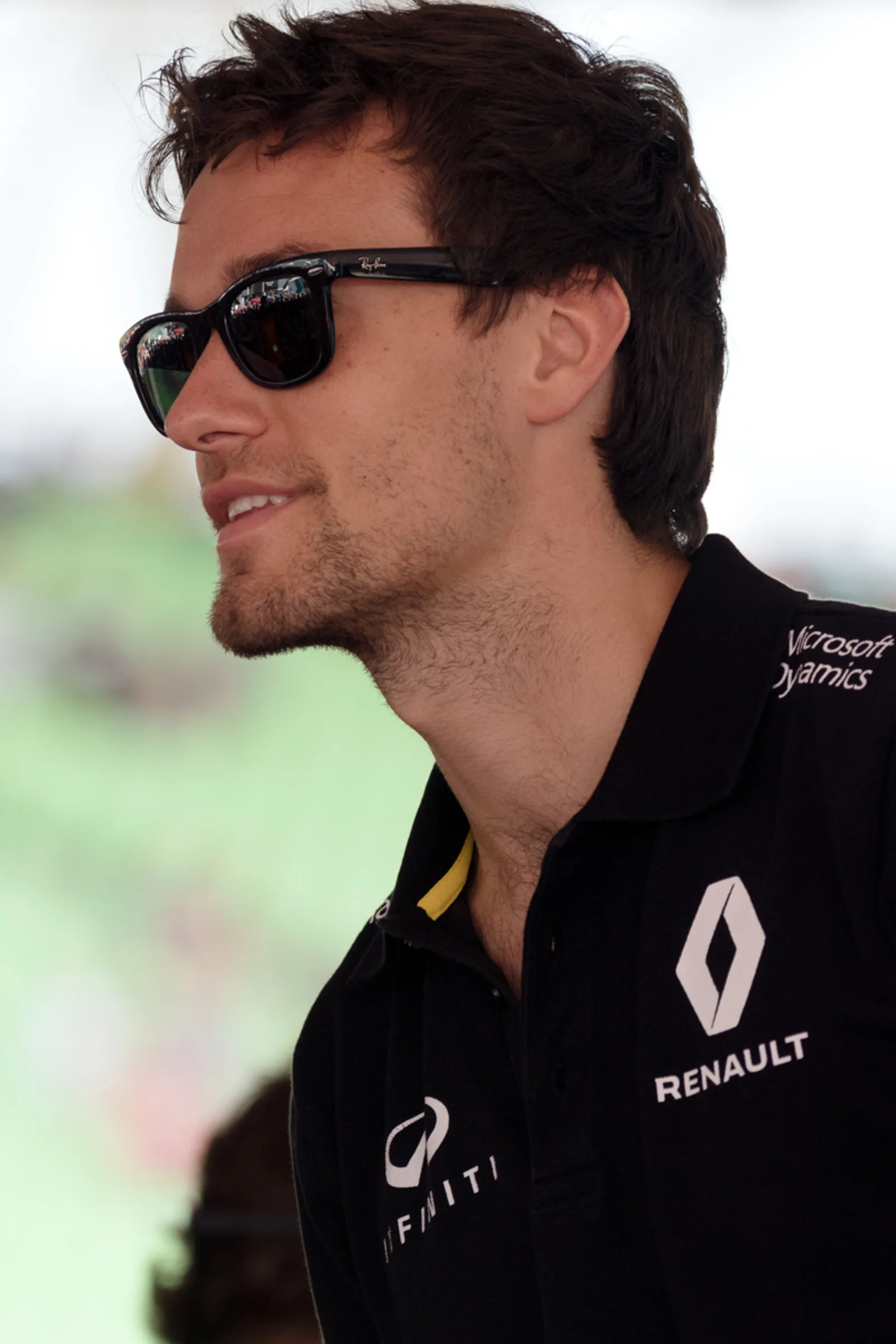
From the 2014 GP2 title to two seasons at Renault, and then a second career in the commentary box.
Jolyon Palmer is a British former racing driver and broadcaster, born in 1991. He won the 2014 GP2 Series title, raced in Formula One from 2016 to 2017 and scored his first points at the Malaysian Grand Prix. He has since worked as an analyst for the BBC, Channel 4 and F1 TV.
Jolyon Palmer's career has taken him from junior karting to a GP2 title, two Formula One seasons and a second life in the commentary box. Each stage is recorded in his results, from the T Cars championship to his 2014 season with DAMS and his Renault years.
Who is Jolyon Palmer?
Jolyon Carlyle Palmer was born on 20 January 1991 and is a former racing driver, broadcaster and journalist from Britain. He raced in Formula One in 2016 and 2017, and since retiring he has been a broadcaster for the BBC, Channel 4 and F1 TV.
His father is Jonathan Palmer, a former F1 driver and circuit owner. Jonathan had created the Formula Palmer Audi series, which his son joined in 2007, so the family link to single-seater racing ran deep from the start.
Palmer was educated at Dorset House School and then Cranleigh School before studying at the University of Nottingham. In 2012 he finished a bachelor's course in Management Studies, the same year he was racing in GP2, so study and racing overlapped.
Before becoming a broadcaster he was a racing driver first. His Formula One seasons with Renault produced his first championship points, and he later applied the same competitor's eye to his analysis.
A GP2 champion who spent two Formula One seasons at Renault before becoming one of the sport's most recognisable analysts.
How did Palmer rise through junior racing?
Palmer began in MiniMax karts in 2004 and moved into cars the following year, taking part in the Autumn Trophy of the T Cars championship. He finished fifth in the main championship in 2005 and again in 2006, before moving to Formula Palmer Audi in 2007 and then to the FIA Formula Two Championship in 2009.
The 2005 season was a learning stage. Palmer finished fifth with 92 points, 46 behind the champion, Adrian Quaife-Hobbs. The series was aimed at drivers aged 14 to 17, and he was still within that bracket.
In 2006 he earned one pole position and four podiums in the main championship, finishing fifth again with 101 points, 69 behind the champion, Luciano Bacheta. He also won four of the six races in a second Autumn Trophy. In 2007 he raced twice in T Cars, won both and then chose to concentrate on Formula Palmer Audi.
His Formula Palmer Audi debut in 2007 was twelfth at Silverstone, and his results improved through the year. He won at Brands Hatch and Oulton Park, but an injury meant he missed the final two rounds, and he still finished tenth in the championship.
He was a championship challenger into the closing races of 2008. He won at Spa, took 11 podiums and three pole positions, and finished third, just 22 points behind Jason Moore. The Autumn Trophy and the FPA Shootout added three more podiums from six races.
In 2009 he moved to the FIA Formula Two Championship, in car three, and his best result that year was sixth at Imola. In 2010 he won the opening race at Silverstone, the first British F2 victory since his father's triumph at Mugello in 1983. He took both wins at Monza to lead the standings, but he finished second behind fellow Briton Dean Stoneman.
Why was the 2014 GP2 title important?
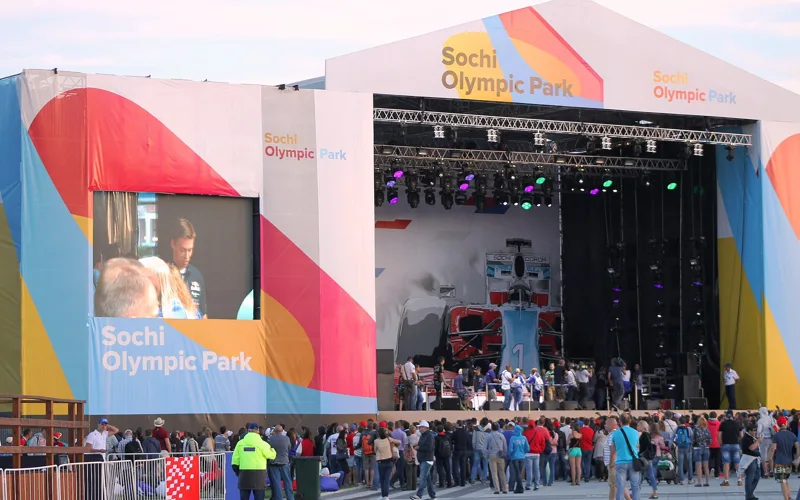
Palmer won the 2014 GP2 Series championship with DAMS, clinching the title at Sochi with a fourth win of the year. He secured it with three races to spare and set an all-time points record for the series, which led to a Formula One test with Force India later that season.
The road to the title began with his GP2 debut in 2011, driving for Arden International alongside Josef Kral. He scored top ten finishes at Abu Dhabi, Istanbul and Valencia, and a move to Barwa Addax for the GP2 Finals brought third and fourth places at Abu Dhabi to close the year.
In 2012 he switched to iSport International, alongside Marcus Ericsson. Electrical problems hurt his early season, and a change of chassis helped. He finished sixth at Monaco and then took his first GP2 win in that weekend's sprint race, but he slipped to 11th in the final standings.
In 2013 he drove for Carlin, partnering Felipe Nasr. He won the feature races at the Hungaroring and in Singapore, where he also took pole and fastest lap, and he finished seventh overall in the points table.
Palmer moved to DAMS for 2014 and was quickest in the opening session of pre-season running at Abu Dhabi. He started from pole in Bahrain and was on the podium at the finish. He then took the Sprint Race victory the next day and held the championship lead for the rest of the year.
At Monza a fuel shortfall sent him to the back of the feature race grid, where he finished eighth. He then won the Sprint Race from reverse-grid pole to extend his lead. At Hungary he and Nasr clashed wheel to wheel twice, and the Sprint Race podium ceremony turned tense.
How did Palmer reach Formula One?
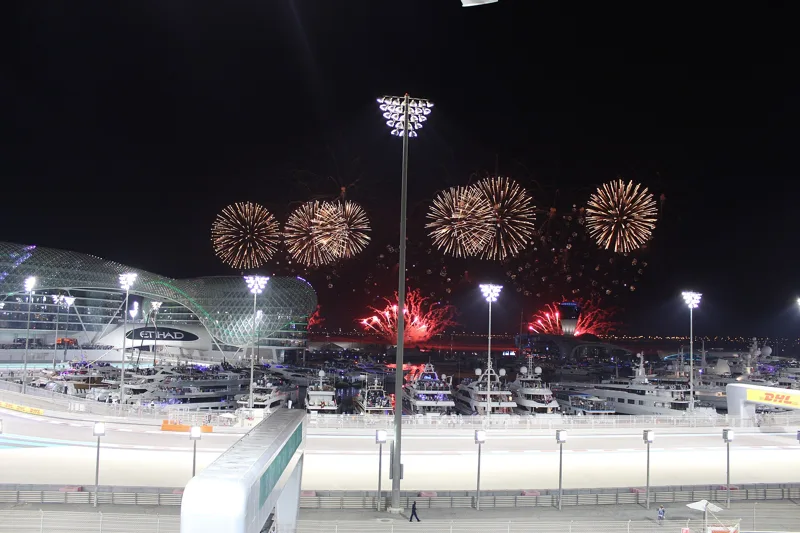
Palmer first drove a Formula One car in November 2014, when Force India gave him a test at the end of the season at Abu Dhabi's Yas Marina circuit. In January 2015 he was named test and reserve driver for Lotus F1 Team, working alongside race drivers Pastor Maldonado and Romain Grosjean.
His first run in the Lotus E23 Hybrid came on the second day of pre-season testing at Barcelona. He completed 77 laps on a session centred on collecting data and development work, and finished the day in eighth place. The team's operations director, Alan Permane, said the session was about accumulating data.
His Grand Prix debut came in Free Practice One at the Chinese Grand Prix, where he finished 15th on his first trip to Shanghai. At Bahrain he was 14th, 0.441s behind Maldonado, and at the Spanish Grand Prix he recorded the 13th fastest time.
In June 2015 he was named to replace Romain Grosjean in Free Practice One for the rest of the European season, five Grands Prix from Austria to Italy. He continued in that role at his home Grand Prix in Britain, and at Spa he tested a new front wing for the team.
His final appearance in the Lotus E23 came at the Abu Dhabi season finale, where problems with the car restricted him to only 10 minutes on track. He had shown enough to earn a Formula One seat, and the Renault announcement came in October 2015.
What were Palmer's results at Renault?
Palmer was confirmed as a full-time Renault driver in October 2015, becoming the first former F2 driver to move up to the Formula One team. In 2016 his best finish early in the season was 11th in Australia, where he outqualified his team-mate.
Renault returned to the sport as a constructor that year, having bought the Lotus team over the winter. His team-mate was former McLaren driver Kevin Magnussen. In Australia Palmer outqualified Magnussen to 14th and finished eleventh, just outside the points.
Car problems disrupted the next races in Bahrain and China. He bounced back at the Russian Grand Prix with 13th from 18th on the grid, repeated that result in Spain, where he finished ahead of Magnussen, and took 15th at the European Grand Prix in Baku.
Reliability hurt him through the middle of the year. A water leak ended his Canadian race, and a suspected gearbox problem forced him to retire on lap 38 at his home Grand Prix at Silverstone. He then produced a strong drive in Hungary, finishing 12th and narrowly missing his first points.
His first championship point came at the Malaysian Grand Prix, which he completed in tenth, 14 seconds adrift of Jenson Button's McLaren. Renault confirmed on 9 November 2016 that he had extended his deal for 2017.
How did Palmer's 2017 season unfold?
Palmer's 2017 season began with Nico Hulkenberg as his team-mate, after Magnussen left for the new Haas team. He ended the year with sixth place at the Singapore Grand Prix, which was his only points-scoring result of the season and his best finish in Formula One.
Renault unveiled the R.S.17 in London on 22 January, in yellow and black livery with his race number 30 on the car. He first drove it at the Circuit de Barcelona-Catalunya in late February, ending the test with the third fastest time behind only the Ferrari of Kimi Raikkonen and the Red Bull of Max Verstappen.
The Singapore race was a difficult one. He had learned the day before that he would lose his seat for 2018, and he still survived a race of attrition to finish sixth.
On 7 October 2017 Renault announced that he would leave after the Japanese Grand Prix. Toro Rosso driver Carlos Sainz Jr would drive in his place from the United States Grand Prix. Palmer later said he first saw the news in an Autosport report over the Singapore weekend, and had to push the team boss to confirm it.
What has Palmer done since Formula One?
Palmer joined the BBC Radio 5 Formula One team as an expert in February 2018, alongside Jack Nicholls and Jennie Gow. He has since written a regular BBC column, appeared on F1 TV and Channel 4, and from 2023 worked as a colour commentator.
His BBC column gives the view of a driver who has raced the circuits he now analyses. He is also a Special Contributor to formula1.com, where he looks at racing incidents using every available camera angle. He has guest presented F1 Live alongside Will Buxton, the post-race paddock show.
He also wrote for Sky Sports F1, filing a GP2 diary after each event, and he co-commentated on GP2 for the channel in 2015. In February 2020 he was announced as an expert analyst for the Barcelona pre-season test, ahead of the 2020 season.
In 2023 he became a colour commentator on F1 Live for F1 TV, BBC Sport and Channel 4. Jolyon Palmer's Analysis, a review of each recent race, runs on F1 TV, and as of 2025 he remains on the pre-race and post-race shows with Laura Winter and Lawrence Baretto.
What honours did Palmer receive?
Palmer took the Guild of Motoring Writers award for the year's best driver in December 2014, at a prize gala in London. He was also up for Autosport's British competition driver award that year and collected the BRDC Fairfield Trophy in 2014.
A panel of motorsport journalists picks the Guild winner. Earlier recipients include Fangio, Clark and Schumacher, so the honour placed Palmer among drivers with long reputations.
The Fairfield Trophy goes to a club member for outstanding performance across the year. Among those present were Lewis Hamilton, Damon Hill and the BRDC president Derek Warwick.
Palmer also took part in the Race of Champions. In 2014 he raced in Barbados for Team Young Stars with Pascal Wehrlein, narrowly missing out on progressing from the group stage. In 2015 he returned at the Olympic Stadium in London with the same partner, losing in the quarter finals.
What were the main milestones in Palmer's career?
| Season | Series or team | Notable result |
|---|---|---|
| 2005 | T Cars Autumn Trophy | Fifth in the championship with 92 points |
| 2006 | T Cars | Fifth in the championship with 101 points |
| 2008 | Formula Palmer Audi | Third, 22 points behind Jason Moore |
| 2010 | FIA Formula Two | Second behind Dean Stoneman |
| 2014 | GP2 Series with DAMS | Champion, with three races to spare |
| 2015 | Lotus F1 Team | Test and reserve driver; Free Practice One appearances |
| 2016 | Renault Sport F1 Team | Tenth at the Malaysian Grand Prix, first World Championship point |
| 2017 | Renault Sport F1 Team | Sixth at the Singapore Grand Prix, his only points of the season |