From a bicycle works at Mezieres to a Paris car factory, the firm built racing cars, the Demoiselle aeroplane and seven airships before Citroen took over.
Clement-Bayard was a French firm founded in 1903 by Adolphe Clement that built cars, aeroplanes and airships. Its cars raced from 1904, its Demoiselle was recorded as the first series production aircraft, and its factories were broken up in 1922 when Citroen bought the car business.
Clement-Bayard was a French manufacturer of automobiles, aeroplanes and airships, founded in 1903 by Adolphe Clement. Its cars were built at Levallois-Perret in Paris, and it raced them from 1904. It also built aircraft and, from 1908, airships at La Motte-Breuil. The company was broken up in 1922, and its Paris factory was taken over by Citroen.
Where did the Clement-Bayard name come from?
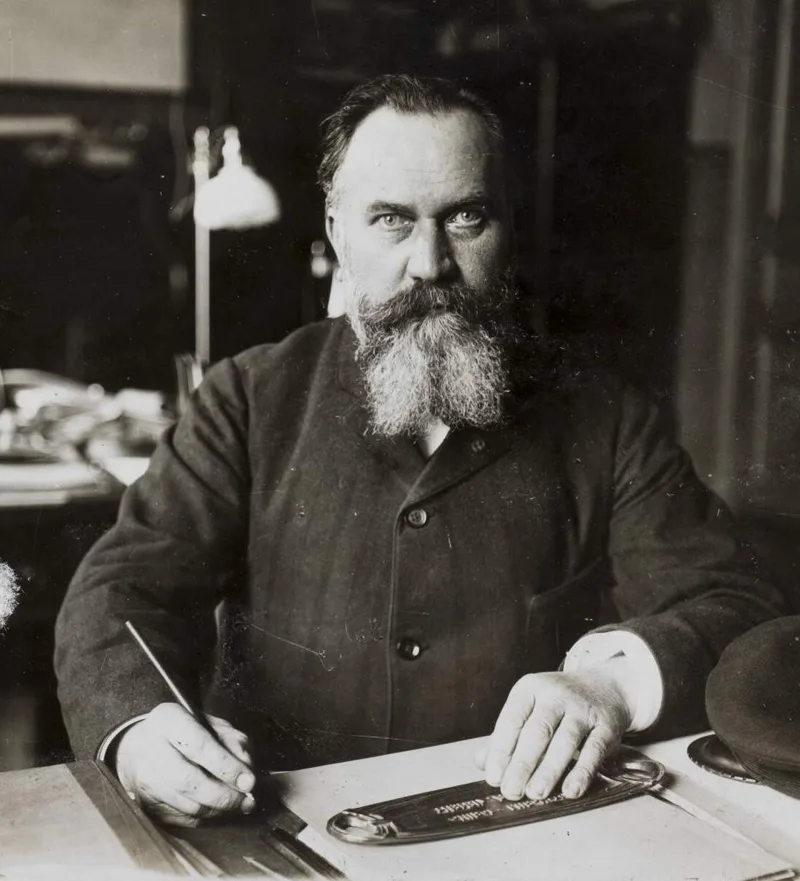
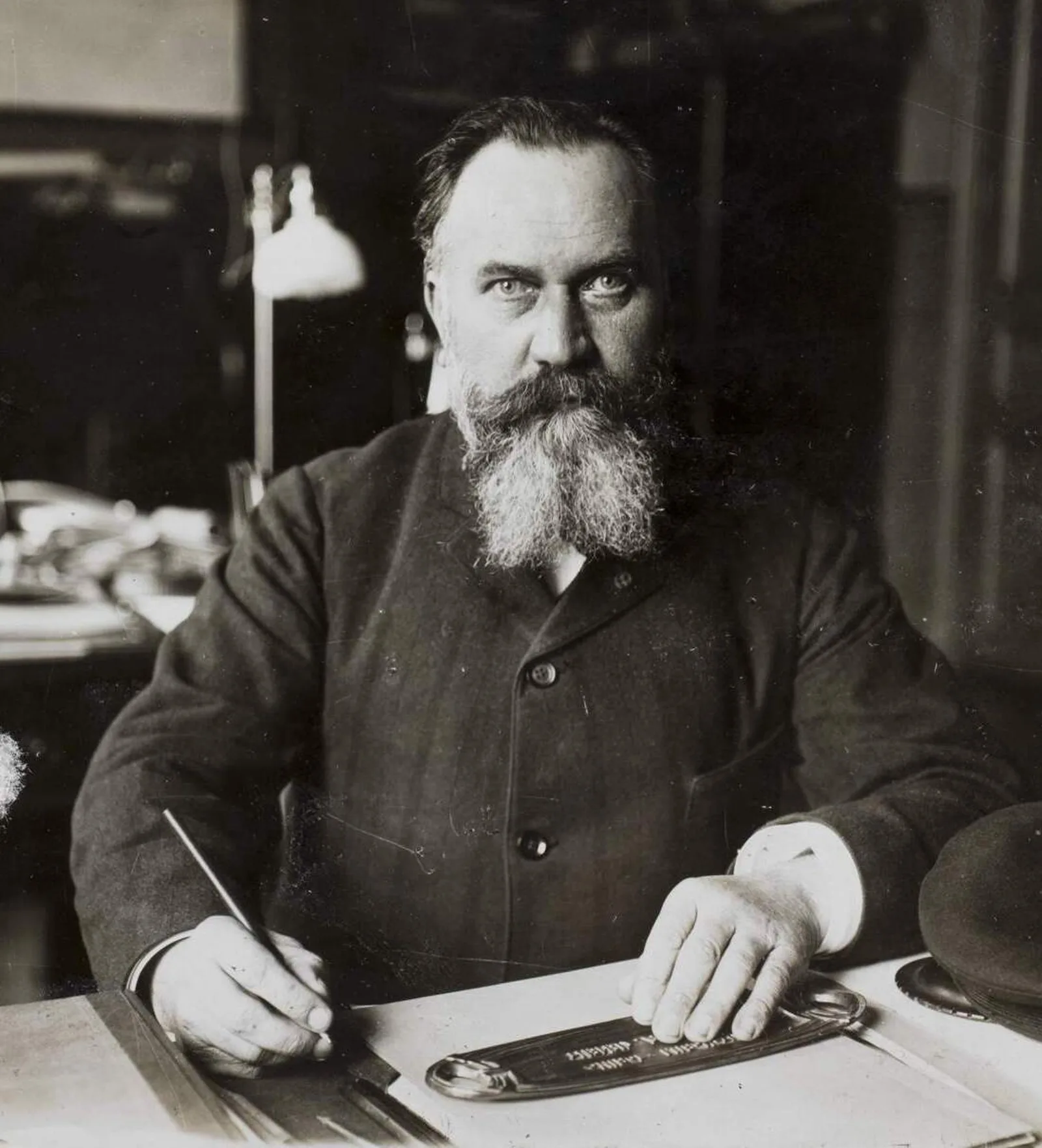
Clement took the name Bayard in honour of the Chevalier Pierre Terrail, seigneur de Bayard, who saved the town of Mezieres in 1521. A statue of the Chevalier stood in front of the Mezieres factory, and the image became part of the company logo. Clement later received permission from the Conseil d'Etat to change his own name to Adolphe Clement-Bayard in 1909.
The name was a local tribute, and it tied the firm to the town where its main works stood. Early cars were imported to Britain under the Talbot brand.
A bicycle works that became a racing team, an aeroplane maker and an airship builder before Citroen took the Paris factory.
How did Clement-Bayard begin making cars?
In 1896 Adolphe Clement, who held the manufacturing rights for Dunlop tyres in France, joined a syndicate led by Dunlop's founder Harvey Du Cros. Together they bought the Gladiator Cycle Company and merged it into a large bicycle conglomerate called Clement, Gladiator and Humber and Co Limited. In 1902 a motorised bicycle led the company into cars and motorcycles.
Clement had designed the La Macerienne factory at Mezieres in 1894, mainly to build bicycles. It was built on a former military site in the Faubourg Saint-Julien, and by 1897 it covered 15,000 m2 and was producing components and spokes for Gladiator. Cars began to be built there from 1903, under the Clement-Bayard name.
Clement supervised the building of the works from a distance. He relied on photographs taken every day and visited the site once a week.
What cars did Clement-Bayard sell before 1914?
The initial range had three models, the 9hp, 12hp and 16hp. In 1904 the line was enlarged with a 6hp single-cylinder, a 7hp twin-cylinder and 14hp, 20hp and 27hp four-cylinder cars. Production at Levallois-Perret rose from 1,800 cars a year to 3,000 in 1907, and the works employed up to 4,000 workers.
The range ran from a compact twin-cylinder two-seater rated 8-10 hp up to a 50-60 hp four-cylinder that could top 60 km/h. The 1907 10/12 hp model brought a unitary gearbox and a dashboard radiator, both of which were modern features for the period.
In 1910 the company began building a compact, inexpensive roadster for two, powered by a 4-cylinder 10/12 hp engine and fitted with a heater for the driver and passenger. Demand was strong, and the car was built until the war broke out in 1914. By early 1914 the firm offered a complete range of twelve models, with two to six seats.
Engines ran from a small 7 hp twin-cylinder costing less than 7000 francs up to a 6-cylinder 30 Hp unit. A 20 Hp four-cylinder sleeve-valve Knight engine, licensed from Panhard et Levassor, completed the line. On 15 November 1913 the company announced a new 4-cylinder 30-40 Hp motor.
How did Clement-Bayard perform in motor racing?
Clement-Bayard began racing in 1904, the same year it started building racing cars. Its team included Albert Clement, Jacques Guders, Rene Hanriot, Marc-Philippe Villemain, Carles, De la Touloubre, A. Villemain and Pierre Garcet. Albert Clement was the team's leading driver, and his results set the early pattern for the marque on the track.
On 24 July 1904 Clement won a Bastogne race, the II Circuit des Ardennes des Voiturettes, covering 240.010 km in 4h 26m 52.6s at an average of 53.91 km/h in an 18Hp car. He also set the fastest lap at 45m 02s, which averaged 63.89 km/h. A month later the team finished second at the Vanderbilt Cup on Long Island, where Clement led lap 8 of the ten-lap race.
The 1906 French Grand Prix at Le Mans was the high point of the early years. Clement finished third in a 100Hp machine after 12 hours 49 minutes, and he was in front at the end of laps 2 and 5 on the second day. Flat tyres plagued the field, and a Michelin detachable rim with a tyre already fitted could be swapped in about 4 minutes, saving 11 minutes. Felice Nazzaro's FIAT used the same idea to take second place from Clement.
| Event | Date | Clement-Bayard result |
|---|---|---|
| I Eliminatoires Francaises, Forest of Argonne | 20 May 1904 | Tenth, Albert Clement, 532.79 km in 7 hours 10 minutes 52.8 seconds |
| II Circuit des Ardennes des Voiturettes, Bastogne | 24 July 1904 | Won, Albert Clement, 240.010 km, average 53.91 km/h |
| III Circuit des Ardennes, Bastogne | 25 July 1904 | Third, Clement, 591.255 km in 6 hours 34 minutes 43.2 seconds |
| I.W.K. Vanderbilt Cup, Long Island | 8 October 1904 | Second, Clement, 457.686 km in 5 hours 28 minutes 13 seconds |
| French Grand Prix, Le Mans | 1906 | Third, Clement, 1,238 km in 12 hours 49 minutes |
| V Circuit des Ardennes, Bastogne | 13 August 1906 | Sixth, Clement, 961 km in 6 hours 2 minutes 55.2 seconds |
| Vanderbilt Cup | 1906 | Fourth, Clement, 100 hp car, averaging 59.0 mph (95.0 km/h) |
| French Grand Prix, 1908 | 1908 | Fourth, Victor Rigal, in a 13,963 cc four-cylinder car |
What happened to the racing team?
The racing record was not all success. Clement retired after one lap of the II Eliminatoires at Auvergne in June 1905, and his team-mate Rene Hanriot finished tenth but failed to qualify. In September 1905 Clement retired after the first 166 km lap of the Coppa Florio at Brescia, and the Vanderbilt Cup car suffered reliability problems that year.
The team's most painful moment came on 17 May 1907, when Albert Clement died while practising for the French Grand Prix. Pierre Garcet and Elliott Shepard finished seventh and eighth in the race itself. Clement-Bayard also took the Coupe de Calais in 1905 and the Coupe de l'Automobile-Club de Cannes in 1907 and 1908, and it won the Tour de France Automobile in 1908.
Did Clement-Bayard build aeroplanes?
Yes. The company entered aviation in 1908 and worked with Louis Capazza on a lenticular airship, a glider that was unveiled in L'Aerophile in May 1908 but never built. Its more important aviation work came with Alberto Santos-Dumont's Demoiselle No 19 monoplane, which Clement-Bayard built to compete for the Coupe d'Aviation Ernest Archdeacon prize.
The Demoiselle is recorded as the world's first series production aircraft. The plan was for 100 units, but 50 were built and 15 were sold, each airframe for 7,500 francs. By 1909 buyers could choose from three engines, including a Wright 4-cylinder 30 hp unit made under licence, a 40 hp design by Pierre Clerget and a Clement 20 hp. The aircraft achieved 120 km/h.
Clerget went on to design a range of Clement-Bayard aero engines, including a 7-cylinder supercharged radial, a 4-cylinder 40 hp used on the Demoiselle, a 4-cylinder 100 hp and a V8 airship engine of 200 hp. The company's aircraft line then grew to monoplanes and biplanes. The Monoplane No. 1 appeared at the Paris show in 1910, and the Monoplane No. 5 followed in November 1912 with a 70 hp Gnome rotary engine.
What airships did Clement-Bayard build?
In 1908 Astra Clement-Bayard began manufacturing airships at a new factory at La Motte-Breuil, in response to a French Army decision to start airship operations. The first airship was too expensive for the French government, so it was bought by Tsar Nicholas II for the Russian army. It first flew on 28 October 1908 and measured 56.25 metres.
The No. 2, piloted by Maurice Clement, first flew on 1 June 1910 with a top speed of 54 km/h. That year it became the first airship to cross the Channel, covering over 380 km in 6 hours. The army ordered three copies.
Seven Clement-Bayard airships were completed in all. The Dupuy de Lome was 89 metres long with a volume of 9,000 m3 and first flew on 1 May 1912. The Adjudant Vincenot was 88.5 metres long with a top speed of 49 km/h, and the modified version reached 53 km/h. The Montgolfier was 73.5 metres long, with a top speed of 60 km/h and first flight on 31 July 1913.
The hangar at La Motte-Breuil is still maintained by Clement-Talbot Ltd.
Where were the Clement-Bayard factories?
The main works at Mezieres was La Macerienne, which covered 15,000 m2 and used a hydraulic turbine power plant, a steam room, a machine hall, a foundry and a nickel processing shop. The factory building still exists, and in the spring of 2006 it was transformed into a cultural centre.
The Levallois-Perret works in north-west Paris began producing cycles in 1898, then cars from 1901 and Clement-Bayard cars from 1903. Clement-Bayard Automobiles also operated at the Boulevard de la Saussaye 57 in Neuilly from 1899 to 1922, where three-wheelers and cars were built.
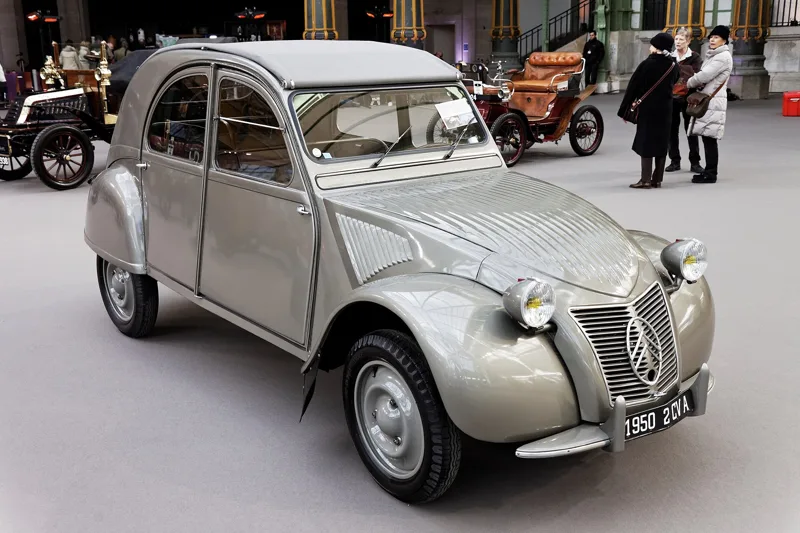
The Levallois factory became the home of the Citroen 2CV for nearly forty years, from 1948 to 1988.
How did the war and the sale end the marque?
Adolphe Clement ceded control of the company to his son Maurice in early 1914, just before the war. The consequences were disastrous, because in 1914 the La Macerienne factory at Mezieres was seized by the advancing German army. Its machinery was shipped back to Germany, the forges and foundries were destroyed, and the gutted building was later used as an indoor riding school for German officers.
Car building at Levallois-Perret stopped in August 1914, and the works switched to war output: arms, military vehicles, aero engines, airships and aircraft. The company was broken up in 1922, when its automobile business was sold to Andre Citroen. Adolphe Clement had also invested financially in the sale.