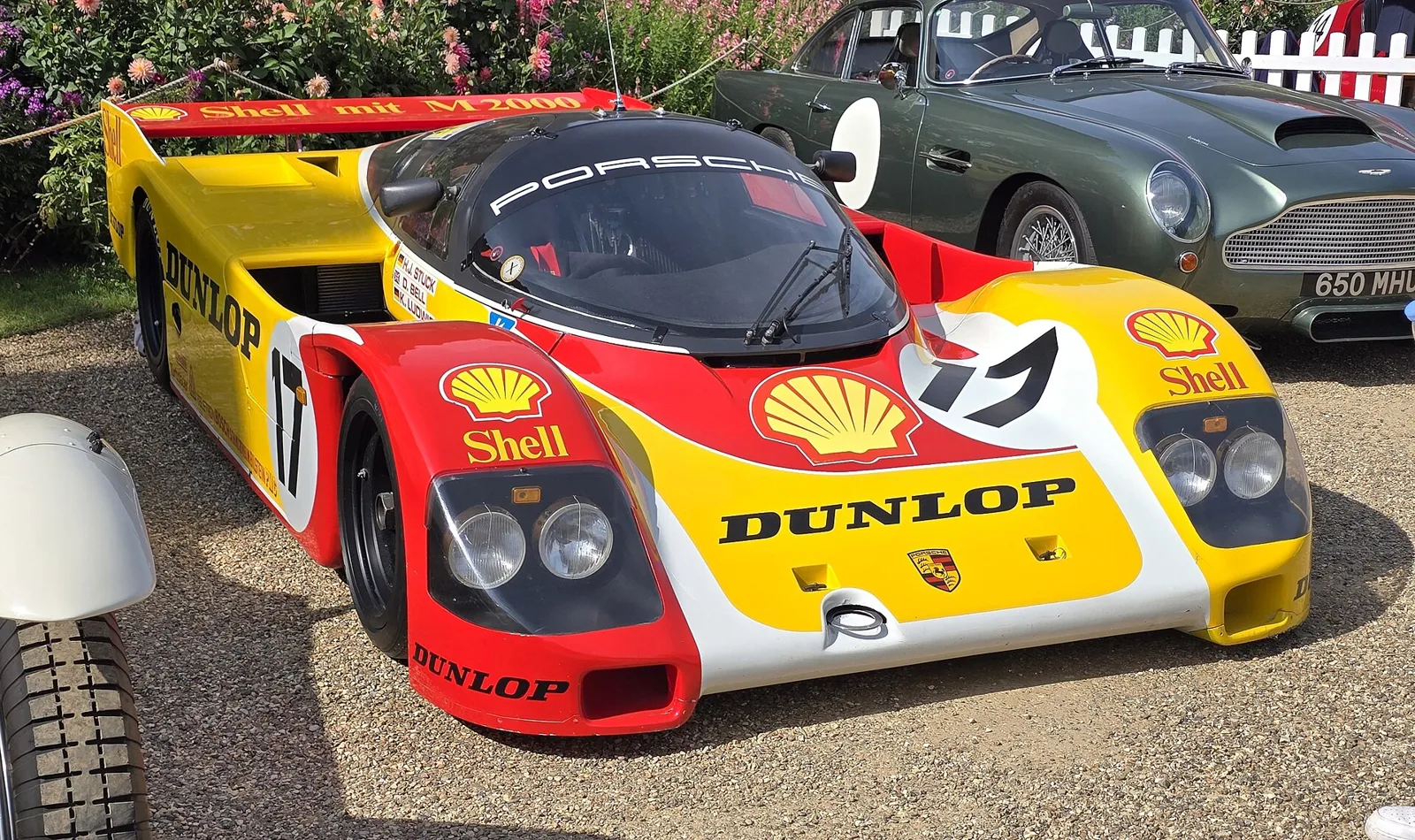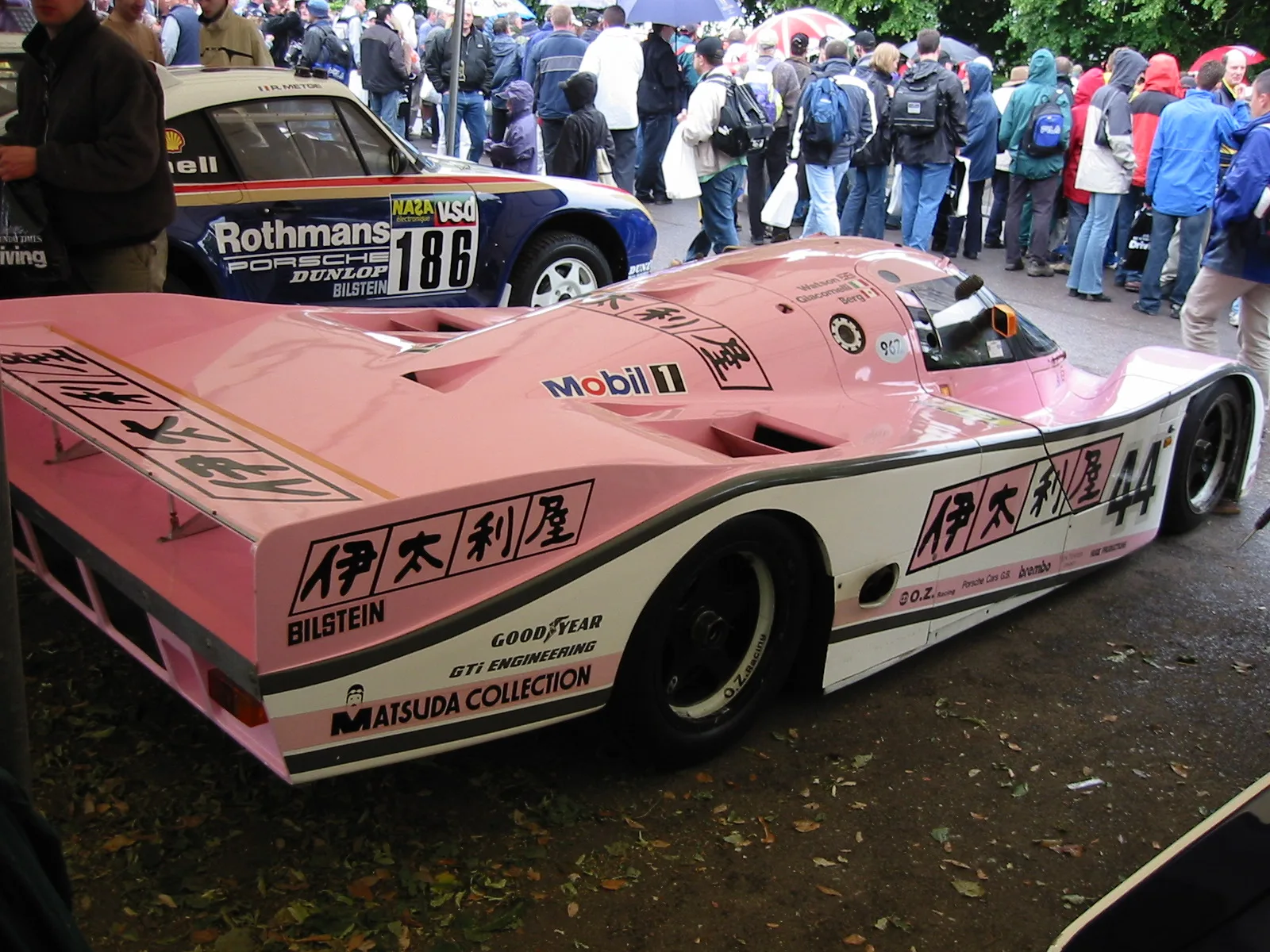
From a Volkswagen Golf GTI team in 1977 to customised Porsche 956 and 962C prototypes, Richard Lloyd Racing built cars that outperformed the factory originals.
Richard Lloyd Racing was a British team created in 1977 as GTi Engineering. It raced modified Porsche 956 and 962C cars in the World Sportscar Championship before folding after the 1990 season, when the cost of the championship became too high.
Richard Lloyd Racing grew out of GTi Engineering, a team that Richard Lloyd created in 1977 to race Volkswagen Golfs in the British Saloon Car Championship. It later became one of the best-known Porsche privateers in the World Sportscar Championship, running extensively modified 956 and 962C cars until it closed at the end of the 1990 season.
Where did Richard Lloyd Racing come from?
Lloyd set the operation up as his own personal team, and it took its name from the Volkswagen Golf GTI cars he raced in the British Saloon Car Championship. The GTi Engineering name stayed on the business even after the team moved beyond saloon cars, and the company kept a separate tuning arm alongside the racing side.
The Golf GTi had launched in 1976, and Volkswagen Great Britain provided the main backing. Lloyd drove as well as managing, and his best championship result came in 1978, when he was runner-up in the standings. Several wins followed across the three-year GTi programme.
Customised Porsche prototypes that outperformed their standard counterparts and pioneered ideas later taken up by Porsche.
Why did the team move from Volkswagen to Porsche?
In 1980 the team left Volkswagen for its partner brand Audi and entered the new Audi 80 in the saloon car series. Lloyd signed Stirling Moss and Martin Brundle for that season. Porsche then asked the team to become its primary European entrant for the 924 Carrera GTR in endurance racing, which brought in Canon as main sponsor.
The Porsche arrangement set the pattern for the next decade. At the 1981 Monza 1000 km, Lloyd and Tony Dron finished eighth overall and second in class. Lloyd and Andy Rouse then won their class at the 1000 km Brands Hatch, the team's home event, which gave the squad its first class win.
Canon's sponsorship gave the operation its Canon Racing identity, a name the team kept for the Porsche programme that followed.
How competitive were the 924 Carrera GTRs?
The 924 Carrera GTR had to run under the GTO class rules of the International Motor Sports Association in 1982. Those rules made it ineligible for most European class victories, but the team still reached fifth overall at the 1000 km Nurburgring by outlasting several Group C and Group 6 prototypes.
When Porsche ended the 924 programme after 1982, the team moved to the Group C 956. That step took it into the top class of the World Championship and gave it a chance at overall wins for the first time.
How did the 956 perform in the World Championship?
The 956 gave the team its first World Championship podiums. In the second race with the car, at Silverstone, Jan Lammers and Thierry Boutsen finished on the rostrum, and another podium followed at the Nurburgring. A final podium came at Mugello, and Lammers finished seventh in the 1983 Drivers Championship.
For 1984 the team added a second car in selected rounds to carry an on-board video camera for Canon, which recorded whole races. Richard Lloyd and Nick Mason, the Pink Floyd drummer, shared that car at Le Mans, where it made its debut. The added camera weight hurt the main entry, but Lammers and John Fitzpatrick remained front runners.
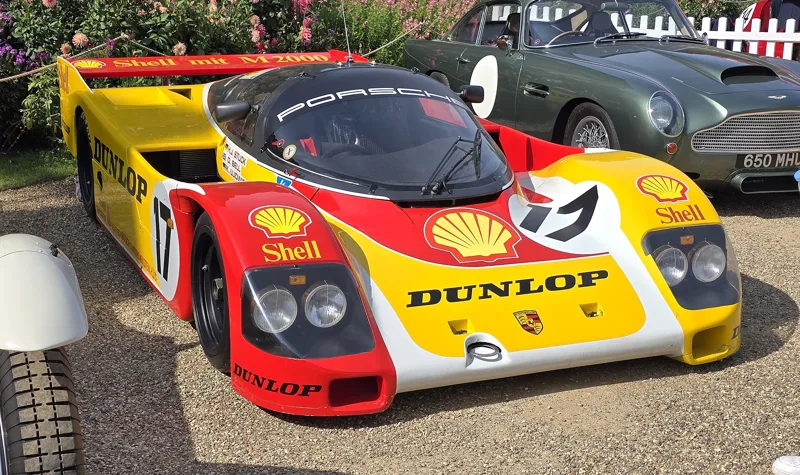
Substituting for Fitzpatrick, Palmer partnered Lammers to a first World Championship win at Brands Hatch, finishing two laps clear of a Joest Racing Porsche. Soon afterwards the team debuted the custom-built 956 GTi, which took second at Imola. Lammers and Fitzpatrick finished the year tied for fifth in the Drivers Championship.
What made the GTi Porsches different from the factory cars?
Lloyd asked designer Nigel Stroud to develop a new monocoque and base chassis in an effort to beat the rigidity of the factory unit. Aluminium composite honeycomb replaced sheet metal in the new structure, and the car became the 956 GTi when it received the Stroud-designed chassis designated #106B.
Other changes followed. The Porsche front suspension was replaced by a custom pullrod layout, and Peter Stevens shaped the bodywork to add downforce on smaller circuits. A narrow front wing sat on two vertical struts, and the rear wing became a twin-element carbon fibre design. Lloyd and team manager Greene devised the nose wing at the 1984 Brands Hatch 1000 km.
The #106B car was wrecked in a crash at Spa in 1985. The replacement monocoque, #106BII, adopted several newer 962 elements, including a cockpit moved farther back from the front axle, and it served the team until the end of 1986.
For 1987 Lloyd commissioned a new 962C-based car, which again used standard 962 parts alongside custom pieces. Its rear body was redesigned so the wing hung from struts at the centre rather than sitting in the long tail. Chassis #200 followed in 1988 with an extended splitter, a relocated brake duct and side panels covering the rear wheels, an idea taken from TWR-Jaguar.
How did the team perform from 1985 to 1990?
Richard Lloyd Racing reached its strongest years in the mid-1980s, with Brands Hatch victories in 1984 and 1986 and a runner-up place at Le Mans in 1985. Results then tailed off as sponsors came and went and running costs rose.
The 1985 Le Mans race ended with Jonathan Palmer, James Weaver and Richard Lloyd three laps behind the winning Joest Porsche and ahead of the factory Rothmans Porsche. Later that year a tyre let go during practice at the 1000 km Spa, sending the car into the barrier at 230 km/h (140 mph). Palmer was injured and the car needed a lengthy rebuild.
In 1986 Canon ended its sponsorship and Liqui Moly stepped in. Brands Hatch delivered a second World Championship win that year, four laps clear of Joest Racing, and the team added a second place at the Nurburgring. Its season finished sixth in the Teams Championship.
The 1987 season began slowly, with Palmer and Mauro Baldi as the full-season drivers. A Norisring sprint victory came in the second half of the year, followed by second at Brands Hatch and third at Fuji. The team finished fifth in the Teams Championship.
Liqui Moly withdrew in 1988 and Porsche Great Britain took over as backer. The schedule shrank to a handful of events, with accidents and disqualifications keeping the car in the garage for long periods. The team ended the year ninth in the Teams Championship.
The 1989 championship was run as shorter sprint events, which lowered costs and allowed a second car to return. Derek Bell, Tiff Needell and Steven Andskar drove for the team, which finished fifth at Dijon-Prenois and fourth in the Mexico City finale. Needell took second in a Supercup race at Silverstone.
In 1990 Italiya became the primary sponsor and the team ran a single entry, with Manuel Reuter, James Weaver and Steven Andskar behind the wheel. A sixth at Spa and a third at a shortened Montreal round were the high points, and the team finished ninth in the championship with three points.
| Season | Main car or sponsor | Standout result |
|---|---|---|
| 1981 | Porsche 924 Carrera GTR | Second in class at the Monza 1000 km |
| 1982 | 924 Carrera GTR under GTO rules | Fifth overall at the Nurburgring 1000 km |
| 1983 | Porsche 956 | Podiums at Silverstone, Nurburgring and Mugello |
| 1984 | 956 and custom 956 GTi | Brands Hatch World Championship win |
| 1985 | 956 GTi | Second at Le Mans; fifth in Teams Championship |
| 1986 | 956 GTi, Liqui Moly | Brands Hatch win; sixth in Teams Championship |
| 1987 | 962C GTi | Norisring sprint win; fifth in Teams Championship |
| 1988 | 962C GTi, Porsche Great Britain | Fourth at the opening sprint; ninth in Teams Championship |
| 1989 | 962C GTi, two cars | Fifth at Dijon-Prenois; ninth in Teams Championship |
| 1990 | 962C GTi, Italiya | Sixth at Spa; ninth with three points |
Who drove for Richard Lloyd Racing?
Richard Lloyd drove for the team through its World Championship years, and Jan Lammers, Jonathan Palmer and John Fitzpatrick formed the core of the 956 line-up in the early and mid-1980s. Mauro Baldi and Bob Wollek were factory Porsche drivers who sat in the car at Brands Hatch in 1986.
Later drivers included Price Cobb and James Weaver at the 1988 Tampa exhibition, Derek Bell, Tiff Needell and Steven Andskar in 1989, and Manuel Reuter in 1990. Jochen Mass won the 1987 Kyalami exhibition, while Nick Mason shared the camera car with Lloyd at Le Mans in 1984.
The team's roster shifted with its budget. Permanent full-season pairings were common when sponsors were in place, and when backing fell away the team used fewer drivers and fewer entries until it closed.
What happened to the GTi cars after the team closed?
The 956 GTi was refurbished in 1990 and still appears in historic events, where it wears its original Canon paint scheme. Several 962C GTi chassis were sold on, and at least one found a second life in American and Japanese racing.
Chassis #202 was bought by Dyson Racing, which modified it for the Camel GT Championship as DR1. That car won a single event at San Antonio, Texas. Chassis #203 went to ADA Engineering for the 1992 Le Mans race and returned in 1994 with Team Nippon.
Chassis #106B was sold once Lloyd had replaced it, and it competed in the All Japan Sports Prototype Championship for Trust Racing Team between 1988 and 1990. Nisseki Racing Team ran it in 1991. Chassis #200 also raced in Japan for Alpha Cubic in 1990.
What is the legacy of Richard Lloyd Racing?
The 1989 change to sprint racing was meant to reduce costs for teams, and the single-entry programme of 1990 shows how far the team's budget had shrunk by the end of its life. Its closure followed a year in which it could field only one car.
The team's lasting mark is the set of GTi Porsches it built. Their early use of exotic materials and unusual design details foreshadowed ideas that Porsche and other manufacturers later adopted, which gives the team a place in the history of endurance racing engineering. The cars showed that a privateer could push a factory design beyond its standard form.
The GTi name outlived the racing team. The tuning business, which worked on Volkswagen and Audi products from the Silverstone race shop, was eventually sold, but it still trades today.