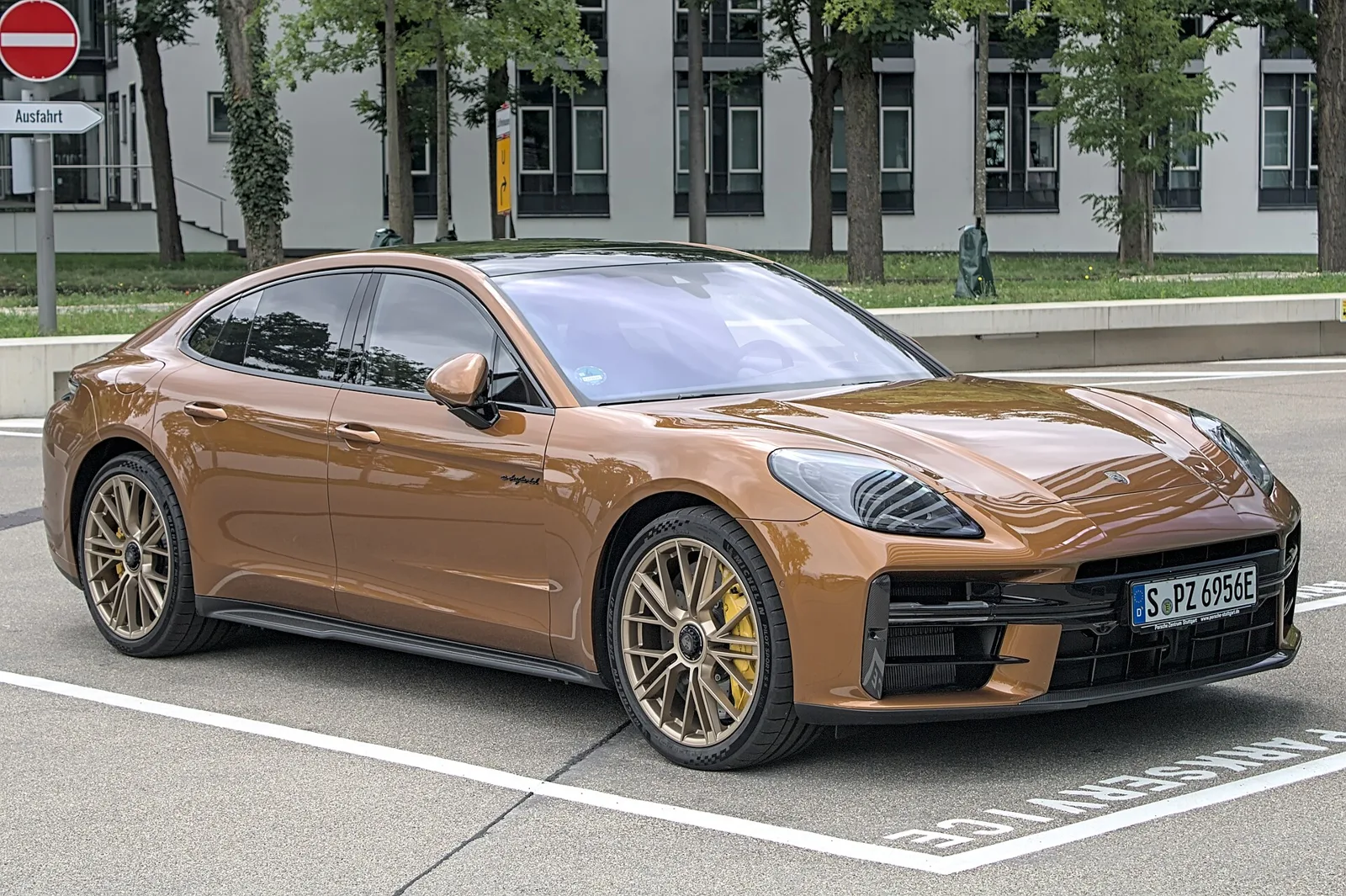
A big front-engined Porsche that its own company built against the grain of the 911, through three generations, V8 and V6 engines, diesels and hybrids.
Porsche's Panamera is a front-engined four-door saloon that began life in Shanghai in 2009. Across three generations it has offered V8 and V6 petrol engines, diesels, hybrids and plug-in models, with the Turbo S E-Hybrid producing 680 PS, making it the third most powerful Porsche.
The Porsche Panamera is a large four-door luxury car that Porsche first showed at the Shanghai motor show in April 2009. It has been built in three generations, with front-mounted engines, rear or all-wheel drive, and a range that moved from V8 power to diesels, hybrids and plug-in hybrids. Its name comes from the Carrera Panamericana race, which also gave the Carrera its name.
What is the Porsche Panamera?
The Panamera is a mid- to full-size luxury car, sold in Europe in the E-segment and as a long-wheelbase F-segment car. It is a four-passenger, four-door hatchback with a front engine, and it has used rear-wheel drive or all-wheel drive across its generations. The car has been offered in three generations, and each has kept the same basic formula of a big, quick grand tourer.
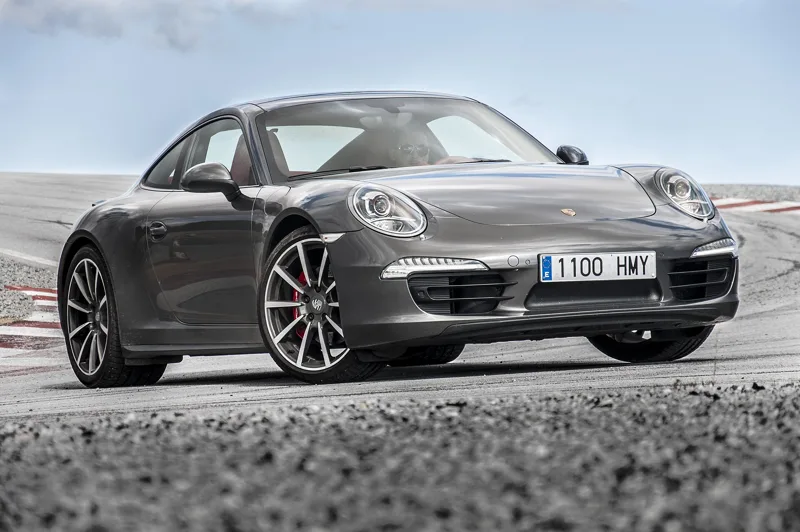
It was a bold product for a company known for lightweight two-door sports cars. The Panamera weighed nearly 1,800 kg (4,000 lb) and used a front engine, which put it at odds with the rear-engined 911 that defines the Porsche brand. Its shape nods to the 911, but its interior and features were built for comfort, luxury and long-distance travel.
Porsche built a front-engined four-door luxury car in the shadow of the 911, and it has been a commercial success for more than a decade.
Why is the Panamera's layout unusual for Porsche?
The Panamera runs against the grain of Porsche's historically lightweight two-door, rear-engined sports cars. It offers commodious dimensions, a four-passenger interior and technological, luxury-oriented amenities, and its shape resembles the 911 while its character is very different.
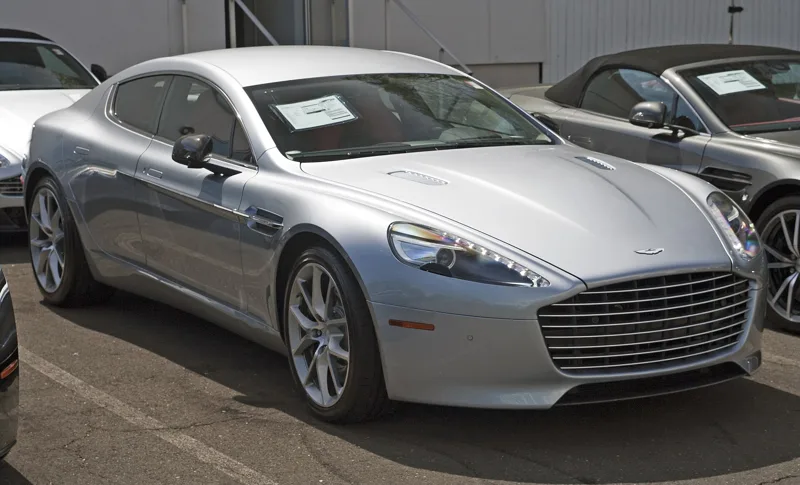
One reviewer noted that the Panamera's driving dynamics were close to those of the 911, and said it seemed to occupy the no-man's-land between good sports saloons and proper sports cars. In comparison tests it has won against four-door performance rivals such as the Maserati Quattroporte and the Aston Martin Rapide.
Where is the Panamera built?
Engines are assembled first in Stuttgart, while the body is built, painted and assembled in Leipzig, Germany. The Leipzig plant also made the Cayenne until 2017, along with the Macan. Hannover, a Volkswagen Group site, built the bodies from 2009 to 2016.
Production began in April 2009, one month after the car's debut at the Shanghai motor show.
How did the first-generation Panamera launch?
Debuting in 2009 were the S, 4S and Turbo, all V8-engined. The S and 4S used a 4.8-litre twin-turbo V8 with 500 PS (368 kW; 493 hp), and the car was unveiled in Shanghai on 19 April 2009. Porsche then launched two V6 models in 2010, the Panamera and the Panamera 4, with a 3.6-litre engine producing 300 PS (221 kW; 296 hp).
The V6 borrowed technology from the V8 engine, including direct fuel injection, variable valve lift, a variable intake manifold, and integrated dry-sump lubrication. An auto start-stop system worked only with the PDK gearbox. The Turbo carried active aerodynamics, and its rear spoiler had several stages.
Optional Sports Chrono Packages added a Sport Plus button, which tightened the damping and lowered the car's body by 25 mm (1.0 in) through the air springs. The Panamera also featured Porsche Active Suspension Management, active anti-roll bars and adaptive air suspension.
What did the 2011 hybrid and diesel models add?
In 2011 Porsche added the Panamera S Hybrid, Diesel, Turbo S and GTS variants. The S Hybrid borrowed its drivetrain from the Cayenne S Hybrid, which pairs a supercharged 3.0-litre V6 from Audi with 333 PS (245 kW; 328 hp) and an electric motor rated at 47 PS (35 kW; 46 hp). Its eight-speed Tiptronic S transmission was also borrowed from the Cayenne.
The S Hybrid produced 380 PS (279 kW; 375 hp) and reached 100 km/h in 6.0 seconds, with a top speed of 270 km/h (167.8 mph). It emitted 193 g/km of CO2, which made it the most environmentally friendly Porsche in the range at launch. US customers took their first S Hybrids in 2011, and 684 had been sold by March 2013.
The Panamera Diesel launched in May 2011 with the Audi 3.0-litre V6 used in the Cayenne Diesel. It produced 250 PS (184 kW; 247 hp), accelerated from 0 to 100 km/h in 6.8 seconds and topped out at 242 km/h (150.4 mph). It was the most economical Porsche in the range at the time, at 6.3 litres per 100 kilometres.
How quick was the Panamera Turbo S?
The Panamera Turbo S accelerated to 100 km/h in 3.3 seconds with launch control engaged. Its engine had larger turbochargers than the standard Turbo's 4.8-litre V8, along with high-pressure fuel injection and aluminium-alloy pistons with low-friction piston rings.
Porsche also changed the PDK gearbox for faster shifts. The Turbo S had a drag coefficient of 0.30, and it covered the quarter mile in 11.5 seconds at 187 km/h (116 mph). Braking from 110 km/h (70 mph) to a standstill took 41 m (135 ft).
What did the S E-Hybrid add in 2013?
The 2013 facelift, announced on 3 April 2013 and shown at Auto Shanghai, brought new front and rear bumpers and a new 3.0-litre twin-turbo Panamera S. The facelift also introduced the Panamera S E-Hybrid, a plug-in model with a 71 kW (97 PS; 95 bhp) electric motor and a total system output of 310 kW (421 PS; 416 bhp).
The S E-Hybrid had a 9.4 kWh lithium-ion battery, which gave more than 32 km (20 mi) of range on the New European Driving Cycle, and it reached 100 km/h in 5.8 seconds. It was rated at 3.1 L/100 km (91 mpg-imp; 76 mpg-US) and 71 g/km of CO2, against 167 g/km for the earlier hybrid. The battery charged fully in about 2.5 hours from a 240 V supply.
In the United Kingdom the government's Office for Low Emission Vehicles approved the S E-Hybrid for the Plug-in Car Grant, which offered a subsidy of up to 5,000 pounds. Retail deliveries in the United States began in October 2013.
What changed in the second-generation Panamera?
Berlin hosted the reveal of the second generation on 28 June 2016. Codenamed 971, it grew by 35 mm (1.4 in) in length, while width and height each rose by 5 mm (0.2 in), and the wheelbase gained 30 mm (1.2 in). The interior replaced many buttons with touch-sensitive surfaces, and a centrally mounted tachometer echoed the 1955 Porsche 356 A.
Only the Panamera 4S, the 4S Diesel and the Turbo were available at launch. The second generation also introduced a 12.3-inch touchscreen with online sat-nav and Apple CarPlay integration. The rear was redesigned, with a full-width LED light bar that linked the car visually to the 911.
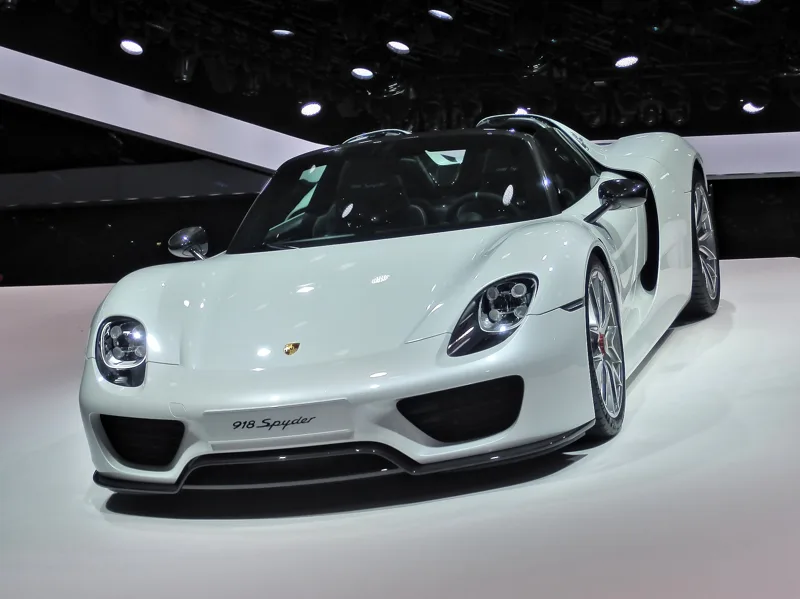
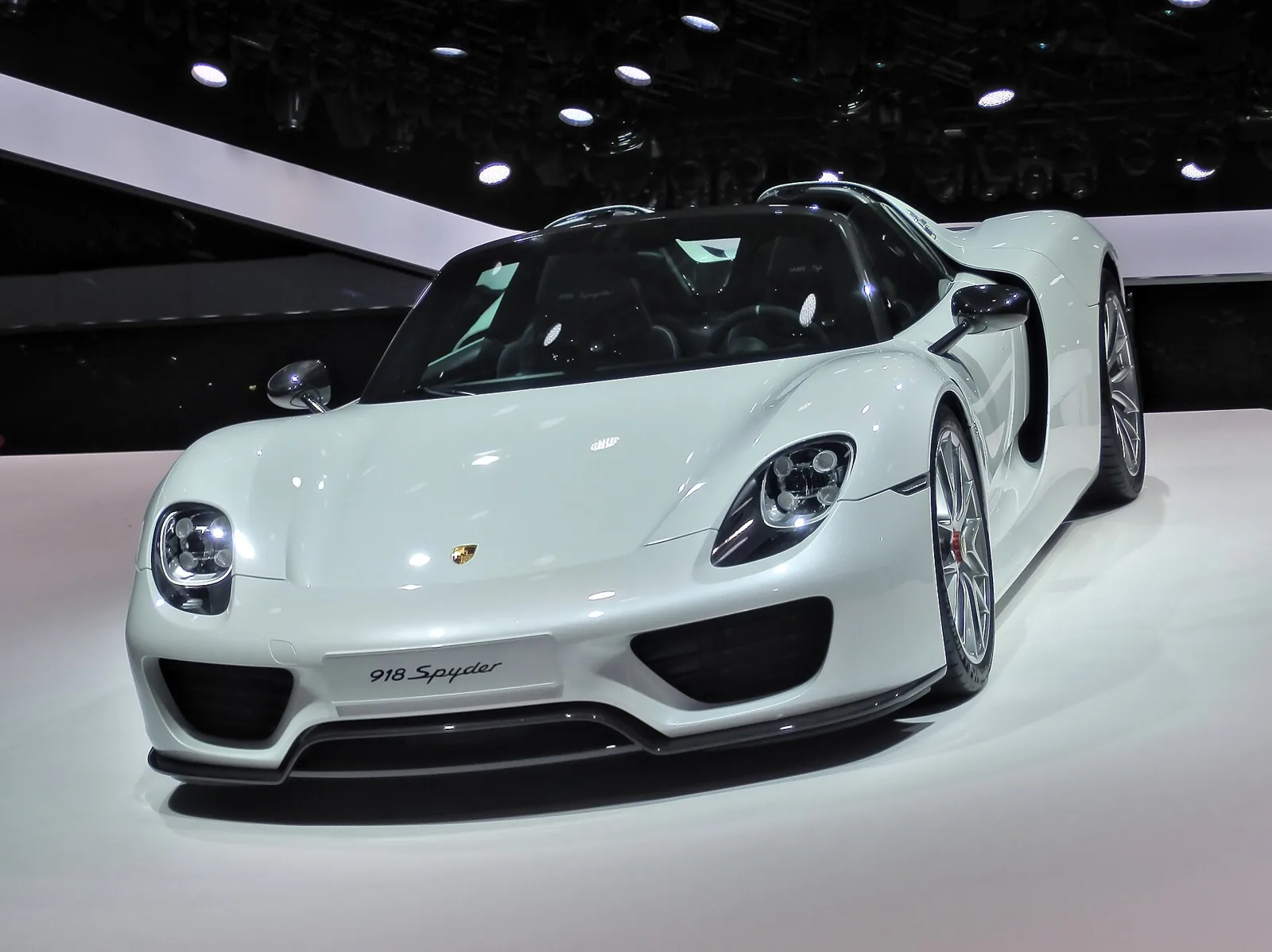
In March 2017 Porsche unveiled the Panamera Turbo S E-Hybrid, which used the 4.0-litre V8 from the Turbo together with an electric motor. Its total system power was 680 PS (500 kW; 671 bhp), making it the third most powerful Porsche after the 918 Spyder and the 991 GT2 RS.
Was there a Panamera estate?
The Sport Turismo was a five-door shooting-brake estate that debuted at the Geneva Motor Show in March 2017, sold in Europe and the United States. It used the same engine range as the four-door car, and in September 2017 Porsche added a Turbo S E-Hybrid Sport Turismo. That made it the world's most powerful stock estate at the time, ahead of the Mercedes-AMG E 63 S and the Audi RS6 Performance.
The estate was dropped from the third generation, which kept the saloon body alone. A concept estate had been shown earlier, at the 2012 Paris Motor Show, with a plug-in hybrid system that prioritised all-electric running.
What is the third-generation Panamera?
The third generation was officially presented on 24 November 2023, and Porsche provided details first for the mid-range Panamera 4 and the Turbo E-Hybrid. The changes to the exterior were described as incremental, including a small front air inlet above the licence plate bracket.
The Turbo E-Hybrid's 370 V battery stores 25.9 kWh gross, or 21.8 kWh net, giving a maximum all-electric range of 90 km (56 mi) on the WLTP cycle. The motor is integrated into the transmission, and the onboard charger accepts 11 kW of AC power, which fully charges the battery in 138 minutes.
The base air suspension has two air chambers and twin-valve dampers. The E-Hybrid can be fitted with Porsche Active Ride, which uses one air chamber and electrohydraulic actuators to control each wheel, and it lifts the car by 55 mm (2.2 in) to ease entry and exit.
How was the Panamera teased before launch?
A spy video of the car appeared online in April 2007, and Porsche released a first teaser image in September 2008. Undisguised test cars were photographed in Busan, South Korea, that October. Those teasers ran ahead of the public debut in Shanghai that spring.
The Shanghai unveiling was staged with a stunt: the car was driven into the freight elevator of the Shanghai World Financial Center and sent up to the 94th floor. A late 2008 mailer to US customers carried two photos labelled as the first official images.
How did the Panamera sell?
As of 2011, the United States was the largest national market, with 6,188 cars sold. Los Angeles took 890 of those sales, New York 760 and Hong Kong 300. By model variant, the 4S sold 9,394 units, the Turbo 6,171, the S 4,563 and the V6 2,390, a figure that counted the V6 only weeks after its introduction.
In 2012 US sales totalled 7,614 cars and Canadian sales reached 422. The Panamera S E-Hybrid made up 9 percent of Panamera sales worldwide in the first eight months of 2014, when global sales exceeded 1,500 units. The Panamera Edition, launched in March 2015, cost US$80,000.
How did critics receive the Panamera?
Reviewers said the car's handling was not far from a 911 in places, and its trunk held 15.7 cubic feet (440 L). Its four-corner adaptive air suspension also kept handling sharp while giving a comfortable ride. The V6 was praised for its lighter engine, which improved weight distribution.
CAR magazine in the UK was less impressed with the S, which it said lacked sportiness and was oriented towards comfort. It called the Turbo a missed opportunity, because the top model weighed about as much as an Audi S8. BBC's Top Gear was critical of the car's look in its 2008 news coverage, while Richard Hammond and James May drove one along the A30 in Devon in June 2009.
Specifications
| Model | Power | 0-100 km/h | Notable figure |
|---|---|---|---|
| Panamera S Hybrid (2011) | 380 PS (279 kW; 375 hp) | 6.0 seconds | 193 g/km CO2 |
| Panamera Diesel (2011) | 250 PS (184 kW; 247 hp) | 6.8 seconds | 6.3 L/100 km |
| Panamera Turbo S | Not given | 3.3 seconds | Drag coefficient 0.30 |
| Panamera S E-Hybrid (2013) | 310 kW (421 PS; 416 bhp) system | 5.8 seconds | 3.1 L/100 km |
| Panamera Turbo S E-Hybrid (2017) | 680 PS (500 kW; 671 bhp) | Not given | Third most powerful Porsche |