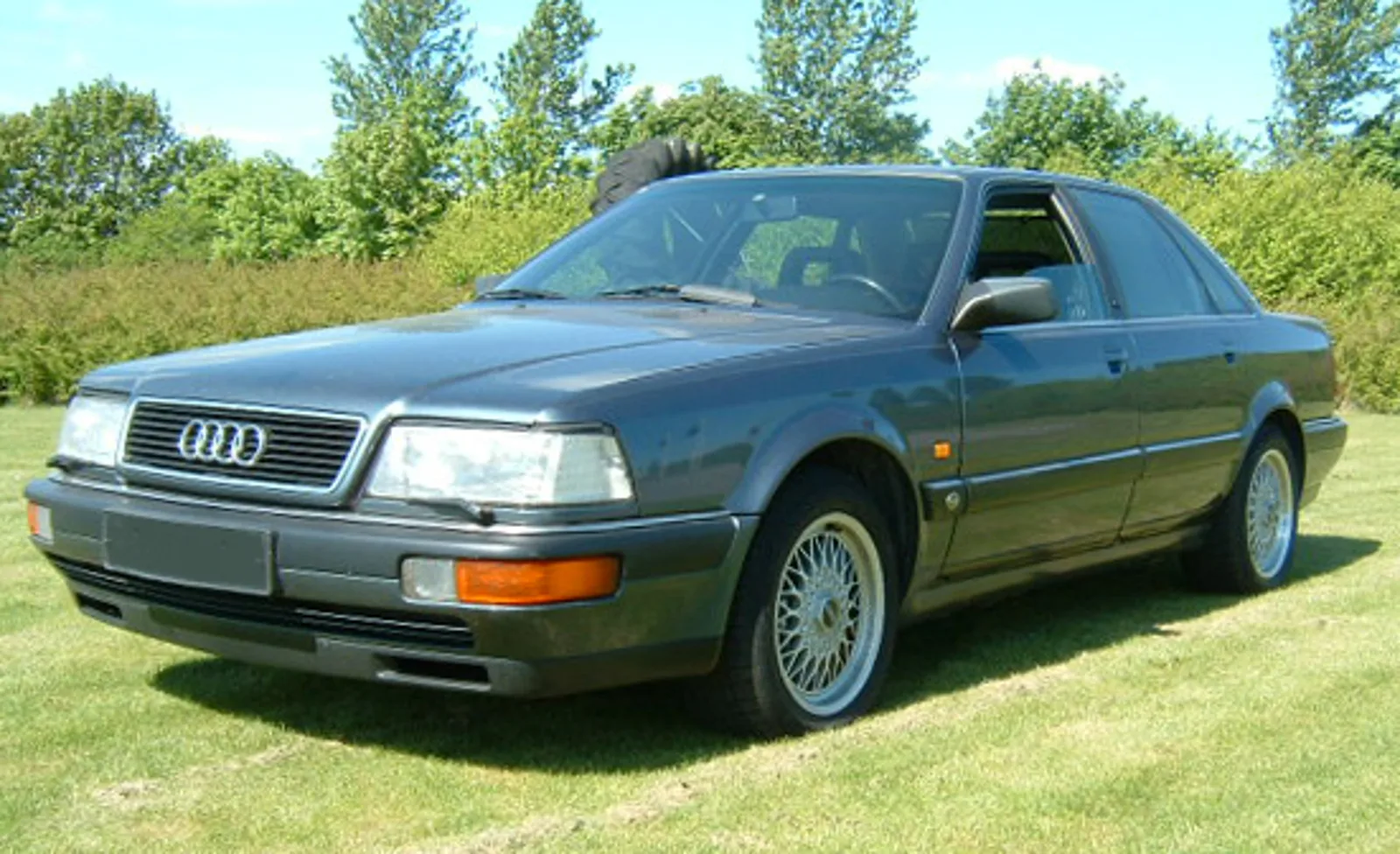
From a 450 PS quattro estate in 2002 to a 630 PS hybrid wagon, the RS 6 has been Audi's most extreme family car for more than two decades.
The Audi RS 6 is a high-performance A6 estate built by Audi Sport GmbH from 2002. It has passed through four generations, from a 450 PS twin-turbo V8 in the C5 to a 600 PS mild-hybrid V8 in the C8. The C6 used a 580 PS V10 in between.
The Audi RS 6 is a top-tier, high-performance estate built on the A6 by Audi Sport GmbH since 2002. Over four generations it moved from a 450 PS quattro wagon to a mild-hybrid V8 producing 600 PS, and it has always sat at the top of Audi's RS range.
What is the Audi RS 6?
The RS 6 is the high-performance version of the A6, built by Audi Sport GmbH for parent company Audi AG within the Volkswagen Group. The RS letters stand for RennSport, which means racing sport. It sits a clear step above the S models in the Audi range and works as the halo car for the family line.
The first two generations were offered as both an Avant estate and a saloon. The third and fourth generations were sold only as Avants, which keeps the car tied to its estate roots. Every RS 6 uses Audi's Torsen-based quattro four-wheel drive, the same system found across the S and RS line.
Its closest rivals have always been the BMW M5 and the Mercedes-Benz E 55 and E 63 AMG. Each generation has also reflected Audi's wider engineering direction, from the quattro traction work of the early years to the hybrid assistance on the latest car. Those cars set the benchmark for fast executive saloons, so the RS 6 has been measured against them in almost every generation.
An estate car that has repeatedly pushed past the performance of its saloon rivals, with each generation pushing the power figure higher.
How fast was the first-generation C5 RS 6?
The C5 RS 6 Avant ran a twin-turbo 4.2-litre V8 with 331 kW (450 PS; 444 bhp) and 560 Nm (413 lb ft) of torque. Audi quoted 4.6 seconds to 100 km/h (62.1 mph) and 17.8 seconds to reach 200 km/h (124.3 mph) for the estate, with the saloon slightly quicker over the second sprint.
The engine was developed in Germany and the UK, with Cosworth working on the twin-turbo layout. Two turbochargers, one for each cylinder bank, delivered a wide band of pulling power with peak torque from 1,950 to 5,600 rpm. The gearbox was a five-speed ZF automatic with tiptronic manual control.
Audi's official limit was 250 km/h (155.3 mph), but owners frequently reported genuine limits closer to 270 km/h (167.8 mph). Running on lower-octane petrol reduced output, so the figures assume the recommended premium fuel.
What made the C5 RS 6 Plus special?
The RS 6 Plus was a final, limited run built between April and September 2004. It lifted output to 353 kW (480 PS; 473 bhp), and its torque reached 580 Nm (428 lb ft). Quoted acceleration was 4.4 seconds to 100 km/h, with an official top speed of 280 km/h (174.0 mph).
Chassis changes included a further 10 mm drop through the optional Sports Suspension Plus, a quicker steering rack and cross-drilled brake discs. Only the Avant body was offered, and cars came with the black optic pack and nineteen-inch five-arm alloys.
The Plus sold out quickly, with 999 units built. Each car carries the last three digits of its VIN on a plaque inside, mounted on the centre console, which helps owners and collectors identify individual examples.
How did the C6 RS 6 V10 compare with its rivals?
The second-generation RS 6, known as the 5.0 TFSI quattro, used a 5.0-litre twin-turbo V10 producing 426.5 kW (580 PS; 572 bhp), with peak torque of 650 Nm (479 lb ft). Audi said this made it the most powerful car it had built at the time, ahead of the naturally aspirated BMW M5 and Mercedes-Benz E63 AMG.
Those rivals relied on normally aspirated engines, which made the turbocharged V10 a notable step up in output. The engine used two Bosch engine control units, one as master and one as slave, because the high revs demanded them. Eight lambda sensors monitored the exhaust, so each cylinder bank could be tuned separately.
Official figures for the Avant were 4.6 seconds to 100 km/h and 12.7 seconds to 200 km/h. The estate could be unlocked from its 250 km/h electronic limit to 274 km/h (170.3 mph), and CO2 was rated at 333 g/km.
How much did the C6 RS 6 cost?
Pricing put the C6 well above its rivals. The estimated 2010 sedan price was $160,000 USD, while one earlier estimate put it at $126,000 USD in 2009. Against that, the BMW M5 listed at $85,700 and the Mercedes-Benz E63 AMG at $87,700, and Audi's own S6 at $78,025.
That gap helps explain why the car struggled in the United States, where it was never sold. Audi had planned a run of 8,000 cars, with 6,500 of them as Avants and the rest as saloons, and production ended in the third quarter of 2010.
Carbon-ceramic brakes were a costly option on the C6, fitted only with 20-inch wheels and using 420 mm discs. Buyers had to weigh the rising cost against what the standard brakes already delivered.
What changed in the C7 RS 6 generation?
Audi revealed the C7 RS 6 Avant in December 2012, powered by a 4.0-litre twin-turbo TFSI V8 rated at 412 kW (560 PS; 553 bhp), with 700 Nm (516 lb ft). Audi claimed 3.9 seconds to 100 km/h and a default top speed of 250 km/h, with optional packs lifting it to 280 km/h and then 305 km/h (189.5 mph).
The Performance model used the same engine with a revised map, lifting output to 605 PS (445 kW; 597 bhp) and torque to 750 Nm (553 lb ft). Its 0 to 100 km/h time fell to 3.7 seconds, and its 0 to 200 km/h time to 12.1 seconds, with fuel economy unchanged.
The Performance trim added a sports exhaust, a choice of optics packages and privacy glass, plus wheels reaching 21 inches. Inside, blue-weave carbon trim sat alongside seats that mixed leather and Alcantara with contrasting blue stitching. The C7 was not offered in North America, where the RS 7 Sportback shared the same running gear.
What does the C8 RS 6 offer?
The C8 RS 6 keeps a 4.0-litre twin-turbo TFSI V8, now assisted by a 48V belt starter-generator that can recover up to 16 bhp (12 kW). The engine makes 600 PS (441 kW; 592 bhp) with 800 Nm (590 lb ft) between 2,100 and 4,500 rpm, and reaches 100 km/h in 3.6 seconds.
The quattro system splits power 40 per cent to the front and 60 per cent to the rear by default, and it can move up to 70 per cent forward or 85 per cent rearward. A cylinder-on-demand system shuts off half the engine under light load to save fuel.
Drive Select gained configurable RS1 and RS2 modes, which are called up by a button on the steering wheel. These modes change the engine and handling response and also switch the Virtual Cockpit to show RS-specific information. The C8 returned to North America, the first RS 6 sold there since the C5.
Which special RS 6 editions were built?
Several limited versions appeared across the generations. Each one changed the car's look, performance or both, and the most significant are summarised in the list below. Some were tied to anniversaries or heritage models, while others pushed engine output further than the standard car.
- C7 Performance: 605 PS and a 3.7 second sprint to 100 km/h, with a sports exhaust and blue carbon interior.
- RS 6 Avant RS Tribute (2021): 25 examples for North America, paying tribute to the RS 2 Avant with Nogaro Blue paint and 22-inch wheels.
- C8 performance (2022): 630 PS (463 kW; 621 bhp) and 850 Nm (627 lb ft) from 2,300 to 4,500 rpm.
- RS 6 Avant GT (2024): 660 examples, inspired by the 1989 Audi 90 IMSA GTO race car, with a carbon bonnet and a double roof spoiler.
The GT also lost 15 kg (33 lb) and cut the 0 to 100 km/h time to 3.3 seconds, with revised differentials and suspension. It represents the most track-minded RS 6 Audi has built.
Did the RS 6 compete in motor racing?
The C5 RS 6 raced in the North American SPEED World Challenge GT Series from 2002 to 2004, winning the manufacturers' championship in all three seasons. The race engine was developed with Cosworth, and the car stayed competitive against manufacturer-backed rivals.
In 2005 new sanctioning rules restricted the car, and the team chose a different wheel diameter and reduced boost to comply. A Cadillac CTS-V then challenged it, but Champion Audi Racing withdrew the RS 6 from the series, citing unfair rules aimed at the Audi cars.
The RS 6's racing record gives it a competitive pedigree that few estates can match. Those results gave the C5 a reputation that later generations have been judged against, and the C5 race programme remains the strongest example of that heritage.
What are the Audi RS 6 specifications?
The table covers the main engines and performance figures across the generations. Each row names the generation it applies to, so the older cars do not blend into the newer ones. Where a figure is an Audi claim rather than a test result, the row says so.
| Specification | Detail |
|---|---|
| C5 engine | 4,172 cc twin-turbo V8; 331 kW (450 PS; 444 bhp) at 5,700 to 6,400 rpm; 560 Nm (413 lb ft) |
| C5 Plus | 353 kW (480 PS; 473 bhp); 580 Nm (428 lb ft); 999 built |
| C6 engine | 5.0 L (4,991 cc) twin-turbo V10; 426.5 kW (580 PS; 572 bhp); 650 Nm (479 lb ft) |
| C7 engine | 4.0 L (3,993 cc) twin-turbo V8; 412 kW (560 PS; 553 bhp); 700 Nm (516 lb ft) |
| C7 Performance | 605 PS (445 kW; 597 bhp); 750 Nm (553 lb ft); 0 to 100 km/h in 3.7 seconds |
| C8 engine | 4.0 L twin-turbo V8 with 48V mild hybrid; 600 PS (441 kW; 592 bhp); 800 Nm (590 lb ft) |
| C8 performance | 630 PS (463 kW; 621 bhp); 850 Nm (627 lb ft) |
| C8 acceleration | 0 to 100 km/h in 3.6 seconds; 0 to 200 km/h in 12 seconds |
| Top speed | 250 km/h (155 mph) standard; 280 km/h and 305 km/h with packs |
| C5 gearbox | Five-speed ZF 5HP24A tiptronic |
| C6 gearbox | Six-speed ZF 6HP 28A tiptronic |
Frequently asked questions
Is the RS 6 available as a saloon?
Only the first two generations offered a saloon. From the third generation onward the RS 6 has been sold solely as an Avant estate.
Which RS 6 had the most power?
The C8 performance version produced 630 PS (463 kW; 621 bhp), which is the highest figure quoted for any RS 6 in the range.
Did the RS 6 come to North America?
The C5 was the first RS variant exported there, and the C8 returned to the market. The C6 and C7 were sold only in Europe.
What does the RS in RS 6 stand for?
RS stands for RennSport, which translates as racing sport. It marks Audi's top-tier performance trim above the S models.