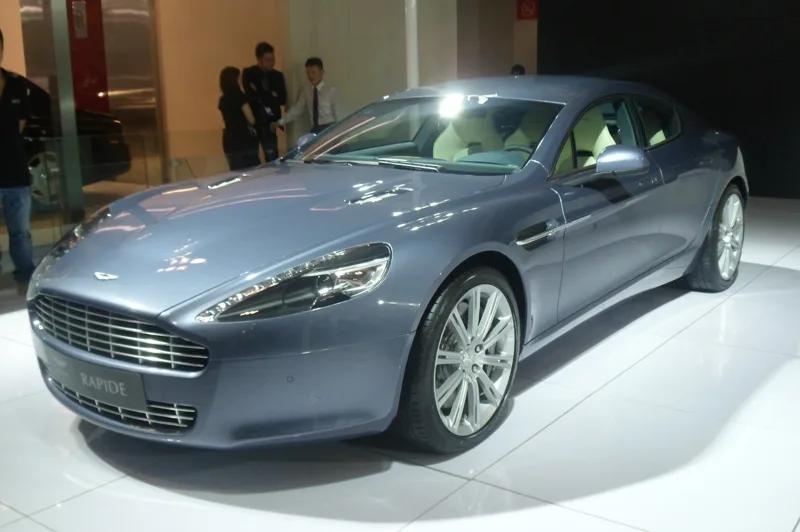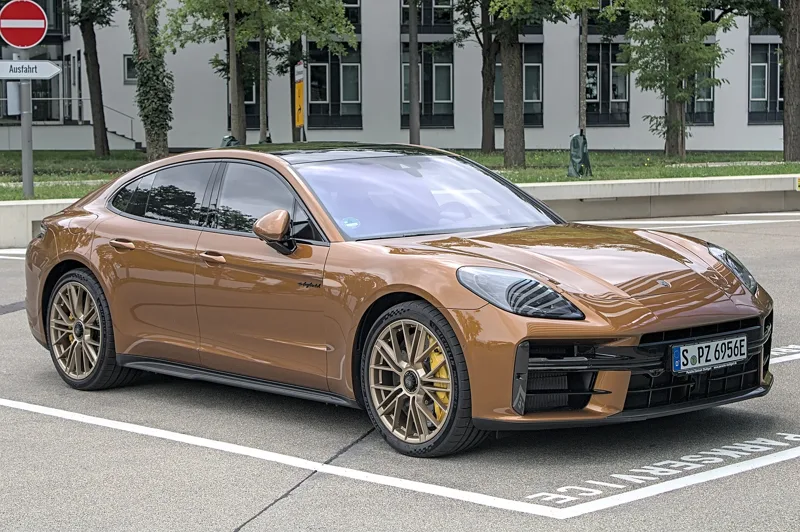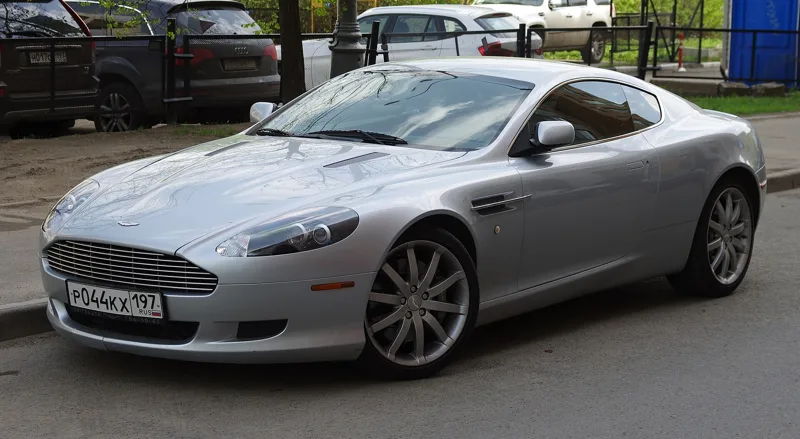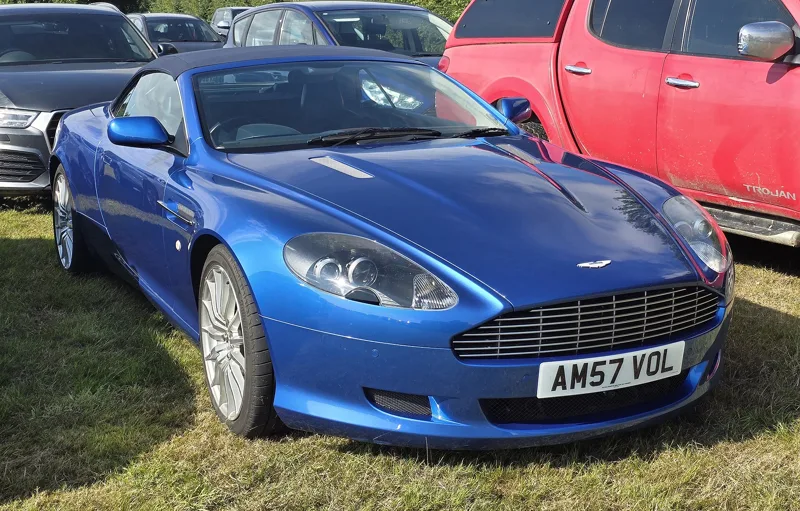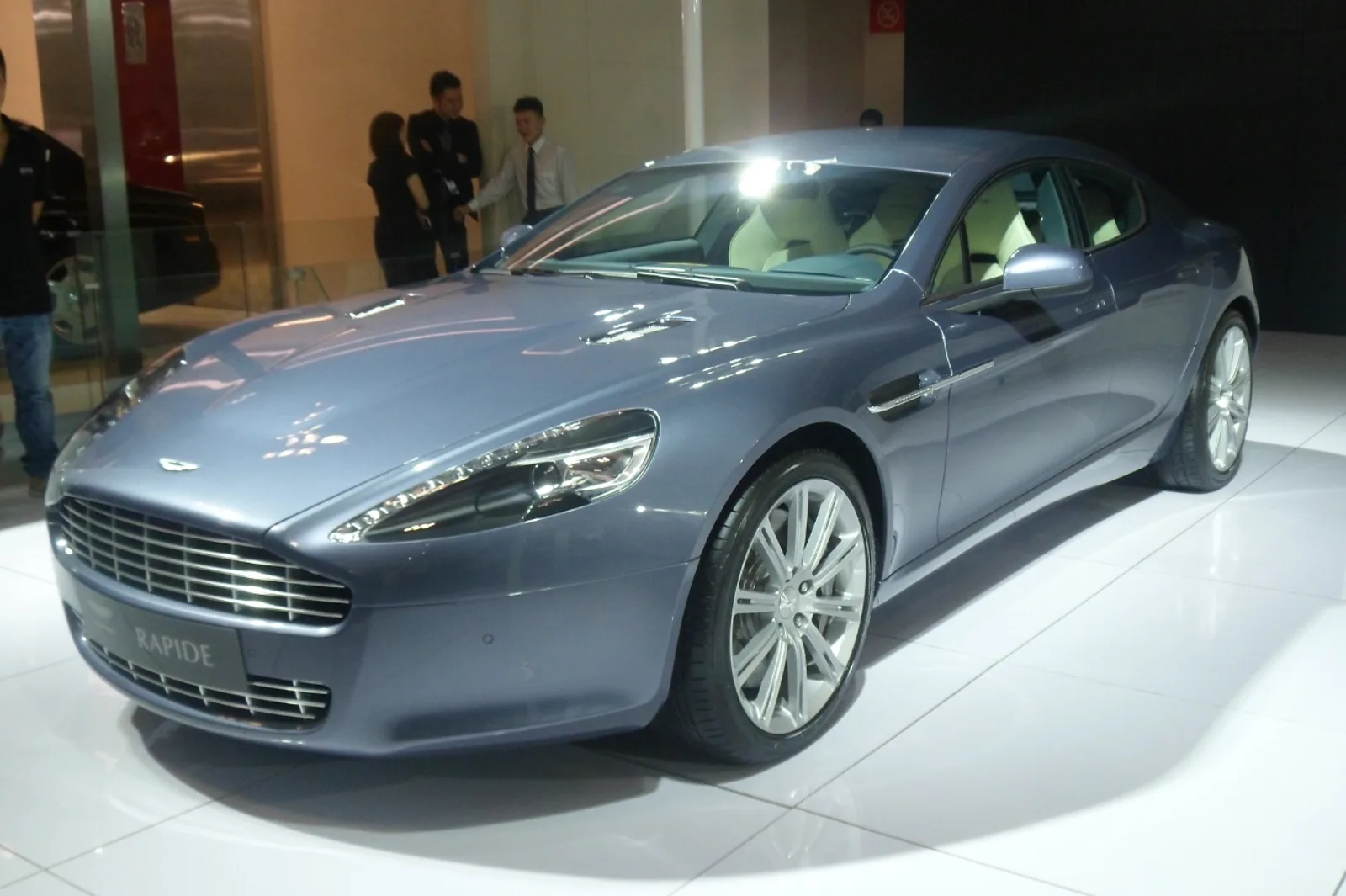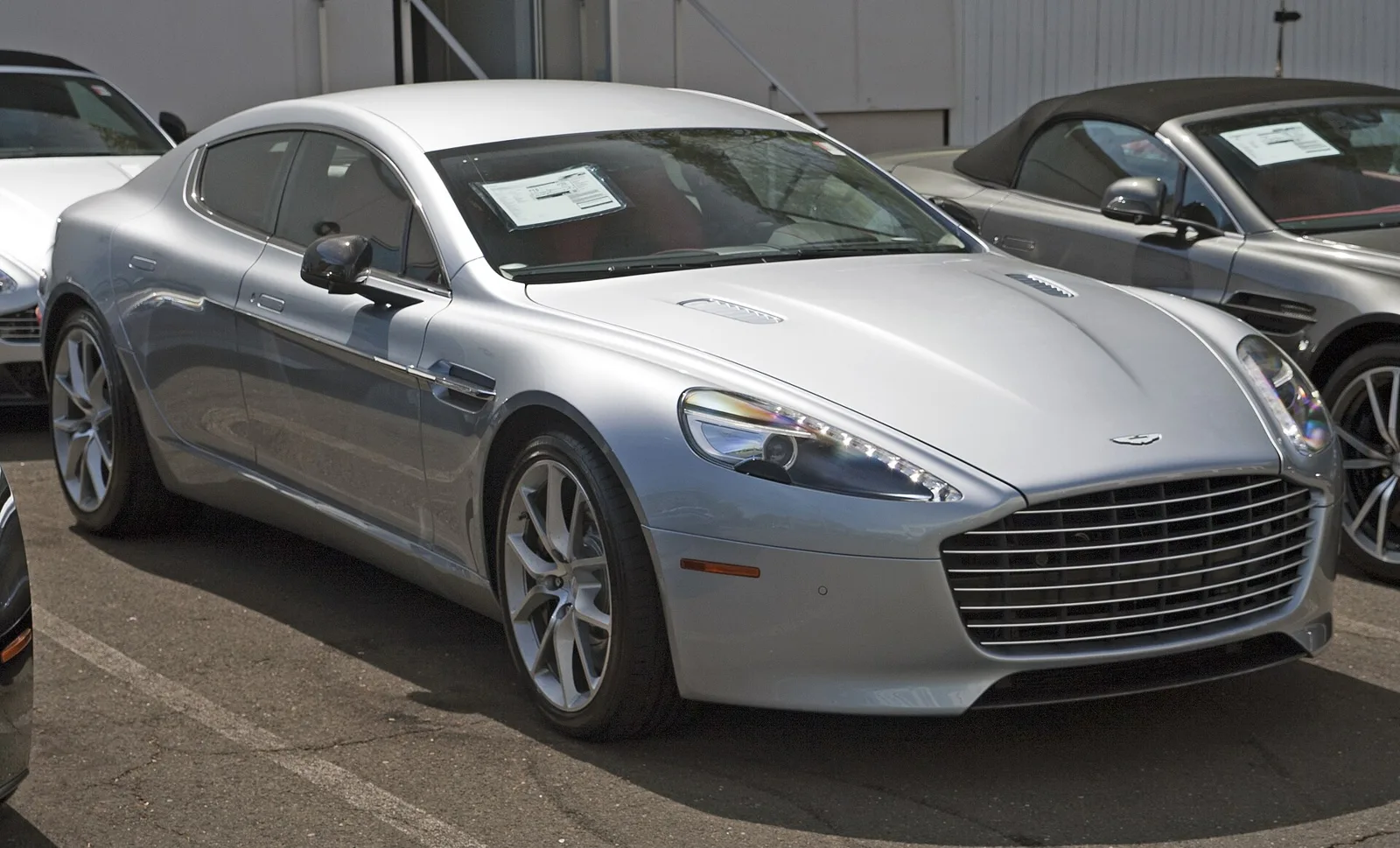
Two four-door grand tourers from the 2010s, one a British saloon with a huge V12 and the other a Porsche with hybrid and turbo options.
The Aston Martin Rapide was built from 2010 to 2020 with a 5,935 cc V12 producing 350 kW (470 hp), and the AM29 later reached 412 kW (552 hp). The Porsche Panamera launched in 2009 with V6 and V8 engines and later offered hybrid and diesel options, reaching 100 km/h in 3.3 seconds in the Turbo S.
The Aston Martin Rapide and the Porsche Panamera were both four-door grand tourers aimed at buyers who wanted a fast car with room for passengers. The Rapide was Aston Martin's first series-produced four-door, built on the company's aluminium VH platform with a V12 at its heart. The Panamera was a Porsche that broke with the brand's two-door tradition, offering V6, V8, hybrid and diesel versions over its life.
Where did each car come from?
Aston Martin began work on the Rapide in 2005, and Marek Reichman, newly appointed as lead design director, completed the initial design in about seven weeks. A team of 26 engineers then built a full-scale prototype between August and December, and it was completed on 22 December 2005 and shown at the 2006 North American International Auto Show.
The production Rapide debuted at the 2009 International Motor Show in Germany, and series manufacture began on 7 May 2010 at Magna Steyr's facility in Graz, Austria. Aston Martin later ended that arrangement, six years earlier than planned, and moved production to Gaydon in Warwickshire in 2012.
The Panamera debuted at the 13th Auto Shanghai International Automobile Show in April 2009, and production began one month later. Its name, like that of the Carrera, came from the Carrera Panamericana race, and the car was built from engines assembled in Stuttgart and bodies assembled in Leipzig.
The two cars reached the market in the same window, but they came from different sides of the luxury market. Aston Martin was a small British maker building a limited number of cars, while Porsche was a large sports car company that had turned to a four-door car.
A British V12 saloon with a dramatic rear window against a Porsche four-door that offered hybrid, diesel and V8 power.
How did the platforms and bodies differ?
The Rapide's vertical/horizontal platform used extensive aluminium throughout the body. About sixty per cent of its chassis and powertrain, including the engine, transmission and the front section up to the windscreen, was carried over from the DB9, the first car to use the VH platform.
The Rapide's chassis, bodywork and structure were made mainly of extruded and cast aluminium, and its roof was polycarbonate. It was also used by the DBS, Vantage, Virage and Vanquish, which made it part of a wider family of Aston Martins.
The Panamera was a front-engined, four-door luxury hatchback, weighing nearly 4,000 lb (1,800 kg). Its shape resembles the 911, but its interior was built for four people in comfort rather than the tight, performance-focused cabin of Porsche's two-door sports cars.
The Rapide is often described as a saloon and a four-door coupe. Its rear window slopes towards the back over the rear haunches, which sharpened the look at the cost of rear head and shoulder room. Its rear flanks were wider than the DB9's, so the extended roof did not look like a stretched DB9.
Which engine was the stronger?
The Rapide's 5,935 cc V12 produced 350 kW (470 hp) at 6,000 rpm and 600 Nm at 5,000 rpm. It reached 100 km/h in 5.1 seconds and had a top speed of 303 km/h (188 mph), while its six-speed Touchtronic II automatic came from ZF.
The Panamera's range started with a 3.6-litre V6 at 300 PS (221 kW; 296 hp), followed by a 4.8-litre twin-turbo V8 rated at 500 PS (368 kW; 493 hp) in the S, 4S and Turbo. The Turbo S had larger turbochargers, high-pressure fuel injection and aluminium pistons, and it reached 100 km/h in 3.3 seconds with launch control.
The Rapide S upgraded the V12 to 410 kW (550 hp) and 620 Nm, and an August 2014 revision brought the AM29 engine at 412 kW (552 hp) and 630 Nm. That took 0-100 km/h down to 4.2 seconds and lifted the top speed to 327 km/h (203 mph).
The Rapide AMR, unveiled in June 2018, used a 5.9-litre V12 at 433 kW (580 hp) and 630 Nm. It went from 0 to 100 km/h in 4.2 seconds, with a top speed of 330 km/h (205 mph), and Aston built only 210 of them.
Specifications side by side
| Feature | Aston Martin Rapide | Porsche Panamera |
|---|---|---|
| Debut | Production version shown at the 2009 International Motor Show Germany; series build from May 2010 | April 2009, Shanghai |
| Production span | 2010 to 2020 | 2009 onwards; second generation 2016 |
| Base engine | 5,935 cc V12, 350 kW (470 hp) | 3.6-litre V6, 300 PS (221 kW; 296 hp) |
| Strongest standard engine | AM29 V12, 412 kW (552 hp), 630 Nm, from 2014 | Panamera Turbo S V8; first generation 4.8-litre reached 100 km/h in 3.3 seconds |
| Hybrid option | No figure | Panamera S Hybrid, 380 PS (279 kW; 375 hp) |
| Diesel option | No figure | Panamera Diesel, 250 PS (184 kW; 247 hp) |
| Plug-in hybrid | Rapide E concept; cancelled 2020 | Panamera S E-Hybrid, 310 kW (421 PS; 416 bhp) total |
| Body | Four-door saloon and four-door coupe | Four-door luxury hatchback; Sport Turismo estate from 2017 |
| Platform | Vertical/horizontal aluminium VH platform | No figure |
| Top speed | 303 km/h (188 mph) base; 330 km/h (205 mph) AMR | No figure |
| Transmission | Six-speed Touchtronic II, later eight-speed Touchtronic III | Seven-speed PDK on 4, 4S and Turbo |
| Production | Gaydon from 2012; output cut to 1,250 a year in 2011 | Stuttgart engines, Leipzig bodies |
| Units | 210 AMR built | 698 S E-Hybrids sold in the US through August 2014 |
How were the hybrids and diesels?
The Panamera S Hybrid combined an Audi-sourced supercharged 3.0-litre V6 at 333 PS (245 kW; 328 hp) with a 47 PS electric motor and an 8-speed Tiptronic S gearbox. Its total output of 380 PS (279 kW; 375 hp) gave a 0-100 km/h time of 6.0 seconds and a top speed of 270 km/h (167.8 mph).
The Panamera S Hybrid produced 193 grams of CO2 per kilometre, making it the most environmentally friendly car in Porsche's range at the time. US deliveries began in 2011, and cumulative sales reached 684 units by March 2013.
The Panamera Diesel launched in May 2011 with an Audi 3.0-litre V6 at 250 PS (184 kW; 247 hp). It accelerated to 100 km/h in 6.8 seconds, reached 242 km/h (150.4 mph) and consumed 6.3 litres per 100 km, the most economical Porsche of its time.
The Panamera S E-Hybrid, added in the 2013 facelift, paired a 71 kW electric motor with a 9.4 kWh battery. Its system output was 310 kW (421 PS; 416 bhp), and it reached 100 km/h in 5.8 seconds, while its all-electric top speed was 135 km/h (84 mph) and a rated CO2 figure of 71 g/km.
The Rapide never had an equivalent production hybrid. Aston revealed the Rapide E concept in 2015, a battery-electric version of the Rapide S, but the programme was cancelled in January 2020 because of the upcoming DBX, and the car became a research project.
How did the Rapide E's plans compare?
The Rapide E was to have had a 65 kWh battery from HyperBat, a joint venture between Williams Advanced Engineering and Unipart, with 5,600 cells and two electric motors at the rear. Their combined output was planned at 449 kW (602 hp) and 949 Nm.
The projected all-electric range was about 322 km (200 mi) under the WLTP procedure, with fast charging at up to 297 km of range per hour from a 50 kW charger. Prototypes were tested at the Nurburgring for linear power delivery.
The project would have produced 155 units at Aston's St Athan plant in Wales. It was cancelled before that could happen, and the Rapide ended production in 2020 without an electric variant on sale.
How did the cars handle and ride?
The Rapide's reviewers praised its looks and interior, with one Australian Financial Review writer calling it the prettiest sedan money could buy. Its V12 won praise too, with What Car? noting that it was one of the largest engines on sale.
What Car? also raised the handling. It found the Rapide unsettled by ruts and bumps at all speeds, that the firmer Sport mode made the ride more uncomfortable, and that the car did not feel particularly agile despite precise steering.
The Panamera had its own suspension story. It came with adaptive air suspension, Porsche Dynamic Chassis Control, active anti-roll bars and Porsche Active Suspension Management, and the optional Sport Chrono Package's Sport Plus button lowered the body by 25 mm.
How did the cars perform on track?
A Rapide was entered in the 2010 24 Hours of Nurburgring, finishing second in the SP 8 class and 34th overall. A Rapide S returned in 2013 with a hybrid-hydrogen system from Alset GmbH, and it became the first car to race the 24 Hours with hydrogen fuel.
The Panamera GTS was quoted at a lateral acceleration of 0.96 g. The Turbo S E-Hybrid of 2017 made 680 PS (500 kW; 671 bhp), the third most powerful Porsche after the 918 Spyder and the 991 GT2 RS.
Which special editions did the Panamera get?
In October 2012 Porsche introduced the Panamera Platinum Edition, offered with rear- and all-wheel drive. It came in one of five colours, with more standard equipment, larger wheels, an exclusive luxor beige and black leather interior and platinum details on the sills, mirrors and lower grille. Every variant could reach 0 to 97 km/h in under 5.8 seconds.
The Panamera Edition followed in March 2015, based on the base car with high-gloss black window trim, 19-inch Turbo wheels and the word Edition inscribed on the sills. It cost US$80,000, a figure that put it firmly in the expensive end of the range.
How did the Panamera's second generation change?
The second-generation Panamera, code-named 971, was revealed on 28 June 2016 in Berlin. It was 35 mm longer, 5 mm wider and 5 mm taller than the first car, with a 30 mm longer wheelbase.
The new interior used touch-sensitive surfaces in place of many buttons and a pair of seven-inch displays in place of the dials. A 12.3-inch touchscreen brought online satellite navigation and Apple CarPlay, and a centrally mounted tachometer recalled the 1955 Porsche 356.
The Panamera's tail lost its predecessor's hatchback-wagon styling, and the full-width rear LED light bar linked it to the 911. Porsche also withdrew diesel from its future line-up in September 2018, after a diesel model was pulled from the German configurator over emissions testing.
Which buyer should choose which?
A buyer who wanted a British grand tourer with a V12, a dramatic rear window and a short run of special models would look at the Rapide. The Rapide AMR is the sharpest version, and its 210-unit run makes it scarce.
A buyer who wanted a four-door Porsche with a choice of V6, V8, hybrid or diesel power and a range of estate and hybrid options would find the Panamera more flexible. Its later generation also added the Sport Turismo estate.
Neither car takes an overall win on these facts. The Rapide offered the bigger engine and a striking shape, while the Panamera offered more powertrains and a longer production life. The buyer's priorities should decide the choice.