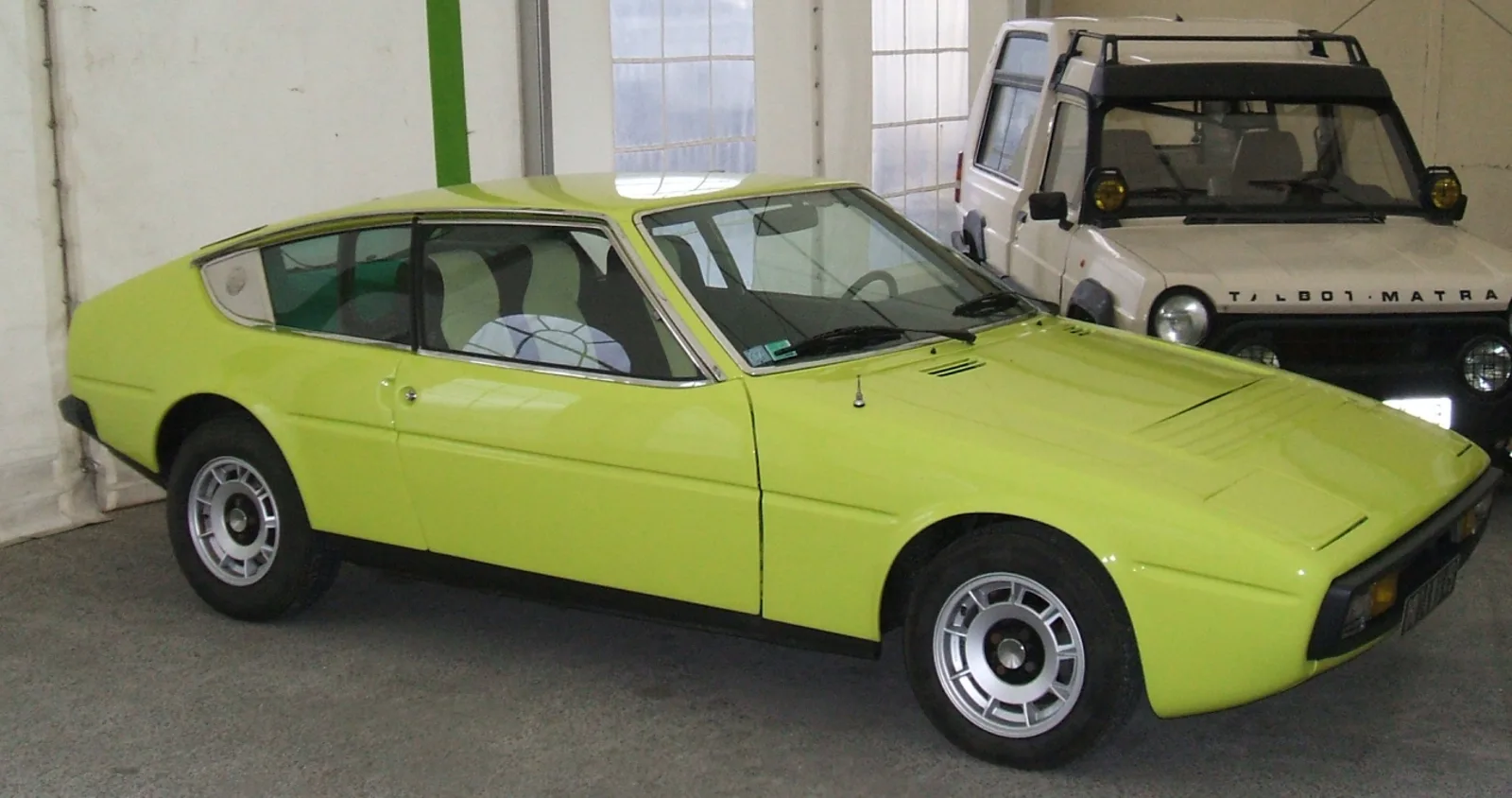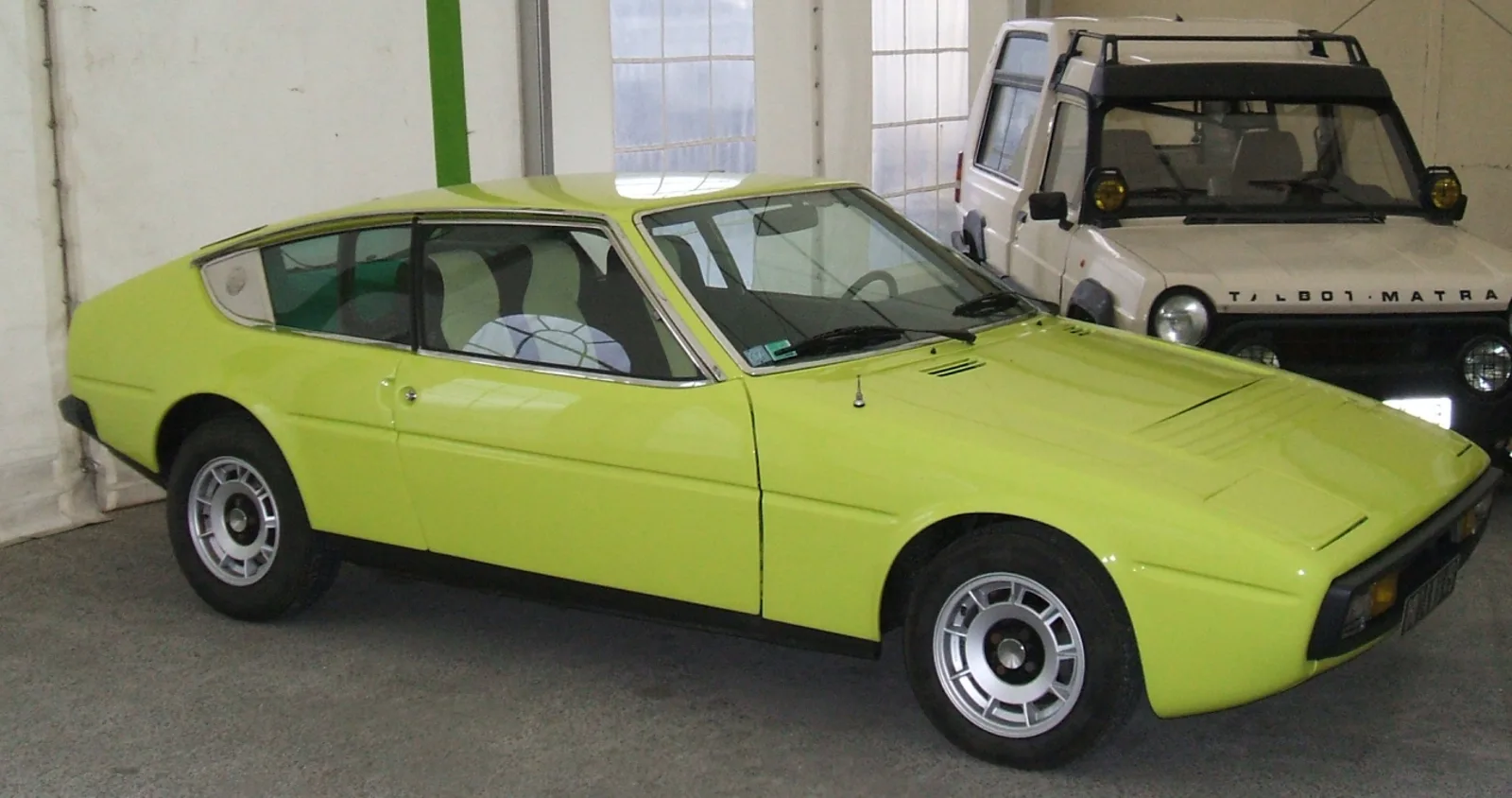
Matra's mid-engined hatchback, built with Simca parts and seating three across, sold steadily from 1973 before the Talbot name took over.
The Matra Bagheera was a French mid-engined sports car built by Matra's automotive division from 1973 to 1980, in cooperation with Simca. It seated three abreast, borrowed Simca 1100 parts and reached 47,802 cars before the Murena replaced it in 1980.
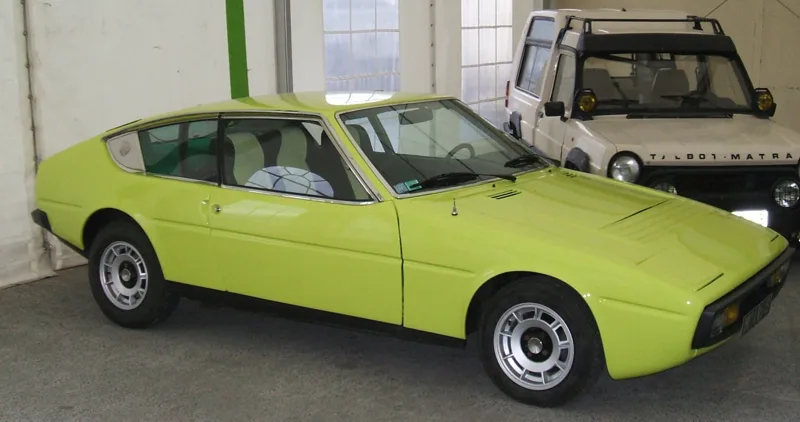
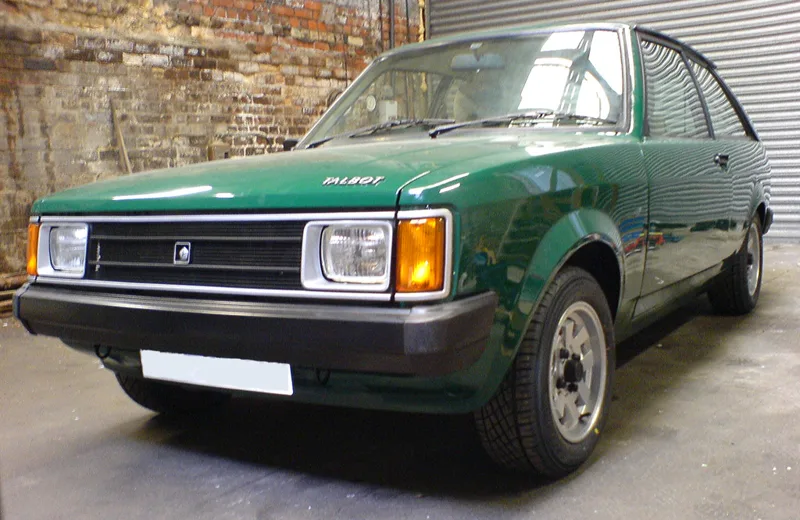
The Matra Bagheera was a French sports car with its engine mounted behind the seats and a hatchback body that carried three people across the front. Matra's automotive division built it in cooperation with Simca from 1973 to 1980. It was sold as the Matra-Simca Bagheera until the final year, when the Talbot-Matra name followed the takeover of Chrysler Europe.
Where did the Bagheera come from?
The Bagheera grew out of a December 1969 agreement between Matra and Simca, which rebranded Matra's racing cars as Matra-Simcas and gave Matra access to Simca's French dealer network. Its first task was to replace the Matra 530, which had missed both its target market and its sales targets.
Work started in 1970 under the project code M550. Philippe Guedon led engineering and design at Matra, with Jacques Rousseau acting as the Chrysler-Simca product planner. Marc Honore added design direction and identified the 1.3 to 1.5 litre class as Simca's strongest market, which set a tight limit on the car's size if its performance was to be acceptable.
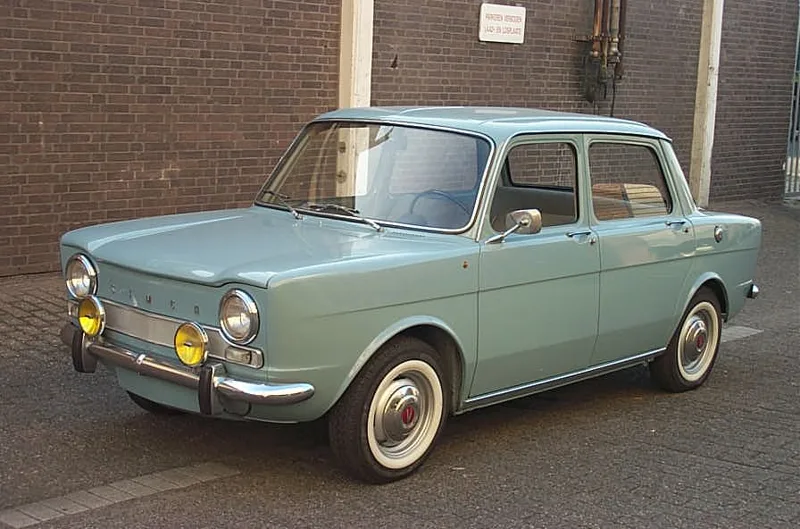
Most major components came from the Chrysler-Simca parts bin. The engine, gearbox and many suspension elements came straight from the Simca 1100, but Matra turned the layout around so that the new car was mid-engined rather than front-wheel drive like its donor. Eleven prototypes were tested in conditions ranging from Saharan Mauritania to Lapland, and development was finished by the end of 1972.
A three-abreast mid-engined hatchback whose body resisted rust while its steel chassis did not.
How quickly did the Bagheera sell?
The Bagheera reached the public in 1973, with a press unveiling at Lake Annecy on April 14 and a public debut at the 24 Heures du Mans later that year. Simca placed 500 yellow cars with dealers across France, and production had reached 65 cars per day by late 1973.
Momentum carried into 1974. More than 10,000 Bagheeras had been sold by June 1974, within eighteen months of the car's release. Sales of that scale gave the new model a strong opening, even though the finish problems described later were already a concern.
How did Matra fit three seats into the car?
Matra fitted three people across the front by abandoning the 2+2 layout of the earlier M530. Guedon, who found those rear seats too small to use, got the idea on a long trip in a Ford Taunus station wagon, where the load filled the rear so completely that three people rode up front.
The solution was a 2+1 arrangement. The driver had a conventional seat, while the passenger side held a single two-place bench with two individual seatbacks, inspired by a lounge chair Guedon had seen in a Paris shop. The body sides bulge slightly, which accommodates the three-abreast seating.
Jean Toprieux produced the first drawings of the body, and Jacques Nochet developed them further. The Greek designer Antonis Volanis also joined the work, shaping the cabin, including the instrument panel and the steering wheel.
The body itself was a sleek hatchback with hidden headlights, and the rear hatch opened onto the engine bay and a luggage space. Its 19 panels were made of fibreglass-reinforced polyester using a low-pressure, high-temperature pressing method called LP. Matra valued the process for large, precise panels at low tooling cost, and LP had been in use for only a year before production began.
The body also won praise. The Bagheera took the 1973 Style Auto Award, beating rivals including the Lancia Stratos, the Lancia Beta coupe and the Ferrari Dino 308 GT4. Its drag coefficient of 0.33 on early cars was unusually slippery, rising slightly to 0.35 after a mid-life redesign.
What was the Bagheera's chassis and suspension like?
The Bagheera used a pressed-steel chassis that behaved more like a unitary body than a space-frame, with some parts simplified to suit low production numbers. Front suspension came from the Simca 1100, while the rear used new Matra trailing arms, transverse torsion bars and an anti-roll bar, a change made after the prototype's rear proved unsatisfactory.
The front end used upper and lower A-arms with telescopic hydraulic dampers. Longitudinal torsion bars ran back along the chassis to provide springing, and an anti-roll bar sat at the front too. At the rear, the M550 prototype had simply moved the front arrangement behind the engine, which did not work well. The production answer was a set of trailing arms with transverse torsion bars and telescopic shock absorbers.
No right-hand-drive Bagheeras came from the factory, although Wooler-Hodec in England converted a number of them.
What engines did the Bagheera use?
The first Bagheeras used a 1,294 cc overhead-valve straight-four taken from the Simca 1100 Ti, producing 62.6 kW (84 hp) at 6,000 rpm. A larger 1,442 cc unit from the Simca 1308 GT followed in the mid-1970s, and the four-speed manual transaxle stayed as the only gearbox.
The engine sat transversely, and in the Bagheera it gave slightly more power than in the donor car. Changes to the carburation were made when the larger engine arrived, and the S model became the first Bagheera to use it.
How did the Bagheera change through its model years?
The Bagheera went through several model years, each marked by a new trim, engine or body detail. The original car was released in 1973 as a 1974 model-year machine with two Weber carburetors, and the 1976 restyle introduced wrap-around bumpers, while the 1979 cars moved to a single 1,442 cc engine across the range.
The 1974 Courreges edition was styled by fashion designer Andre Courreges, with an all-white exterior and interior and imitation gold trim on the dash. Its mechanics matched the standard car. In 1975 the S arrived with the 1,442 cc engine and produced 67.1 kW (90 hp) through its two two-barrel carburetors, along with its own trim and badging.
The 1976 restyle changed almost every body panel except the rear hatch, with new wrap-around bumpers, rear-quarter glass and larger tail lamps. The drag coefficient rose to 0.35, and a new dashboard appeared inside. Some enthusiasts call these the type II cars, and the 1294 cc base engine stayed in place.
In 1977 the Courreges was dropped in favour of a fully optioned model called the Bagheera X. A 1978 update brought new dashboards and seats to all cars, and an April Jubile series marked Simca's second Car of the Year win, the Horizon of 1978. By then PSA had taken control of Simca, so the cars were renamed Talbot-Matras.
The 1979 cars lost the 1294 cc engine, received new doors and handles from the Rancho in place of the hidden ones, and dropped the S. Only the base model and the X remained. Production ended in April 1980 with 47,802 cars built in total, and the Matra Murena succeeded it.
How did the Bagheera perform on the road?
Early in 1974 the German magazine Auto, Motor und Sport tested a 1,294 cc Bagheera against its closest rivals. The car recorded 186.5 km/h (116 mph), beating the Alfa Romeo GT 1300 Junior, and reached 100 km/h (62 mph) in 12.2 seconds, quicker than the Alfa's 13.5 seconds.
The light weight helped in these comparisons, and the Alfa's claimed extra 3 bhp did not make up the gap. The Alfa's own top speed was 176.5 km/h (110 mph). Prices were close, with the Matra-Simca at DM 14,198 against DM 14,490 for the Alfa, and both were undercut by the 1900 cc Opel Manta SR at DM 13,990.
Why did the Bagheera have a poor reputation?
The Bagheera earned a reputation for poor build quality. It won the ADAC Silver Lemon award in 1975 for the poorest quality car of its time, with complaints about a leaky body, mechanical failures and rust in the steel chassis.
Many cars suffered from extensive corrosion of the steel chassis, which had almost no protection against rust. The fibreglass body panels did not rust, so the trouble lay underneath. Matra learned from this and fully galvanised the chassis of the Bagheera's successor, the Murena.
Problems with the finish hampered sales when the car was new, and the leaky body and mechanical faults added to the doubts among buyers.
What was the Bagheera U8?
The Bagheera U8 was a more powerful project, codenamed M560, that paired two Simca straight-four blocks into a 2,588 cc eight-cylinder engine producing 126 kW (169.0 hp). Chrysler Europe refused to approve it, so only three prototypes were built. Its initial design was finished in March 1973 under Georges Pinardaud.
The engine was a unique U layout built by joining two 1,294 cc blocks at an 82 degree angle around a shared aluminium sump. Each block kept its own crankshaft, distributor and water pump, while a chain-driven shaft running down the sump carried power from one crankshaft to the other.
The car needed a wider body, with extra air intakes cut into its sides ahead of the rear wheels and larger arches for 185/70 VR14 front tyres and 205/70 VR14 rear tyres. The overall length grew by 431.8 mm (17 in), the wheelbase by 230 mm (9.1 in) and the width by 20 mm (0.8 in).
The engine sat longitudinally behind the driver and drove the wheels through a Porsche five-speed transaxle. Because the output shaft sat 127.0 mm (5 in) to one side, the half-shafts were of unequal length. Top speed was reported at 232 km/h (144.2 mph).
Chrysler Europe would not approve the project, with the developing fuel crises and the company's own financial problems weighing against it. The U8-powered car therefore stayed a prototype. One surviving prototype and its engine are displayed at the Matra museum at Romorantin-Lanthenay.
Matra Bagheera specifications
| Specification | Detail |
|---|---|
| Early engine | 1,294 cc Simca straight-four, 62.6 kW (84 hp) at 6,000 rpm |
| Later engine | 1,442 cc from the Simca 1308 GT, from the mid-1970s |
| Transmission | Four-speed manual transaxle, the only gearbox offered |
| Drag coefficient | 0.33 on early cars; 0.35 after the 1976 restyle |
| Top speed (1,294 cc test) | 186.5 km/h (116 mph) |
| 0-100 km/h (1,294 cc test) | 12.2 seconds |
| Production | 47,802 built, 1973 to April 1980 |
| U8 prototype engine | 2,588 cc, eight cylinders, 126 kW (169.0 hp) at 6,200 rpm |
| U8 top speed (reported) | 232 km/h (144.2 mph) |