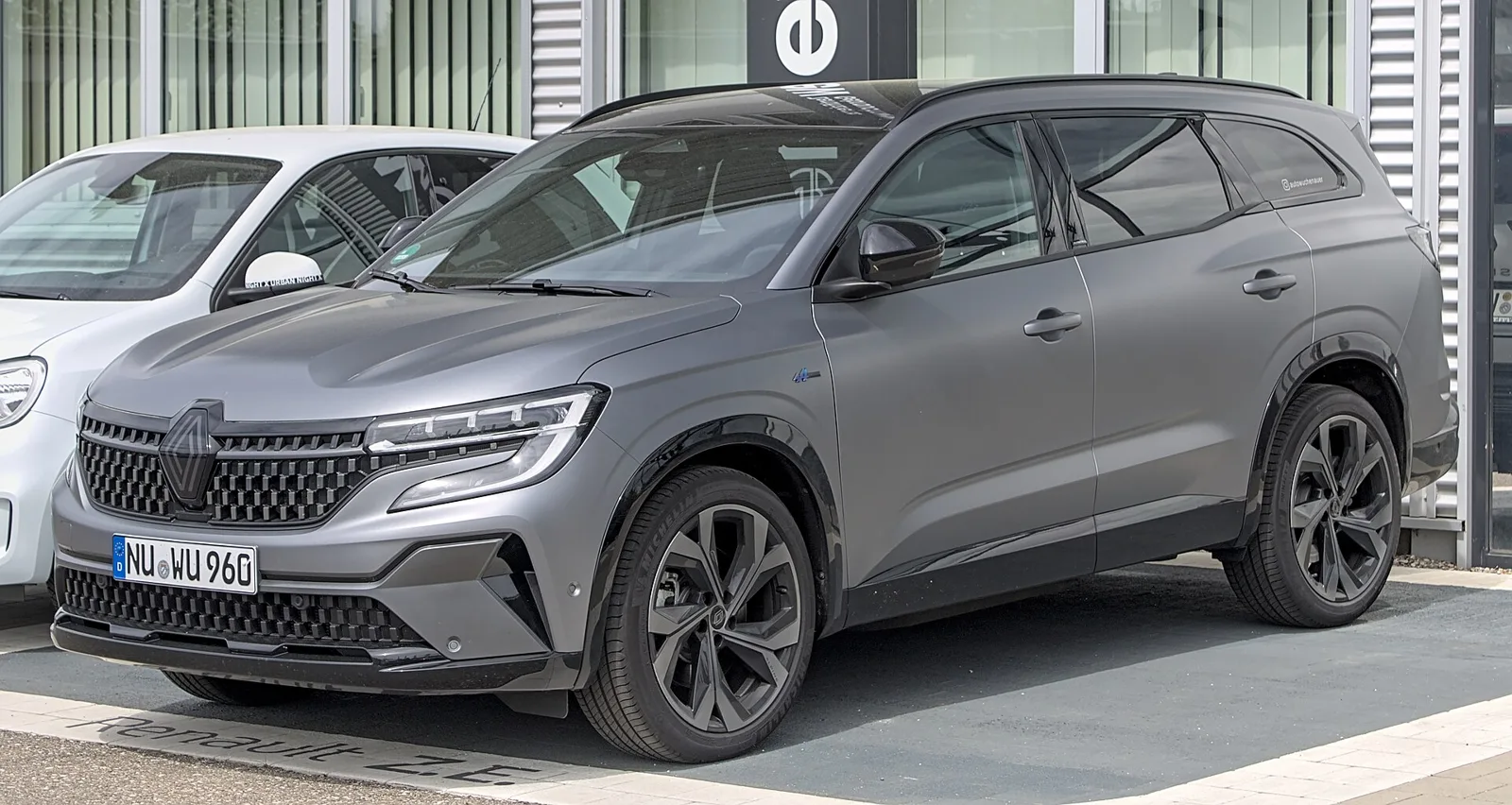
Renault's seven-seat sixth generation, built closely on the Austral, belongs to a family that began as one of the first contemporary minivans in 1984.
Renault's sixth-generation Espace, unveiled in 2023, is a seven-seat crossover built closely on the Austral. The Espace name dates to 1984, when the family began as one of the first contemporary minivans.
The Renault Espace has been built since 1984, and its sixth generation is a very different car from the minivans that came before. For five generations the Espace was a multi-purpose vehicle, but the sixth turned into a seven-seat crossover built around the Austral, and the nameplate now covers a different kind of vehicle.
What is the Renault Espace VI?
The Espace VI is the sixth generation of the Renault Espace family, unveiled on 28 March 2023. It is a mid-size crossover SUV heavily based on the Austral, sharing most of its body panels, its front end and its interior, and it uses the OpenR Link multimedia system.
Renault's own description of the fifth generation as a crossover-style MPV set the direction, and the sixth took that idea to a seven-seat layout.
A facelift in March 2025 added a new front end inspired by the Rafale, a new bonnet and tailgate, new rear lights, new seats and extra soundproofing.
A name that means space, carried from a 1984 minivan pioneer to a 2023 crossover built around the Austral.
Where did the Espace concept come from?
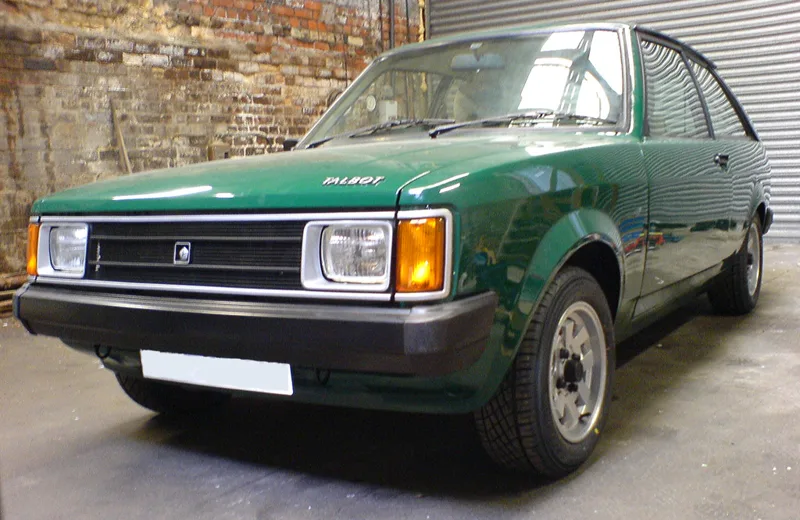
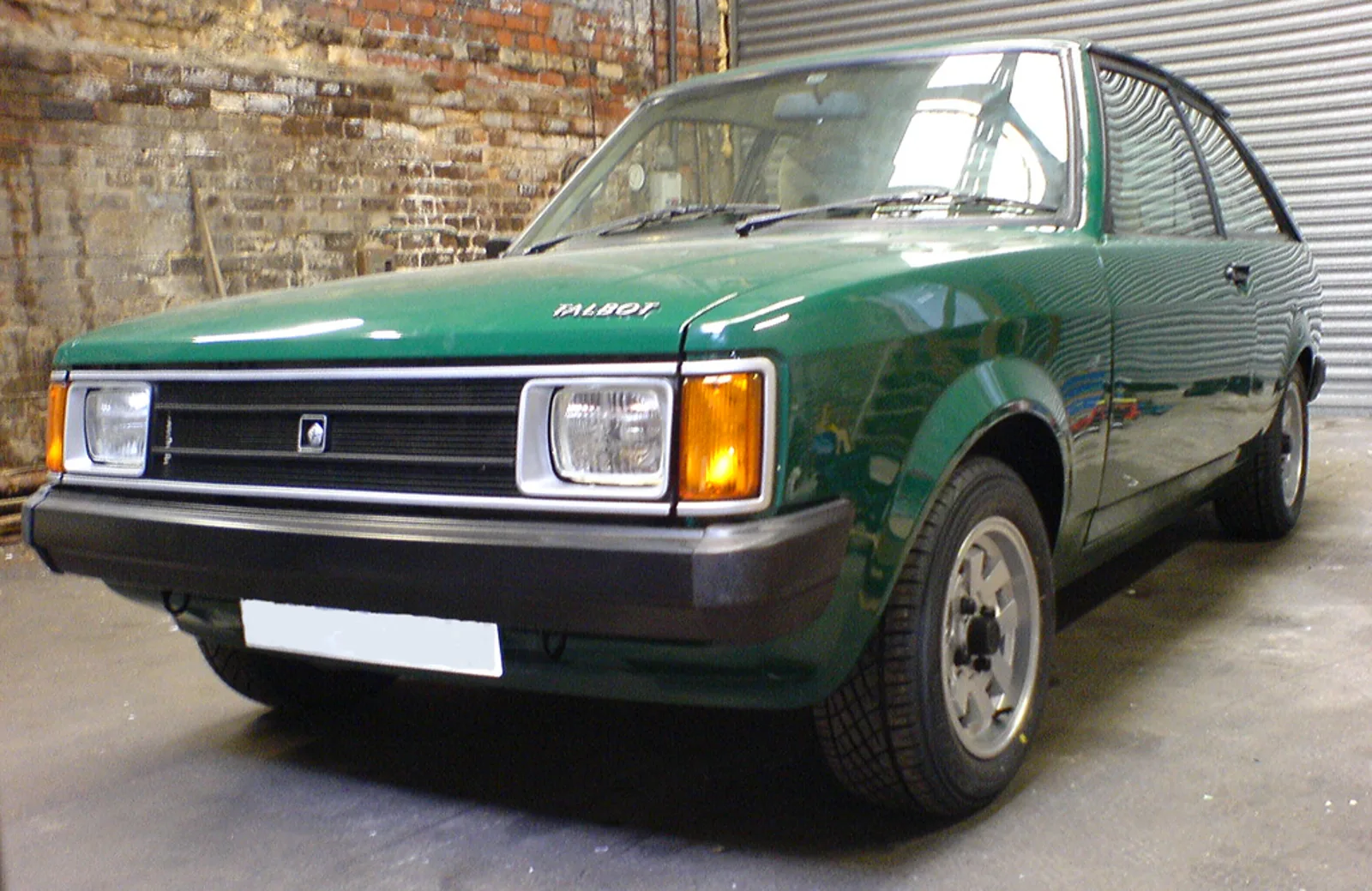
The Espace idea began in the 1970s with the British designer Fergus Pollock, who worked for Chrysler UK at its Whitley design centre in Coventry. Matra then developed the design, led by Greek designer Antonis Volanis, for Simca, with the plan of selling it as a Talbot. The project was eventually taken on by Renault.
Early prototypes borrowed Simca parts, including a grille that resembled the Simca 1307, which was also sold as the Chrysler Alpine. In 1978 Chrysler UK and Simca were sold to PSA Peugeot Citroen, and PSA phased out Simca within a decade because sales fell. PSA judged the Espace too expensive and too risky to put into production.
The design went back to Matra, which called it the Matra P23 and took it to Renault. Renault adopted it as project J11 and gave it the name Espace. Renault kept longitudinal engines, where the P23 had been designed for transverse ones, which allowed more flexibility in engine fitting and made four-wheel drive easier to develop.
How was the first Espace built?
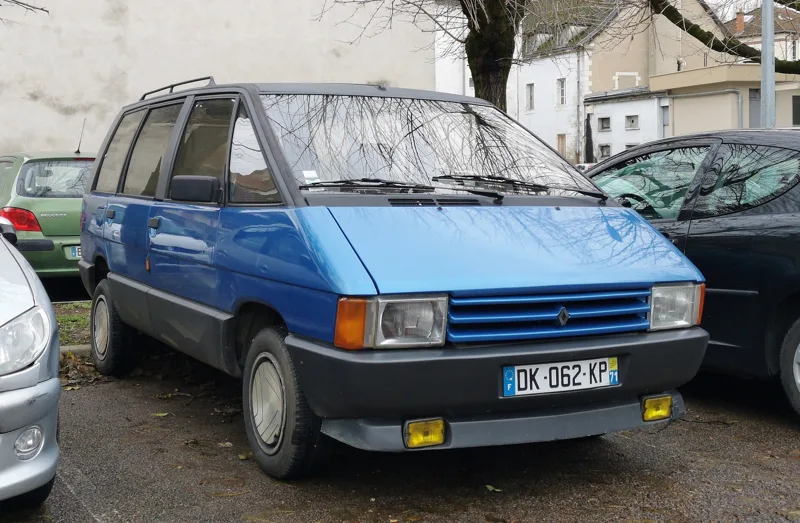
The first Espace used a fibreglass body on a warm-galvanised steel monocoque spaceframe, built on the same line and with the same technique as the Talbot Matra Murena. Renault insisted on an entirely flat floor behind the front seats, and the original petrol version carried 62.9 per cent of its weight over the front wheels.
Galvanising made the body 60 per cent stiffer in torsion and 20 per cent more resistant to bending, though it added 30 kg (66 lb). The radiator sat to the left in the engine bay, and turbodiesel models needed a longer front end, which gave them a protruding grille and a larger bumper.
Renault launched the Espace in July 1984, and only nine were sold in the first month. Buyers soon warmed to the MPV concept. Turbo D and Turbo DX diesels arrived in October 1984, and the car reached UK showrooms in August 1985, after Matra stopped making the Murena to free up its factory.
American Motors planned to import the front-wheel drive Espace and showed it at the 1985 Chicago Auto Show, but pricing talks with Matra dragged on. The plan ended when Chrysler bought AMC. In 2004 BBC's Top Gear staged a race between two Espaces and four rival people carriers, and the Espaces finished first and second.
How did the second generation change?
The second generation arrived in January 1991 with a heavily revised body that adopted the Renault family look, a new dashboard and a V6 option. Second-generation output ended in October 1996, with 316,419 examples built, and the final cars left showrooms in the summer of 1997.
The V6 was Renault's 2,849 cc PRV unit with 153 PS (113 kW). A four-speed automatic joined the V6 later, and a 1995 turbodiesel with a variable vane turbocharger lifted output from 88 to 92 PS (65 to 68 kW). Four-wheel drive, badged Quadra, was offered only with the 2.2-litre petrol four.
Sanjiang Renault in China also assembled the car from nearly complete kits, taking advantage of loopholes in the Chinese CKD rules.
What was the Espace Biturbo Quadra?
Matra proposed the Espace Biturbo Quadra in 1990 as a high-performance prototype, coded P46. It was to use the engine later fitted to the Safrane Biturbo, making around 270 PS (199 kW), but it never reached production because of concerns about its stability, and only one prototype remains.
The estimated performance was 0-100 km/h (0-62 mph) in around 7.5 seconds and a top speed above 230 km/h (140 mph).
What was the Espace F1?
The Espace F1 was a 1995 show car that Matra built to mark ten years of the Espace and Renault's involvement in Formula One. It used a lightweight carbon fibre F1-style chassis under a carbon fibre Espace body, with a 3.5-litre V10 that produced 800 PS (588 kW; 789 hp) after an upgrade from 700 PS (515 kW; 690 hp).
The engine and gearbox came from the 1993 Williams-Renault FW15C, and the V10 sat in the middle, with power going to the rear wheels through a six-speed semi-automatic gearbox. The car reached 100 km/h (62 mph) in 2.8 seconds and 200 km/h (124 mph) in 6.9 seconds, with a top speed of 312 km/h (194 mph).
Carbon ceramic brakes gave the car braking to match its acceleration. It could slow from 270 km/h (168 mph) to a halt in under 600 metres (1,969 ft). A slightly altered version returned in Gran Turismo 7 in 2025, 26 years after its first appearance in Gran Turismo 2.
Frank Williams rode in the Espace F1 as a passenger, chauffeured by the Williams driver David Coulthard. The car now sits in the Matra Museum in France.
What were the third and fourth generations?
The third generation arrived in December 1996, with the long-wheelbase Grand Espace coming in early 1998. Its most notable feature was a radically futuristic interior, with a centrally mounted dashboard and a digital speedometer, and it kept a plastic body over a galvanised steel chassis. A facelift followed in September 2000.
A 1.9-litre turbodiesel was added in November 1999, and the car shared much of its running gear with the Laguna. Some third generation examples were converted into NGV and taxi vehicles for Kuala Lumpur, where they were rebranded as Enviro 2000s. The third generation was the last Espace built by Matra, and the Avantime was later built on the same line.
Production of the third generation ended in September 2002, with a final production number of 357,120. The fourth generation followed in November 2002 as the first Espace fully developed and built by Renault, with 90 percent of the car recyclable and aluminium doors and bonnet 20 kg (44 lb) lighter than steel equivalents.
How did the fourth generation Espace perform?
The fourth generation moved the range upmarket and matched the radical Vel Satis and Avantime concept lines in styling. Its engines were mounted transversely, and a 2006 facelift added 2.0-litre and 3.0-litre dCi diesels. A further redesign with LED lights appeared at the 2010 Paris Motor Show.
Renault had aimed to sell 450,000 units before 2009, which would have given the Espace 20 percent of the European MPV market. The car finished third from the bottom of the Top Gear Satisfaction Survey in 2005, although many reviewers still praised its space and refinement.
In June 2012 Renault restyled the car again, adding the family design concept of Laurens van den Acker and new 2.0 dCi M9R engines to meet French CO2 limits. The car passed Euro NCAP tests, and a 2003 Espace twice appeared in Fifth Gear crash tests at 64 km/h (40 mph) with its passenger compartment largely intact.
Why did the fifth generation turn into a crossover?
The fifth generation, unveiled at the Paris Motor Show in October 2014, dropped the traditional large MPV shape for crossover SUV styling. It used the Renault-Nissan Common Module Family architecture, and Renault described it as a crossover-style MPV that kept the practicality of an MPV interior.
Equipment included optional radar adaptive cruise control, active emergency braking, R Link 2 infotainment, lane departure warning and a hands-free parking system. Only left-hand drive cars were built, which matched the Renault Talisman. The car's engines changed several times over its life.
In June 2017 the 1.6-litre petrol gave way to a 1.8 TCe, and in September 2018 both 1.6-litre diesels were replaced by larger 2.0-litre engines from Nissan's MR family. The summer 2020 update brought a new interior, more assisted driving options and an updated infotainment system, and petrol models left production in October 2020.
The lower-powered diesel was discontinued in January 2022, leaving the Blue dCi 190 EDC with 189 PS (139 kW) as the only engine. Production of the fifth generation halted in March 2023. The concept that preceded it, the Initiale Paris shown at the Frankfurt Motor Show in September 2013, had a 1.6-litre diesel and a map of Paris in its roof.
Espace generation timeline and specifications
| Generation | Key details |
|---|---|
| First (J11), 1984 | Fibreglass body on galvanised spaceframe; Matra-built; nine sold in the first month |
| Second (J63), 1991 | V6 with 2,849 cc, 153 PS (113 kW); 316,419 built by October 1996 |
| Third, 1996 | Grand Espace from early 1998; facelift September 2000; 357,120 built |
| Fourth (J81), 2002 | First fully Renault-developed Espace; 90 percent recyclable |
| Fifth (JFC), 2014 | Crossover SUV styling; Renault-Nissan CMF; 189 PS (139 kW) Blue dCi 190 |
| Sixth, 2023 | Seven-seat SUV based on the Austral; OpenR Link; facelift March 2025 |
| Biturbo Quadra prototype, 1990 | Around 270 PS (199 kW); one prototype survives |
| Espace F1 show car, 1995 | 800 PS (588 kW; 789 hp); 0-100 km/h in 2.8 seconds; 312 km/h (194 mph) top speed |