A former RAF bomber station in Northamptonshire that became the permanent home of the British Grand Prix and one of the sport's great stages.
The Silverstone Circuit is a Northamptonshire track built on a wartime RAF airfield. It first hosted the British Grand Prix in 1948 and has been the permanent home of the race since 1987. Its official race lap record is 1:27.097, set by Max Verstappen in 2020.
The Silverstone Circuit is a motor racing circuit near the Northamptonshire villages of Silverstone and Whittlebury, England. It sits on the site of a wartime RAF bomber station, and it has been the home of the British Grand Prix since 1987, after first hosting the race in 1948. The 1950 British Grand Prix was also the first race of the new World Championship of Drivers.
The circuit's history runs from improvised post-war racing on runways to a modern Formula One track that remains one of the most fast and demanding in the calendar. Its story includes royal visits, record-breaking speeds, a major redesign in 1991 and a long contract that keeps the race in England until the 2034 event.
How did Silverstone begin?
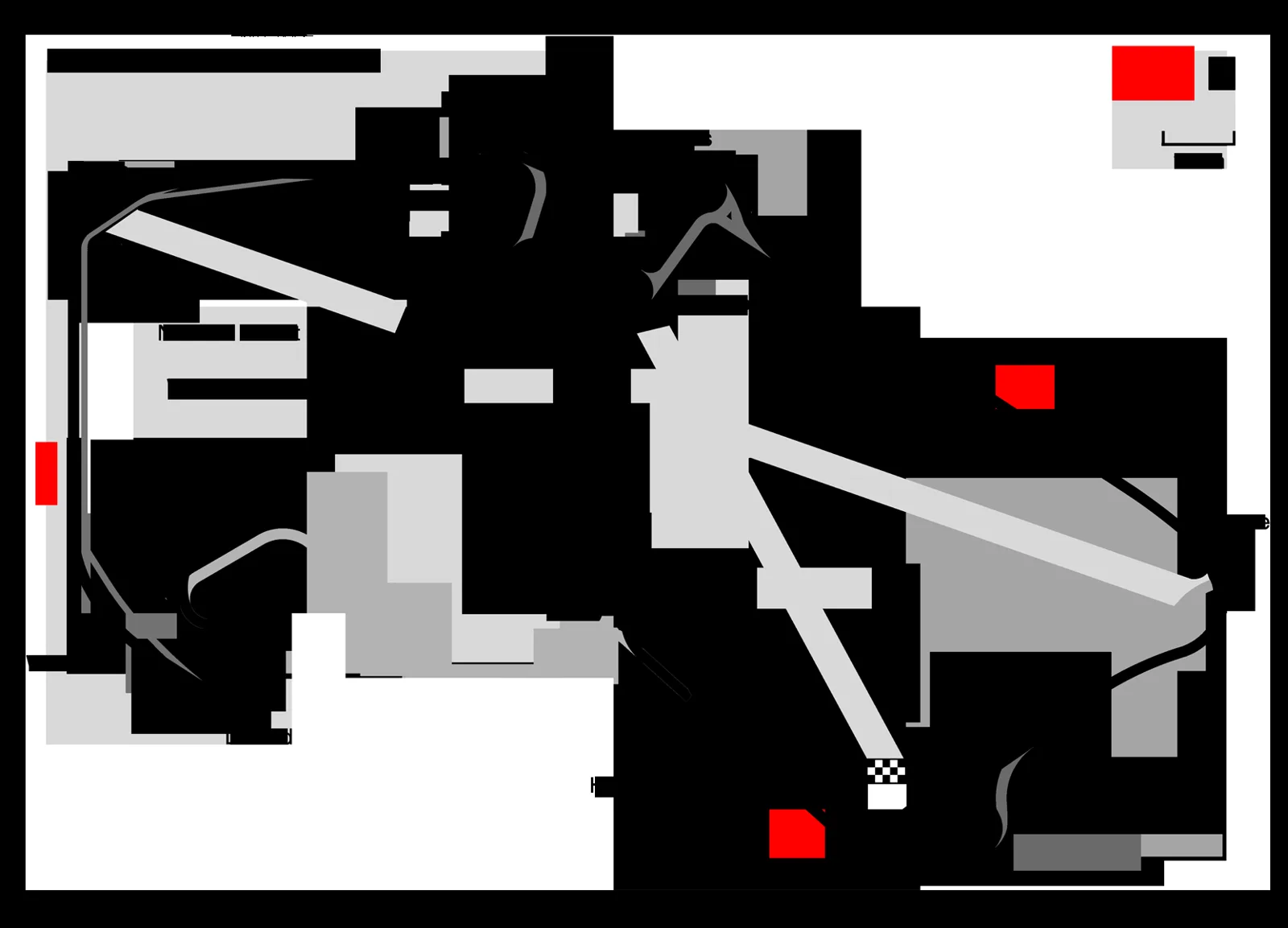
Silverstone was built on an airfield that had been operational from 1943 to 1946 as the base for the No. 17 Operational Training Unit. Its three runways, laid out in the classic triangle of wartime airfields, lie within the outline of the present track.
The first motor racing there was an informal event in September 1947, organised by a group of friends. One of them, Maurice Geoghegan, ran over a sheep that had wandered onto the airfield, and the car was written off. The race became known as the Mutton Grand Prix as a result.
The Royal Automobile Club took a lease on the airfield the following year and set out a proper circuit. The first races used the runways themselves, with hay bales marking the track. Organisers then built the Grand Prix circuit in less than two months, and an estimated 100,000 spectators watched the 1948 race.
A wartime runway that became a permanent Grand Prix circuit, carrying British motor sport through eight decades of speed.
Why is Silverstone the home of the British Grand Prix?
The Grand Prix did not settle at Silverstone straight away. From 1955 the race alternated between Silverstone and Aintree, and from 1964 Brands Hatch joined the rota. It finally settled permanently at the Silverstone track in 1987.
The 1950 race was historic. It was the first World Championship Grand Prix and the first race in the newly created World Championship of Drivers, and King George VI and Queen Elizabeth attended, the only time a reigning monarch has come to a motor race in Britain.
The 2019 race nearly ended the arrangement. Escalating costs led the British Racing Drivers' Club to trigger a break clause, but a new agreement with Liberty Media kept the race at Silverstone for a further five years. In February 2024 a ten-year contract extension was agreed, running to the 2034 event.
How did the early Grand Prix winners shape the circuit?
The early years were dominated by a few teams and a few cars. The table below lists some of the most important winners and their race averages, showing how speeds rose from the post-war Alfettas to the powerful turbo era.
| Year | Winner | Car | Race average |
|---|---|---|---|
| 1950 | Giuseppe Farina | Alfa Romeo 158 | 90.96 mph (146.39 km/h) |
| 1951 | Jose Froilan Gonzalez | Ferrari 375 | 96.11 mph (154.67 km/h) |
| 1967 | Jim Clark | Lotus-Cosworth 49 | 117.6 mph (189.3 km/h) |
| 1969 | Jackie Stewart | Matra-Cosworth MS80 | 127.2 mph (204.7 km/h) |
| 1977 | James Hunt | McLaren M26 | 130.36 mph (209.79 km/h) |
| 1983 | Alain Prost | Renault RE40 | 139.218 mph (224.050 km/h) |
The 1950s brought Mercedes and Ferrari rivalry to the British circuit. Fangio won his only British Grand Prix in 1956, in a Lancia-Ferrari, and Peter Collins won for Ferrari in 1958, with Hawthorne second.
In 1960 Jack Brabham won in a works Cooper T53, while Graham Hill stalled his BRM on the grid and carved through the field before fading brakes sent him spinning at Copse. Jim Clark then dominated, winning in 1963, 1965 and 1967.
How did the 1970s and 1980s change the track?
Speeds kept rising, and the track had to adapt. In 1973 Jody Scheckter spun his McLaren at the completion of the first lap, which set off the biggest accident ever seen on a British motor racing circuit. Officials halted the event, and only one driver was hurt.
The accident led to a chicane being inserted at Woodcote in 1975 to slow cars through the corner. That same year Tom Pryce took pole for the Grand Prix, but the race was run in appalling weather and was stopped at two-thirds distance after several cars crashed on the very wet circuit.
The turbo era brought dramatic qualifying. In 1985 Keke Rosberg qualified his Williams FW10-Honda at over 160 mph (260 km/h), and the fuel allowance of 220 litres per car per race meant that races were often economy runs. In 1983 Rene Arnoux set a lap of 1:09.462 in a Ferrari 126C3, the first lap under 1:10.000 at the circuit.
The decade ended with Nigel Mansell taking his home-crowd victories. In 1987 he passed Nelson Piquet into Stowe in the final laps after a mid-race pit stop to cure a vibration, and the crowd's reaction is still remembered as one of the great moments of the event.
What did the 1991 redesign change?
The circuit was reworked after the 1990 meeting, ahead of the 1991 racing. The old flowing character, with most corners taken in fourth or fifth gear, gave way to a layout that asked for patience and precision.
Club and Stowe were slowed, and a chicane went in ahead of Club. Maggotts, Becketts and Chapel became fast, snaky esses that demanded constant changes of direction, while a new twisty infield section, Luffield, replaced the Farm Straight and the Bridge chicane.
Nigel Mansell took the first Formula One race on the new layout before his home crowd. On the way back to the pits he collected Ayrton Senna, whose McLaren had run dry, and carried him on the side of his car.
What is a lap of Silverstone like?
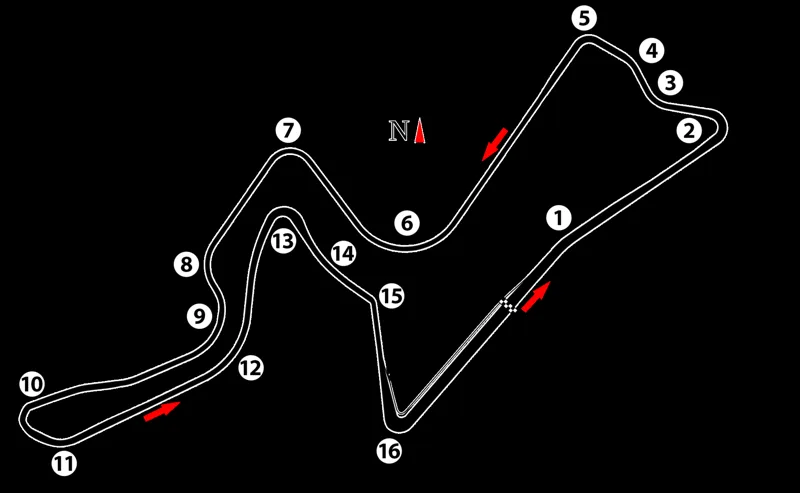
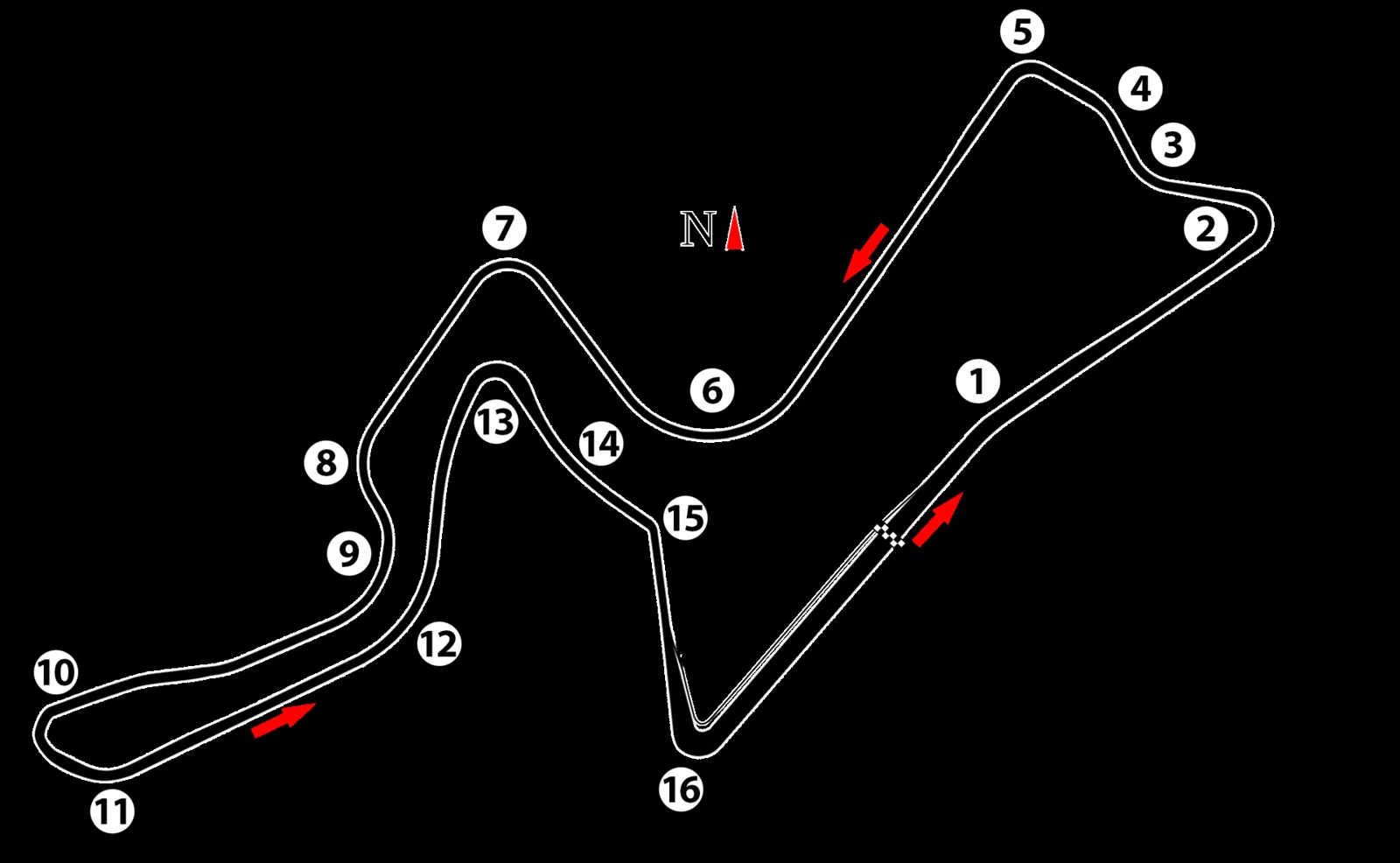
A modern Formula One lap starts on the Hamilton Straight and runs through a series of distinctive sections. The circuit rewards late braking, careful exits and strong nerves, and the Hangar Straight is the prime place to pass under DRS.
| Corner | Character | Detail |
|---|---|---|
| Abbey (Turn 1) | Flat-out, eighth-gear right-hander | Leads into Farm |
| Village (Turn 3) | Slow right-hander, first heavy braking point | Taken in fourth gear |
| The Loop (Turn 4) | Slowest corner on the circuit | Approached at 90 km/h (56 mph) |
| Brooklands (Turn 6) | Sharp left-hander | Rewards a late apex |
| Luffield (Turn 7) | Long, 180-degree right-hander | Demands patience on the throttle |
| Copse (Turn 9) | Fast right-hander | Seventh or eighth gear at 290 km/h (180 mph) |
| Maggotts and Becketts (Turns 10 to 13) | Rapid left-right-left-right sequence | Lateral forces above 5g |
| Stowe (Turn 15) | Fast, sixth-gear right-hander with a blind entry | Downhill exit |
| Vale (Turn 16) | The hardest stop on the track | Second gear |
The Hangar Straight, 770 m (840 yd) long, is the prime passing zone under DRS, and cars reach 325 km/h (202 mph) on it before Stowe. The modern lap has two DRS zones, the first on the Wellington Straight, and the Hangar Straight offers the best overtaking chance.
The final complex, Club, is a long accelerating right-hander, and drivers must unwind the steering wheel carefully to maximise traction over the line. The lap then restarts on the Hamilton Straight, the pit straight named after Lewis Hamilton in 2020.
Which safety changes shaped the modern circuit?
Silverstone's safety record has changed as the cars have. The 1994 deaths of Ayrton Senna and Roland Ratzenberger at Imola led many circuits to reduce speeds, and at Silverstone the flat-out Abbey kink was turned into a chicane in just 19 days ahead of the 1994 race.
The approach from the Hangar Straight into Stowe was reworked in 1995 to widen the run-off. The starting grid is 17 m (19 yd) wide, which meets the latest safety guidelines.
Fatalities have occurred at the circuit over the years, including Harry Schell at the 1960 BRDC International Trophy and Bob Anderson at the 1967 British Grand Prix. Riders also died at the 1983 British motorcycle Grand Prix, when Norman Brown and Peter Huber were killed.
What are the lap records at Silverstone?
Verstappen set 1:27.097 at the 2020 race, and that remains the official race mark on the current Grand Prix layout, in use since 2011. Official lap records are set in races, while qualifying laps are typically faster.
The fastest lap of the circuit is 1:24.303, set by Lewis Hamilton in qualifying during 2020. That benchmark reflects the speed of a modern Formula One car on a layout that has been stable for more than a decade.
Who holds the British Grand Prix records?
Lewis Hamilton has the most wins at Silverstone, and his win in 2019 was his sixth there. It broke a 52-year-old record for the most British Grand Prix wins by a Formula One driver, after Jim Clark had set the previous mark of five in 1967.
Hamilton won his ninth British Grand Prix in 2025, after 945 days without a victory, and he extended his consecutive Silverstone podium record to twelve. In the same race Lando Norris won his first British Grand Prix, becoming the thirteenth British driver to win on home soil.
What else takes place at Silverstone?
The circuit is much more than the Grand Prix. It hosts club racing series, the world's largest historic race meeting in the Silverstone Classic, and British rounds of MotoGP and the Superbike World Championship over the years.
The circuit has held a 24-hour car race, Britcar 24, between 2005 and 2018. It has also hosted exhibition drifting, with a course that uses both Brooklands and Luffield corners to form an S-bend, and it hosts the Formula Student Competition each year.
The World Endurance Championship has also raced there, including the 6 Hours of Silverstone, which was held from 2012 to 2019 and is planned again for 2027. The circuit's varied calendar keeps it busy from spring to autumn.