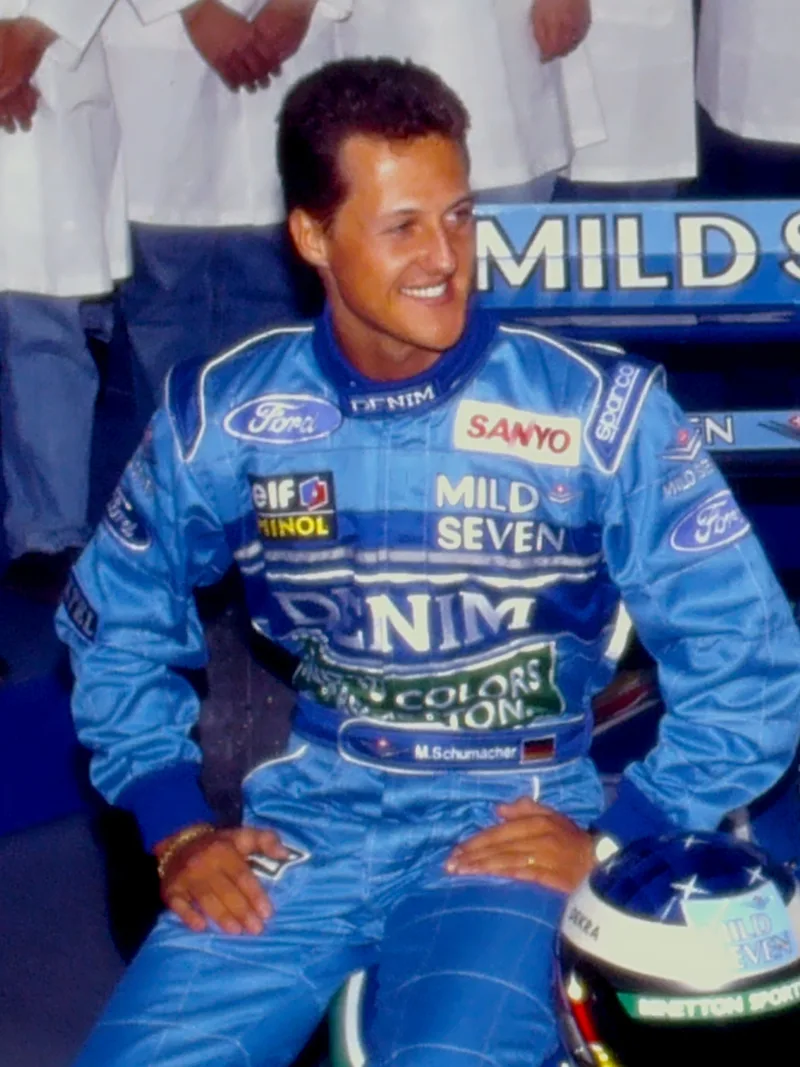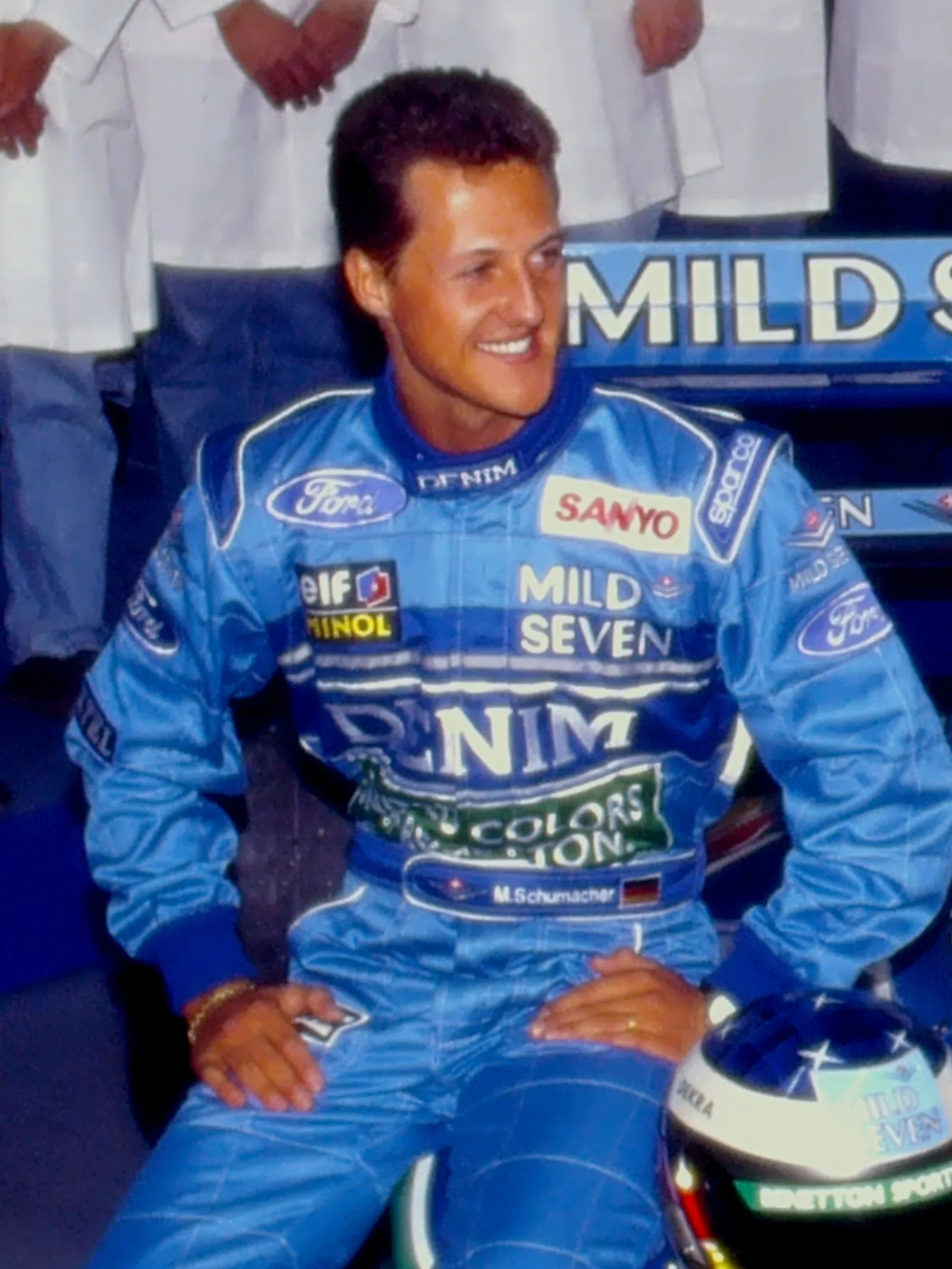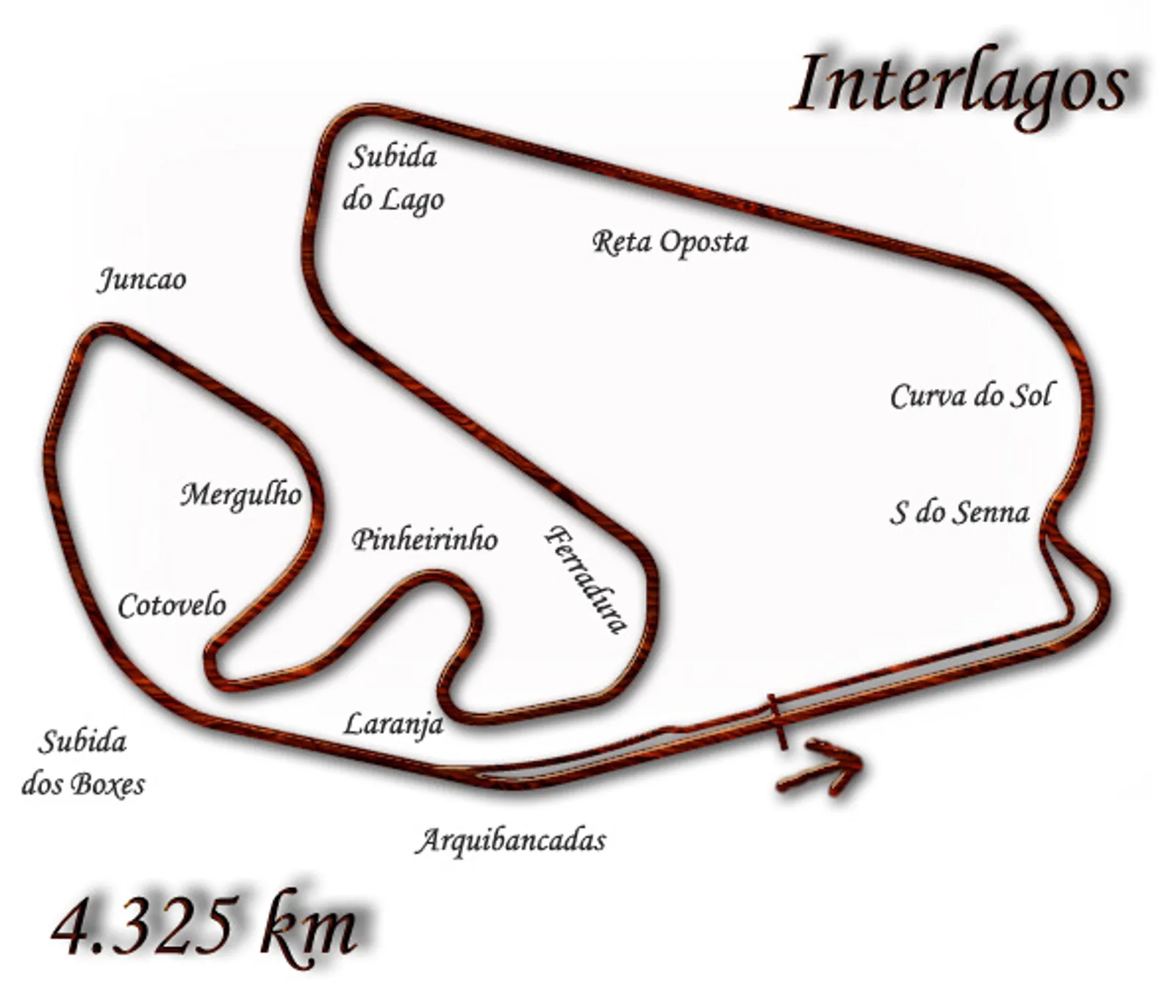
Michael Schumacher was excluded and then reinstated after the 1995 season opener at Sao Paulo, while Damon Hill's pole-position race ended in a spin on lap 30.
The 1995 Brazilian Grand Prix was won by Michael Schumacher for Benetton from second on the grid, after a fuel sample appeal overturned his exclusion. Gerhard Berger had first been declared the winner, and Damon Hill's pole-position race ended in a spin on lap 30.
The 1995 Brazilian Grand Prix opened the season at Sao Paulo on 26 March, and it ended with Michael Schumacher winning a race whose order was later settled by an appeal. Damon Hill had taken pole and was the faster car on the day, but he spun out while leading on lap 30. Schumacher's win was confirmed only after a dispute over fuel samples was reversed on appeal.
Why did the Brazilian Grand Prix result change after the race?
Schumacher and David Coulthard were excluded after the race when the fuel taken from their cars did not match the sample lodged with the FIA. Berger was declared the winner, but the stewards' decision was overturned at an appeal hearing on 13 April, and Schumacher and Coulthard were reinstated as first and second.
The appeal restored the order on the road, but neither Benetton nor Williams received constructors' points for the race. Ferrari was unhappy with the outcome, and Berger described the sport as a joke. The affair showed how much the fuel rules had changed for 1995.
Fuel legality was a fresh rule that season. Each team's fuel supplier had to send samples to the FIA before every Grand Prix, and the governing body used those samples as its reference during testing at the event. Only fuel approved in advance was allowed, and the rule had been proposed by the Elf oil company in 1993 and backed by the other suppliers.
The same season brought standardised refuelling equipment, a revised weigh-in procedure and changed licence conditions. Several of these produced controversies that at times threatened to overshadow the race, as did the rough surface of the track itself.
A fuel sample dispute, not the chequered flag alone, decided who won the 1995 Brazilian Grand Prix.
What was the background to the 1995 season opener?
The race was the first round of the 1995 championship, coming after a four-month break since the final race of 1994 in Australia. The track had been resurfaced over the winter in an attempt to reduce its bumps, but the drivers found it rougher than before. Coulthard was blunt about it, and Rubens Barrichello was blunter still.
Coulthard was also worried about his stamina for 71 laps, because tonsillitis had disrupted his physical training in the run-up to the event. Barrichello, the local Jordan driver, criticised the circuit organisers and said the track was three times bumpier than before. Heinz-Harald Frentzen claimed the bumping was so severe that he came close to passing out, and his Sauber handled badly over the bumps all weekend.
The race was the first Brazilian Grand Prix since Ayrton Senna's death at the 1994 San Marino Grand Prix, and the weekend carried tributes throughout. Drivers took a parade lap on the back of a truck, waving Brazilian flags, while the Brazilian Air Force drew a large S trail in the sky. A local highway was renamed Rodovia Ayrton Senna, and Barrichello wore a special helmet design as a personal tribute.
Organisers in Sao Paulo wanted the circuit named for Senna, but the relatives of Carlos Pace, whose name it already carried, objected. Because of Senna's death the event was lower-key, with fewer spectators at practice and qualifying, although the race itself drew a capacity crowd.
Which teams and drivers started the 1995 season?
Fourteen teams and 28 drivers were on the official 1995 entry list after a threatened drivers' boycott over their Super Licences was defused before the race. The Larrousse drivers, Eric Bernard and Christophe Bouchut, did not appear on track at all, because the team was short of money.
The Super Licence dispute centred on terms that let the FIA demand promotional appearances and stopped drivers from criticising the championship. French government aid did not arrive, and the team had not yet built a 1995 chassis. Owner Gerard Larrousse chose to miss the first two rounds and hoped to compete from the San Marino Grand Prix onwards.
Some cars had barely been tested. The Footwork FA16 and Simtek S951 arrived with virtually no running, having been completed shortly before the event. Pedro Diniz was the only complete rookie, while Andrea Montermini made his first start after failing to qualify for the 1994 Spanish Grand Prix because of injury. Mika Salo and Domenico Schiattarella had each raced twice before, and Taki Inoue had raced once the previous year.
Mansell's arrival at McLaren had been expected, but a week before the opener the team said he would not race the first two rounds because he could not fit into the MP4/10. Mark Blundell took his place while McLaren built a wider monocoque. Sponsor demand played a part, since Philip Morris and its Marlboro brand wanted the publicity of the 1992 World Champion's return.
Why did the Benetton and Ligier designs cause controversy?
Ligier's new JS41 was compared with Benetton's B195 because of their similar design, and the only apparent difference between them was the engine. The Ligier team was run in 1995 by Tom Walkinshaw, who had been Benetton's engineering director the season before.
Walkinshaw argued that the two cars were as close as the team could make them aerodynamically, but mechanically and structurally they were different. He said that a core group of engineers who had worked on the Benetton would naturally produce something similar, and that the detail of the two cars was not interchangeable.
Rival team owners had been comparing the two cars, and the debate carried into the race weekend in Sao Paulo.
How much did the weight rules matter in 1995?
The 1995 rules set a minimum of 595 kg for car and driver together, and drivers were weighed before the first session to set a reference weight. Schumacher weighed 77 kg at the weigh-in, against 69 kg at the start of 1994, and after the race he was 71.5 kg, which left the car and driver at 599 kg.
Williams technical director Patrick Head estimated that a weight penalty of 7 kg could cost 14 seconds over 70 laps. A driver who registered as heavy as possible at the weigh-in gained a small advantage, because his true weight in the car was lower.
Karl Wendlinger gained the most weight since 1994, putting on 10.0 kg (22 lb). Frentzen and Ukyo Katayama added the least, gaining 1.4 kg (3 lb) each. Schumacher put his heavier weigh-in down to a winter fitness regime that had turned fat into muscle, and he admitted that he had been eating and drinking heavily and had avoided the toilet before the weigh-in.
How did practice and qualifying go in Sao Paulo?
Hill took pole with 1:20.081 in the first qualifying session and kept it after the second, where Schumacher was fastest at 1:20.382 but could not beat that earlier time. Practice and qualifying were held in damp conditions after overnight rain, with the track drying towards the end of each session.
Two practice sessions ran on the Friday and Saturday mornings, each lasting 1 hour and 45 minutes. In the first, Hill was fastest with 1:21.664, two thousandths of a second ahead of teammate Coulthard, with Schumacher third and the two Ferraris of Alesi and Berger close behind.
Hakkinen finished that session 14th, complaining of steering problems. The two Ferrari drivers used different pedal layouts in the 412T2. Berger ran two pedals and a hand-operated clutch, while Alesi preferred the traditional three-pedal arrangement.
The second practice session was wet but drying. Schumacher went off at the exit of turn five and damaged his front wing, yet he went on to post the quickest lap of the session, 1:23.607, once his ride height had been adjusted. Berger, Hill, Hakkinen, Alesi and Olivier Panis's Ligier completed the top six.
In the first qualifying session Hill set the provisional pole at 1:20.081, ahead of Berger, Coulthard, Alesi, Hakkinen and Schumacher. The session was disrupted by Schumacher's crash, and Benetton kept Herbert in the garage while the team worked out what had gone wrong.
Why did Schumacher crash in qualifying?
Schumacher crashed heavily into the tyre barrier at turn eight, a corner usually taken at 230 km/h (140 mph), after the steering failed. The cause was a joint in the steering column. Benetton engineer Tim Wright sourced replacement steering components from Sao Paulo, and the team had no further problems for the rest of the weekend.
Schumacher completed only two of his twelve allotted laps in that session. He said the steering had moved at the previous corner and then gone completely, and that the safety structure behind his head had done its job. He was not happy about the incident, but he was confident the team would find the fault.
Schumacher then set the fastest time of the second qualifying session, 1:20.382, which still could not beat Hill's time from the first session. Hill had made a set-up change that he later disliked, but he held on to pole, his first since the 1994 British Grand Prix.
Coulthard took third on the grid, and Herbert qualified fourth after a late flying lap. That position equalled his best-ever qualifying result, achieved at the 1994 Italian Grand Prix for Lotus.
How did the race unfold?
Schumacher started second and won the 71-lap race, while Hill, the faster car on the day, retired from the lead on lap 30 after a spin. Berger finished third despite a loose wheel nut at a routine stop, and Hakkinen took fourth in a McLaren that had been uncompetitive in pre-season testing.
Hill was the faster driver on the day and looked set for a comfortable win. While leading on lap 30, he spun out. Initial reports pointed to a gearbox problem, but it was later found to be a suspension failure, and that left Schumacher in front.
Schumacher's weekend had begun with a heavy crash on Friday, after the steering failed. Steering components had to be changed for the rest of the event.
Mika Salo drove strongly in the first half of the race and ran third in his first Grand Prix for Tyrrell. A cramp then dropped him back to seventh at the finish. Behind Hakkinen the points went to Alesi in the second Ferrari, and to Blundell, who drove the second McLaren as Mansell's stand-in.
Final classification after the appeal
| Finish | Driver | Team | Note |
|---|---|---|---|
| First | Michael Schumacher | Benetton | Reinstated after the appeal |
| Second | David Coulthard | Williams | Reinstated after the appeal; no constructors points |
| Third | Gerhard Berger | Ferrari | Declared winner before the appeal; loose wheel nut at a stop |
| Fourth | Mika Hakkinen | McLaren | Ran well in a car that had struggled in testing |
| Retired | Damon Hill | Williams | Spun out while leading on lap 30 |
| Seventh | Mika Salo | Tyrrell | Cramp after a strong first half |
Alesi, in the second Ferrari, and Blundell, in the second McLaren, also scored points.
Why did the 1995 Brazilian Grand Prix matter for the season?
The race showed a season in which rules, reliability and the appeal process shaped results as much as speed. Hill had the pace and Schumacher had the win, but the fuel dispute decided the official order, and it was not settled until after the race had finished.
Schumacher himself anticipated a struggle for the championship, and Renault Sport's chief engineer Bernard Dudot said Benetton were less well prepared than Williams. Benetton had changed engine supplier to Renault, while Williams had been in partnership with the company since 1989.
Hill had set the fastest time at the final pre-season test at Estoril, 0.35 seconds faster than Schumacher's best. Williams had also completed 2,500 miles of testing with its FW17, significantly more than Benetton, which had encountered reliability problems with its own B195 chassis.
The first race of a season can be settled as much by paperwork as by the track, and Sao Paulo in 1995 was a clear example.