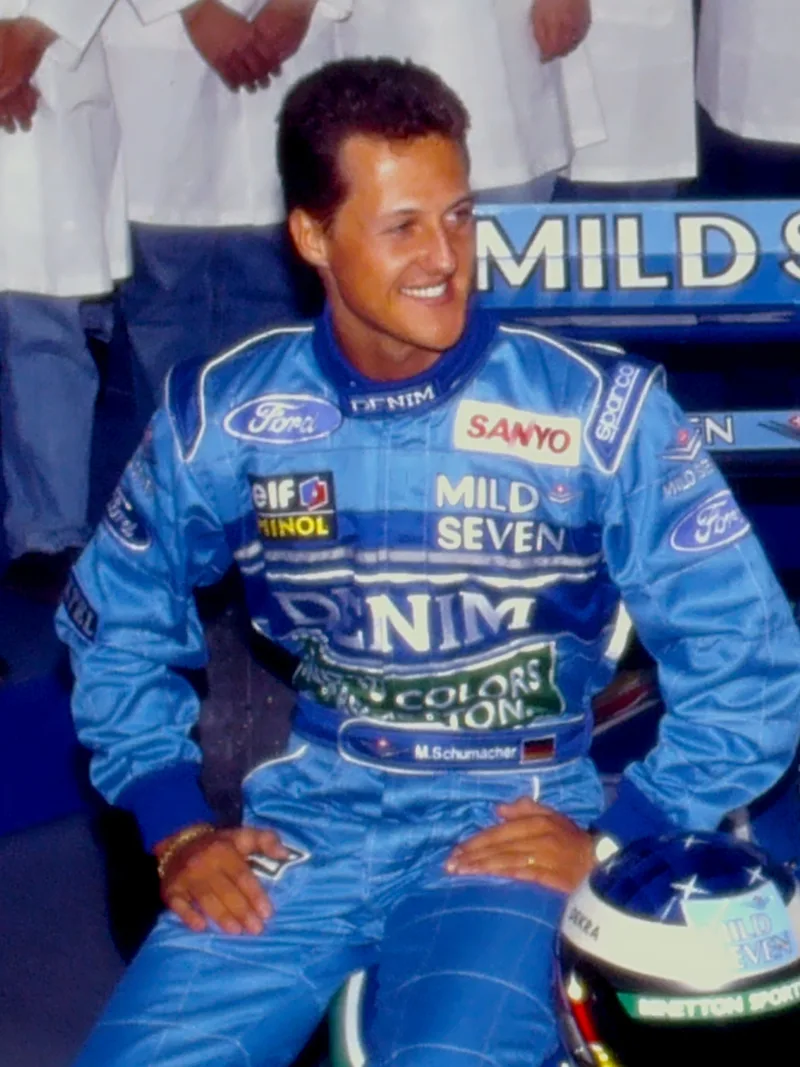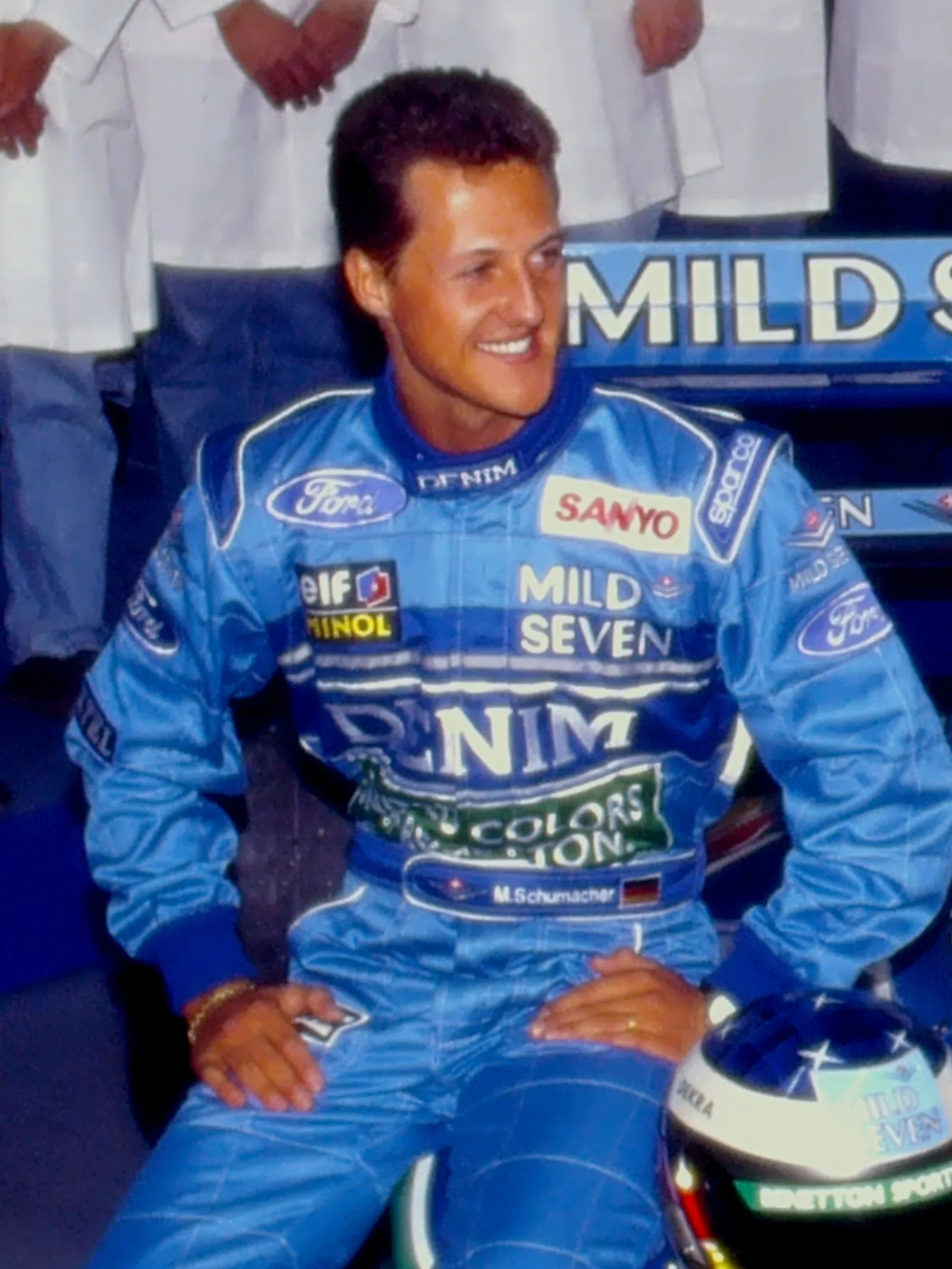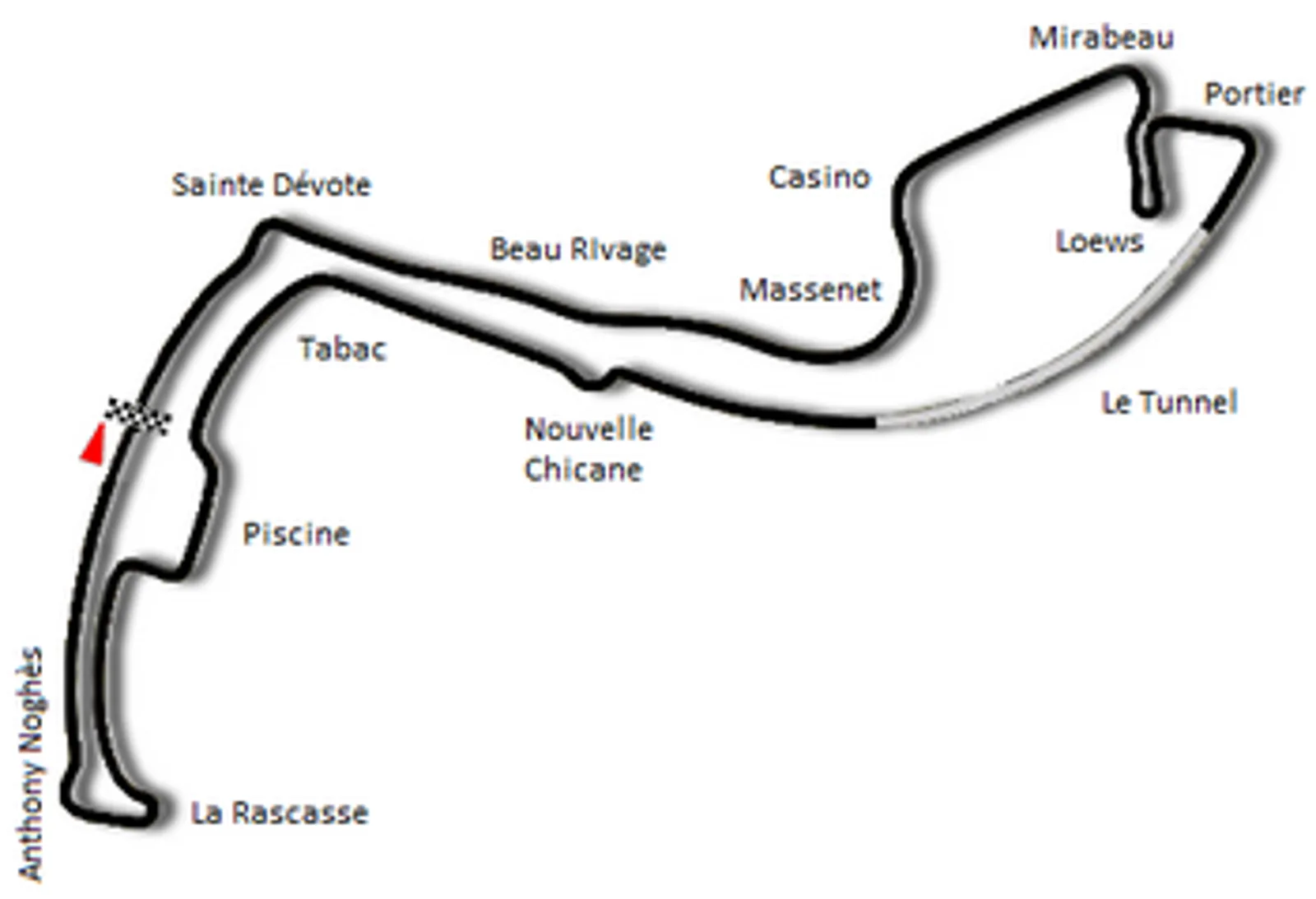
Damon Hill took pole and led the first 23 laps, but Michael Schumacher's one-stop strategy and a brief lead change decided the 1995 Monaco Grand Prix.
The 1995 Monaco Grand Prix, the fifth round of the season, was held on 28 May 1995 at the Circuit de Monaco. Michael Schumacher won the 78-lap race for Benetton from second on the grid, and Damon Hill, who had started from pole, finished second for Williams.
Michael Schumacher won the 1995 Monaco Grand Prix for Benetton after starting from second on the grid, finishing more than 30 seconds ahead of Damon Hill. Hill had taken pole and led the first 23 laps for Williams, while Gerhard Berger was third for Ferrari. The win was Schumacher's third of the season and extended his championship lead over Hill to five points.
Who led the championship going into Monaco?
Schumacher led the drivers' championship with 24 points, a single point ahead of Hill on 23. Jean Alesi and Berger were third and fourth with 14 and 13 points, while David Coulthard and Johnny Herbert had scored 9 each. Ferrari led the constructors' table on 27 points from Williams on 26 and Benetton on 23.
The margins were tight. Schumacher had dominated the Spanish Grand Prix, which was the context for the Monaco meeting, but both championships were still open with no obvious favourite for the win around the streets of Monte Carlo.
Ferrari led the constructors' table by a single point from Williams, with Benetton a further three points back, so the Monaco streets offered each team a chance to gain ground. Ferrari had a narrow lead in that table, and the gap was only a single point.
Hill took pole and led 23 laps, but Schumacher's one-stop strategy turned the Monaco streets into his race.
Mansell's exit and the McLaren seat
Two drivers changed for the race. Nigel Mansell's McLaren seat went to the team's test driver, Mark Blundell, while Karl Wendlinger's Sauber seat went to Jean-Christophe Boullion, the reigning International Formula 3000 champion and a Williams test driver.
Mansell's exit closed a brief spell at McLaren that had lasted only two races. He had come back to Formula One in 1994 to stand in for the late Ayrton Senna at Williams, yet Williams chose Coulthard for 1995, and Mansell moved to McLaren instead.
Mansell raced the wider MP4-10B at San Marino and Spain but struggled to match Mika Hakkinen, and he retired from the Spanish race with handling problems. Mansell and Ron Dennis then agreed a mutual termination of his contract, and Blundell was restored to the seat he had held in the first two races, employed race by race.
The official tickets and publicity material, meanwhile, showed a large picture of his McLaren.
Sauber, Simtek and the team problems
Wendlinger had been badly hurt in a heavy practice crash at the previous year's Monaco race, and the head injury kept him sidelined for the rest of that season. Back at Sauber, he was several seconds a lap off the pace set by Frentzen across the first four races.
Boullion's Formula One debut followed from this. Frank Williams had lent his test driver to Sauber, partly to judge Frentzen's potential for a race seat at Williams. Frentzen was in his second season, and this was his first Monaco start, because Sauber had withdrawn him from the previous year's race after Wendlinger's crash.
The state of the Simtek team was another major topic. Team principal Nick Wirth held a press conference on the Thursday before the race and admitted that the outfit faced imminent closure unless promised sponsor money arrived. He said Simtek faced a shortfall of several million dollars to complete the season, and that the team would not travel to the Canadian Grand Prix without a rescue package.
Simtek had only three gearboxes for the Monaco meeting, and that alone limited the team's running. Across the Thursday session the team managed only nine laps between its two drivers.
How did the cars prepare for the Monaco streets?
Because the low-speed corners and the low-grip road surface at Monaco favour maximum downforce, every team set its car up for as much grip as possible. The result was a field of cars tuned for the same narrow demands. Ferrari introduced a revised rear wing and diffuser design for the 412T2, with more space for downforce-generating winglets around the rear bodywork.
Ferrari also trialled two suspension layouts, one run by Alesi and one tested by Berger in his spare car. As was traditional at Monaco, the team brought a spare chassis, taking its total to four. Sauber fitted new wings at both ends, a revised diffuser and a slightly lighter C14 chassis.
Benetton, Footwork and Tyrrell added flaps and wings to the rear of their cars. Tyrrell also applied its Hydrolink suspension to the rear of the 023 for the first time, while Forti's lead driver Pedro Diniz was given a new monocoque that weighed 4 kilograms (8.8 lb) less than the first two built. Minardi debuted a new exhaust on its M195 to add power from the Ford engine.
How did Thursday practice and qualifying unfold?
Thursday's free practice took place in bright, sunny conditions. Alesi was quickest at 1:25.457, while Schumacher and Hill took second and third ahead of the two McLarens. Hakkinen was ahead of the returning Blundell, and Berger was more than two seconds slower in ninth. Each driver was limited to 23 laps of free practice per day.
Schumacher was unhappy with the way his car handled, so the rear end of the Benetton B195 was taken apart for a precautionary check before qualifying. Frentzen was eighteenth-fastest after his Sauber shed its engine cover during the session, and Boullion crashed at the Nouvelle Chicane in a way that recalled Wendlinger's accident the year before.
Simtek's shortage of gearboxes was apparent in practice. Verstappen's unit allowed him only five laps before problems developed, and his teammate Domenico Schiattarella set an encouraging fourteenth-fastest time. Schiattarella was later fined $20,000, suspended for three races, for a dangerous spin at La Rascasse.
Thursday qualifying took place in similar weather, although a brief shower arrived near the end. Alesi nudged the barriers on several laps to take a provisional pole of 1:23.754. Berger was third, having power-slid through Casino Square to the delight of the crowd. Gachot never set a time, because a sheared brake disc sent his left-rear wheel off on his first out-lap.
The Ferrari results were unexpected, since the 412T2's V12 was thought to deliver less torque than its rivals, a real handicap on a circuit as tight as Monaco. Alesi credited the performance to the effort he and Berger were putting into their driving, which made up for shortcomings in the car.
Schumacher felt that the rain shower had stopped him from fulfilling his potential, and he did not complete his full quota of 12 laps. Herbert took provisional sixth, while Hill was fourth, and Coulthard admitted he was still learning the track on his way to eleventh. Hakkinen was provisionally fifth, although he was later fined $10,000 for ignoring yellow flags during the season.
What happened on Saturday and in the Inoue incident?
Friday was a day off, a unique feature of the Monaco timetable. On Saturday the drivers returned in bright, warm weather, and Hill posted the fastest time at 1:23.468, almost 0.8 seconds ahead of Alesi. Coulthard, Hakkinen, Berger and Panis were the next to follow.
Schumacher damaged his suspension in a collision with Frentzen as they came out of Casino Square, which restricted him to 11 laps. Frentzen later crashed heavily under braking for Massenet, punching a hole in the Sauber's monocoque, while Blundell crashed his McLaren at La Rascasse. The damage to the McLaren was easier to repair than the Sauber's.
The main drama came after the session ended. Taki Inoue had spun and stalled his Footwork, and the car was being towed back to the pit lane when it was struck from behind by the Renault Clio safety car in the middle of the Piscine complex. The safety car was being driven on quick demonstration laps by rally driver Jean Ragnotti, with the FIA's press delegate as a passenger.
That impact overturned the Footwork and wrote it off. Inoue, still in the cockpit, took two blows to the head and was taken to hospital for a brain scan. He was found to have only a slight concussion, but he missed the afternoon qualifying session as a precaution. The stewards tacitly accepted that the incident was not his fault by letting him use the team's spare car, although that was academic once he could not take part. Footwork's team principal, Jackie Oliver, wrote a letter of complaint to the Automobile Club de Monaco, arguing that the driver would have died without his helmet.
How did the race unfold and who finished?
Schumacher won the race running one stop, with a heavier fuel load than Hill, who had planned two. When Hill made his first stop, Schumacher took the lead and stayed ahead for the rest of the race, finishing more than 30 seconds in front.
Hill's qualifying speed advantage had vanished in the race. He had led the first 23 laps from pole, but Schumacher followed him closely from the start, and the Benetton's one-stop plan put him in front when the pit stops came.
Hill also dropped behind Alesi's one-stopping Ferrari, which crashed on lap 42 while avoiding the lapped Ligier of Martin Brundle, which had spun in front of him. Coulthard, who had been running third, retired with a gearbox failure, and an early first-corner accident involving Coulthard, Alesi and Berger had blocked the track and forced a restart.
In total, sixteen of the 26 entrants failed to finish, and both Simtek drivers were among them. Renault also took its first win at Monaco, as Benetton's engine supplier.
The finishing order at Monaco
| Position | Driver | Team |
|---|---|---|
| First | Michael Schumacher | Benetton, from second on the grid |
| Second | Damon Hill | Williams, from pole, led 23 laps |
| Third | Gerhard Berger | Ferrari |
| Fourth | Johnny Herbert | Benetton, second car |
| Fifth | Mark Blundell | McLaren, restored to the seat |
| Sixth | Heinz-Harald Frentzen | Sauber |
Coulthard's gearbox failure ended a race he had been running in third. Berger's third place was Ferrari's only points finish, since Alesi had crashed out. Benetton's pair finished first and fourth. The points-scoring finishers were the Benetton pair, Williams, Ferrari, McLaren and Sauber.
What did the Monaco win change in the title fight?
The win gave Schumacher a points lead of five over Hill in the championship, and Hill had started from pole without converting it into a win. Schumacher's third victory of the season underlined his pace on the streets, where the low grip and tight corners leave little margin for error.
Benetton and Renault also gained something from the result. It was Renault's first Monaco victory, achieved with Benetton's engine.
For Simtek the weekend marked the beginning of the end, and its team principal had described the shortfall as the result of a broken deal. Its financial problems and the shortage of gearboxes led the team to withdraw from the sport before the Canadian Grand Prix, and Wirth had pledged a meeting of its financial backers over the race weekend in an attempt to raise capital.