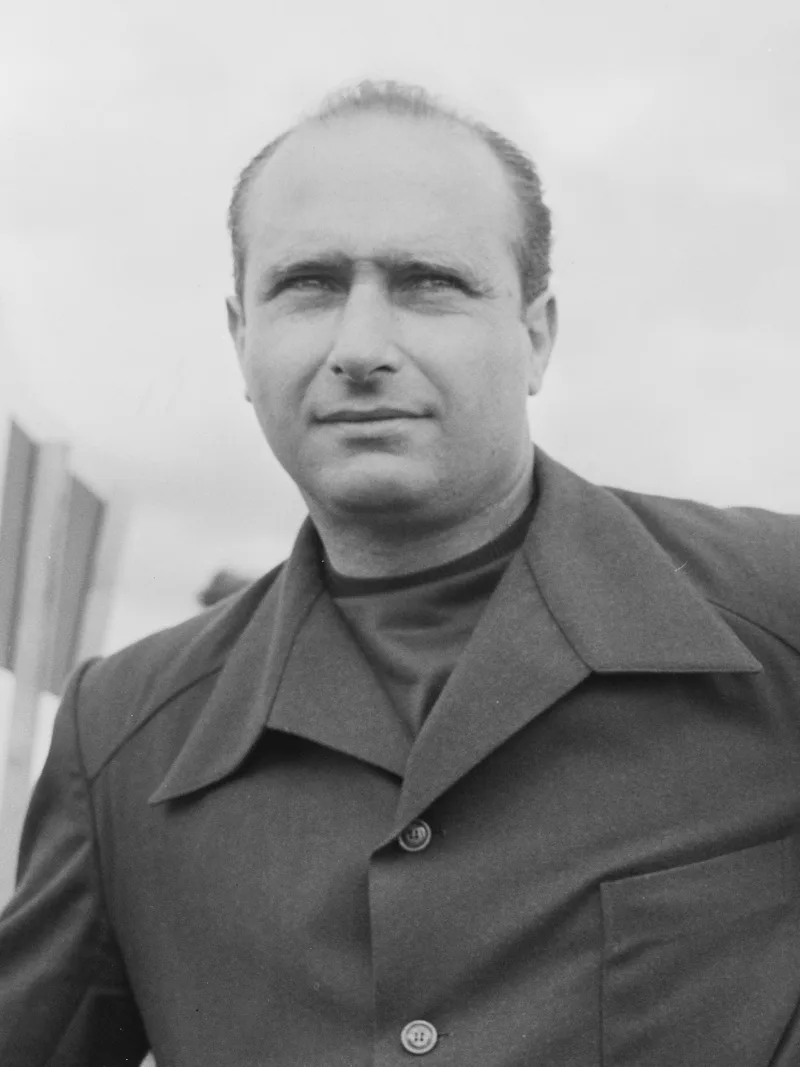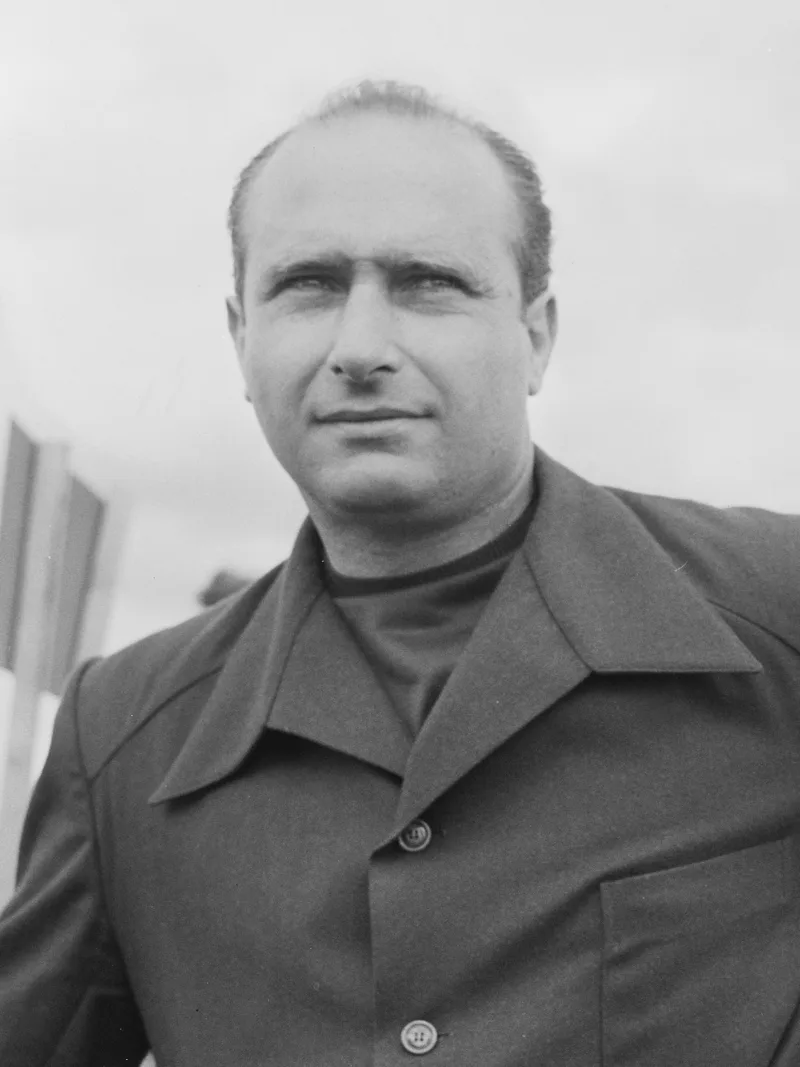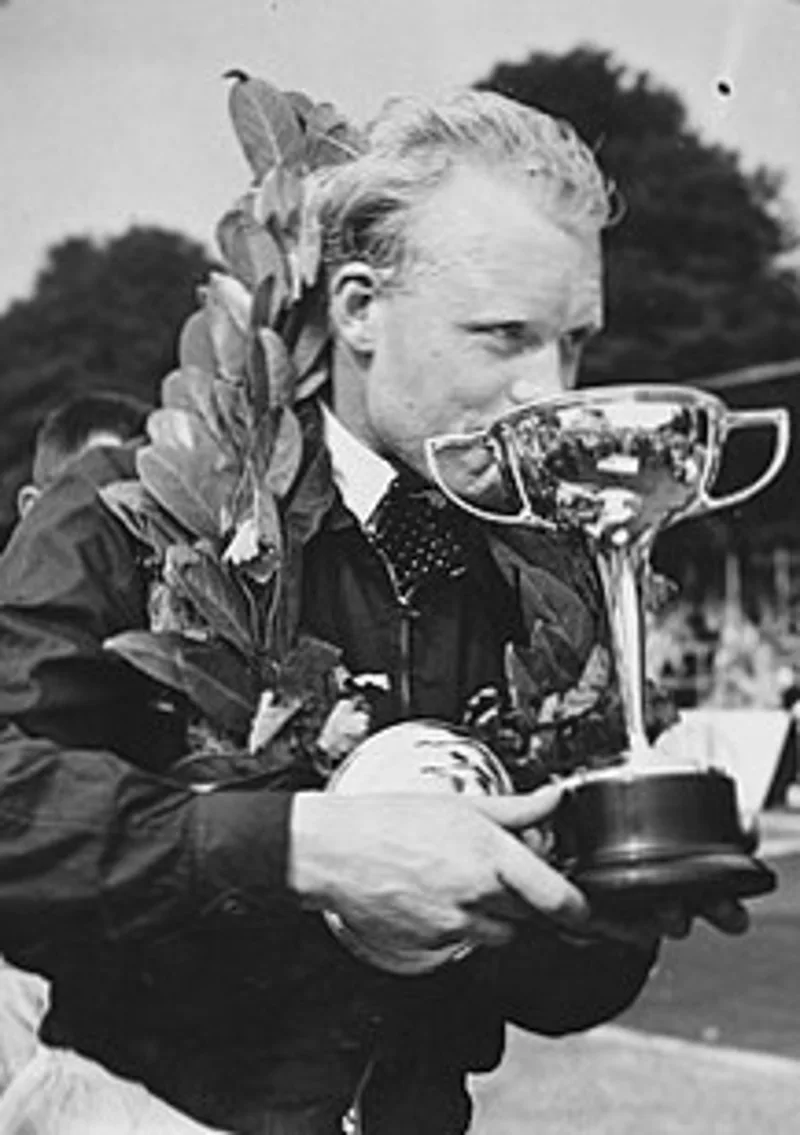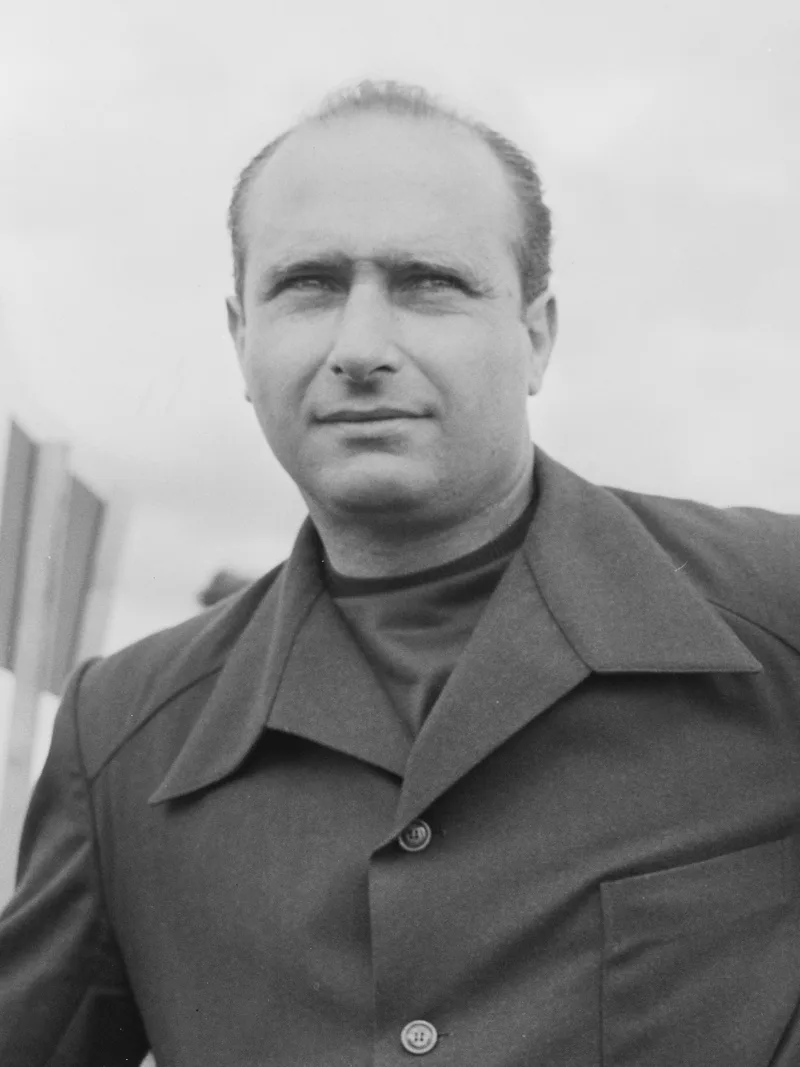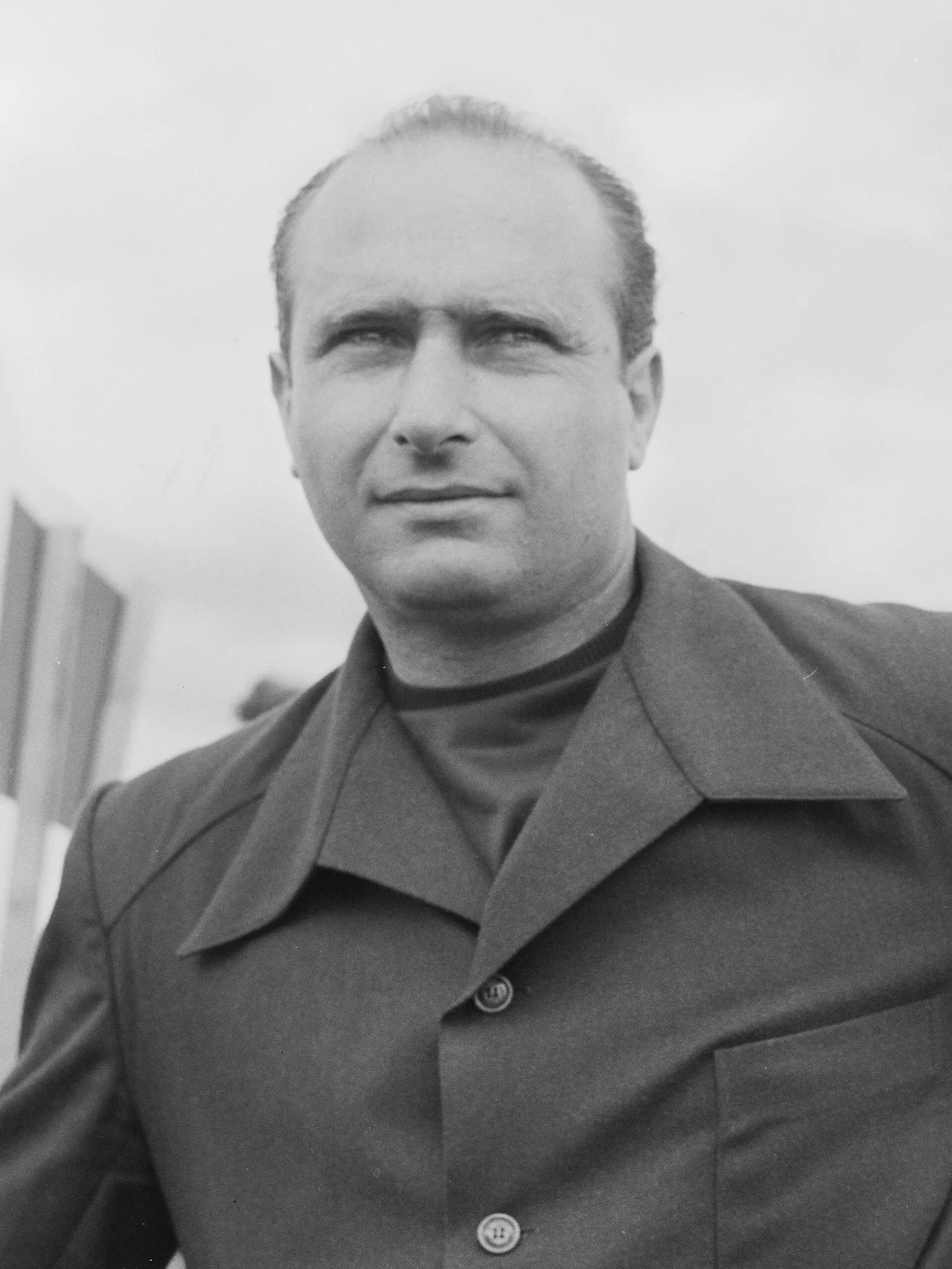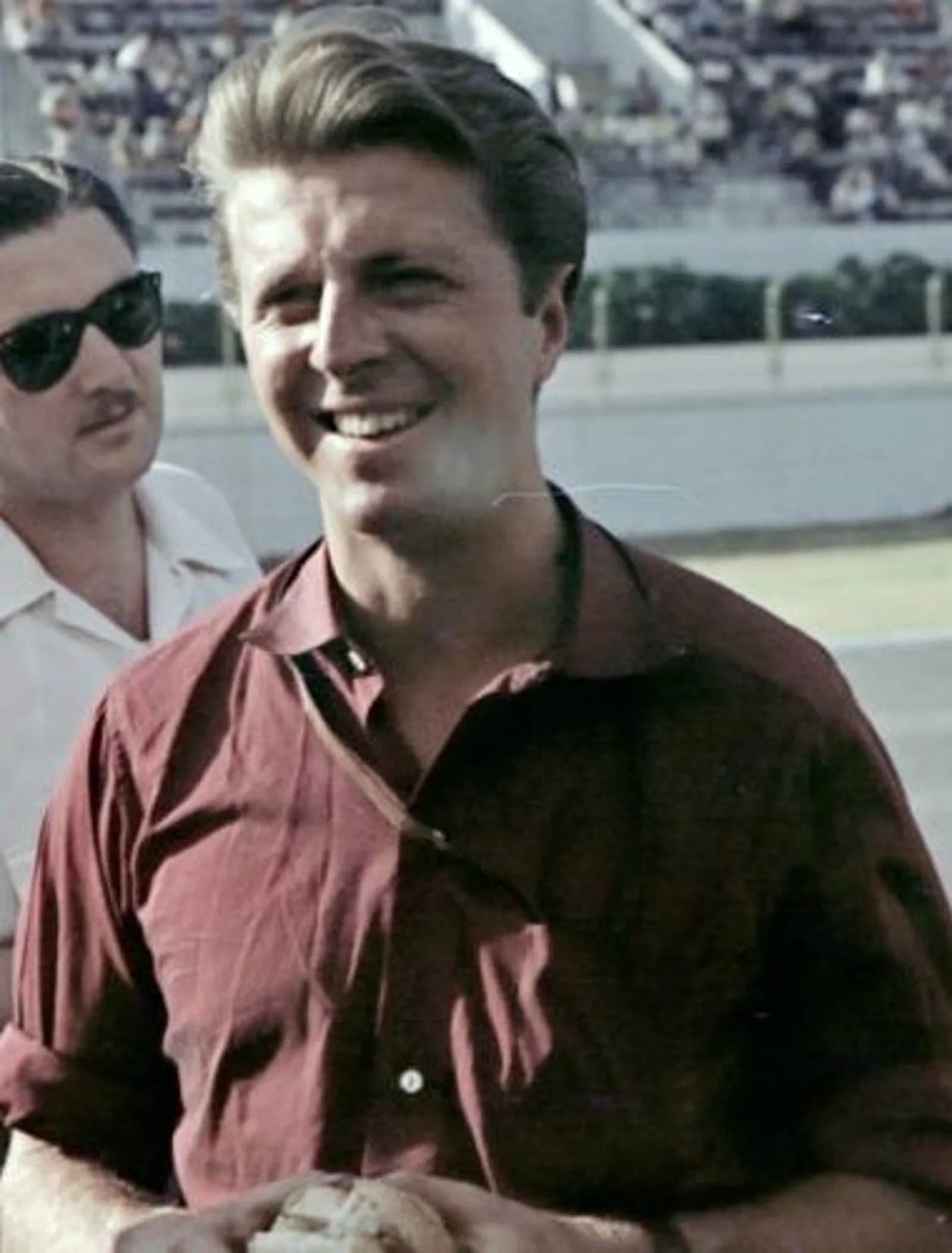
A count who led the 1961 championship, a Roman who won on his Ferrari debut, a Frenchman who never won a Grand Prix and the man who won the last Mille Miglia.
Wolfgang von Trips, Luigi Musso, Jean Behra and Piero Taruffi were Formula One drivers of the 1950s who raced for Ferrari and Maserati. Von Trips, Musso and Behra all died in racing accidents between 1958 and 1961, while Taruffi won the last Mille Miglia in 1957 and retired.
Three of these four drivers died in racing accidents within a span of three years: Luigi Musso at Reims in 1958, Jean Behra at Berlin's AVUS circuit in 1959 and Wolfgang von Trips at Monza in 1961. The fourth, Piero Taruffi, won the last competitive Mille Miglia in 1957 and walked away from racing at the age of 50. Between them they raced for Ferrari and Maserati, and they come from the era when Formula One drivers also ran sports cars, rallies and the Carrera Panamericana within the same season.
Who was Wolfgang von Trips?
Wolfgang Graf Berghe von Trips was born on 4 May 1928 in Cologne and grew up in Kerpen, the son of a noble Rhineland family. He was a count, and Graf is a German title, not a name. The family castle at Horrem, with its agricultural and fruit-growing land, weighed heavily on him as the heir. From 1951 he struggled to train as a farmer because racing was his real passion. Friends and fellow drivers called him Taffy.
He started 29 World Championship Grands Prix between 1956 and 1961, won two, took one pole position, stood on the podium six times and scored 56 championship points. He had diabetes, and during races he kept high-sugar snacks with him to offset low blood sugar.
Von Trips in Formula One, 1956 to 1960
His debut came on 2 September 1956 at the Italian Grand Prix in a Ferrari, and he failed to qualify. In 1957 he appeared in Argentina, Monaco and Italy, taking his first podium at Monza. In 1958 he raced regularly and finished on the podium at the French Grand Prix. That July he retired from the British Grand Prix at Silverstone when his Ferrari came into the pits on its 60th lap without oil, and at Porto in the Portuguese Grand Prix he was fifth, one lap behind Stirling Moss's winning Vanwall. In 1959 he made two appearances for Porsche before going back to Ferrari for the season-ending United States Grand Prix, and in 1960 he scored points regularly to finish seventh in the championship.
Outside Formula One he won the Solitude Formula Two Grand Prix in Stuttgart in July 1960 in a Ferrari with the engine at the rear, a 20-lap race at an average of 164.49 km/h (102.21 mph) over 229 km (142 mi). In May 1961 he won the ten-lap, 721 km (448 mi) Targa Florio with Belgium's Olivier Gendebien, at 103.42 km/h (64.26 mph). A sports car trial at the Nurburgring in May 1957 ended with a concussion and a destroyed Ferrari.
1961: the championship that slipped away
The 1961 season was his best. He took his first victory at the Dutch Grand Prix and a second at the British Grand Prix. At Spa in Belgium he and Phil Hill traded the lead before Hill pulled away to lead for most of the race, watched by 100,000 people, and Ferraris took the first four places, von Trips second. At that stage Hill led the standings with 19 points to von Trips's 18. That year von Trips also set up a go-kart track in Kerpen, which Rolf Schumacher later leased; his sons Michael and Ralf took their first laps there.
On 10 September 1961, the second lap of the Italian Grand Prix at Monza, von Trips's Ferrari touched Jim Clark's Lotus on the long straight leading to the Parabolica. His car went airborne and crashed into a side barrier, and he was thrown from the car and died before reaching hospital. Fifteen spectators also died, the highest toll in the history of Formula One. The FIA responded by banning Formula One from circuits that had steeply banked corners. Clark was investigated and at first accused of manslaughter, but the charges were dropped. Von Trips was leading the championship at his death. Ferrari, already constructors' champions, pulled out of the United States Grand Prix that closed the season, and Phil Hill took the drivers' title by one point over von Trips, who is recorded as runner-up.
Three of these four drivers died in racing accidents within three years of each other.
Who was Luigi Musso?
Luigi Musso, born in Rome on 28 July 1924, started in sports car racing and reached Formula One in 1953 with Maserati. He took his first podium in 1954 with second place in the Spanish Grand Prix, then raced full-time for Maserati in 1955 and was third in the Dutch Grand Prix at Zandvoort. Over his Formula One career he scored one win, one fastest lap, seven podiums and three non-championship victories, including the Coppa Acerbo in 1954.
The Ferrari years
After three seasons at Maserati he joined Ferrari in 1956. In his first race for the team he won the Argentine Grand Prix, sharing the car with Juan Manuel Fangio. Musso completed 30 of the 98 laps. A sports car crash at the Nurburgring then cut his season short. He raced at Ferrari in rivalry with Mike Hawthorn and Peter Collins, and in 1957 he beat both to third place in the championship. That season he also won the 1000 km of Buenos Aires in a Ferrari 290 MM as the third driver of the car, with Moss second in a Maserati 300S and Eugenio Castellotti third, as well as the Grand Prix de la Marne. In 1958 he won the Targa Florio with Gendebien in a Ferrari Testa Rossa. Later that year he shared a 4-litre Ferrari 412 MI with Phil Hill and Hawthorn in the second Race of Two Worlds, run on the banked oval at Monza, finishing third overall.
Years afterwards Fiamma Breschi, who was Musso's girlfriend when he died, described the rivalry on television in the documentary The Secret Life of Enzo Ferrari. She said Hawthorn and Collins had an arrangement to share their winnings equally, leaving Musso on his own against them, and that the antagonism pushed all three to take more risks. She also said Musso was in debt when he died, which made the prize money at the French Grand Prix all-important to him.
Reims, 1958
On the tenth lap of the 50-lap 1958 French Grand Prix, Musso was chasing the leader and team-mate Hawthorn. Running wide at the Gueux Curve, his Ferrari 246 struck a ditch and somersaulted. He was flown to hospital with critical head injuries and died there later that day. Hawthorn won the race.
Who was Jean Behra?
Jean Marie Behra, born on 16 February 1921, was a French driver who started 54 Formula One Grands Prix across eight seasons, from 1952 to 1959, for Gordini, Maserati, BRM, Ferrari and his own Behra-Porsche. He took nine podiums and one fastest lap, and finished fourth in the 1956 World Championship with Maserati, with five podiums in seven starts. He never won a Formula One World Championship race, though he won many others, starting with the non-title 1952 Reims Grand Prix.
Behra was small and stocky, weighed 178 pounds and was scarred from 12 crashes. In 1955 a collision tore off an ear. Sometimes he drove magnificently and sometimes with little enthusiasm. He had raced motorcycles for Moto Guzzi before cars, and in January 1950 took third in the Monte Carlo Rally in a Simca 8 coupe with Julio Quinlin. Joakim Bonnier said he learned most of his racing skill from Behra.
Gordini and Maserati
In a Gordini, Behra won the first stage of the Panamericana in Mexico in November 1952. In April 1954 he overtook the leader with ten minutes left to win the Pau Grand Prix, 200 yards (180 m) clear of Maurice Trintignant after many pit stops for mechanical trouble. At the wheel of a Maserati he won Pau again, in front of 50,000 spectators, after Alberto Ascari's brakes failed while leading until lap 19. He and Musso shared a 3000cc Maserati that won the Supercortemaggiore Grand Prix at Monza. After leg surgery in June 1956 he missed a 1,000 km race at Monza, but in October that year he won the Grand Prix of Rome. In 1957 he won again at Pau, at an average of 62.7 mph (100.9 km/h), and took victories at Kristianstad in Sweden and in the Grand Prix of Modena.
Porsche and BRM
In 1958 Behra drove BRMs in Formula One and Porsche Spyders in sports car events. He won at Rouen, beating the British pair Graham Hill and Alan Stacey, and in Berlin, where he averaged 128.2 mph (206.3 km/h). In all he won eight straight European races that year. After finishing fourth at Riverside in California in October 1958, he left the circuit in an ambulance to catch a flight to the Grand Prix of Morocco in Casablanca.
Ferrari, then AVUS
Behra moved to Ferrari for 1959, partnering Tony Brooks, and won a 200-mile (320 km) race for Formula One cars at Aintree in April. Meanwhile he started building a Formula Two car on a Porsche 718 RSK, under the name Behra-Porsche. Maria Teresa de Filippis entered it at Monaco but failed to qualify. At Reims, Hans Herrmann drove it to second place in the supporting Formula Two race, beating Ferrari's own entries, which infuriated Enzo Ferrari. After retiring from the French Grand Prix with a piston failure, Behra had an argument in a restaurant, punched team manager Romolo Tavoni and another diner, and was dismissed at once. He had also been accused of over-stressing engines at Le Mans and Reims.
Less than a month later, on 1 August 1959, Behra crashed his Porsche RSK in rain in the sports car race before the German Grand Prix at the AVUS in Berlin. After three laps he was third behind von Trips and Bonnier. The circuit used a strip of the Autobahn, with a steeply banked loop 30 feet (9.1 m) high at one end. Behra lost control at 110 mph (180 km/h), was thrown from the car and hit a flagpole at the top of the banking. The skull fracture was fatal. AVUS is now part of the German highway system as Autobahn A 115.
He was buried in Nice on 7 August, with three funeral services in Berlin, Paris and Nice. At Nice 3,000 mourners lined the streets. He left a son, Jean Paul, who was nineteen. Maurice Trintignant, the only famous French driver then still alive, comforted the family. Enzo Ferrari, who had dismissed him after the French Grand Prix, sent no remembrance to the funeral masses.
Who was Piero Taruffi?
Pierino Antonio Alberto Taruffi was born in Rome on 12 October 1906. He worked as a driver, a motorcycle road racer, an engineer and a motorsport executive, and his Formula One years ran from 1950 to 1956. He started on motorcycles, winning the 500cc European Championship in 1932 on a Norton. In 1937 a 492cc Gilera gave him the motorcycle land speed record, set on the Autostrada Serenissima and held for 38 days; the speed was 274.18 km/h. He also managed the Gilera motorcycle team and designed record-setting machines, the Cisitalia Tarf and the Gilera Rondine.
Taruffi in Formula One
His World Championship debut was on 3 September 1950, and he took part in 18 Grands Prix, scoring 41 points. His Formula One cars came from Alfa Romeo, Ferrari, Mercedes, Maserati and Vanwall. In May 1952 he led from the start of the Swiss Grand Prix in a Ferrari and won, with Rudolf Fischer second. That year he finished third in the championship, behind world champion Alberto Ascari and Giuseppe Farina.
Sports cars and the Mille Miglia
His sports car record was wider. In 1951 he was third in the Bari Grand Prix behind Fangio and Froilan Gonzalez in a new 2-litre Ferrari. That November, with Luigi Chinetti, he won the Carrera Panamericana on 25 November in 21:57:52, at an average of 87.6 mph (140.97 km/h). In May 1952 he won the Grand Prix de France in Paris in a two-litre Ferrari, covering 285 miles (459 km) in three hours. The following year he was second to Fangio in the Panamericana in a Lancia D24. In March 1954 he led the first three hours of the 12 Hours of Sebring and lost it with an hour to go when his Lancia stopped, and a month later he won the 1,080 km (670 mi) Giro di Sicilia in a Lancia D24. He won the 1955 Tour of Sicily in a Ferrari. At Monza in June 1956 he set world records, including 100 miles in 46 minutes 27.2 seconds, an average of 129.9 mph (209.04 km/h).
His last victory was the 1957 Mille Miglia, the final competitive edition of the Italian road race, in a Ferrari 315 S. In that race Alfonso de Portago suffered a tyre failure and crashed into the crowd, killing himself, co-driver Edmund Nelson and nine spectators. Taruffi retired from competition afterwards, aged 50. That November the Saturday Evening Post published an article by him on the 1955 Le Mans and 1957 Mille Miglia, where drivers and many spectators lost their lives. In 1959 he wrote a book, The Technique of Motor Racing. In August 1952 he patented a racing car with three torpedo-shaped bodies joined together, with twin motors in the two larger outer bodies and the driver in the central section.
Taruffi died in Rome in 1988, aged 81. The Piero Taruffi Museum in Bagnoregio, between Viterbo and Orvieto, holds vintage cars and motorbikes from his career. In the 2023 film Ferrari, he is played by the American actor Patrick Dempsey.
How do the four drivers compare?
| Driver | Lived | F1 seasons | F1 record |
|---|---|---|---|
| Wolfgang von Trips | 1928 to 1961, German | 1956 to 1961 | 29 starts, 2 wins, 1 pole, 6 podiums, 56 points |
| Luigi Musso | 1924 to 1958, Italian | 1953 to 1958 | 1 win, 1 fastest lap, 7 podiums |
| Jean Behra | 1921 to 1959, French | 1952 to 1959 | 54 starts, 9 podiums, 1 fastest lap, fourth in 1956 |
| Piero Taruffi | 1906 to 1988, Italian | 1950 to 1956 | 18 starts, 1 win, 41 points, third in 1952 |