A front-wheel-drive compact with a 981 cc two-stroke three, a Lubrimat oiling system and rally wins across three continents, built from 1958 to 1965.
The Auto Union 1000 was a front-wheel-drive compact built by Auto Union GmbH from 1958 to 1965. It used a 981 cc two-stroke three-cylinder, was the first Auto Union-badged model since the 1930s and sold 171,008 cars in six years.
The Auto Union 1000 was a luxury compact with front-wheel drive, built by Auto Union GmbH between 1958 and 1965. It used a two-stroke three-cylinder engine enlarged to 981 cc and was the first model sold under the Auto Union name since the 1930s. Its story runs from a rugged DKW heritage to rally wins, an oiling system that became famous for the wrong reasons, and a long afterlife in South America and South Africa.
What was the Auto Union 1000?
The Auto Union 1000 was a front-drive compact that replaced the DKW 3=6 in the Auto Union range. The older car stayed in production until the end of 1959, so the two overlapped for a time. The new model's two-stroke engine was enlarged to 981 cc, which gave a power gain of between 10% and 37%, depending on the version.
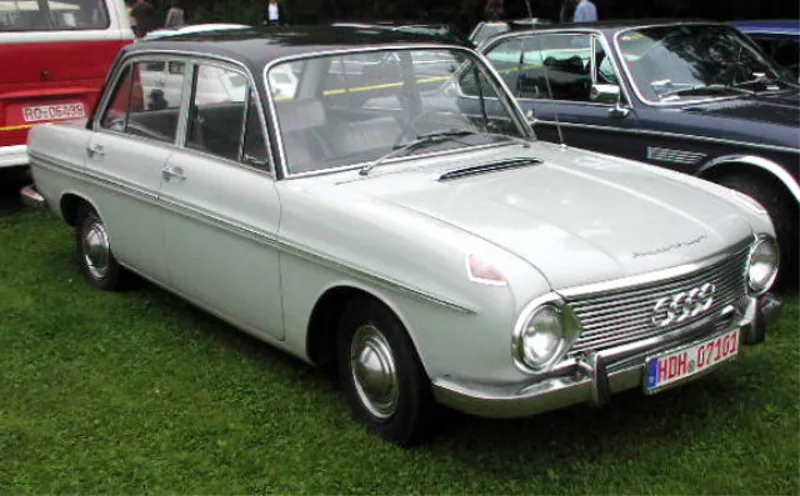
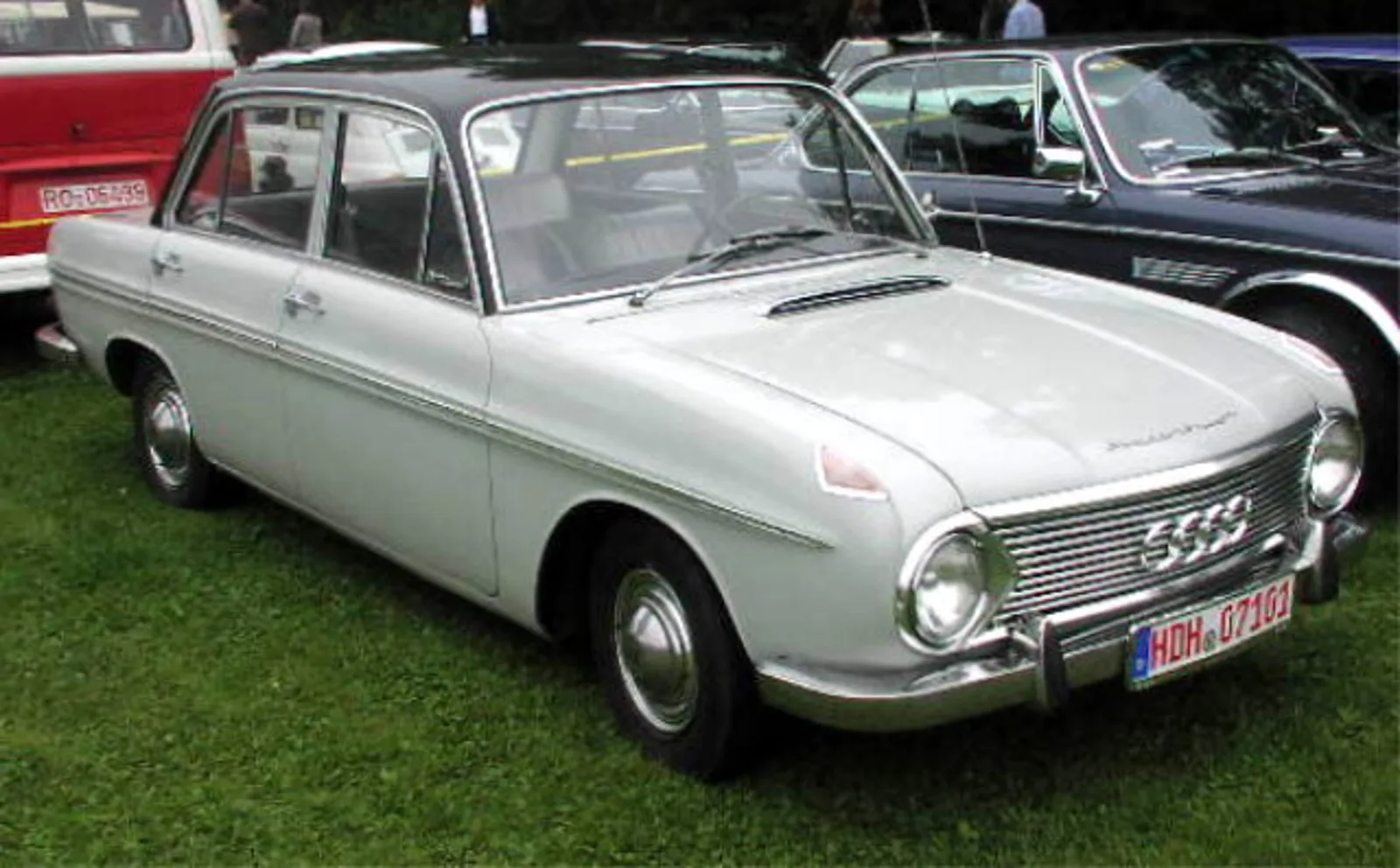
Apart from the bigger engine, the 1000 was recognisable by its four-ring Auto Union badge across the grille, with the Auto Union name above it. That badge replaced the DKW emblem that had sat on the nose of the earlier cars. A smooth boot lid was also part of the package.
A front-drive compact with a famous badge, a two-stroke heart and a rally record that outlived its production run.
How was the 1000 developed from the DKW?
The 1000 grew out of the 3=6 series, specifically the DKW F93, F94 and F94U. Enlarging the engine raised the base model to 44 PS (32 kW; 43 hp), and the body and mechanical layout stayed closely tied to the earlier cars.
Auto Union kept the front-wheel drive principle that the company had used since the 1930s. The suspension was carried over from the 3=6, so the car inherited the same surefooted handling, and the six-volt electrical system remained as well.
What were the three European series?
For the European market the 1000 and 1000S came in three distinct series. The first, the model 58 or AU1000/58, was sold only as the 1000 Coupe de luxe with the 44 PS engine. It was offered for the 1958 and 1959 model years only, after being released in late 1957.
The second series, the model 60 or AU1000/60, was the first to introduce the panoramic windscreen, at least in two-door form. The third and final series, the model 62, refined the model 60. It gained front disc brakes, the Lubrimat oiling system, a wider rear track, a larger boot and several other refinements.
How did the model 60 series begin?
Chassis 6820000001, a 1000S Coupe finished at Dusseldorf on 27 July 1959, opened the model 60 story. Twenty-five pre-production cars preceded the first production example, chassis 6820000026.
Over time the model 60 range picked up a four-door saloon and a Universal estate, and all of them were produced at Dusseldorf. Production of second-series cars switched to the model 62 on 29 September 1961, marking the change from one series to the next.
How did production of the 1000 end?
The third series tapered off from late 1962. Ingolstadt completed the last Universal on 31 October 1962, followed by the closing 1000S four-door on 13 November. The closing batches were shipped as CKD and SKD kits and assembled abroad.
The final European 1000S manufactured was a 1000S Coupe de Luxe with chassis number 6820146387, although the details of the last cars assembled are unknown because so many kits were finished elsewhere.
What body styles did the 1000 offer?
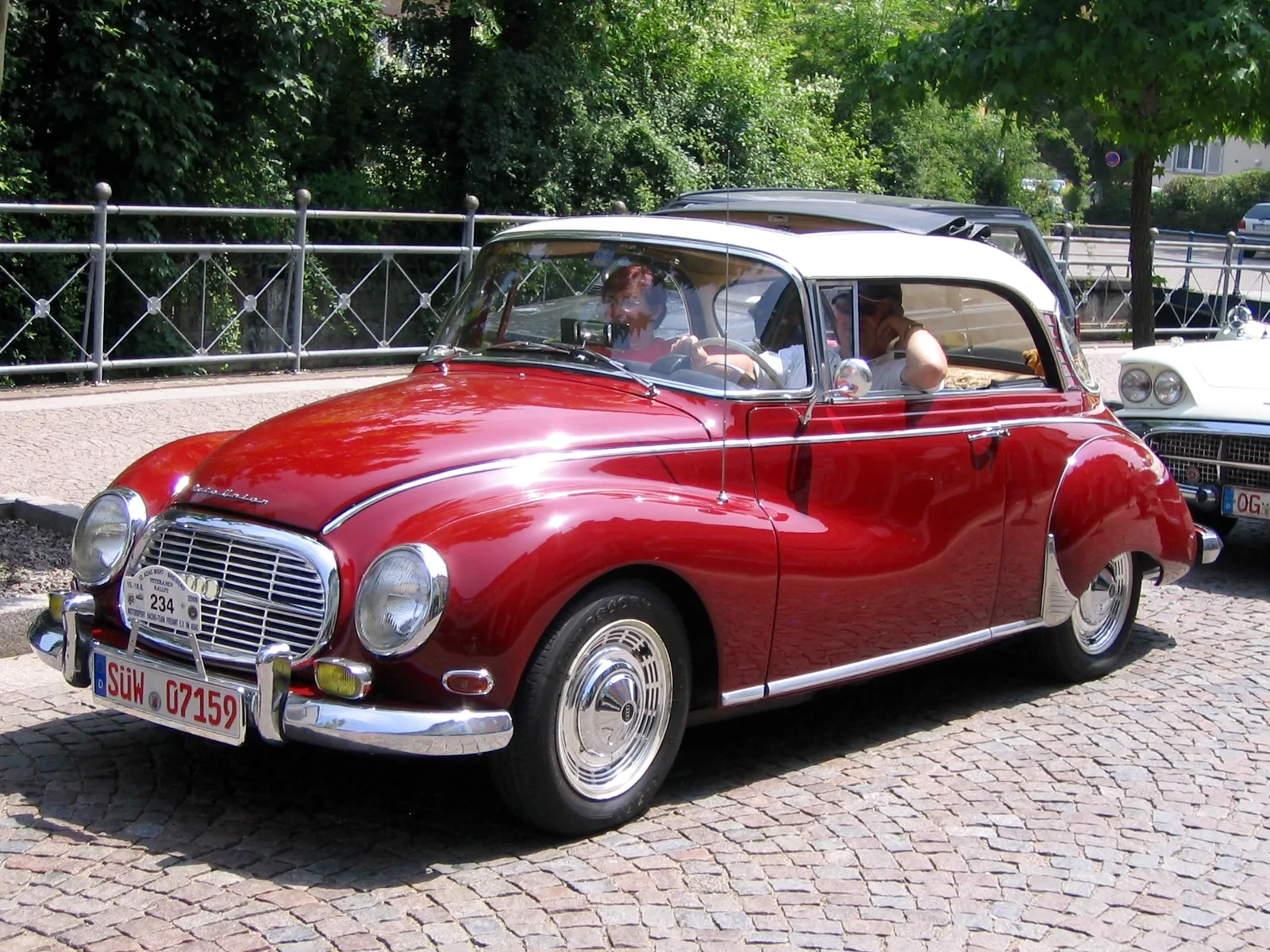
The 1000 came as two- and four-door saloons and as a pillarless coupe, which had the same profile as the saloons but no fixed B pillar. The 1000 Universal, a three-door estate that was really an updated DKW F94U, sold from 1959 to 1962. The right-hand-drive version of that estate was built only for 1959, 1960 and 1961.
From August 1959 the two-door cars of the second series wore an eye-catching wrap-around windscreen with a vertical strip speedometer. The coupe and four-door were renamed 1000S for the new decade. Despite the new look, the body and most of the technical features traced back to the DKW F9 prototype developed at Zwickau in 1938.
What was the 1000 Sp?
The 1000 Sp was a low-slung two-seat sports car, introduced in 1958 and bodied for Auto Union by the Stuttgart coachbuilder Baur. A cabriolet joined the fixed-head version in 1961. Its tail fins and modern look earned it the nickname baby Thunderbird in the press.
Under the skin it was largely a 1000 with a higher compression ratio, rated at a claimed 55 PS (40 kW; 54 hp). It was lower than the saloon but not much lighter with two people aboard, and a claimed top speed of 140 km/h (87 mph) put it at the top of the range. It was the last open-top car the company made until the Audi 80 cabriolet arrived in 1994.
How did the 1000 perform on the road?
Road tests gave the 1000 mixed but mostly positive reviews. The Motor magazine tested a 1000S Coupe in 1960: it reached 80.9 mph (130.2 km/h) flat out, and 0 to 60 mph took 23.6 seconds. The fuel consumption figure was 31.5 miles per imperial gallon, and the test car cost GBP 1259 on the UK market.
The much larger Austin Westminster, meanwhile, sold for GBP 1148 in Britain that year. That price gap highlighted how British makers were still shielded by import tariffs in their home market, which made the German car a costly choice for buyers there.
What did reviewers say about handling?
Sports Cars Illustrated praised the 1000 in January 1959 for its extraordinary cornering grip, noting that drivers had to learn to keep the throttle down through corners that would have upset a conventional car. The writer found the gravel stability remarkable and described the car as rugged, with beefy leaf springs and a solid frame.
CAR, a South African title, put the 1000S Coupe through its paces in August 1960. It clocked 132 km/h (82 mph) flat out and used fuel at 33.5 miles per imperial gallon, equal to 8.4 L/100 km. Testers said the front-drive layout needed some getting used to, but found the car stable and quiet at speed and comfortable on corrugated farm roads.
Why was Lubrimat introduced?
Lubrimat, the clean oil regulator also called Frischolautomatik, arrived in 1961 for the 1962 models. It used a separate oil tank and pump to meter oil into the fuel, since two-stroke engines usually mix oil with fuel before combustion. The aim was to reduce the blue smoke for which the car was known, with oil delivered at exactly 1:40 to the fuel.
The timing proved poor. The winter of 1962 to 1963 was exceptionally cold across Europe, and the thickened oil struggled to flow through the narrow feed pipe to the carburettor. Crankshaft damage rose sharply as a result, and the damage was traced back to that oil flow.
The idea came from Dr William Werner, the technical director, and the chief designer Oskar Siebler, who sketched it over coffee at the Franzenshohe cafe in the Alps on 17 March 1959. They felt the smell and smoke of two-stroke engines put people off. Werner and Siebler filed a patent for Lubrimat in April 1959, and the system was promoted as a sensation at the 1961 International Automobile Exhibition.
Which model series and dates matter most?
| Series or model | Key date | Main change |
|---|---|---|
| Model 58 (AU1000/58) | Released late 1957 | Coupe de luxe only, 44 PS engine |
| Model 60 (AU1000/60) | First 1000S Coupe 27 July 1959 | Panoramic windscreen on two-door cars |
| Model 62 (AU1000/62) | Production switch 29 September 1961 | Front disc brakes, Lubrimat, wider rear track |
| 1000 Sp | 1958, cabriolet 1961 | Baur-bodied two-seat sports car |
| 1000 Universal | 1959 to 1962 | Three-door station wagon |
| Final 1000 Universal | 31 October 1962 | Built at Ingolstadt |
How successful was the 1000 in motorsport?
The model won several outright victories in the late 1950s and early 1960s. Wolfgang Levy and Hans Wenscher took the 1959 Acropolis Rally. Titles in South Africa's national rally series came three years running, from 1961 to 1963, with Reinhard and Pieter Muhl among the crews and Jan Hettema sharing the 1963 win.
Class wins came in many more events, including the 1960 Monte Carlo Rally. Well into the 1970s the cars were still rallied with real zeal in Sri Lanka, Brazil and South Africa.
Was the 1000 built in Argentina?
Yes. Industrias Automotriz de Santa Fe built the 1000 under licence between 1960 and 1969 at Sauce Viejo in Santa Fe province. The range included two- and four-door sedans, a three-door Universal estate and a coupe and Spyder called the 1000 SE, designed by Carrozzeria Fissore on the basis of the German 1000 Sp.
The Fissore coupe had one-piece front bumpers, longer wrap-around rear bumpers, side louvres in the front wings and chrome strips on the doors. Only a limited number were built, and collectors now seek them out. Licensed coupes and Spyders were also produced in Spain.
How many Auto Union 1000s were built?
Most of the 171,008 cars were built at Dusseldorf, in the former Rheinmetall-Borsig works, across six model years. The 1000 SP sports version carried on until 1965, with 5,000 hard-tops and 1,640 cabriolets sold.
In Argentina, the company sold 21,797 1000S saloons until 1969, along with 6,396 Universal S estates. The DKW 3=6 was built in Argentina until late 1969, and about 30,000 cars were made there.
Did any famous people own a 1000?
Several well-known figures owned the car. The aviator Elly Beinhorn drove a white and red 1958 Coupe de luxe named Alwine VIII, and the Hollywood director Billy Wilder had a 1000 SP. The bandleader Max Greger, Graf von Brandenstein-Zeppelin and the German fashion designer Katja Nieborg also owned examples.
Argentine owners of the Fissore coupe included Julio Sosa and Cesar Luis Menotti. Several Argentine films, including The Games Maker and The German Doctor, have since put 1000S cars on screen.
Why did the 1000 disappear?
In 1963 the DKW F102 took the 1000's place in Europe. Its styling looked modern for the time, and it was the final car to carry an Auto Union or DKW badge before Volkswagen bought the company. The old Dusseldorf factory was sold to Daimler-Benz and converted into a Mercedes truck and van plant.
The Auto Union name was dormant for years before the Audi brand returned. Production moved to a new plant in Ingolstadt, which became the company's home.
Where are surviving 1000s today?
Brazil and South Africa still had many 1000s on the road in the early 2020s, used as everyday transport. Parts specialists in Europe and South America support clubs worldwide. The biggest of these bodies is the Auto Union Veteranen Club (AUVC),
which usually stages an annual European Treffen for DKW and Auto Union cars. In South America a large annual gathering, the Blue Cloud, takes place every August at Pocos de Caldas in Brazil.
What is the 1000's legacy?
The Auto Union 1000 is remembered for its robust build, its front-drive handling and its rally record. Its Lubrimat system is also part of the story, given the cold-weather problems it caused.
In South Africa in particular the car has taken on a legendary status, and a 2012 song by the artist Steve Hofmeyr expressed nostalgia for it as a symbol of solidity and reliability.