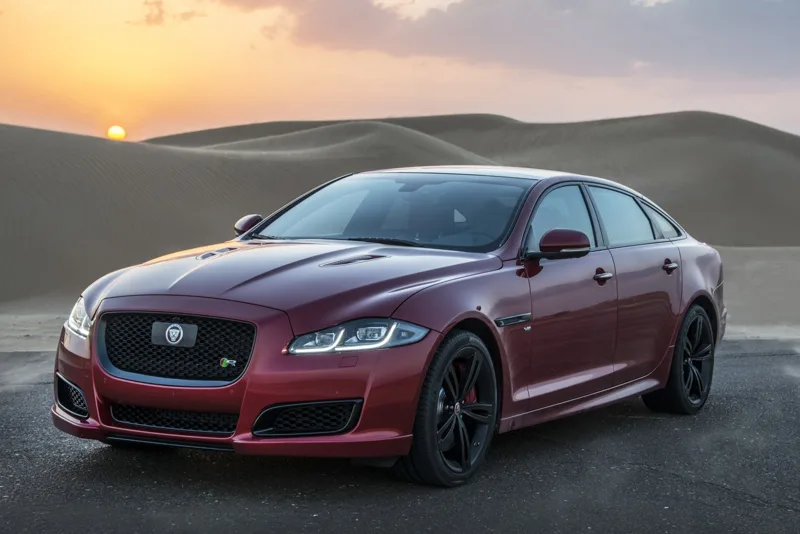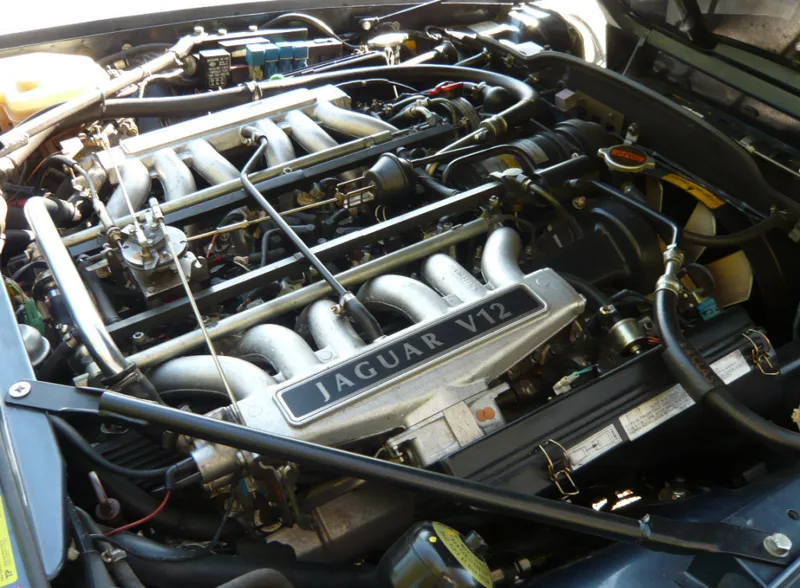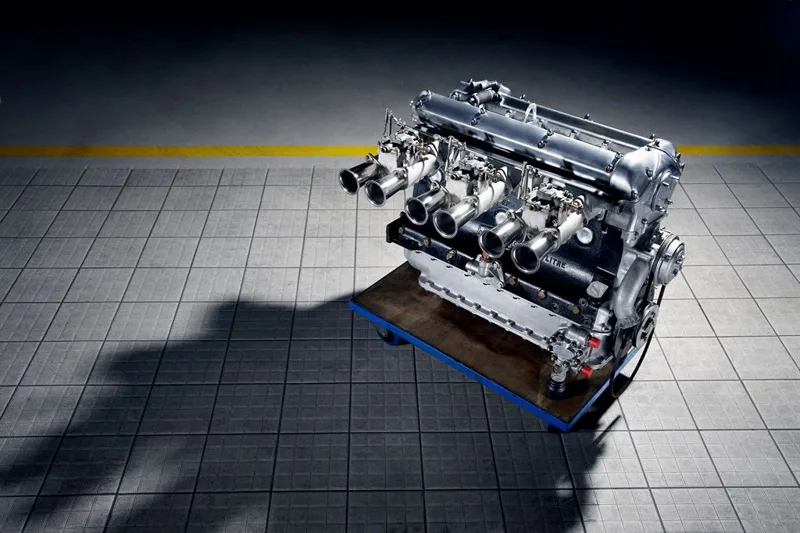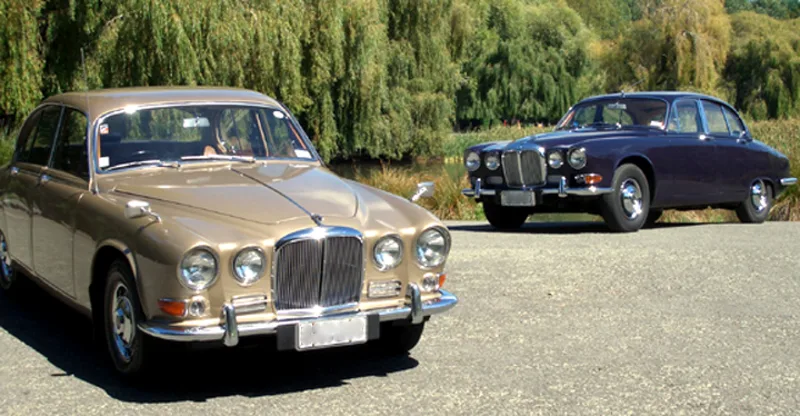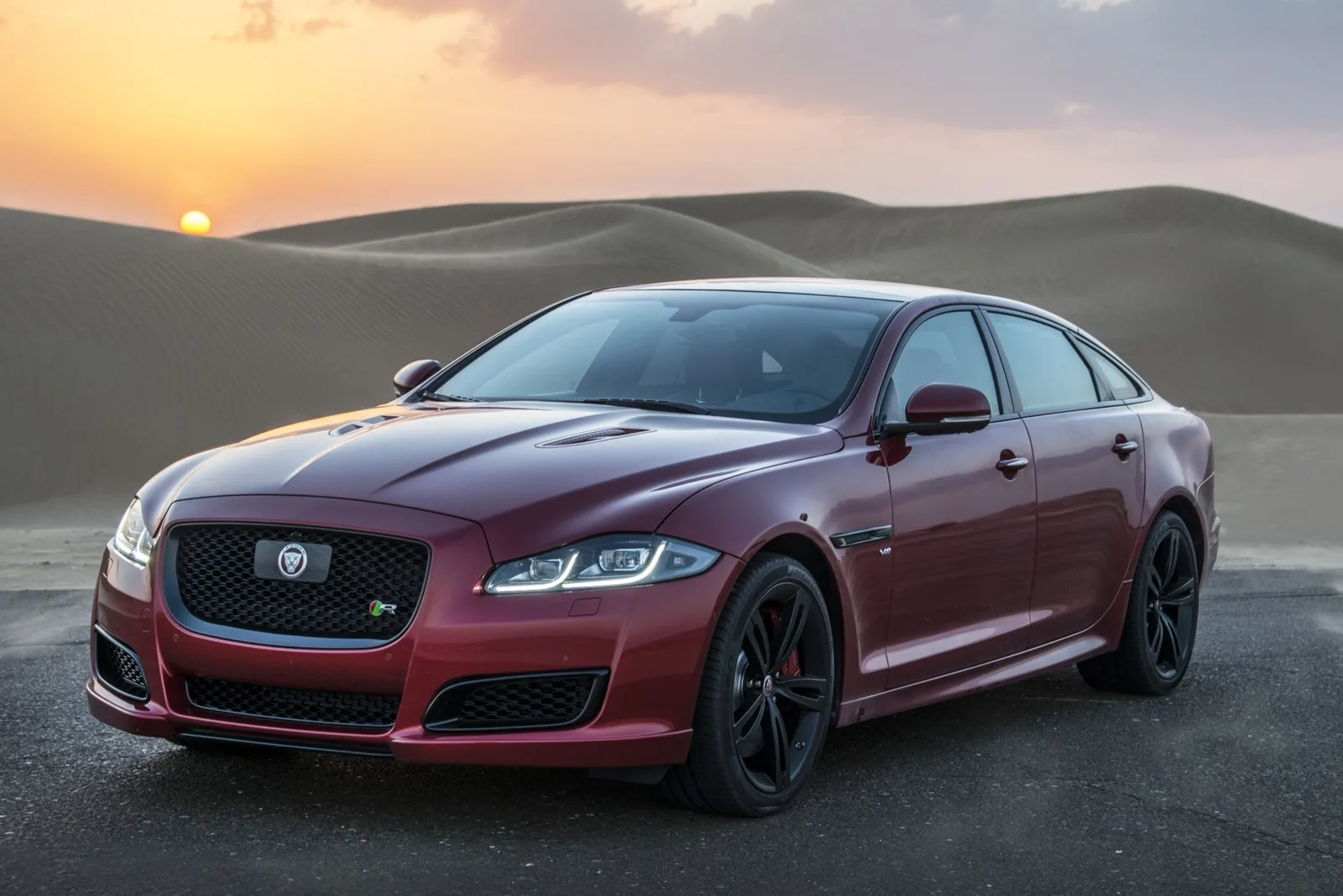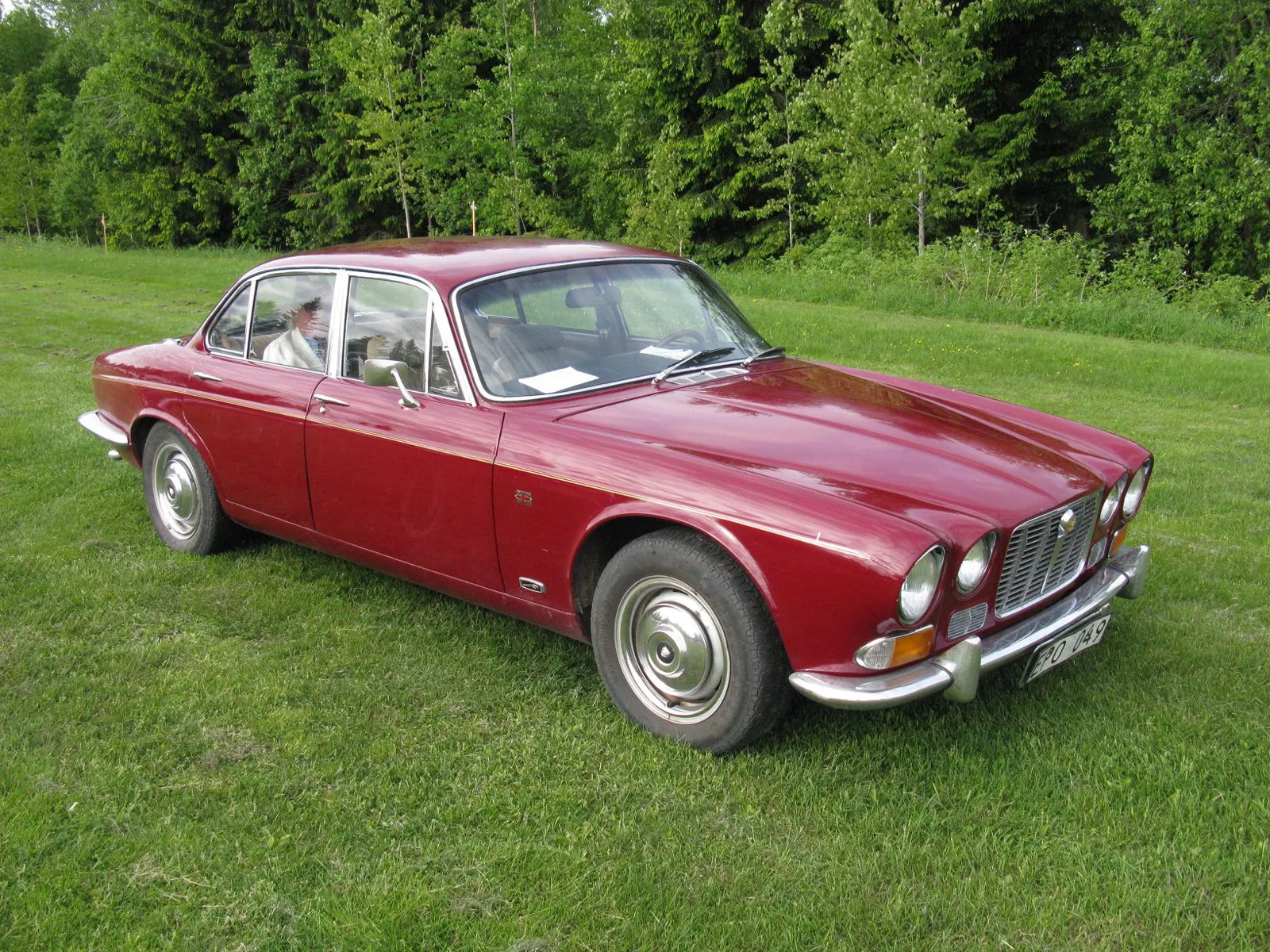
Shown in Paris in 1968, the XJ 6 was the last design of Jaguar's founder, and within four years it had a V12 sibling borrowed from the E-Type.
Built between 1968 and 1973, the first XJ generation carried XK sixes of 2.8 and 4.2 litres. The E-Type's 5.3-litre V12 arrived in 1972, and 98,343 cars of this series were built before Series II replaced it under new American bumper rules.
The Jaguar XJ Series 1 was the first series of the first-generation XJ luxury saloon. The XJ 6 was presented in September 1968 with a six-cylinder XK engine, and a 5.3-litre V12 joined it in 1972 as the XJ 12. Series I ran until 1973, when American bumper rules forced a change of front end.
It deserves a closer look for two reasons. It was the last design of William Lyons, the company's founder, and it gave the marque a four-door saloon that could also take a twelve-cylinder engine. Read in build order, the model shows the saloon growing from a six to a twelve.
Who designed the XJ and when did it arrive?
William Lyons's final project was the XJ. Jaguar showed the XJ 6 at the Mondial de l'Automobile in Paris on 26 September 1968, with a six-cylinder inline engine offered in 2.8 litres (171 cu in) and 4.2 litres (256 cu in) forms.
The long-awaited XJ 12 followed in 1972. It took the 5.3-litre (323 cu in) V12 from the E-Type. For a decade and a half, until BMW's 750i arrived, it was the only four-door car with a twelve-cylinder engine on the German market.
The last Jaguar design of William Lyons, and the first XJ to carry a V12 from the E-Type.
What engines did the XJ 6 offer?
Buyers could choose the XK six-cylinder inline in its 4.2-litre form, or a reworked version with a shorter stroke and 2.8 litres. Both engines wore two carburettors, a layout borrowed from the 420, which made outputs of 245 bhp and 180 bhp realistic.
For the first time Jaguar quoted power under the DIN standard, giving 186 PS (136 kW) for the 4.2 and 149 PS (109 kW) for the 2.8. The 4.2 could reach 205 km/h (127 mph) and the 2.8 180 km/h (112 mph), both with manual gearbox and overdrive.
| Model | Engine | Output |
|---|---|---|
| XJ 6 4.2 | XK six-cylinder inline, 4.2 litres (256 cu in) | 245 bhp; 186 PS (136 kW) DIN |
| XJ 6 2.8 | Shorter-stroke six, 2.8 litres (171 cu in) | 180 bhp; 149 PS (109 kW) DIN |
| XJ 12 | V12 from the E-Type, 5.3 litres (323 cu in) | 269 DIN-PS (198 kW; 265 hp) |
How did the XJ 6 drive and stop?
Power went to the rear wheels through a four-speed manual, which could be fitted with an electrically engaged overdrive from Laycock-de Normanville. A three-speed Borg-Warner 35 automatic was available on request. The limited-slip differential was an option on the 4.2 and standard in some markets, Switzerland among them.
The rear suspension, with independent wheels on double wishbones and extra trailing arms, was an E-Type design. A rubber-mounted subframe let the rear axle steer itself passively under load, which blunted the car's tendency to oversteer.
Braking was hydraulic on two circuits, with three-piston Girling calipers at the front. The rear discs sat inboard at the differential and were combined with small pads for the handbrake. Dunlop created a belted tyre for the car, the SP Sport, in size E70 VR 15, equivalent to 205/70VR15.
Which models did the XJ 6 replace?
The XJ 6 first took over from the 340, the S-Type and the 420 starting in September 1968. The 240, the Daimler 250 V8, the Daimler Sovereign (the Daimler twin of the 420) and the 420 G stayed in production for a while.
Early 2.8 brochures showed a stripped version without power steering and without a centre armrest, though such a car is thought never to have been delivered. A de Luxe version matched the 4.2 for equipment.
In autumn 1969 Daimler-badged versions arrived as the Sovereign 2.8 and Sovereign 4.2, taking over from the Daimler 250 V8 and the earlier Sovereign. The Jaguar 240 had ended shortly before. When the 420 G ran out in 1970, the XJ6 was the only saloon Jaguar and Daimler still built, apart from the state limousine DS 420.
When did the twelve-cylinder XJ arrive?
The XJ 12 came out in 1972 alongside its sister, the Daimler Double-Six. Daimler had used the Double-Six name for its first twelve-cylinder engine in the late twenties. The XJ 12 and Double-Six shared the 5.3-litre V12 and internally vented front discs, the same arrangement as the E-Type V12.
A month later came the Daimler Double-Six Vanden Plas, a very luxurious model on a longer wheelbase. From autumn 1972 the XJ 6 4.2, the Sovereign 4.2 and the XJ 12 L could also be bought with the longer wheelbase on the home market.
How many Series I cars were built?
Series I production reached 98,343. It ended in 1973, when new American regulations required a higher front bumper and the Series II took its place.
What did the Series II change?
Series II was shown at the IAA in Frankfurt in September 1973 as a four-door saloon with short or long wheelbase. A two-door version followed for a short period and was used in motor sport for a time. The front bumper sat higher, the bulkhead area of the body was redesigned, and the heating and ventilation system was new, with automatic air conditioning on the XJ 12.
The 4.2 lost output to lower compression, falling to 172 DIN-PS from 186, or 126 kW from 136 kW. Overdrive became standard as the list of variants grew. The short-wheelbase saloons were dropped in autumn 1974, and the Daimler Vanden Plas 4.2, with a standard automatic, took their place.
In spring 1975 the V12 gained D-Jetronic injection, which Lucas had reworked for twelve cylinders. Power rose from 253 to 287 DIN-PS, or from 186 to 211 kW. The 3.4 six, rated at 161 DIN-PS (118 kW), was added to the range badged XJ 3.4 and Daimler Sovereign 3.4, and outside the USA the other models were renamed XJ 4.2 and XJ 5.3.
Stricter US exhaust rules brought fuel injection to the 4.2 there from May 1978. By February 1979 the Series II had reached 91,227 cars, of which 14,226 were twelve-cylinders. Of those, 10,069 were left-hand drive and 4,157 right-hand drive.
How did the XJ-C coupe and motor sport fit in?
The XJ-C coupe had been announced at the 1973 IAA as the most attractive Series II variant. Its XJ 4.2 C and XJ 5.3 C forms reached production only in 1975. The frameless side windows, with no B-pillars, proved a difficult technical challenge because of wind noise. Coupe production stopped in November 1977.
British Leyland chose the tuning firm Broadspeed to build specially revised XJ-C cars for touring car racing. They kept the standard camshafts and tappets of the 5.3-litre V12 but used revised pistons, and their Group 2 entries were driven in 1976 and 1977 by Derek Bell, David Hobbs, Andy Rouse and Steve Thompson. At the 1976 Tourist Trophy at Silverstone, Bell and Hobbs took pole and set the fastest lap, but a tyre failure ended their race early.
What came after Series I?
Series III followed in March 1979, presented in Scotland with styling reworked by Pininfarina. Its larger windows, vertically barred radiator grille and rubber-faced bumpers set it apart. On the 4.2 the carburettors were replaced by injection, lifting output from 168 DIN-PS to 205 DIN-PS, or from 124 kW to 151 kW.
In 1981 the V12 got new heads with "Fireball" chambers, the work of the Swiss engineer Michael May. Fuel use fell by roughly 2 litres, with the minimum figure moving from 18 to 16, and the heads were called H.E., for High Efficiency. Output was given as 295 DIN-PS (217 kW). The layout put two of the spark plugs at an awkward side position, so they could not be changed without removing attached parts, and they are often skipped at service time.
In autumn 1982 the range for continental Europe was reorganised, because the Daimler models threatened to outsell the simpler Jaguars. Badges were reshuffled: the Daimler Sovereign turned into Jaguar Sovereign 4.2, the Double Six into a Jaguar Sovereign H.E., and the Vanden Plas Double Six into a Jaguar Vanden Plas H.E. A year later a similar renaming took place in England.
Production of the XJ6 ended in 1986, with deliveries to the USA continuing into early 1987, and the successor could not be shown in America until May 1987. The Series III V12 kept going until 1992. In 1989 the XJ12 and Double Six were thoroughly revised for the 1990 model year, gaining a Bosch ABS and a regulated catalytic converter that had previously been optional. The last Daimler Double Six of the series left the line on 30 November 1992, after 177,668 cars.
The XJ 6 and XJ 12 names passed to the successors, which carried the internal codes XJ40, XJ81, X300 and X330, and the XJ abbreviation reappeared in the model lines X308 and X350. Across all three series the XJ reached 404,243 units, more than any earlier Jaguar series.