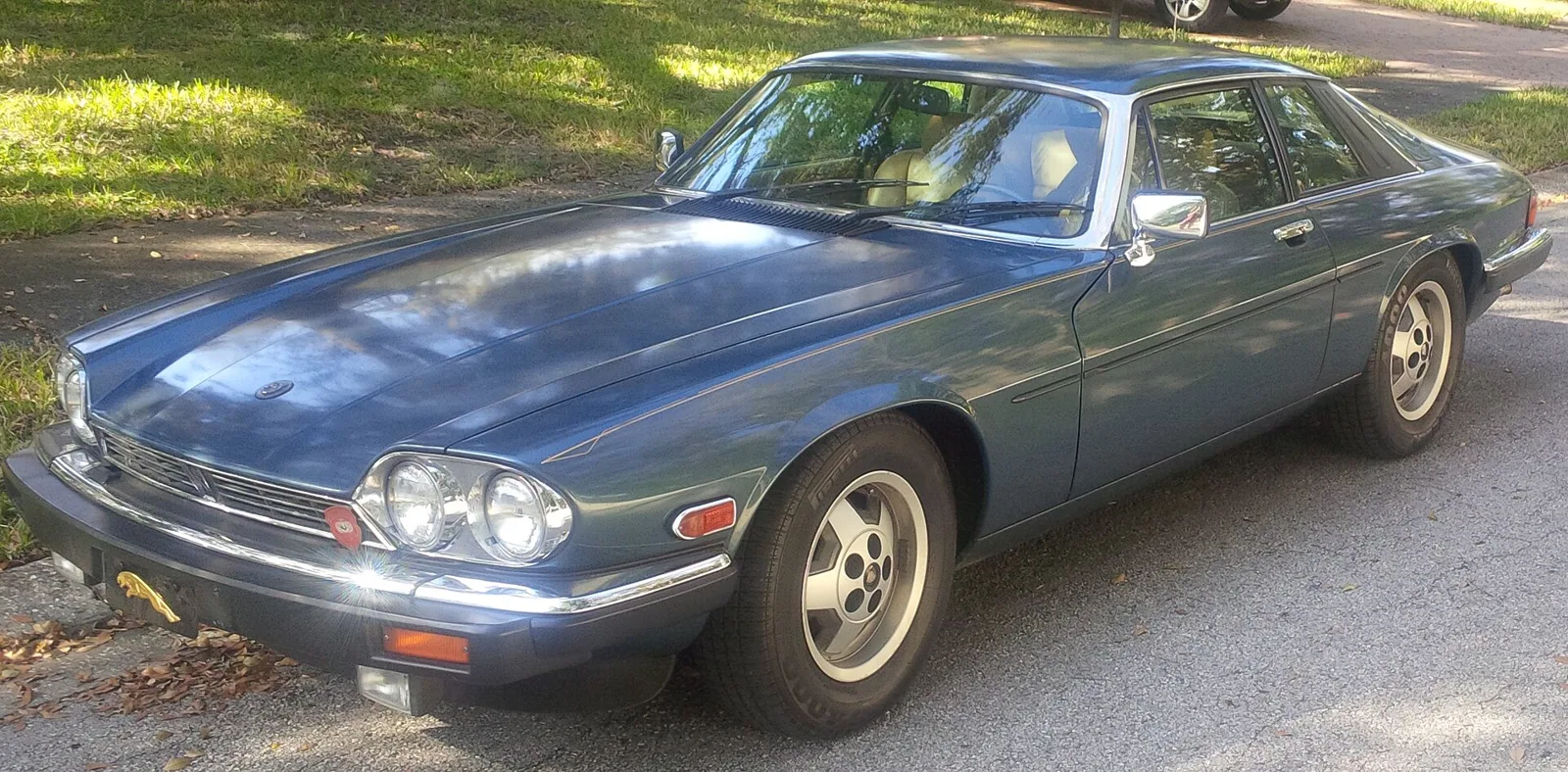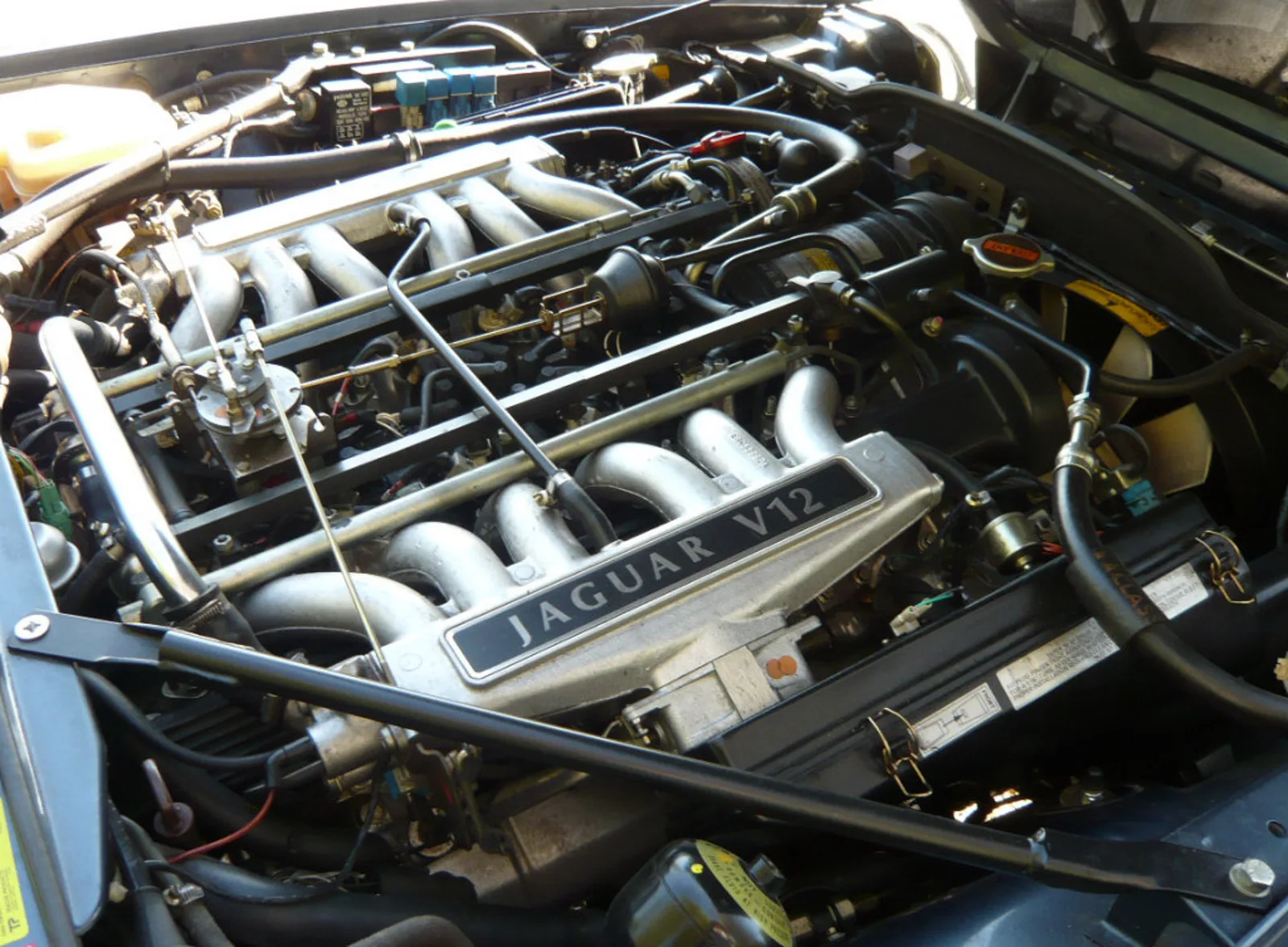
Built from a 1964 racing prototype, Jaguar's SOHC V12 powered the E-Type and every XJ series from 1971 until the last engine left the line in 1997.
Jaguar's V12 was a single overhead camshaft family built from 1971 to 1997, mostly as a 5.3 litre engine and later as 6 and 7 litre racing versions. It powered the E-Type and the XJ saloons, and its racing derivative won Le Mans in 1988 and 1990.
The Jaguar V12 was a family of single overhead camshaft V12 engines with a common block design, built by Jaguar Cars from 1971 to 1997. Most were 5.3 litre units, later joined by 6 litre versions and 7 litre racing engines. At launch it was the only V12 in mass production, and for 17 years Jaguar was the only maker turning out luxury four-door saloons with a V12 under the bonnet.
Where did the Jaguar V12 come from?
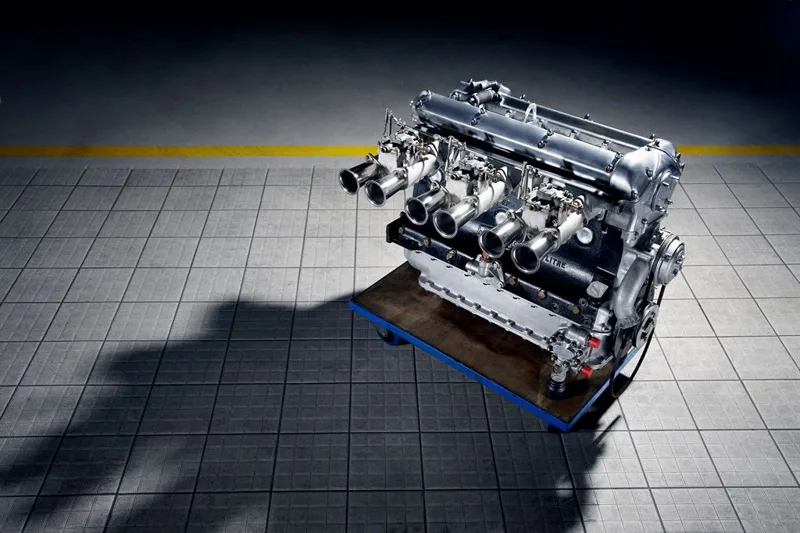
The engine's roots lie in a 1964 double overhead camshaft prototype, the XJ13, built for a Le Mans racing car. Claude Bailey began the design in 1951 with an 8.0 litre double overhead camshaft layout that shared the basic arrangement of Jaguar's inline six. Six DOHC engines were built, and three were extensively tested in cars before the XJ13 project was terminated in 1967 without ever racing.
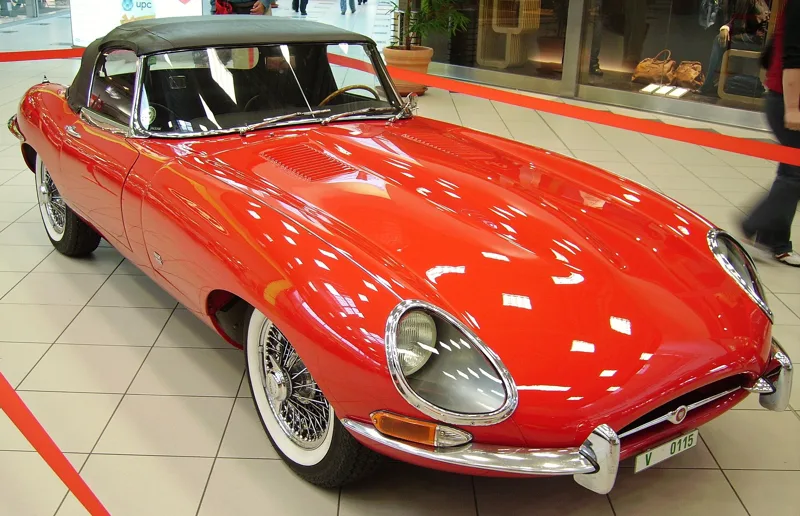
Under chief engineer William Heynes, the DOHC design was reworked by Walter Hassan and Harry Mundy into a road-going single overhead camshaft version. That production engine first went into the Series III E-Type in 1971. It was Jaguar's second production engine design after the 1949 straight-six XK, and it was the first mass-produced V12 since the Lincoln Zephyr V12 that preceded it.
A V12 begun as a racing prototype that became a production engine, a road-going V12 and a Le Mans winner.
How did the single overhead camshaft head work?
Hassan and Mundy designed a new single overhead camshaft head in which the cam lobes acted directly on vertically inclined valves through bucket tappets. The arrangement resembled the cylinder head of the contemporary Rover 2000, which also used dished Heron pistons. The changes reduced complexity, weight, size and noise, and they were expected to help the engine meet future emissions standards.
The revised head also had longer and more restrictive inlet ports. These sacrificed some top-end power but, together with a larger capacity, gave much better performance at low and middle engine speeds, which suited heavy luxury cars. The displacement settled at 5.3 litres (5,344 cc), with a 90 mm bore and a 70 mm stroke. The chain-driven heads and softer springs lowered the red line to 6,500 rpm, down from the 8,000 rpm of the original double overhead camshaft design.
What were the 5.3 litre engines like?
The production 5.3 litre engine produced between 242 hp (180 kW) and 295 hp (220 kW), depending on emissions controls and compression ratio, with up to 400 N m (295 lb ft) of torque in fuel-injected form. From the start in 1971 it had Lucas OPUS electronic ignition. The amplifier was first mounted on the engine between the cylinder heads, where it overheated, so later cars moved it away to a cooler position.
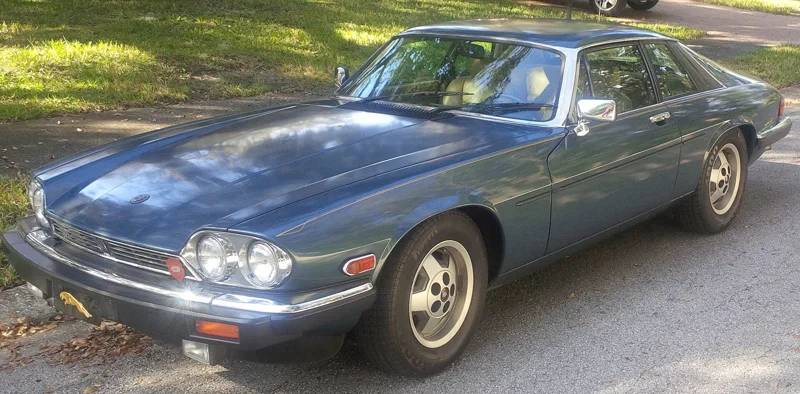
Jaguar originally planned an advanced fuel injection system developed by AE Brico, but it was cancelled late in the programme. The early V12 used four side-draft Zenith-Stromberg carburettors, and from April 1975 Lucas adapted a licensed copy of the Bosch D-Jetronic system for the Series 2 XJ12 and the new XJ-S. Cars of that period used this layout across the E-Type, XJ12, XJ-S, Daimler Double-Six and Panther models.
What did the high-efficiency HE version change?
A high-efficiency version, the HE, debuted in 1981 with cylinder heads designed by Swiss racing driver Michael May. His design placed a swirl chamber at the exhaust valve and a channel around the inlet valve. Conventional flat-topped pistons let the squish from the compression stroke drive air through that channel, which created a stratified charge that allowed compression ratios of 10.5:1 to 12.5:1 depending on market and year.
Power levels stayed similar to the previous engine, but fuel economy improved by nearly 50%. A new system called Digital P used a digital control unit with an integrated manifold pressure sensor in place of the older analogue unit. Cars sold in Australia, Sweden and Switzerland kept the D-Jetronic system until at least 1985. Lucas Constant Energy Ignition replaced the OPUS unit in 1982, and Magneti Marelli ignition came to the XJ-S in mid-1989.
| Version | Introduced | Displacement | Output or feature | Main applications |
|---|---|---|---|---|
| 5.3 litre | 1971 | 5,344 cc (5.3 L) | 242 to 295 hp (180 to 220 kW) | E-Type, XJ12 Series 1 and 2, Daimler Double-Six |
| 5.3 litre HE | 1981 | 5,344 cc (5.3 L) | Compression 10.5:1 to 12.5:1 | XJ12 Series 3, XJ-S, Double-Six Series 3 |
| 6.0 litre HE | 1992 | 5,993 cc (6.0 L) | 318 bhp (322 PS; 237 kW) | XJR-S, XJS, XJ40 and X300 |
| Lister 7.0 litre | 1991 | 6,995 cc (7.0 L) | 546 hp (407 kW; 554 PS) | Lister Le Mans |
How powerful was the 6.0 litre engine?
The 6.0 litre arrived in 1992, when the engine was stroked to 78.5 mm (3.09 in) to give 5,993 cc (365.7 cu in). It became one of Jaguar's most powerful production engines, producing 318 bhp (322 PS; 237 kW) at 5,400 rpm and 336 lb ft (456 N m) of torque at 3,750 rpm. The XJR-S stayed in the range until 1993 with more power, at 333 bhp (338 PS; 248 kW) at 5,250 rpm.
The X305 version used a Nippondenso distributorless crank-fired ignition with coil packs closely resembling the Ford EDIS-6 system. The 6.0 HE was used in the XJR-S from September 1989, and later in the XJS and the XJ-12 and X300 saloons. The last Jaguar V12 engine was produced on 17 April 1997, closing a production run of more than a quarter of a century.
How did TWR use the V12 in racing?
From 1982, Tom Walkinshaw Racing was the factory-backed Jaguar entry in the European Touring Car Championship, racing the XJS with its 5.3 litre V12. TWR developed that engine to a reliable 450 bhp (336 kW; 456 PS). Drivers included Tom Walkinshaw himself, Win Percy, Hans Heyer and the young Martin Brundle, and the team won the 1984 ETCC title and the 1984 Spa 24 Hours.
The XJS retired at the end of 1984, when TWR moved into Rover Vitesse touring car racing and took over Jaguar's World Endurance Championship project from Group 44. The XJS V12 returned for one-off events in 1985, 1986 and 1987. Its best result came at the 1985 James Hardie 1000 at Mount Panorama, where Jaguars were the fastest cars in the race, and John Goss and Armin Hahne won in the team's third car.
As Jaguar's World Sportscar Championship team, TWR's first car, the XJR6, used the 6.0 litre engine. The following year the engine grew to 6.9 litres, and in 1988 the XJR9 used the most famous displacement of the programme, 7.0 litres (6,995 cc). By 1991 the V12 reached 7.4 litres in the XJR12, producing 750 bhp (559 kW; 760 PS). Those racing engines brought Jaguar two overall victories at the 24 Hours of Le Mans in 1988 and 1990.
How did the V12 start out as a development of the XK?
Bailey's first V12 was an 8.0 litre double overhead camshaft layout modelled on Jaguar's inline XK six, a choice that allowed a fairly high redline. Even after Jaguar withdrew from racing in 1957, the V12 design kept being refined, and Bailey proposed a range of sizes. The largest, at 7.6 litres, shared the 87 mm bore and 106 mm stroke of the 3.8 litre XK, while the smallest, at 5.0 litres, shared the 83 mm bore and 76.5 mm stroke of the 2.4 litre XK.
In 1962 Bailey was told to begin prototype tooling and bench testing of a 5.0 litre design, and he settled on an 87 mm bore with a 70 mm stroke. By 1964 several versions were under test, including units meant for racing and others for production cars. The production versions were tested in Mark X saloons, which gave the team real-world data before the design was committed.
Why did the XJ13 project end without racing?
The XJ13 was built around an all-aluminium quad-cam design with fuel injection, and it was meant to race at Le Mans. The project was cancelled in 1967, and the car never entered a race. Its engineering did not disappear, because Hassan and Mundy turned the lessons into the single overhead camshaft head that the road engine eventually used.
How did TWR's production upgrades work?
Tom Walkinshaw Racing also upgraded production Jaguar cars, usually the XJRS, with a range of styling, handling and performance changes. Most of those cars were built at the factory and sold through Jaguar dealerships. By 1989 TWR was selling moderate numbers of XJRS models fitted with the 6.0 litre V12, a few years before the factory built its own version of that car.
What role did Lister play?
Lister Cars, a well-known Jaguar tuner with a long history of technical work with the company, made frequent use of the V12. The first Lister XJRS cars were built by BLE Automotive in Erdington, Birmingham, in the early 1980s, before the Lister brand passed to WP Automotive of Leatherhead. The 7.0 litre version of the engine, with a 94 mm x 84 mm bore and stroke, was fitted to a modified XJS in 1991 and called the Lister Le Mans.
The official figures for that car were 546 hp (407 kW; 554 PS) and 580 lb ft (786 N m) of torque. Starting in 1993, the owner of Lister Cars, Laurence Pearce, created the firm's first in-house model, the Storm. It kept the V12 on the road and on the track, and it competed regularly in FIA GT racing and national series for years afterwards.
How many V12 cars did Jaguar build?
Jaguar made 161,583 SOHC V12-engined cars in total, including the E-Type Series 3 and the XJS from 1975 to 1996. The engine was regarded as one of the premier power plants of the 1970s and 1980s, and it powered all three series of the original XJ luxury saloons, as well as the XJ40 and X305 successors. For 17 years, Jaguar was the only company consistently producing luxury four-door saloons with a V12.
The engine's block and cylinder heads were all aluminium, with removable wet steel liners. Each bank had a single overhead camshaft driving two valves per cylinder. That layout, shared through three decades of changes, let Jaguar keep the engine in production long after its rivals had moved on to other designs.