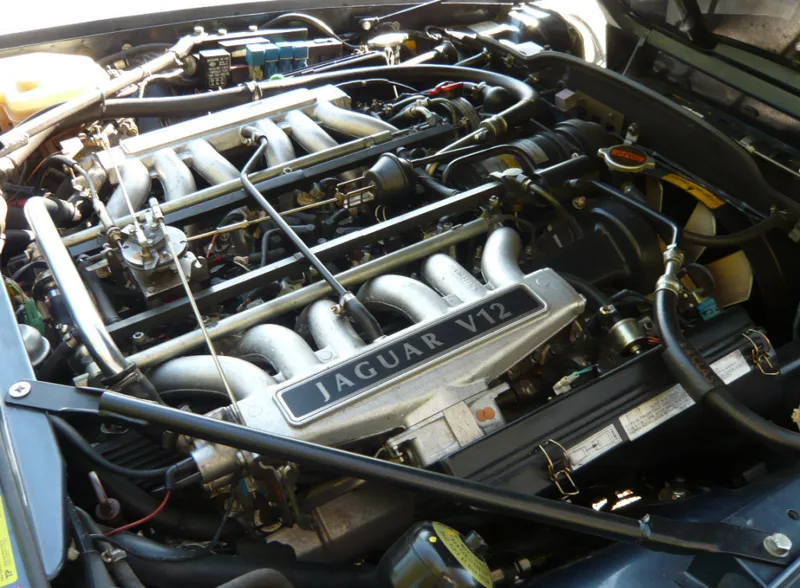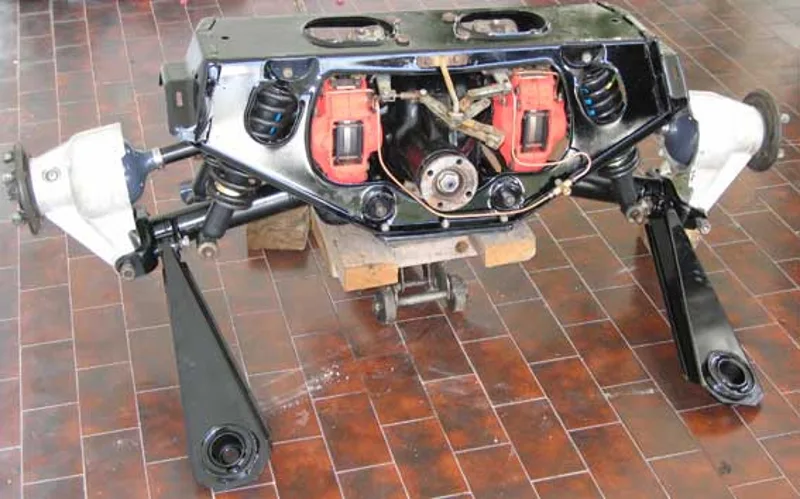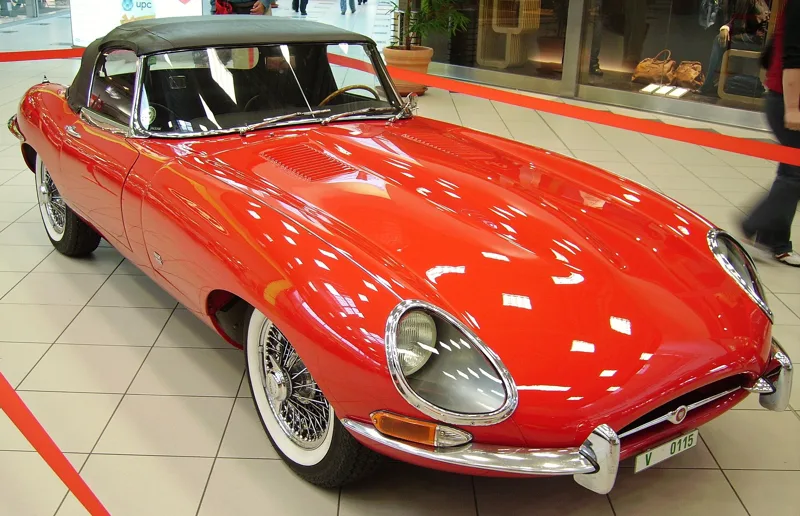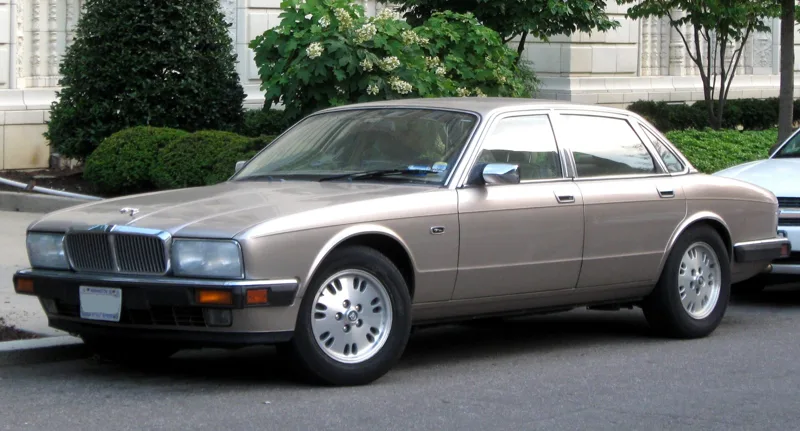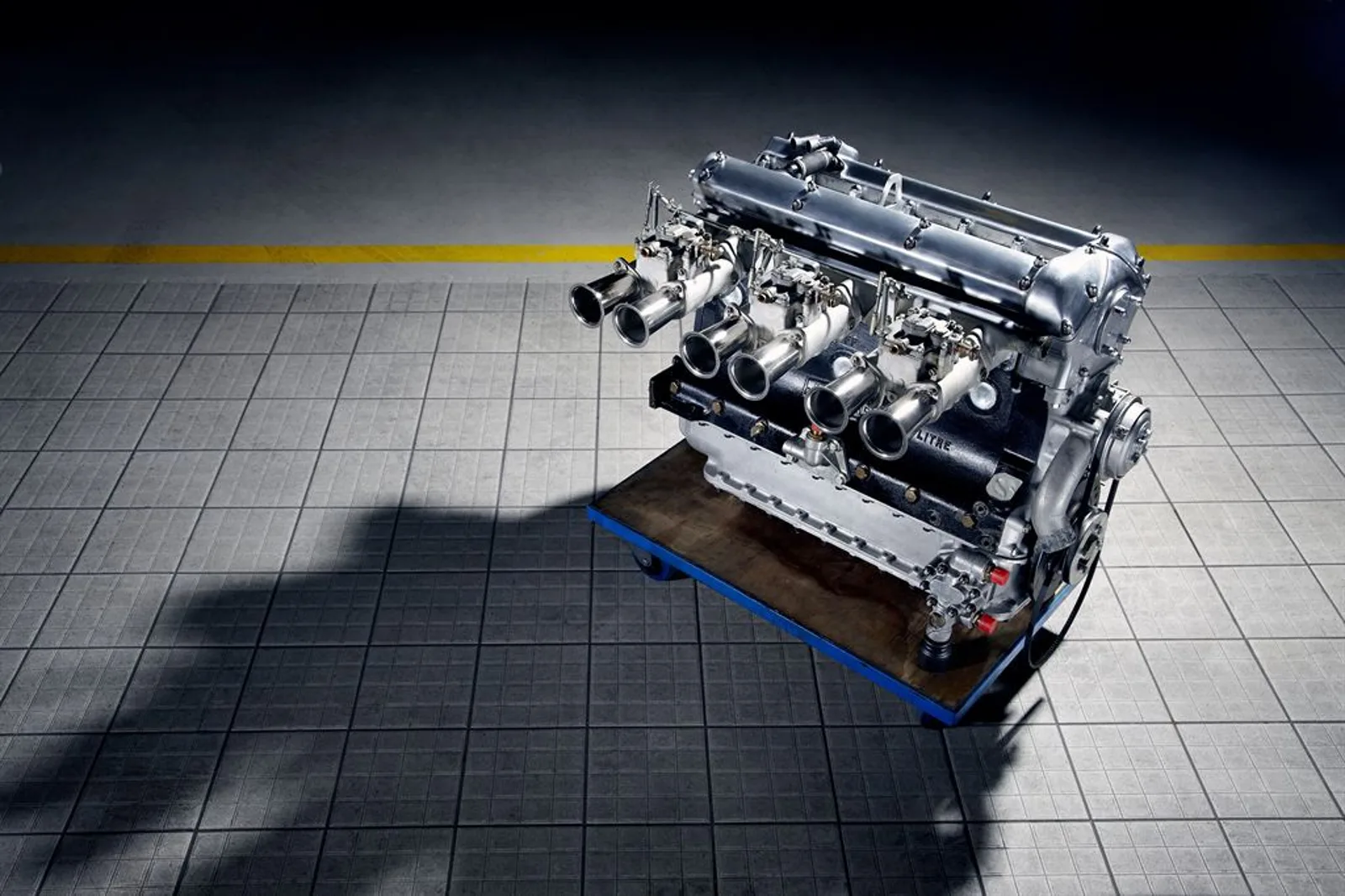
From the wartime XG and XF prototypes to the 4.2-litre E-Type and the last XJ6, the XK ran for four decades.
Produced by Jaguar Cars between 1949 and 1992, the XK began as a 3.4-litre inline six with DOHC. It was made in five displacements from 2.4 to 4.2 litres for passenger cars, and a de-rated version powered some military vehicles.
The Jaguar XK was an inline-six DOHC engine that Jaguar Cars built for passenger cars and sports cars for more than four decades. It began at 3.4 litres and reached five displacements between 2.4 and 4.2 litres, with racing versions built by Jaguar and privateers alike.
Where did the XK engine come from?
Work on the XK began during the Second World War, when Jaguar engineers started prototypes that led to a DOHC layout with hemispherical combustion chambers. The XG and XF prototypes of 1943 and 1944 settled the design, with the XF's dual overhead cams chosen over the XG's pushrods.
Engineers including William Heynes, Walter Hassan, Claude Baily and Harry Weslake worked under Sir William Lyons, who insisted that the new engines should look good as well as deliver high output. The aim was an engine that could stay ahead of the competition for years without revision.
The XG was a 1,776 cc four first tested in October 1943, with a cam-in-block operating the opposed valves through crossover pushrods. It suffered noise and its vertical valve ports flowed less well than the horizontal ports of the XF, a 1,732 cc four first tested in November 1944. The XF's layout was therefore selected for development.
A hemispherical-head six that began on the wartime drawing board and outlived the cars it was first built for.
How did the six-cylinder XK reach production?
By September 1947 a 3.2-litre six called the XJ had been produced, intended to replace both Standard-based six-cylinder units. Testing showed that it needed more low-speed torque, so it was stroked to 3,442 cc to form the XK six. That engine debuted in the open two-seat XK120 at the 1948 London Motor Show, and it went on to power the Mark VII and a number of other models.
Production castings were made for Jaguar by Leyland Motors. In 1968 Jaguar laid off 2,500 workers at its Radford and Brown Lane sites during a Leyland strike over pay parity, a dispute the company estimated had cost 160 cars a day, worth GBP 320,000.
What were the four-cylinder prototypes?
The XK 4-cylinder of 1,790 cc was first tested in October 1945 and remained under development alongside the six. The first true XK, called XK Number 1, had a 1,970 cc capacity. A 1,970 cc version was also fitted to the MG EX-135 streamliner in 1948, which took the 2,000 cc class record at 177 mph (285 km/h) near Jabbeke in Belgium.
The four was finally dropped as a possible production engine later in 1953. The name XJ for a four-cylinder prototype appears only in William Heynes' 1953 paper to the IMechE, and the archive shows no other mention of it.
How was the XK's valvetrain arranged?
The most recognisable feature of the XK is its dual cam covers, which were polished alloy until a change to ribbed black and alloy finish in early 1968. The cylinder head was deep so that it could house two generously sized valves, set at a wide angle with long stems. Dual overhead cams were the most effective way to operate valves that sat so far apart.
The cam lobes act directly on bucket tappets, which are adjusted with shims beneath the buckets. Two duplex chains drive the camshafts: one from the crankshaft to a sprocket at combustion chamber level, and one from that sprocket to each camshaft. The original sprung slipper tensioner for the lower chain proved too weak and was replaced after a couple of years by a hydraulic design using oil pressure.
Why were the XK cylinder heads made of aluminium?
The heads used RR50 aluminium alloy for its heat conduction and light weight. William Heynes estimated that this saved some 70 lb (32 kg) against a cast iron head. Harry Weslake and Heynes also gave the inlet port a curved shape to create swirl in the air-fuel mixture for better combustion.
The basic head layout stayed the same for the whole engine life, while valve and port sizes, camshaft lift, compression and carburation changed from model to model. Very early XK120 and Mark VII engines lacked studs at the front of the cam covers, where they covered the timing chains, and oil leaked as a result. From 1951 every XK had studs around the full perimeter of the covers.
What did the cylinder head colours signify?
The earliest heads, known as Standard or A-type, had 30 degree inlet and 45 degree exhaust valve angles and were unpainted. Around 1954 the B-type appeared with equal 35 degree valve angles, painted light duck egg blue on early cars and light green later on 2.4 and 3.4-litre models, and metallic dark blue on 3.8s. A few XK120s and XK140s came with the red C-type head, which carried a Jaguar Type C plaque on each cam cover.
A straight-port head with equal 35 degree angles came later in the 1950s and was painted pumpkin orange on the XK150S. The E-Type Series 1 and Mark X heads were gold for both the 3.8 and 4.2, and the painting practice stopped around 1968. Many sources still call the unpainted aluminium finish silver.
What set the XK block and fuel system apart?
The block was cast iron, except for some racing engines, and its crankcase split on the centreline of the seven-bearing crankshaft. That crankshaft was made of EN16 steel and heat treated before machining, and a proprietary Metalastik vibration damper on its nose eliminated damaging resonances. The bottom end barely changed through the engine's life, apart from the respacing needed for the 4.2.
Pre-injection cars used two or three SU, Weber, Zenith or Zenith-Stromberg carburettors. Factory Webers were not supplied, and 2.4-litre cars up to the 240 used twin Solex downdraught carburettors. Fuel injection did not reach road cars until 1978, starting with certain US models to meet fuel-efficiency rules.
How were XK power figures quoted?
During the 1950s and 1960s Jaguar quoted SAE gross horsepower, the measure US manufacturers preferred, because its cars would otherwise have looked underpowered. The company moved to SAE net around 1972, though DIN net figures were also used. The conditions behind the gross figures were not recorded, so a fair comparison of outputs over time is impossible.
The 1965 4.2 XK in the carburetted E-Type was listed at 265 hp (198 kW) SAE gross. The fuel-injected 4.2 in the 1986 Series 3 XJ6 was listed at 202 hp (151 kW) DIN net. Compression ratio, cam lift and duration, and fuel consumption during testing would all be needed for a reliable estimate.
What was the 3.4-litre XK?
The 3.4 litre XK120 engine displaced 3,441 cc, with an 83 mm x 106 mm (3.27 in x 4.17 in) bore and stroke. It had an iron block without cylinder liners and an aluminium head. It was first rated at 160 bhp (162 PS; 119 kW) SAE gross at 8:1 compression, rising to 210 bhp (213 PS; 157 kW) SAE gross with the C-type head, and reaching 250 bhp (253 PS; 186 kW) SAE gross with the straight-port head at 9:1 in the XK150SE.
Pressure to fit the 3.4 to the new compact saloon led to the Jaguar 3.4-litre of February 1957, which was later named the Mark 1 after the Mark 2 arrived in 1959. The 3.4 went into the XK120 from 1948 to 1953, the XK140 from 1954 to 1957, the Mark VII from 1950 to 1954, the Mark VIII from 1956 to 1958 and the Mark 2 from 1959 to 1967. Later it appeared in the 340 Mark 2 and the S-Type 3.4, between 1963 and 1968.
How did the 2.4-litre come about?
Jaguar needed a compact saloon, and it could either downsize the 3.4 or use the four-cylinder prototype. The four was judged too low powered and unrefined. The 3.4 was already undersquare, so a smaller bore was not realistic, and Jaguar instead built a short-block six reduced in height from 11.5 in (292 mm) to 8.85 in (225 mm).
The 2.4 engine had a stroke of 76.5 mm (3.0 in) on the 83 mm (3.3 in) bore, giving 2,483 cc (151.5 cu in). Although it was almost 2.5 litres, the car was called the Jaguar 2.4 to separate it from the old Standard 2.5-litre and link it to the 3.4. It was rated at 112 bhp (nett) with twin Solex carburettors.
In 1959 the Mark 2 gave 120 hp (89 kW) SAE gross, still with Solex carburettors. The Jaguar 240 had a straight-port head and twin SU carburettors, delivering 133 bhp SAE gross.
What was the 3.8-litre XK?
The 3.8 arrived in 1958 for the last of the XK150s and the Mark IX saloon. It kept the 3.4's 106 mm stroke but was bored out to 87 mm (3.4 in) for 3.8 L (3,781 cc). Its cylinders sat close together, so dry liners were fitted, and it had several valvegear and carburation differences from the 3.4.
The standard 3.8 produced 220 hp (164 kW) SAE gross, and the XK150SE with the straight-port head reached 265 hp (198 kW) SAE gross. The 3.8 was fitted to the XK150 3.8, the 3.8S with its triple carburettors, the Mark IX, the Mark X 3.8, the Mark 2 and the Series 1 E-Type. The S-Type 3.8 followed from 1963 to 1968.
Which racing versions of the XK were built?
From 1959 onward a 3-litre XK, with an 85 mm (3.35 in) bore and 88 mm (3.46 in) stroke, was built for FIA sports car racing. It was popular with small manufacturers such as Lister, HWM, Cooper and John Tojeiro, who could not afford their own engines. It also appeared in Formula Libre racing and in the E2A prototype of 1960.
Racers had been boring the 3.8 out to 4.2 litres for years before the factory version arrived.
How did the 4.2-litre differ?
The 4.2 was officially released in 1964. Its block used a new siamesed sleeve design, with respaced cylinders, new main bearing spacings and a new crankshaft. The cylinder bores grew to 92.08 mm (3.63 in) while keeping the 106 mm (4.17 in) stroke, for 4.2 L (4,235 cc). The cylinder heads stayed unchanged, so the 3.8 and 4.2 heads and camshafts are interchangeable.
Factory 4.2 engines had unsmoothed steps between the inlet manifold and head, and the manifold gaskets did not match the inlet ports well. That made them good bases for tuning, and simply flowing the head could reach about 220 bhp (164 kW; 223 PS) SAE net.
Published ratings are complicated by the switch from gross to net figures. In 1965 the US-specification E-Type with triple SU HD8 carburettors was rated at 265 hp (269 PS; 198 kW) at 5400 rpm and 384 Nm (283 lb ft) at 4000 rpm, SAE gross. By 1969, with twin Zenith-Stromberg carburettors, the figure had fallen to 246 hp (183 kW) SAE gross.
The 1987 XJ6 was the last Jaguar car with the XK. The last Daimler DS420 Limousine, which used a 4.2-litre XK, was built in 1992. The 4.2 was also used in military vehicles with few changes, including the FV101 Scorpion light tank, the FV107 Scimitar and the Fox armoured reconnaissance vehicle, as well as the Dennis D600 fire engine.
What were the 2.8-litre and new 3.4-litre XKs?
A 2.8-litre version, with a 2,792 cc capacity, arrived for the entry-level XJ6 in 1968. It kept the 83 mm bore but the stroke grew to 86 mm (3.4 in), 9.5 mm (0.4 in) more than before. Its output was 142 PS (104 kW; 140 hp) DIN net. It gained a poor reputation for carbon deposits on the piston crowns at low speed, and it was dropped in 1973.
The "new" 3.4 arrived in 1975 to replace the 2.8. It kept the old 3.4's 83 mm bore and 106 mm stroke, but it used the main bearings of the 4.2 and a stiffer bottom end, with no cylinder liners. It delivered 161 PS (118 kW; 159 hp) DIN net and much better torque than the 2.8, powering XJ6 Series 2 and Series 3 models until 1986.
XK engines at a glance
| Version | Displacement | Years | Output | Notable cars |
|---|---|---|---|---|
| 2.4-litre | 2,483 cc | 1955 to 1959 (Mark 1) | 112 bhp (nett) | Jaguar 2.4, Jaguar 240 |
| 3.4-litre | 3,441 cc | 1948 to 1967 | 160 bhp (162 PS; 119 kW) SAE gross, up to 250 bhp | XK120, Mark VII, Mark 2 |
| 3.8-litre | 3,781 cc | 1958 to 1968 | 220 hp (164 kW) SAE gross | XK150, Mark IX, E-Type |
| 4.2-litre | 4,235 cc | 1964 to 1992 | 265 hp (198 kW) SAE gross, 1965 E-Type | E-Type, XJ6, DS420 |
| 2.8-litre | 2,792 cc | 1968 to 1973 | 142 PS (104 kW; 140 hp) DIN net | Entry-level XJ6 |
| New 3.4-litre | 3.4 L | 1975 to 1986 | 161 PS (118 kW; 159 hp) DIN net | XJ6 Series 2 and 3 |