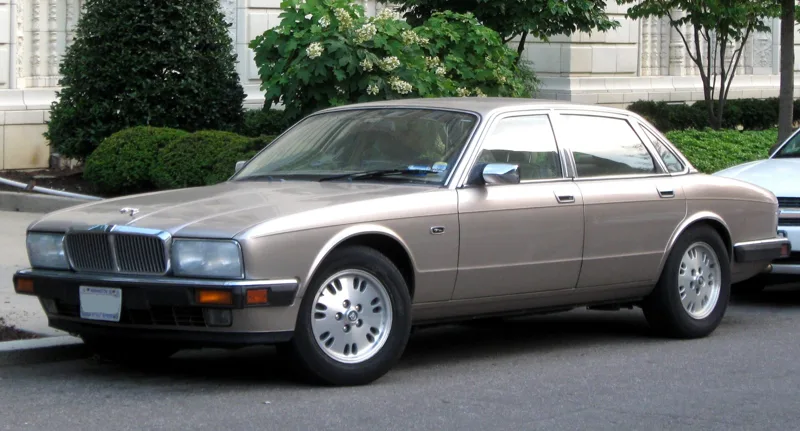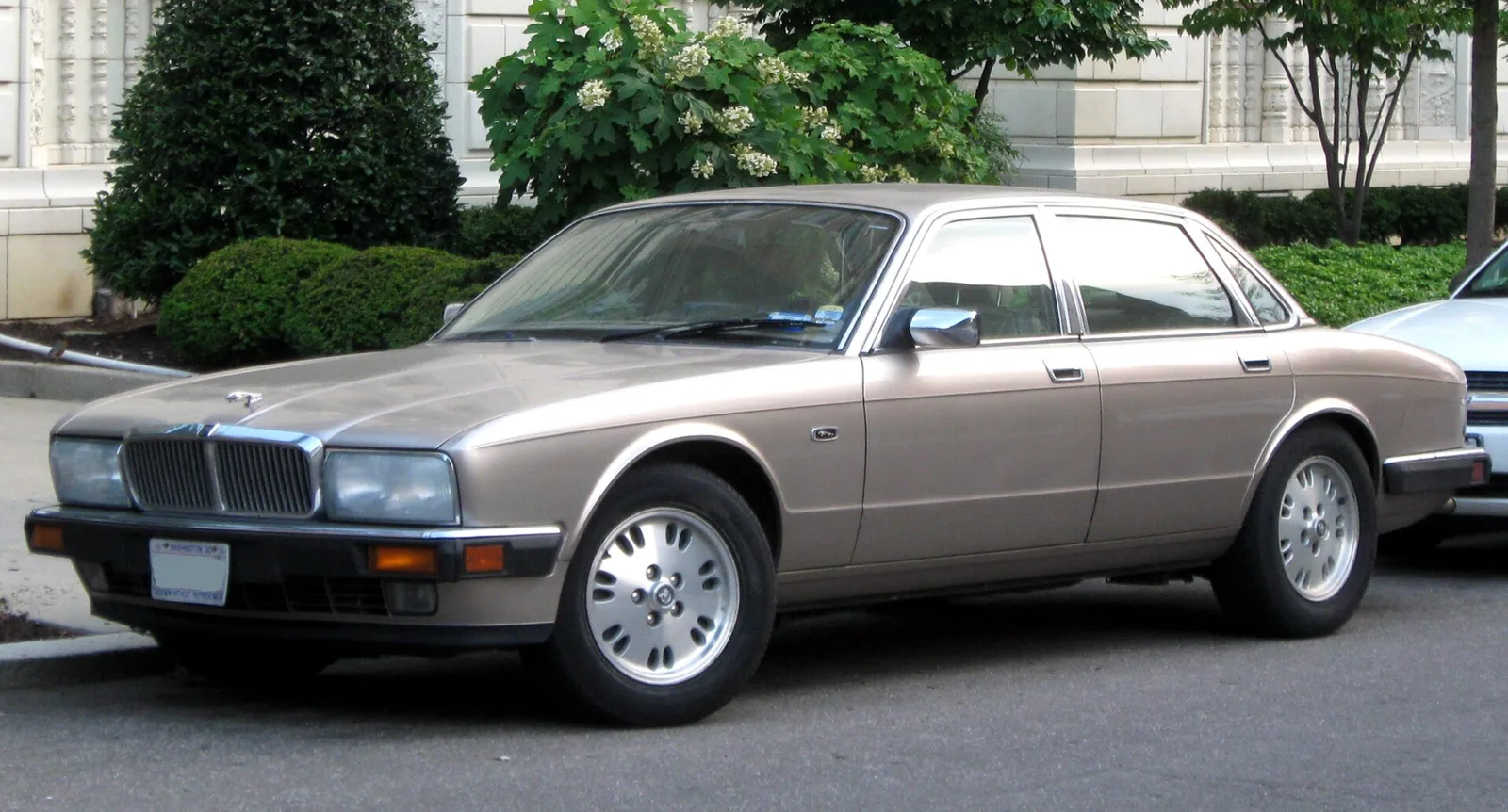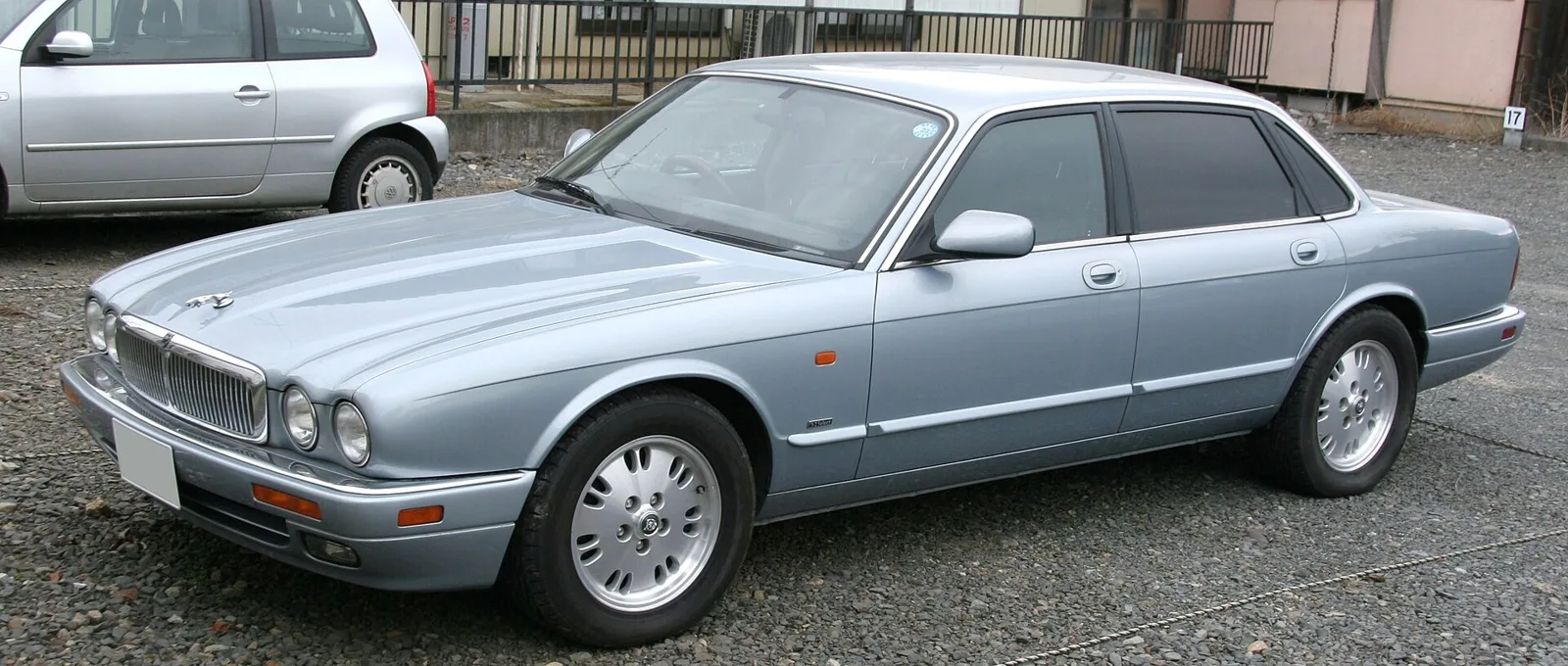
Built from 1994 to 1997, the X300 was the first XJ made wholly under Ford ownership and one of Jaguar's most successful saloons.
The Jaguar XJ X300 was a full-size luxury saloon sold between 1994 and 1997. Its AJ16 six-cylinder, V12 and supercharged XJR versions came in short and long wheelbase bodies, and it marked the first XJ made wholly under Ford's ownership.
The Jaguar XJ X300 is a full-size luxury saloon that Jaguar built from 1994 to 1997. It was the first XJ produced entirely under Ford ownership, an evolution of the XJ40 that put build quality, reliability and traditional Jaguar styling back at the centre of the range.
Why did the X300 matter for Jaguar?
The X300 arrived after Ford took control of Jaguar in 1990, and it was launched at the Paris Motor Show in October 1994 as part of a 200 million pound facilities renewal. Jaguar's marketing called the range the New Series XJ, which set it apart from the car it replaced. It went on to become one of the company's most successful models.
Ford's money paid for automated body welding robots from Nissan, a production line meant to show where the British motor industry could go. The programme was a visible statement that Jaguar could build cars to a new standard under its new owner.
A Ford-era saloon that gave Jaguar a six, a V12 and a supercharged XJR from a single luxury family.
How did the X300 look?
The X300 kept the XJ's profile but changed its face and rear. A design refresh led by Geoff Lawson in 1991 replaced the XJ40's flat bonnet with a fluted, curvaceous shape, gave the four round headlamps more prominence, reshaped the rear wings for wrap-around light clusters and added a fully integrated, body-coloured bumper.
The leaper bonnet mascot appeared only on cars sold outside Europe. The locks used eight-disc tumbler barrels, similar to those on Ford vehicles of the period, although Ford used six discs, which made the key blades on Ford models shorter. Aston Martin used the same locks.
Inside, the layout followed the XJ40, with revised seats that had a more rounded profile, bevelled wood trim and a redesigned steering wheel. Early cars had no front passenger glovebox, because the space was needed for a passenger airbag.
What engines did the X300 use?
The X300 offered Jaguar's V12 and an inline six known as the AJ16. The six came as a 3.2-litre and a 4.0-litre, and a supercharged 4.0-litre version powered the XJR. The V12 was a 6.0-litre unit with distributorless electronic engine management designed by Nippon Denso.
The V12 used twelve coils in two packs, driven by two Denso ignition modules that resembled Ford's EDIS-6 units. Its crankshaft changed from a forging to a chill casting, and the chromed breather pipe that ran across the engine gave way to an almost invisible design under a plastic cover.
The AJ16 gained magnesium-alloy valve covers and revised pistons. Normally aspirated six-cylinder cars used either a ZF automatic, the 4HP-22 on the 3.2-litre and the 4HP-24 on the 4.0-litre, or a Getrag 290 five-speed manual. The 4HP-24 was electronically controlled and offered Normal and Sport modes on a switch by the gear lever.
The 4HP-22 was mechanically controlled, and the 3.2-litre cars had a blanking plate where that switch would have been. V12 cars and XJRs were fitted with the GM 4L80-E four-speed automatic, and in some markets, North America included, no manual gearbox was offered.
Why was the X300 almost never built?
Jaguar intended to launch an all-new saloon with a new V8, but Ford halted that project, known as the XJ90. Ford then proposed fitting its own engine and front and rear ends to the centre section of the XJ40. The V8 was not ready in time and would not arrive until the successor, the X308.
Ford's influence was felt more in product development processes than in shared parts, according to David Versical of Automotive News. He pointed to a traction control system that came through Ford's Mondeo programme and a Nippondenso air conditioner bought through Ford's purchasing channels.
Which X300 models could buyers choose?
The range ran from the base XJ6 through the Sovereign, Sport, Executive and XJR, and it came in short and long wheelbase bodies. The XJ6 used the 3.2-litre six, with alloy wheels, leather upholstery and air conditioning all extra-cost options. The Sovereign added luxury features as standard.
The Sovereign used the AJ16 in 3.2-litre or 4.0-litre form. Its standard kit included ten-way electric leather front seats with driver memory, cruise control, automatic climate control and a toolkit stored beneath the bonnet. Chrome trim appeared on the grille, window surrounds, rain gutters and boot-lid plinth.
The XJ Sport was aimed at younger buyers, with wider 8-inch wheels, revised seats and stiffer suspension. It kept matte-black window surrounds and Sport badges on the B-pillars. The sports suspension and wider wheels could also be ordered on the standard XJ6 and Sovereign.
The Executive arrived for the 1997 model year with leather trim, a wood and leather steering wheel and the Sport's wide wheels. It was treated as a run-out specification for the XJ6, so it has no separate production figures.
What was the long-wheelbase X330?
From the 1996 model year Jaguar offered a long-wheelbase body, the X330, which added an extra 5 inches (130 mm) for rear passengers and an extra inch of headroom. It was available on the classic models, including the XJ, Sovereign and XJ12, but not on the sport models.
Jaguar called the stretched car the X330 Majestic internally, though it was never badged that way. X330 bodies ran on the standard production line, while the earlier XJ40 Majestic began as a short-wheelbase body that was stretched by Project Aerospace in Coventry before returning to Jaguar for finishing.
Two X330 variants existed, a five-seater and a four-seater. The four-seat version had a raised centre console between two adjustable rear seats, and that layout gave the rear compartment a more exclusive feel.
What made the XJR special?
The XJR was Jaguar's first supercharged road car and only the second Jaguar road car with forced induction, after the turbocharged XJ220. An Eaton M90 supercharger and an air-to-water intercooler lifted the six to 321 hp (239 kW; 325 PS) and 378 lb-ft (512 N-m) of torque.
Acceleration from 0 to 97 km/h (0 to 60 mph) took around 5.9 seconds with the manual and 6.6 seconds with the automatic. The XJR ran 17-inch wheels where the rest of the range had 16-inch ones, with Pirelli P-Zero tyres, traction control and a suspension set 10 mm lower and firmer.
Visually the XJR wore a body-coloured grille surround with a mesh insert and larger exhaust outlets. Its wheels were five-spoke Sport alloys, and the car carried XJR badging. Window surrounds and gutters were matte black on most cars, though North American models used polished stainless steel instead.
The bulk of the 6,547 XJR production cars left the factory with the GM 4L80-E automatic, even though the Getrag 290 five-speed was the standard choice. Only 268 manuals were made, 102 of them right-hand drive for the UK, with the rest mainly left-hand drive in Europe and 57 going to Italy.
What was the XJ12 and why does it matter?
The XJ12, code X305, used the 6.0-litre V12 and shared the trim of the Sovereign. It also formed the basis of the short-wheelbase Daimler Double Six. Its only transmission was a four-speed GM 4L80-E automatic, and it was identified by a rear XJ12 badge, a V12 insignia on the passenger-side dashboard and chromed door mirrors.
In the United States the XJ12 was sold only as the 1995 model, which was short-wheelbase, and the 1996 model, which was long-wheelbase. The X305 on-board diagnostics fell short of OBD-II, which became mandatory for the 1996 model year. A 2001 settlement with the US EPA extended the emissions warranty on those 1995 and 1996 saloons to 14 years or 150,000 miles, because the Nippondenso engine management could not provide continuous misfire monitoring.
The XJ12 used 225/55-16 tyres on 8-inch wheels with sports suspension, while the Daimler Double Six had 225/60-16 tyres on 7-inch wheels and a comfort suspension. That difference explains the small height gap between the two cars. The last Jaguar V12 was a green long-wheelbase XJ12, registered P60 SOV, which left the production line on 17 April 1997.
What did the Daimler and Vanden Plas versions offer?
The Daimler name marked the highest trim level of the X300. It carried all the chrome brightwork of the Sovereign, plus chromed door mirrors and handles, a fluted radiator grille surround and a boot finisher. In North America the same car was sold as the Jaguar Vanden Plas.
Most of the optional extras were standard on a Daimler, including heated front seats, a heated windscreen, a sunroof and cruise control. Fluted leather door pockets, picnic tables on the back of the front seats and marquetry veneer added to the cabin. The Daimler Six used the AJ16, and the Double Six used the V12, and both were offered in short or long wheelbase.
US Vanden Plas cars from model year 1995 onward all used the long-wheelbase body shell, although they were offered only with the six-cylinder engine. That left the V12 solely in the XJ12 for the American market, and the 1995 Vanden Plas cars were all short-wheelbase.
Did a pricing mistake end up in court?
Yes. In April 1997 a Lexus of Westminster advertisement in the Daily Pilot newspaper in Orange County, California, listed a used sapphire blue 1995 Jaguar XJ6 Vanden Plas for US$25,995 instead of the intended US$37,016. The dealership declined to honour the price, then sold the car to another buyer for US$38,399.
The case reached the Supreme Court of California, which ruled on 30 July 2001 that the dealership had formed a contract through offer and acceptance. The same court also held that the dealership could avoid enforcing that contract on the ground of mistake.
Which concept cars came from the X300 era?
The Daimler Century, introduced in 1996 to mark the centenary of the Daimler name, carried every X300 feature along with chromed wheels, special exterior paint and electrically adjustable rear seats. In the same year a single two-door XJ convertible appeared, the Daimler Corsica.
The Corsica was based on the Daimler Double-Six saloon and could seat four. The prototype had no engine, and its name recalled the 1931 Daimler Double-Six Corsica. It was painted in Seafrost, a colour that was later discontinued, and it was built as a one-off that may have been intended for limited production from 1997.
The Jaguar Daimler Heritage Trust owns the Corsica and has commissioned it to run as a fully functional road-legal car. It was displayed at the trust's museum at Browns Lane in Coventry and now sits in the Jaguar Collection at the British Motor Museum in Gaydon, Warwickshire. It most recently appeared at the Oulton Park event in August 2026.
Which prime ministers rode in the XJ?
Several British prime ministers used the XJ as their official car, starting with Margaret Thatcher and followed by John Major and Tony Blair. Successive versions of the model later served Gordon Brown, David Cameron, Theresa May and Boris Johnson.
The role passed down through several generations of the model, so the XJ became a long-running choice for the job. Each new version carried the same responsibility forward, which shows how far the car's reputation for comfort and quiet refinement reached beyond the showroom.
What are the Jaguar XJ X300 specifications?
| Specification | Detail |
|---|---|
| Production | 1994 to 1997 |
| Launch | Paris Motor Show, October 1994 |
| Body | Full-size luxury saloon, short and long wheelbase |
| Base six | AJ16 inline six, 3.2-litre |
| Larger six | AJ16 inline six, 4.0-litre |
| XJR engine | Supercharged 4.0-litre AJ16, 321 hp (239 kW; 325 PS), 378 lb-ft (512 N-m) |
| V12 | 6.0-litre, XJ12 and Daimler Double Six |
| Automatic gearboxes | ZF 4HP-22 on the 3.2-litre; ZF 4HP-24 on the 4.0-litre; GM 4L80-E in V12 and XJR |
| Manual gearbox | Getrag 290 five-speed |
| XJR 0-97 km/h | 5.9 seconds manual; 6.6 seconds automatic |
| XJR production | 6,547 built, 268 with manual gearbox |
| Long wheelbase | X330, 5 inches (130 mm) longer, one extra inch of headroom |
| Last V12 | Registered P60 SOV, left the line on 17 April 1997 |