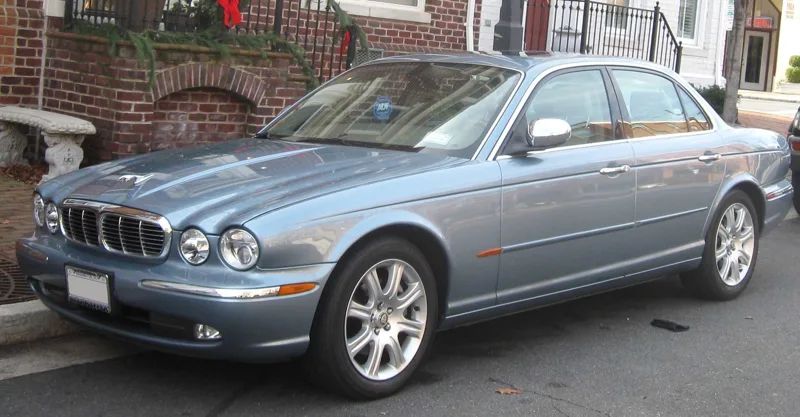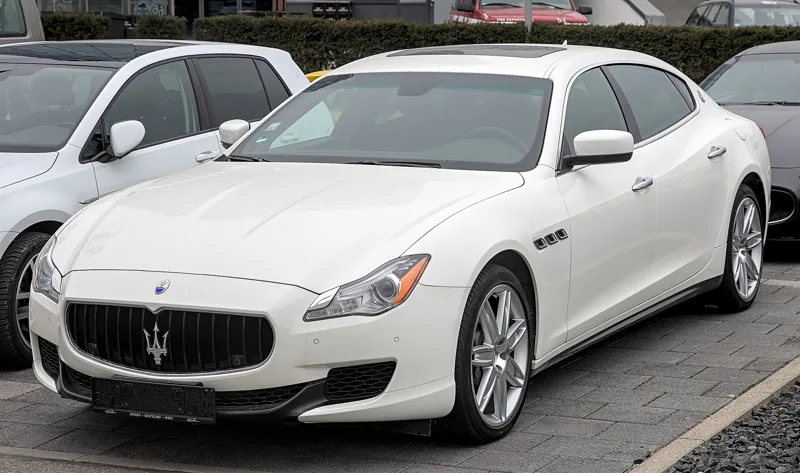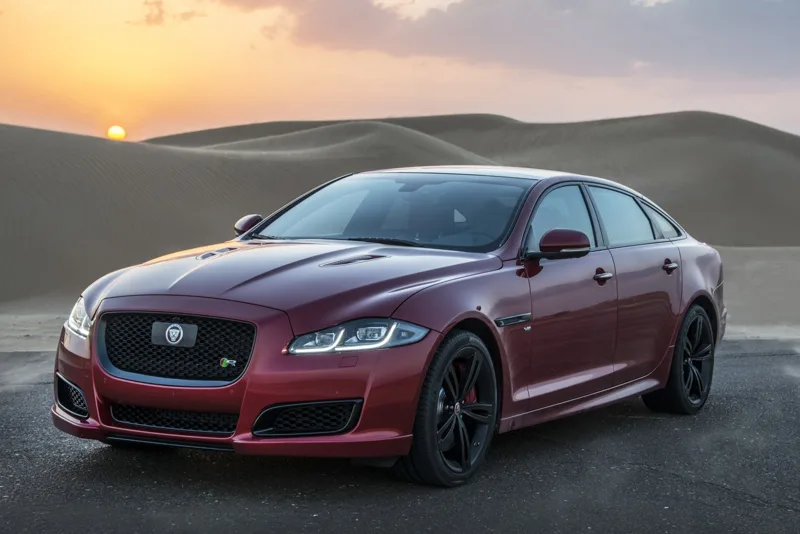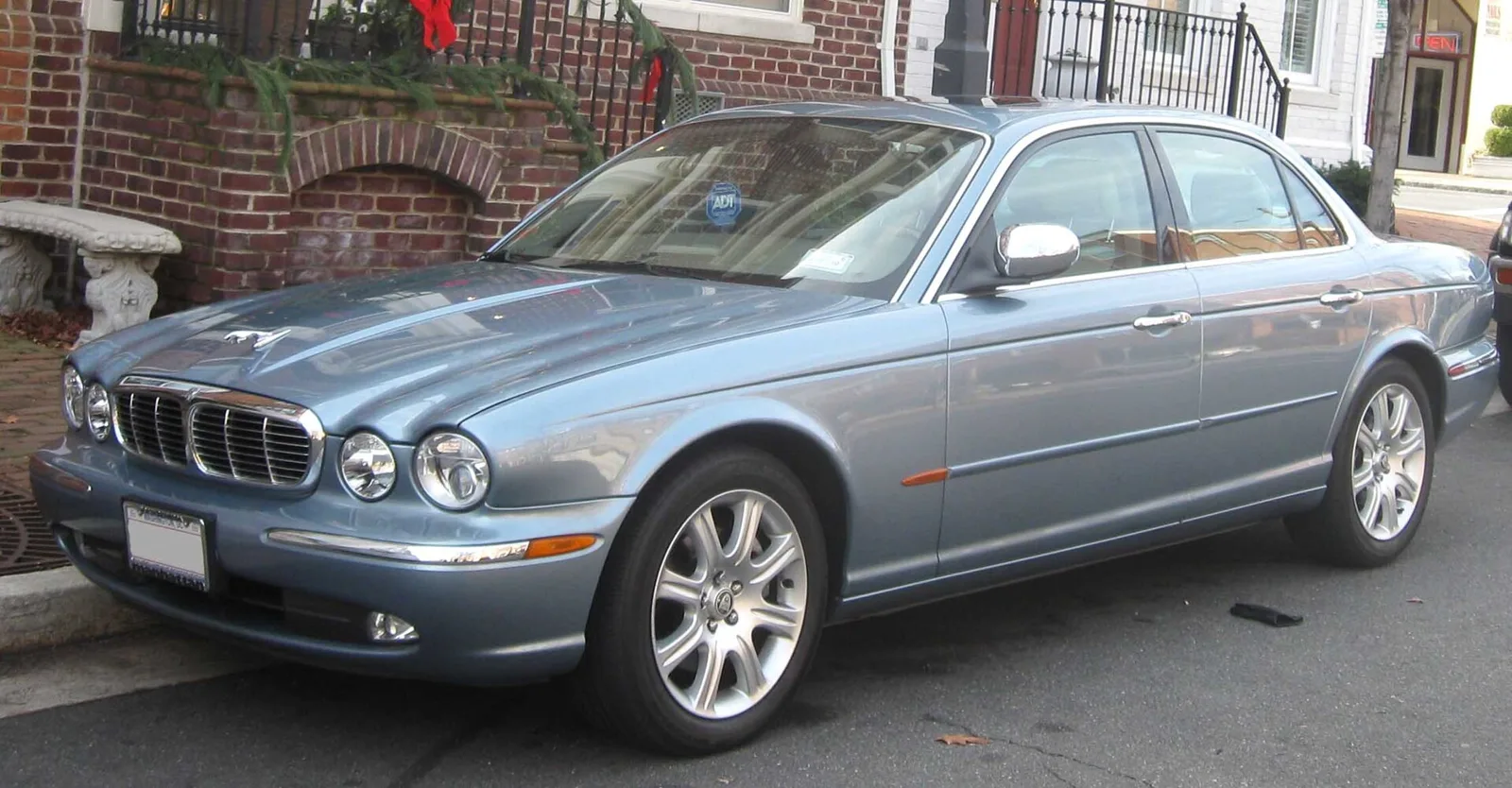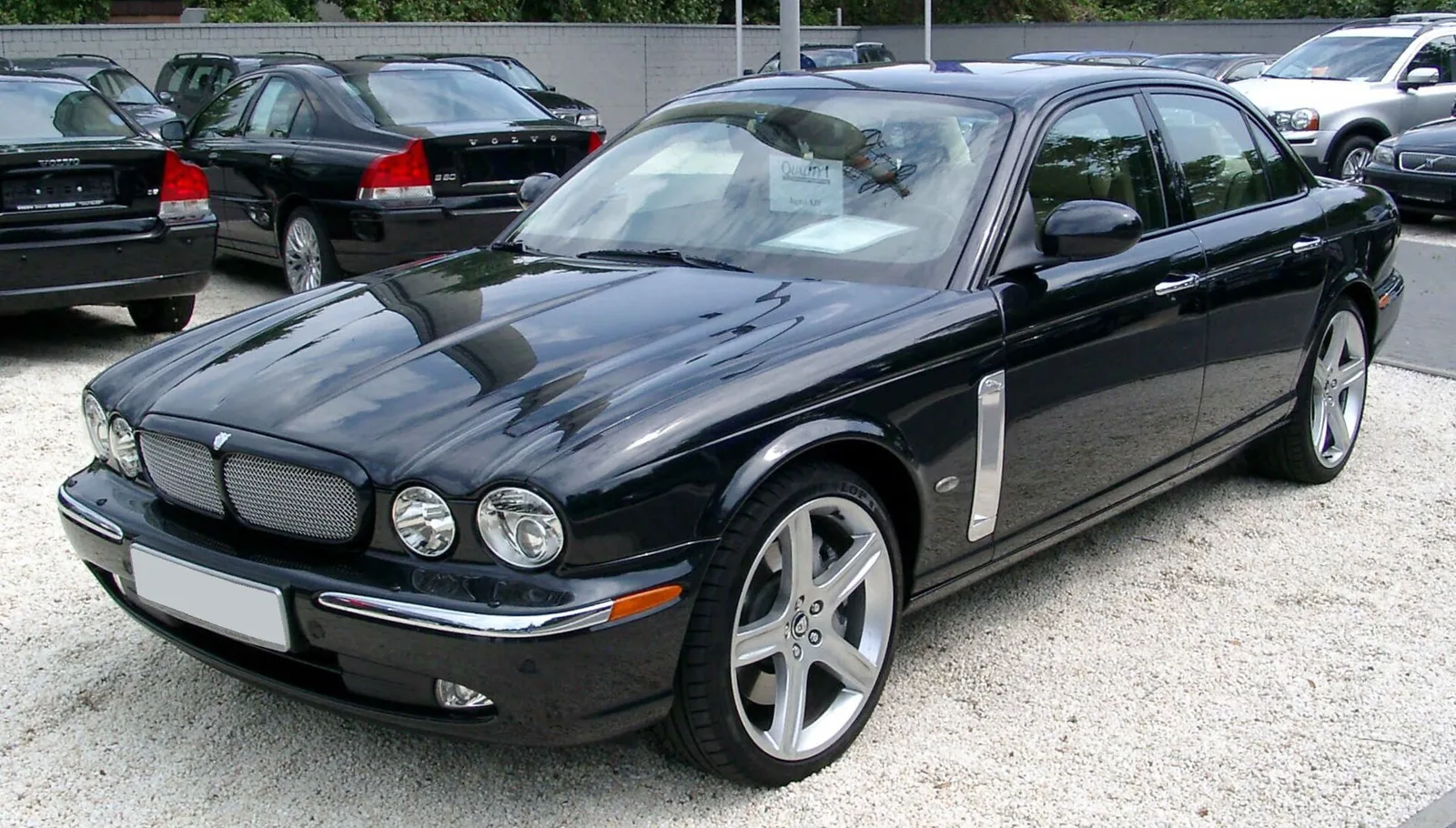
Jaguar's aluminium XJ X350 and Maserati's long-running Quattroporte both aimed at the top of the full-size saloon market, but they came from very different engineering traditions.
The Jaguar XJ X350 was a full-size saloon built from 2003 to 2009 with an aluminium unibody and V6 and V8 engines. The Maserati Quattroporte began in 1963 as a V8 saloon and was built in six generations, so the two cars sit at very different points in the life of their badges.
Jaguar's XJ X350 and Maserati's Quattroporte were both full-size four-door luxury saloons, and both aimed at buyers who wanted V8 power and a distinctive cabin. Their paths diverged sharply, though, with one built on a modern aluminium unibody and the other descended from a line that began in 1963.
The comparison runs across two long histories. The XJ X350 was one generation in a series that began in 1968, while the Quattroporte has passed through six generations, several owners and a number of very different engineering approaches under the same name.
Why were the XJ X350 and Quattroporte set against each other?
The Super V8 was the most expensive model in the XJ range, and its primary competitor was the Maserati Quattroporte. Both cars were aimed at the top of the full-size saloon market, where buyers wanted a V8 flagship with a distinctive look and a long list of equipment.
The XJ's story is tied to Ford's ownership. The X350 generation largely coincided with Ford's Premier Automotive Group, which lasted until Tata Motors bought Jaguar in 2008. The car was styled as an evolution of its predecessor, and it was the final Jaguar built at Browns Lane in Coventry.
The Quattroporte's story is one of changing owners. The first generation was styled by Pietro Frua and built by Vignale, the second was based on a stretched Citroen SM chassis, and the third returned to rear-wheel drive. Each era left its own mark on the name.
An aluminium Jaguar that was the last to leave Browns Lane, set against a Maserati whose V8 heritage began with its first generation.
How was the XJ X350 engineered?
The X350 used a full aluminium unibody, a material choice that was among the first for a mass-produced car. The bodyshell was 40% lighter and 50% stiffer than its predecessor, despite the car being larger overall. That combination of lower weight and greater stiffness was a considerable engineering achievement for a car of its size.
The stressed aluminium structure used 15 aluminium castings, 35 extrusions and 284 stampings, joined with about 3,200 self-piercing rivets and 120 yards of epoxy adhesive. Jaguar had used aluminium before, on the XK120 and the E-Type, so the X350 extended a familiar material into a much larger car.
The X350's suspension used self-levelling adaptive air springs with electronic control. The system kept the ride steady under changing loads, and it gave the car the composed ride that buyers of the Super V8 expected.
The long-wheelbase model arrived in 2005, with a wheelbase of 3,159.8 mm (124.4 in) and an overall length of 5,214.6 mm (205.3 in). It was the longest Jaguar saloon built up to that point, which made it a clear flagship in the range.
How did the V8 and V6 engines compare?
The naturally aspirated 4.2-litre V8 produced 300 PS (221 kW; 296 hp), and the supercharged version made 400 PS (294 kW; 395 hp) in the XJR. The V6 powered the XJ6, while the Super V8 reached 0-97 km/h in about 5 seconds with a top speed of 249 km/h (155 mph).
North American models were fitted with the 300 hp naturally aspirated engine or an optional 400 hp supercharged 4.2 L V8, and the supercharged car's top speed was limited to 155 mph (249 km/h).
The Quattroporte's V8 history goes back to its first generation. Its 4.1-litre V8 made 260 PS DIN (191 kW; 256 hp) at 5,000 rpm, with a claimed top speed of 230 km/h (143 mph). The Series II's 4.7-litre version lifted output to 290 PS (213 kW; 286 hp) DIN, and the Quattroporte 4700 was the fastest four-door sedan in the world at the time.
The 4.7-litre version arrived in 1968 alongside the 4.1-litre, and around 500 of the second series were made before production ended in 1969.
Diesel power came later to the XJ with the TDVi, a 2.7-litre twin-turbo V6 rated at 204 PS (150 kW; 201 hp) with 435 N-m (321 lb-ft) of torque. The engine was fitted with electronically controlled active mounts to reduce vibration at idle.
What did each car offer inside?
The XJ offered walnut burl trim, leather seating and dual-zone automatic climate control as standard. Its audio and comfort kit included an 8-speaker sound system with a 6-CD changer, rear-seat entertainment as an option, and 16-way adjustable front seats in the upper trims.
The XJ also carried the Advanced Restraint Technology System, which used sensors to judge crash severity, driver position and seatbelt status before choosing the airbag deployment force. The system was part of a wide list of safety features that included four-channel anti-lock brakes and traction control.
The XJ's wood was genuine veneer rather than a printed finish, and on higher models the door trim was veneered as well. That choice added to the development and production costs, which the record notes as a factor in the car's economics.
The first-generation Quattroporte came with a five-speed ZF manual or a three-speed Borg Warner automatic, and the Quattroporte Royale of 1986 added four electrically adjustable seats and a mini-bar. Its interior reflected the era's luxury trim, with leather and veneer throughout.
How did sales and production compare?
The XJ X350 built 83,566 cars before production ended in March 2009, and it was generally profitable, though its sales fell short of Jaguar's expectations. The Quattroporte's early production was far smaller, with 230 Series I cars built between 1963 and 1966 and 776 cars across the first generation.
Browns Lane was where the final XJ was built, and the factory's closing run gave the car a place in Jaguar's own production history.
The Quattroporte III sold 120 units in Italy in 1980 alone, and production of the third generation totalled 2,155 units. The planned Royale run of 120 cars was cut back, and only 53 were completed before production ceased in 1990.
The XJ's UK range started with the XJ6 3.0-litre at GBP 39,000 and reached GBP 68,500 for the Super V8. In North America, the Super V8 Portfolio launched at US$115,995 in March 2005, with a DVD player and 7-inch screens in the rear headrests.
The Quattroporte II was a far rarer machine, with only twelve production cars built from 1976 to 1978. Its Citroen-era design and the failure to win EEC approval for the European market explain much of that small output.
The fourth generation, built from 1994 to 2001 under Fiat ownership, used a stretched Biturbo architecture and a V6 from the Ghibli, and its wedge-shaped body was penned by Marcello Gandini.
How do the specifications compare?
| Specification | Jaguar XJ X350 | Maserati Quattroporte |
|---|---|---|
| Production | 2003 to 2009, 83,566 built | first generation 1963 to 1969; sixth generation ended late 2023 |
| Structure | aluminium unibody | steel unibody in the first generation |
| Engine | 4.2-litre V8 or 3.0-litre V6 | 4.1-litre V8 in the first generation |
| Power | 300 PS (221 kW; 296 hp) V8; 400 PS (294 kW; 395 hp) XJR | 260 PS DIN (191 kW; 256 hp) first generation |
| Top speed | 249 km/h (155 mph), Super V8 | 230 km/h (143 mph) claimed, first generation |
| Diesel | 204 PS (150 kW; 201 hp) TDVi | no figure given |
| Launch price | GBP 39,000, XJ6 3.0-litre in the UK | no figure given |
| Notable figure | bodyshell 40% lighter and 50% stiffer | Quattroporte 4700 top speed 255 km/h (158 mph) |
Read together, the table shows an aluminium Jaguar with the more modern engineering and a Maserati with a stronger link to its own V8 history. Neither column settles which car is better, because the generations and price points differ too widely to compare directly.
Did either car have a motorsport record?
The record gives no motorsport results for the XJ X350, and it is silent on racing for the Quattroporte as well. No race result can be credited to either car in this comparison. That absence is simply part of the record, not a judgement on either car's engineering.
The XJ's sportiest versions were the XJR and the Super V8, which the record presents as road cars rather than race entries. Their supercharged V8 gave them a high-performance profile without any link to a competition programme.
The Quattroporte's special cars include a 1962 design built for Prince Karim Aga Khan, which inspired the first Quattroporte's styling. That link to a single owner is the closest the name comes to a motorsport story in the record.
How were the two cars received?
The XJ was generally well received and profitable, but its sales fell short of what Jaguar had hoped for. Ian Callum said the new car's proportions and stance gave it real presence on the road, a view that reflected the design team's confidence in the shape.
The Super V8 counted the Quattroporte as its main rival, and the two cars shared a similar brief of V8 power and a premium cabin. Buyers who compared them would have been choosing between a British and an Italian take on the same idea.
The Quattroporte's reputation rests on its firsts. The original car was the first series-production Maserati with a V8, and the 4700 was the quickest four-door car of its day, according to its maker.
Which buyer suits each car?
The XJ suits a buyer who wants a British full-size saloon with aluminium construction, a choice of V6, V8 and diesel power and a long run of trim levels. The Quattroporte suits a buyer who wants a rarer Italian flagship with a V8 heritage and a distinctive design.
Buyers who prize a modern car with lighter construction and a wide engine range will find more in the XJ. Those drawn to exclusivity and history will find the Quattroporte's long run of generations and special models more appealing.
Owners who keep a car for many years should note that the X350 was built for seven years, from 2003 to 2009, and that the record counts a total run of 83,566 cars.
The record gives no current prices for either car beyond the launch and special-edition figures quoted above, so a buyer should check present-day values before comparing purchase costs.