From a 2009 Winton debut with the Kelly brothers to Nissan's Altimas and a Ford Mustang finale, the team changed names and partners across seventeen years of touring car racing.
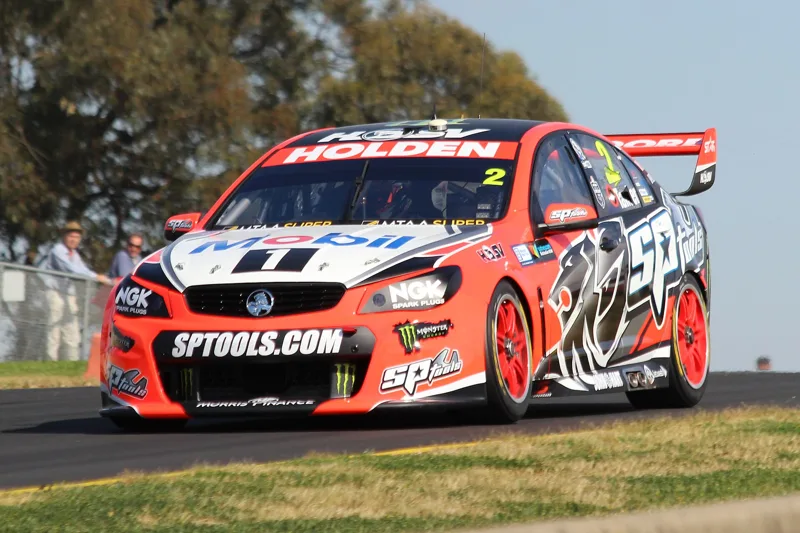
Founded by John and Margaret Kelly, this Melbourne outfit raced Holden Commodores, then Nissan Altimas, then Ford Mustangs, across more than a decade of V8 Supercars. It changed names several times and left the Dunlop Super2 Series at the close of 2025.
Kelly Racing was an Australian motor racing team based in the Melbourne suburb of Braeside. It raced in the V8 Supercars ranks for twelve seasons, and later in the Dunlop Super2 Series, before stepping away at the close of 2025. Along the way it traded under several names, including Kelly Grove Racing and Nissan Motorsport.
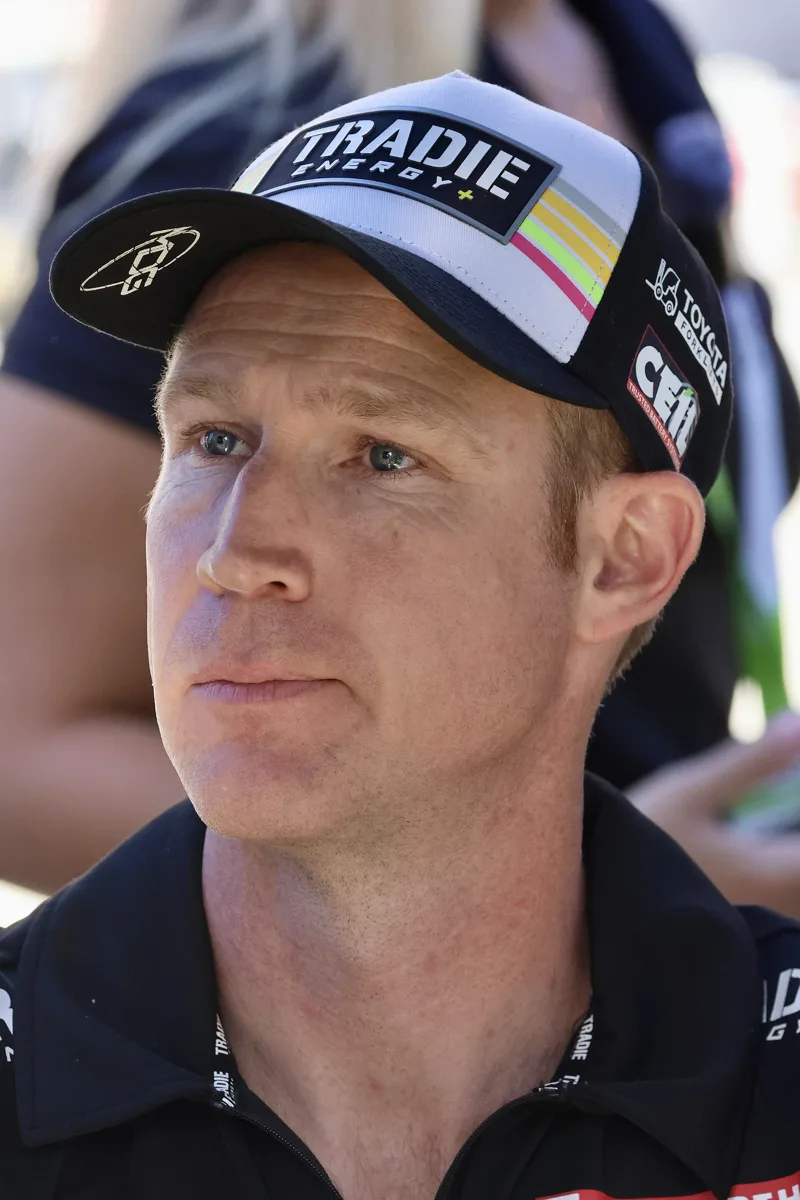
At its core the operation was a family enterprise. Two brothers, Rick and Todd Kelly, drove for it from the first race, and the outfit was assembled from equipment and staff inherited from another squad. It changed manufacturers, partners and branding more than once, and its strongest season arrived in 2011.
How did Kelly Racing get started?
John and Margaret Kelly founded the team after a difficult partnership with Tom Walkinshaw, with whom they had formed the HSV Dealer Team. They used their own Racing Entitlement Contracts to launch the new operation, which left Walkinshaw searching for other entitlements to staff his second team.
Larry Perkins chose to step back from the sport at the end of 2008, as Holden trimmed its backing for Commodore teams. His Perkins Engineering outfit sold much of its hardware, cars included, to the newcomers, and many of its former staff moved across. Perkins kept his own entitlements and became the entrant for the third and fourth cars.
Number 7 went to the Kelly licences because it suited the major sponsor, Jack Daniel's, and its Old Number 7 brand. That backing had arrived from Perkins Engineering, where Todd Kelly had already carried the number.
A team built from a split with a famous rival, sustained by two brothers and a famous whisky brand, and rebuilt more than once.
How did the 2009 season go?
The new squad debuted at Winton Raceway in March 2009, completing the 20-lap shakedown that newly built V8 Supercars had to pass. Both brothers judged the outing a success, and all four cars took part in the official category test day at the venue a few days later.
The opening round was the Clipsal 500. Todd Kelly finished 7th after starting 24th, and Rick Kelly came home 10th from 17th. Dale Wood, who had crashed in practice and set no qualifying time, recovered to 14th from the pit lane. Jack Perkins retired with steering damage from brushing the wall. Only Rick reached the finish of the second race, again in 10th.
Results improved through the year. Rick picked up fourth places at Winton and Hidden Valley, and Mark McNally took over from Wood from the Townsville round onwards. The first podium arrived at the Island 300, the opener of a run of three, with Rick third there and second at Phillip Island, and Todd second in race one at Barbagallo.
Rick finished the championship eighth and Todd 18th. The sister Jack Daniel's entry was sixth in the teams' table, while Kelly Racing finished 13th, bottom of the two-car entries. The brothers had also come fifth in the L&H 500, and at Bathurst they were running second with just a few laps left before a rear wing problem and a late safety car dropped them to eighth.
What happened in 2010?
Jason Bargwanna and Tony Ricciardello arrived for 2010, and the season was a mixed one. Rick Kelly claimed the squad's first pole position at Winton, yet the only podium of the year was his third place in the rain-hit first race of the Sydney 500.
New endurance co-driver rules meant the brothers could not share a car, so Owen Kelly, who was no relation, partnered Rick while Dale Wood drove with Todd. At the Phillip Island 500 Rick and Owen finished fourth, but the Bathurst result was poor, with the best finish a 16th place. For the Gold Coast 600 the team brought in Scott Dixon and Alex Tagliani as international drivers. Rick and Todd again finished eighth and 18th in the standings, and Kelly Racing ended the year 11th among the teams.
Why was 2011 the team's best season?
The 2011 campaign was the most successful the squad had enjoyed. Rick won the Hamilton 400 in wet conditions, his first victory for the team, while Todd finished third in the same race with a broken windscreen wiper. Further wins followed at Hidden Valley in Darwin and at Sandown, which lifted Rick to sixth in the championship.
Todd took 18th for a third straight season, and David Reynolds, back in Supercars, showed well in qualifying, reaching the top ten several times, and twice finished in the top five to end 19th. Greg Murphy placed 13th. At Bathurst that year car number 11 claimed pole, and Murphy and Simonsen finished third, 11 seconds adrift of the winners.
Why did the team switch to Nissan?
The team confirmed in 2012 that it would move to Nissan for 2013, which made it the first team to change manufacturers under the new regulations. Perkins's entitlements were bought in January 2013 for the third and fourth entries, and the operation became Nissan Motorsport, with Michael Caruso and James Moffat recruited to drive those cars.
The Nissan years brought changes of sponsor and driver. Norton ended its title backing after 2014, and for 2015 the race numbers changed, with Caruso moving to #23 and Moffat to #99. Carsales took over the number 7 car from Jack Daniel's, which had cut back its support to the number 15 car. Moffat left at the end of 2015, Dale Wood returned, and Caruso won a race at Hidden Valley in 2016.
The squad also fielded a fifth entry at Bathurst in 2016, a Harvey Norman Supergirls Altima driven by Renee Gracie and Simona de Silvestro, which finished 14th. Simona de Silvestro replaced Wood in 2017, and in 2018 Andre Heimgartner took over from Todd Kelly, who retired.
What did the team do after Nissan left?
With Nissan's sponsorship gone, the team went back to the Kelly Racing name in 2019, still running the Nissan Altima under licence. The same year it entered the new TCR Australia series with four cars, two Opel Astra TCRs badged as Holden Astras and two Subaru WRX STI TCRs.
For 2020 the team cut back to two cars and switched to Ford Mustang GTs. The spare entitlements went to Team 18 and Matt Stone Racing. Rick Kelly stepped away at the end of 2020, and David Reynolds came back to drive for the team.
How did the Grove Group era end the story?
In 2021 the Grove Group took a stake in the team, which was renamed Kelly Grove Racing. Reynolds carried Penrite sponsorship on car #26, a number chosen to honour 1926, the year Penrite was founded. Andre Heimgartner continued in car #7.
In 2022 the Grove Group took full ownership, and the team became Grove Racing. Neither Kelly remained involved. The operation later competed in the Dunlop Super2 Series, where drivers such as Aaron Cameron and Mason Kelly appeared, before withdrawing at the end of 2025.
Looking back, each rename followed a change of backer or owner. The team became Nissan Motorsport when Nissan came in, returned to Kelly Racing when that sponsorship ended, and then took the Grove names once the Grove Group had bought into the operation.