How a Willys-Overland and Studebaker lineage became the South Bend maker of the Humvee, the civilian Hummer and the buses that carried American cities.
AM General is a South Bend, Indiana maker that began as the Studebaker and Jeep defence division and built the Humvee from 1983. It is also known for the civilian Hummer, its 1970s city buses and the JLTV contract awarded in 2023.
Based in South Bend, Indiana, AM General makes heavy vehicles under contract. Its best-known products are the military Humvee and the civilian Hummer, both assembled at Mishawaka. Its story runs from the Willys-Overland Jeep to the Humvee, and from a 1970s city bus programme to the Joint Light Tactical Vehicle contract of 2023.
Where do AM General's roots lie?
The firm's lineage starts with Standard Wheel of Terre Haute, Indiana, which added an Overland Automotive Division in 1903. John North Willys acquired Overland in 1908, when it was based in Indianapolis, and gave it the Willys-Overland name.
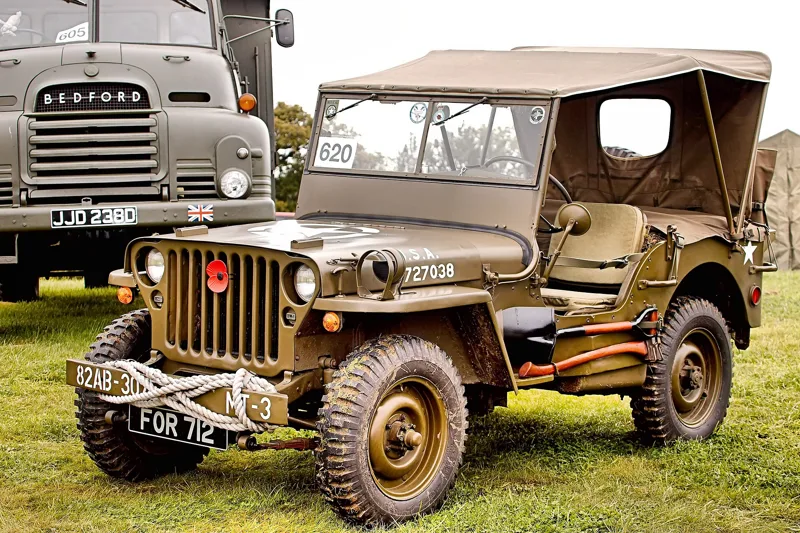
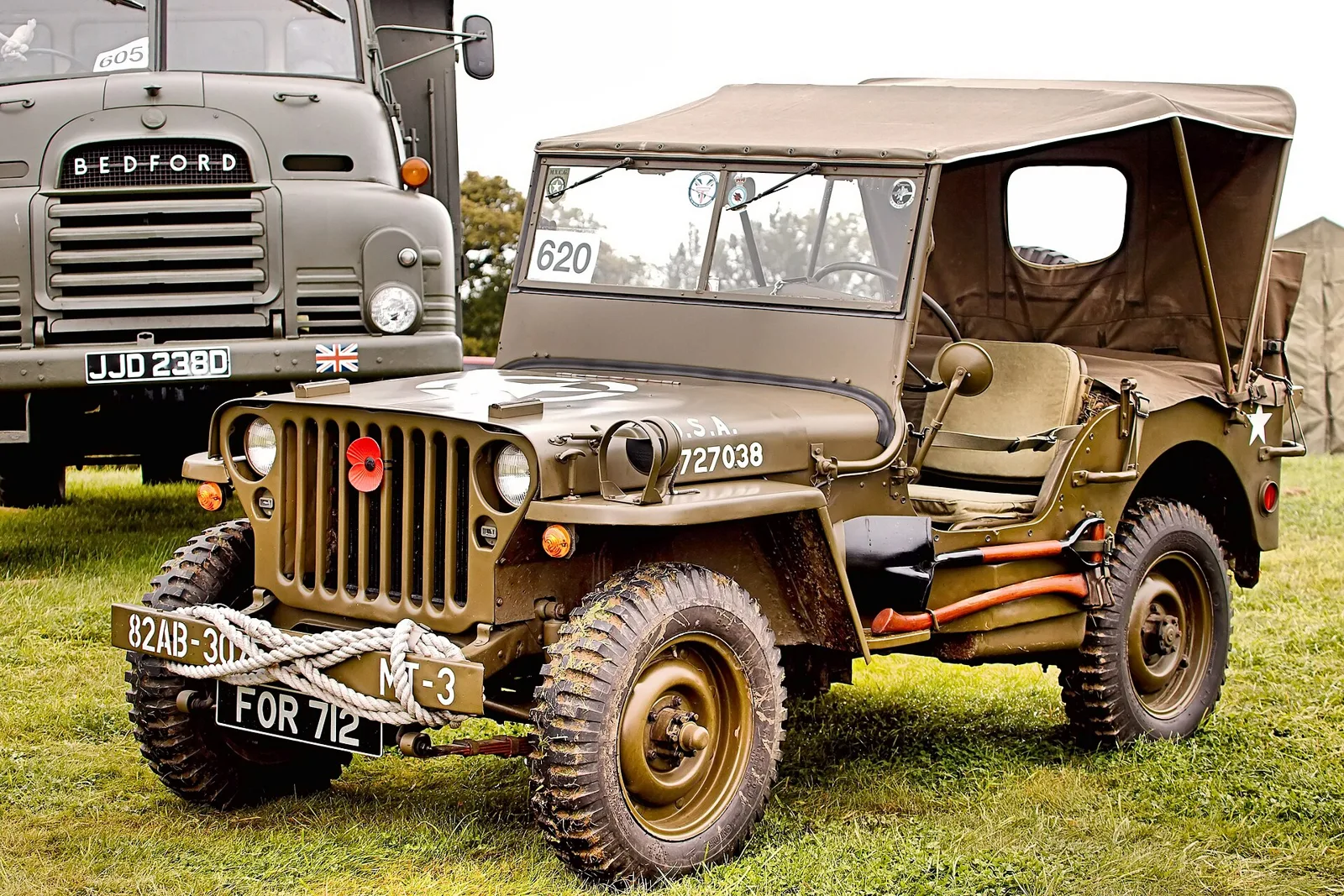
In 1941 the US Army awarded Willys-Overland a contract for the Willys MB, the Jeep used by American infantry in the Second World War. It was pitched as the first American four-wheel-drive tactical utility truck of one-fourth-ton class, a label that stuck.
From Studebaker's South Bend plant to the Humvee, the bus that carried cities and the JLTV contract of 2023.
Who owned the Jeep business after the war?
In 1953 Kaiser Motors bought Willys-Overland, which became Kaiser-Willys Motor Company, and in 1963 it was renamed Kaiser-Jeep Corporation. American Motors Corporation (AMC) bought the Jeep business in 1970, and in July 2020 KPS Capital Partners acquired the company.
How did the South Bend plant come into the story?
In 1964 Kaiser-Jeep bought Studebaker's General Products Division, with its facilities on Chippewa Avenue in South Bend and its defence contracts. Kaiser had just won a US$87 million Army truck contract, and under government pressure it agreed to carry out that work at the South Bend plant it had acquired.
The move created the defence base that later became AM General. Military trucks, contract vehicles and non-commercial vehicles were produced there, and the plant was the core of the division.
How did AMC create AM General?
In 1970 AMC bought the Jeep Corporation from Kaiser, which had decided to leave the car business. A year later AMC made the General Products Division of Jeep a wholly owned subsidiary and renamed it AM General Corporation.
In 1982 American Motors stopped being an independent automaker, when Renault bought a 46.1% interest. Federal rules of the time barred foreign government ownership of defence contractors, and the French state partly owned Renault, which complicated its position.
Who owned AM General through the 1980s and 1990s?
In 1983 LTV Corporation bought AM General and made it a wholly owned subsidiary. Headquarters moved from Detroit to Livonia, Michigan in 1984, and two years later to South Bend, where the main manufacturing was.
In 1992 the Renco Group bought AM General, and in 2002 Renco converted the business into a limited liability company.
Why did the Humvee factory go to Mishawaka?
In 1984 the company put up a plant for HMMWV output on McKinley Highway, number 13200, in Mishawaka, Indiana. The vehicle was the High Mobility Multi-Purpose Wheeled Vehicle, pronounced Humvee.
The Mishawaka plant handled assembly while South Bend housed the wider business. The move to Mishawaka tied the Humvee's production to a plant built for it, rather than to the older Studebaker and Jeep works.
How did the Hummer brand reach the public?
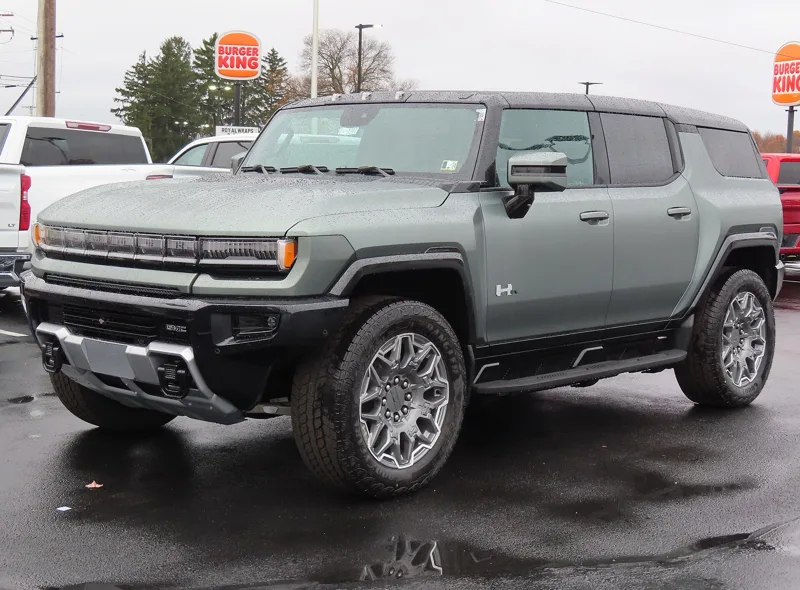
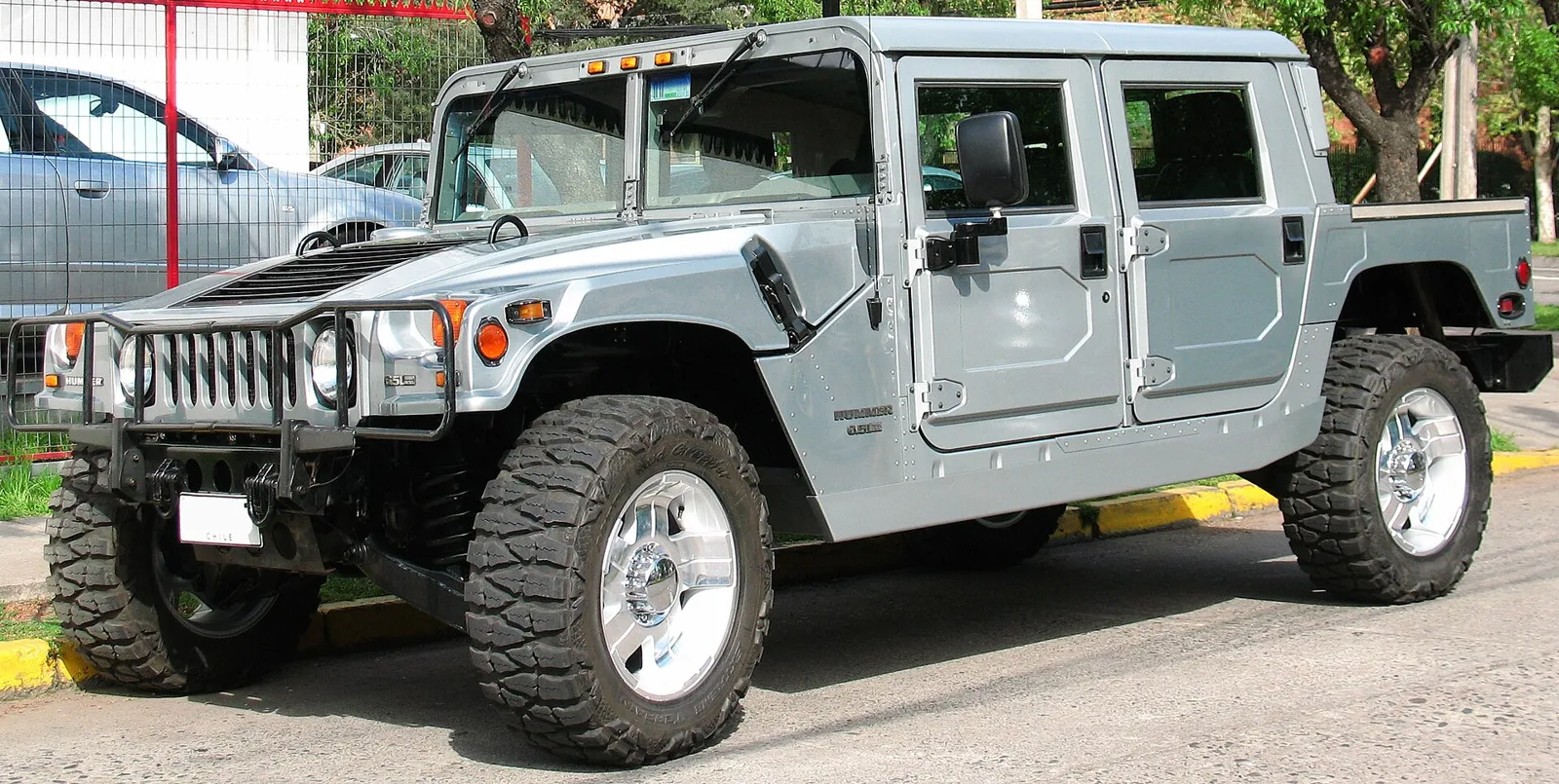
In 1992 AM General began selling the HMMWV to civilian buyers under the Hummer name. In 1999 GM acquired the rights to the brand and kept building the original civilian Hummer, the H1, until June 2006.
The H2 model appeared in 2002. GM designed and marketed it, and AM General built it at Mishawaka until January 2009. AM General did not build the H3.
Did Jeep sue over the Hummer grille?
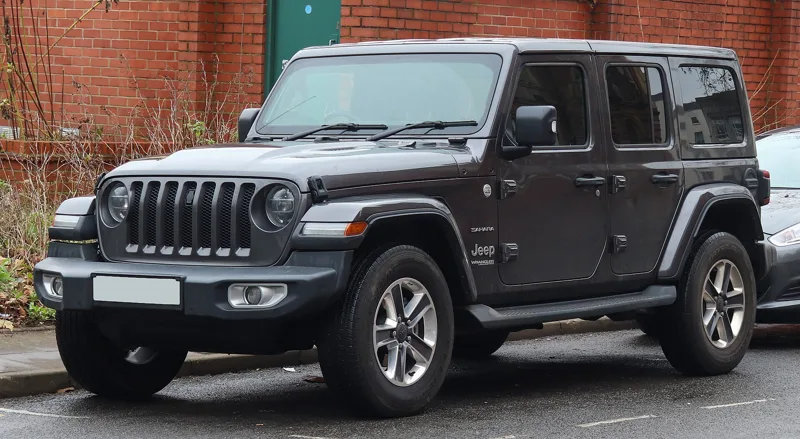
Yes, but the case did not last. DaimlerChrysler, the owner of Jeep, sued in early 2003, arguing that the Hummer grille looked too much like a Jeep's. The suit was dismissed once the shared corporate history of AMC and Jeep was acknowledged.
General Motors sued the boutique maker Avanti Motor Corporation of Cancun, Mexico, after it showed the Studebaker XUV at the 2002 Chicago Auto Show. GM said the vehicle copied the Hummer look. The AM General Hummer line had by then moved back to the Studebaker General Products Division, which still handled military contracts.
How did MacAndrews and Forbes get involved?
In August 2004 it was announced that Ronald Perelman's MacAndrews and Forbes would form a joint venture with Renco Group, AM General's owner, giving Perelman 70% ownership. The deal was reported to have cost close to US$1 billion.
Did AM General build taxis or electric drivetrains?
Yes. In 2008 AM General and the Vehicle Production Group of Troy, Michigan, signed contracts for purpose-built taxis, and production began in October 2011. The first vehicle was presented to Marc Buoniconti, a former Citadel linebacker who was partly paralysed in 1985.
In May 2010 Azure Dynamics picked AM General to put together its electric drivetrain for Ford Transit Connect vans sold in North America, at the Livonia factory. In September 2013 AM General bought the US Department of Energy's secured loan to the Vehicle Production Group, and it formed Mobility Ventures LLC to run the Mobility Vehicle-1 business.
What was the Metropolitan bus?
The Metropolitan was a city transit bus built from 1974 to 1979, and the production run reached 5,431 vehicles. It was made under a 1971 agreement with Flyer Industries of Winnipeg, which licensed its Western Flyer D700 for the US market.
The front end of the D700 was restyled for the Metropolitan, so it was a jointly designed vehicle rather than a straight licence build. Flyer later took the same design changes into its own D800 and E800 models. Lengths were 35 ft (10.7 m) or 40 ft (12.2 m), and the width options were 96 in (2,438 mm) or 102 in (2,591 mm).
Model numbers showed the dimensions, so a 10240 was a 102-inch wide, 40-foot bus. In total 3,571 40-foot diesels and 1,641 35-foot diesels were built.
What were the articulated buses?
Between 1977 and 1979 AM General worked with MAN of Germany on SG 220 articulated buses for US transit systems. MAN made the bodyshells in Germany and shipped them for final assembly in the US. The articulated models came in two sizes: 55 ft (16.8 m) and 60 ft (18.3 m).
Bus production stopped in October 1978 and the last unit was completed in March 1979. The articulated total was just under 400, and Seattle's Metro Transit took 150 of them. MAN later set up its own US factory at Cleveland, North Carolina.
Did AM General make trolleybuses?
Yes, the company's only trolleybuses. In 1979 it built two batches of 40-foot model 10240T vehicles, 110 for Philadelphia's SEPTA system and 109 for Seattle's trolleybus network, which is now run by King County Metro. One Seattle vehicle has been preserved by King County Metro since its retirement in 2003.
What was the Jeep Dispatcher?
The Jeep DJ-5 was a purpose-built Dispatch Jeep, a two-wheel-drive version of the CJ-5. The US Postal Service used them widely in the 1970s and 1980s. They had an automatic transmission but were rudimentary, with a lighter and less durable build than standard Jeeps.
The Postal Service specified right-hand drive so carriers could reach mailboxes without leaving the seat. The vehicle had an enclosed metal cabin with sliding side doors and a sorting table for processing mail on the route.
How did the Humvee come to be?
In 1979 AM General began preliminary design of the M998 HMMWV, a 1.25-ton truck intended as a successor to the M151 and similar light utility vehicles. In 1981 the Army awarded a prototype contract, and development and operational testing followed in 1982 over five months.
In March 1983 AM General won an initial US$1.2 billion contract for 55,000 Humvees, spread over five basic models and 15 configurations delivered across five years. Production began at Mishawaka in the fall of 1984, and the first deliveries came in early 1985.
How many Humvees have been built?
Production passed 72,000 by mid-1991. After 1991 another 20,000 were ordered, which took the total to 100,000 by March 1995. In late 2000 AM General won a contract for 2,962 M998A2 trucks, and the contract has been renewed since. Nearly 250,000 units have now been produced.
Each Humvee has permanent four-wheel drive and independent suspension, with steep approach and departure angles, the ability to climb a 60-percent grade, and 16 inches (406 mm) of ground clearance. In 2015 the fleet in service stood at 140,000, used by the Army, Marine Corps, Air Force and Navy, and more than 50 nations have bought them.
Who replaced the Humvee?
The Joint Light Tactical Vehicle, or JLTV, has been built by Oshkosh Corporation since 2016. AM General lost that US$30-billion, 25-year contract, and it now focuses on Humvee support and on a new ambulance model. Humvees still outnumber JLTVs by three to one.
In February 2023 the US Army granted AM General a multi-billion-dollar production contract for next-generation JLTV A2 vehicles, covering about 20,682 vehicles and 9,883 trailers. Oshkosh Defense had won the initial contract for the programme.
What is the Mobile Tactical Cannon project?
AM General plans to take part in the US Army's Mobile Tactical Cannon programme with India's Kalyani Strategic Systems, a subsidiary of Bharat Forge, which developed the MArG-52 gun. In February 2025 the two signed a letter of intent for artillery cannons in 105 mm and 155 mm calibre, and on 18 June 2026 the pair formalised their ties at the Eurosatory show.
The MArG-52 is said to be combat-relevant, with delivery planned by 2027 once chosen. It has a claimed maximum range of 40 km (25 mi). In August 2026 the Army instead chose Hanwha Defense USA to supply six prototypes of a wheeled 155 mm K9 howitzer, with an option for 12 more.
Key dates in the AM General story
| Year | Event |
|---|---|
| 1908 | John North Willys renames Overland as Willys-Overland Motors |
| 1941 | Army contract for the Willys MB Jeep |
| 1964 | Kaiser-Jeep buys Studebaker's General Products Division in South Bend |
| 1971 | AMC renames the division AM General Corporation |
| 1974 | Metropolitan city bus production begins |
| 1983 | Initial US$1.2 billion Humvee contract in March |
| 1984 | Mishawaka factory built and production starts in the fall |
| 1992 | Humvee marketed to civilians under the Hummer name |
| 2002 | Hummer H2 goes on sale, built by AM General |
| 2011 | Purpose-built taxi production begins in October |
| 2015 | Mercedes-Benz R-Class production starts at Mishawaka |
| 2020 | KPS Capital Partners acquires the company in July |
| 2023 | JLTV A2 production contract worth several billion dollars |