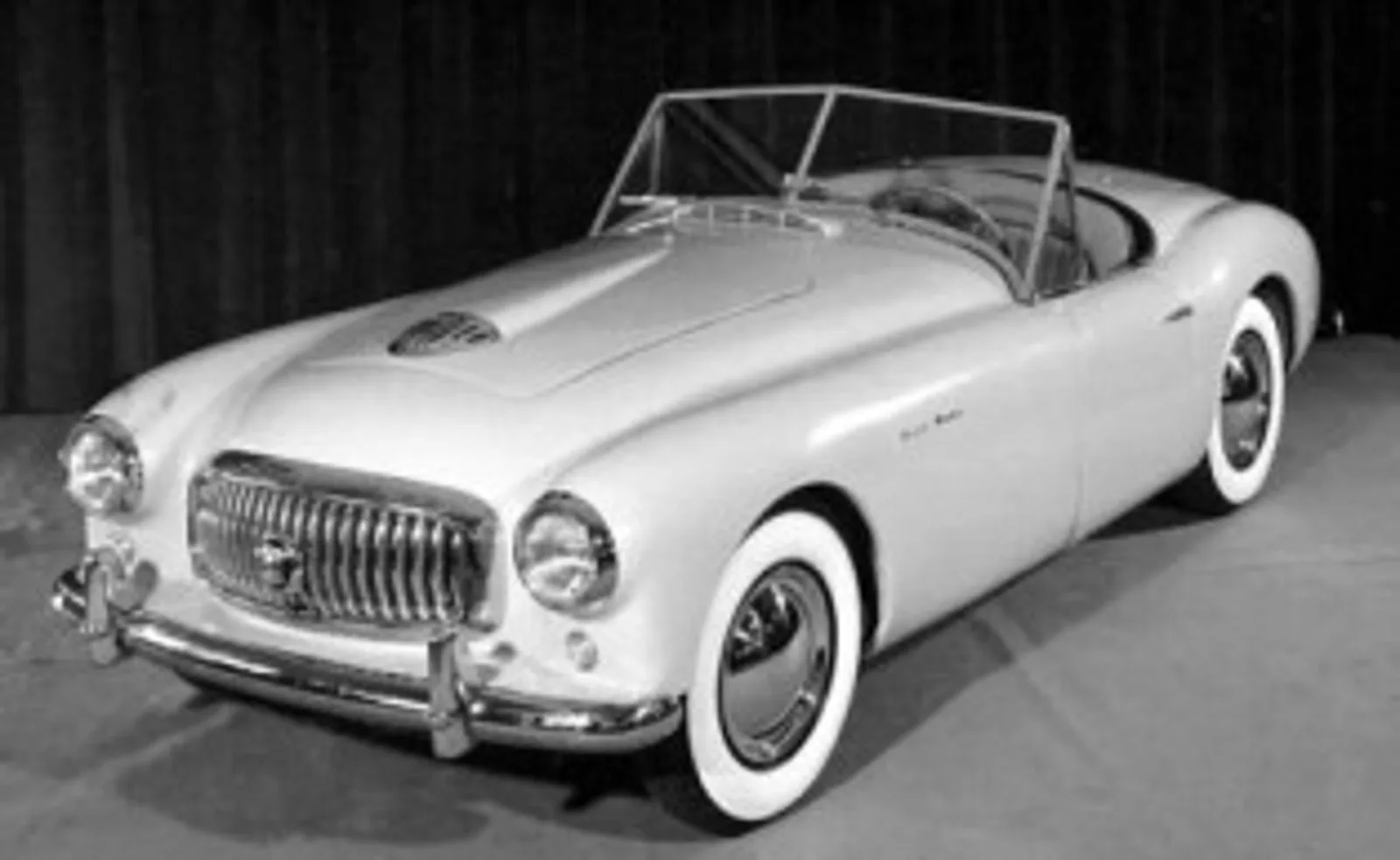
A grand tourer built from an Ambassador engine, a Healey chassis and a Pinin Farina body, with a Le Mans podium in 1952.
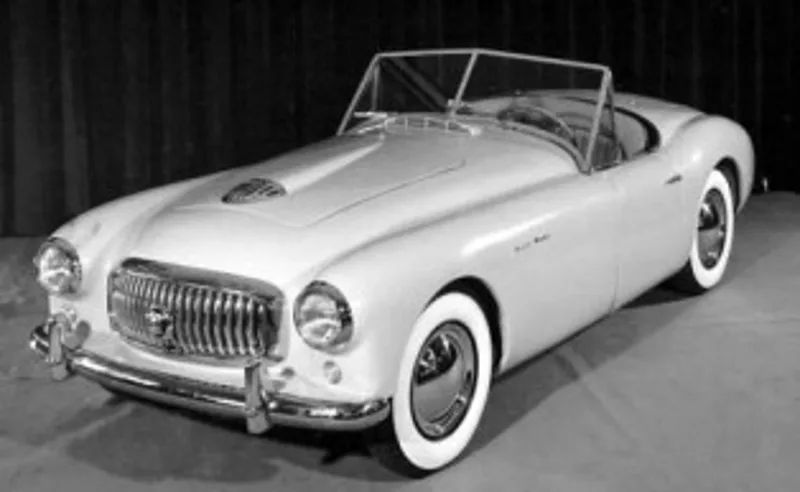
The Nash-Healey was a luxury sports car from Nash-Kelvinator and the Donald Healey Motor Company, built from 1951 to 1954. It used a Nash Ambassador engine and drivetrain on a Healey chassis, and Pinin Farina restyled it in 1952, finishing third overall at Le Mans that year.
The Nash-Healey was a three-seat grand tourer that American and British engineers built together between 1951 and 1954. Nash-Kelvinator sold it as a halo model for its Nash range, while the chassis and early bodies came from the Donald Healey Motor Company.
What was the Nash-Healey?
Built from 1951 to 1954, this luxury sports car drew its engine and drivetrain from Nash and its chassis from Donald Healey. It was a joint venture between Nash-Kelvinator and the Healey company, marketed in North America as a halo model for Nash Motors.
Healey designed the aluminium body, but the work was outsourced to Panelcraft Sheet Metal of Birmingham. Completed cars were shipped to the United States and sold through the Nash dealer network,.
One year after its introduction, Pininfarina restyled the car and moved final assembly to Italy. Some writers describe it as the first sports car from a major American automaker since the Great Depression.
A Nash engine in a Healey chassis, later clothed by Pinin Farina, the car finished third at Le Mans in 1952.
How did Nash and Healey come together?
In December 1949, Donald Healey crossed the Atlantic hoping to buy Cadillac V8 engines from General Motors for his Healey Silverstone club racer. He met George W. Mason, president of Nash-Kelvinator, aboard ship, and Mason told him to get in touch if talks failed. When GM declined, citing defence commitments, Healey did.
Nash cleared Healey's bank debt of 50,000 pounds, with the balance to be settled in cars that Healey assembled. A prototype was previewed at the 1950 Paris Motor Show, and its fate is unknown. The production model followed in 1951.
When did the Nash-Healey go on sale?
The car first appeared publicly in February 1951 at Chicago, and a Miami show followed later that same month. The full name of the production car was the Nash-Healey Series 25, and it was built in Britain for its first year before moving to Italy.
Many people credit it as the first post-war sports car offered by a big American carmaker, arriving two years ahead of the Chevrolet Corvette. That label leaves out limited-run cars such as the Kurtis-Kraft and Muntz Jet, along with the small Crosley roadsters.
Chrysler later bought a Nash-Healey from a Detroit dealership, took it apart and wrote an analysis for its executives.
What engine and chassis did it use?
The Nash-Healey used the Ambassador's 234.8 cu in (3.85 L) inline six with a three-speed manual and Borg-Warner overdrive. Healey fitted an aluminium head and twin SU carburettors to lift output from 112 hp (84 kW; 114 PS) to 125 hp (93 kW; 127 PS).
Under the skin sat a widened Healey Silverstone box-section frame, with independent front suspension on coil springs, trailing links and an anti-roll bar. At the rear, a Nash torque tube and live axle took the place of the Silverstone's Riley parts, and a Panhard rod located the axle.
Drum brakes were fitted all round, with steel wheels, chrome hubcaps and 4-ply 6.40 x 15-inch whitewall tyres. The cabin had leather seats, foam cushioning and a cigarette lighter, while the steering wheel could be adjusted.
How did Pininfarina restyle the car for 1952?
For 1952 Nash asked Pinin Farina to revise the body, giving the car a new grille with inboard headlights, fender character lines ending in small tailfins and a curved windshield in place of a two-piece flat one. Pininfarina built the steel bodies in Turin, with aluminium used for the hood, boot lid and dashboard.
The restyle was meant to make the car look more like the rest of Nash's range. The grille idea travelled further than the car, because the Ambassador and Statesman sedans borrowed the look for 1955.
The engine also grew for 1952. It grew to 252 cu in (4.1 L) and produced 140 hp (104 kW; 142 PS) with twin Carter carburettors.
How much did the Nash-Healey cost?
The 1951 car was listed at US$3,767 free on board at New York, a price many considered high. By 1953 the sticker had reached US$5,908, close to double the US$3,513 asked for a Chevrolet Corvette. In 1954 Nash cut the port-of-entry price to 5,128 dollars.
Shipping was the main reason for the cost. Engines and drivetrains went from Kenosha, Wisconsin, to England, the rolling chassis then went to Italy for bodywork, and the finished cars were exported back to the United States.
Where was the Nash-Healey built?
All 1951 cars were built in Britain, with bodies made at Panelcraft Sheet Metal and final assembly at Healey's factory in Warwick. The 1952 to 1954 cars came from Italy, built by Pinin Farina.
The registry holds 520 entries, among them prototypes and race cars. The 1954 cars were the last of the line, and 62 oval-window coupes were built that year before the car was dropped.
How did the Nash-Healey race?
The race programme used four lightweight endurance cars, rated at 200 hp (149 kW; 203 PS) in their tuned form. The best result came at the 1952 Le Mans, where the car finished third overall, took first in class and won the Motor Gold Challenge Cup.
Donald Healey built the racers from the same Ambassador engines and drivelines as the road cars, but with aluminium cylinder heads, special manifolds and twin SU carburettors. The racing bodies were spartan and light, and three open cars and one coupe were built.
How did the cars fare at Le Mans in 1950 and 1951?
The prototype debuted at Le Mans in 1950 with Tony Rolt and Duncan Hamilton, finishing fourth overall among 29 finishers from 66 starters. That result secured Healey's deal with Nash for a short run of road cars.
Roger Menadue, who led Healey's experimental work, added slots to the brake backplates and an exterior lever to the adjuster. Brakes could then be adjusted during stops without raising the car on a jack, saving as much as half an hour per stop.
In 1951 Rolt and Hamilton ended up fourth in class and sixth overall. They also finished in front of two Ferraris and a further Aston Martin, while a Jaguar, Talbot-Lagos and Aston Martins were ahead.
What was the 1952 Le Mans result?
In 1952 Leslie Johnson and Tommy Wisdom finished third overall, behind two works Mercedes-Benz 300SLs. They also took first in class, ahead of a Ferrari, and placed second in the Rudge-Whitworth Cup, which rewards the best two-year record.
The drivers found the car nimbler through the corners than its more exotic rivals. Fuel economy was 13 mpg-US, which is 18 L/100 km or 16 mpg-imp, and the engine used no oil or water over the full 24 hours.
The car went together in about two weeks, and Menadue with his assistant shaped the body by eye in under a week, with no drawings.
What happened in the 1952 Mille Miglia and the 1953 Le Mans?
Leslie Johnson raced the car in the 1952 Mille Miglia with Bill McKenzie as passenger, and they finished seventh overall. In 1953 the factory paired Johnson with Bert Hadley, and the pair finished 11th, 39 laps behind the winning Jaguar.
Their average of 92.45 mph (148.78 km/h) beat the previous year's pace. They also finished ahead of the two new Austin-Healey 100s entered by Donald Healey, which ended the factory's lightweight racing programme.
Why did production end in 1954?
Production ceased in August 1954, a few months after Nash-Kelvinator became a division of American Motors on 1 May 1954. Nash had limited resources for a niche car, and sales had been low for several years.
Nash pushed the 1954 launch back to 3 June and dropped the convertible. Healey had moved on to the Austin-Healey 100, and the Nash-Healey was left behind. Unsold 1954 cars that remained were sold as 1955 models.
What successors were planned?
Two designs tried to follow the Nash-Healey. The Wisp, sketched in 1953 by Nash designer Ed Anderson, was never funded. The 1956 Palm Beach concept, drawn by Pinin Farina, was commissioned by Mason as a possible successor and was never put into production.
The Wisp was a low car with a tapering tail and side coves, which foreshadowed the Corvette. Anderson asked Pinin Farina to quote for a single copy, but he did not go ahead with the project.
What was the Alvis-Healey?
In Britain the car was also sold by Healey as the Healey Sports Convertible, using the original Nash-Healey bodywork. A later variant with a 3.0 L Alvis engine became known as the Alvis-Healey, and about 25 examples were built.
Under the bonnet sat an Alvis TB 21 engine, a 3.0 L (183 cu in) six, with two SU carburettors. It also swapped the torque tube rear drive for a rigid Salisbury axle, which was located by trailing links and sprung on coil springs.
Which films and shows featured the Nash-Healey?
Dick Powell's roadster turned up in four episodes of Adventures of Superman, where George Reeves drove it as Clark Kent, and another roadster appeared in the 1954 film Sabrina. Walt Disney also owned two of the cars, and the teal coupe went to his studio in 1954.
Nash also used golf to sell cars, sponsoring more than 20 major tournaments in 1953. Sam Snead appeared with a Nash-Healey roadster on the June 1953 cover of Nash News.
Nash-Healey specifications at a glance
| Specification | Detail |
|---|---|
| Body | Luxury grand tourer with three seats |
| Production | 1951 to 1954 |
| Engine | 234.8 cu in (3.85 L) Ambassador inline six, 125 hp (93 kW; 127 PS), with twin SU carburettors |
| Engine from 1952 | 252 cu in (4.1 L), 140 hp (104 kW; 142 PS) |
| Transmission | Three-speed manual with Borg-Warner overdrive |
| Build locations | 1951 in Britain; 1952 to 1954 in Italy by Pinin Farina |
| Prices | US$3,767 (1951); US$5,908 sticker (1953); 5,128 dollars port of entry (1954) |
| Registry | 520 entries, including prototypes and race vehicles |
| Best Le Mans result | Third overall in 1952 |