Walker and Whitehead took the C-Type to a nine-lap win in the rain, after Moss's lead ended with a broken connecting rod just before midnight.
Peter Walker and Peter Whitehead won the 1951 race in a works Jaguar C-Type, the first outright Le Mans victory for the marque. They finished nine laps ahead of the Talbot-Lago of Mairesse and Meyrat in wet conditions, after Moss's lead ended with a broken connecting rod.
Peter Walker and Peter Whitehead gave Jaguar its first outright Le Mans victory in 1951, winning by nine laps in a C-Type that had been designed in secret for the race. The 19th Grand Prix of Endurance was marred early by the death of the French driver Jean Lariviere on lap 6, and it was run in rain that lasted through most of the night.
Why was the 1951 race a turning point?
The race brought Jaguar's and Cunningham's first purpose-built racers into direct competition with Ferrari. Porsche and Lancia made their first appearances, and the sports prototypes began to overtake the luxury touring cars that had dominated Le Mans. The contest between the manufacturers that followed became one of the defining features of the sport.
The rules changed little. The CSI and the Automobile Club de l'Ouest made no significant alterations, except to create a reserve list to back up the basic 60 entrants. Delahaye made its final Le Mans entry, and the Talbot-Lago was about to be overwhelmed by the new sports cars.
Jaguar had the pace to win, and the wet night gave the team the time to do it.
What did the Jaguar C-Type bring to the race?
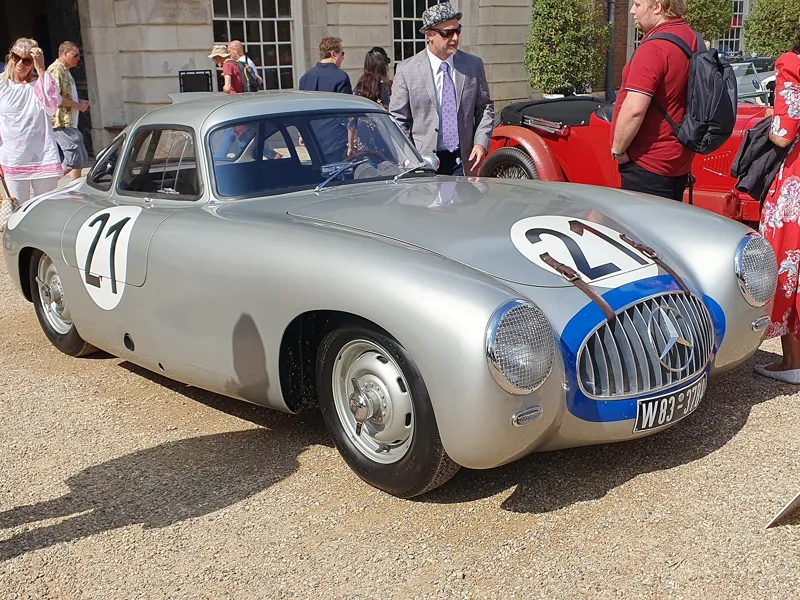
The C-Type, known as the XK-120C, was designed in complete secrecy for Le Mans. It was 450 kg lighter than its predecessor, and its 3.4L engine produced 205 bhp and a top speed of 160 mph (257 km/h). Team manager Lofty England paired the three works cars with a mix of experienced drivers and debutants.
Stirling Moss made his Le Mans debut in one of the works Jaguars. Clemente Biondetti, a multiple Mille Miglia winner, drove another, and Fairman, Whitehead and Johnson made up the rest of the squad. The Jaguars immediately showed their pace in practice, although Peter Walker had to take off his tinted glasses at night before he could set an unofficial lap of 4:46.
The official fastest practice lap went to Phil Walters, who set 5:03 in the Cunningham C-2R. The later practice sessions were compromised by very wet weather, and Rudolf Sauerwein crashed and rolled his new Porsche, almost collecting Moss's Jaguar and the Aston Martin behind it.
The biggest single-marque entry was nine Ferraris, including four 340 America models with a 4.1L V12 producing 230 bhp. Three 212 Export cars with 2.4L engines and two of the older 166MM models completed the Ferrari effort.
The Aurelia B20 grew out of Vittorio Jano's B10, the first production car with a V6 engine. The Scuderia Ambrosiana of Milan entered it under Count Giovanni Lurani, and it became the first car at Le Mans to run on radial tyres. It covered nearly 2000 miles on a single set of tyres and finished 12th before being driven back to Turin.
Porsche was the first German car in the post-war Le Mans races. Race director Charles Faroux had approached the company, and five 356 SL cars were built, with a 1086cc engine producing only 46bhp. Two were wrecked in road testing, but two made the entry list, and they were still capable of about 100mph.
How did the race start, and what happened on lap 6?
The race started wet but was dry for the start. Tom Cole's Allard was first away, but by the end of the first lap it was the Talbot of Gonzalez ahead of Moss and Cole. After three laps the young Moss had taken the lead.
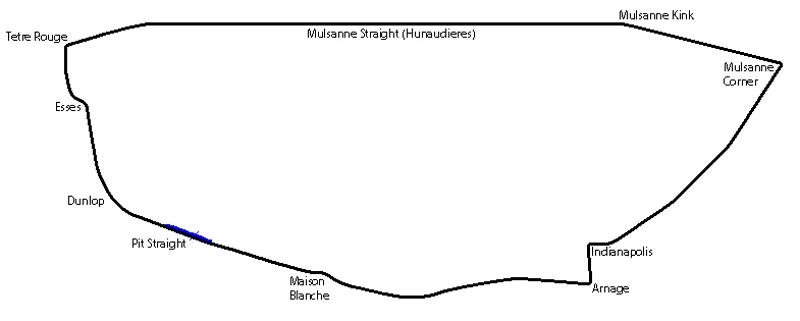
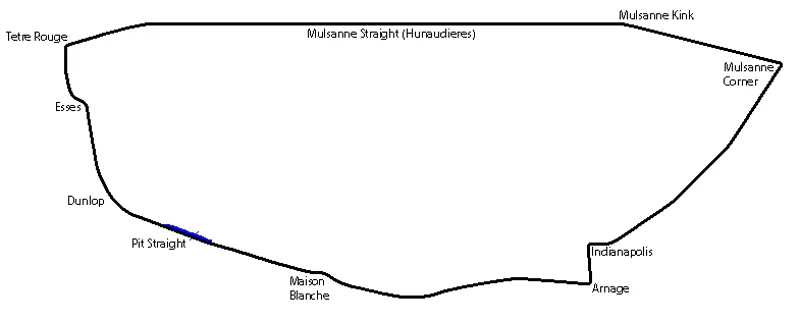
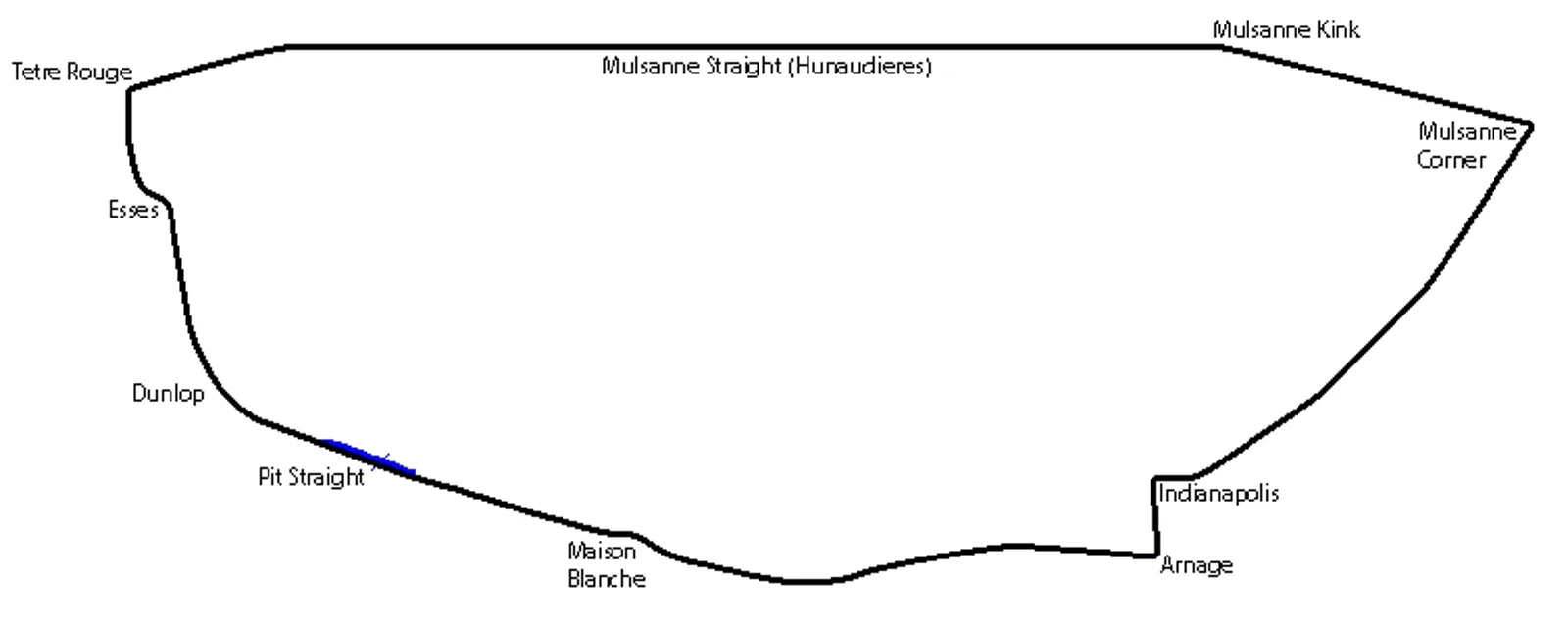
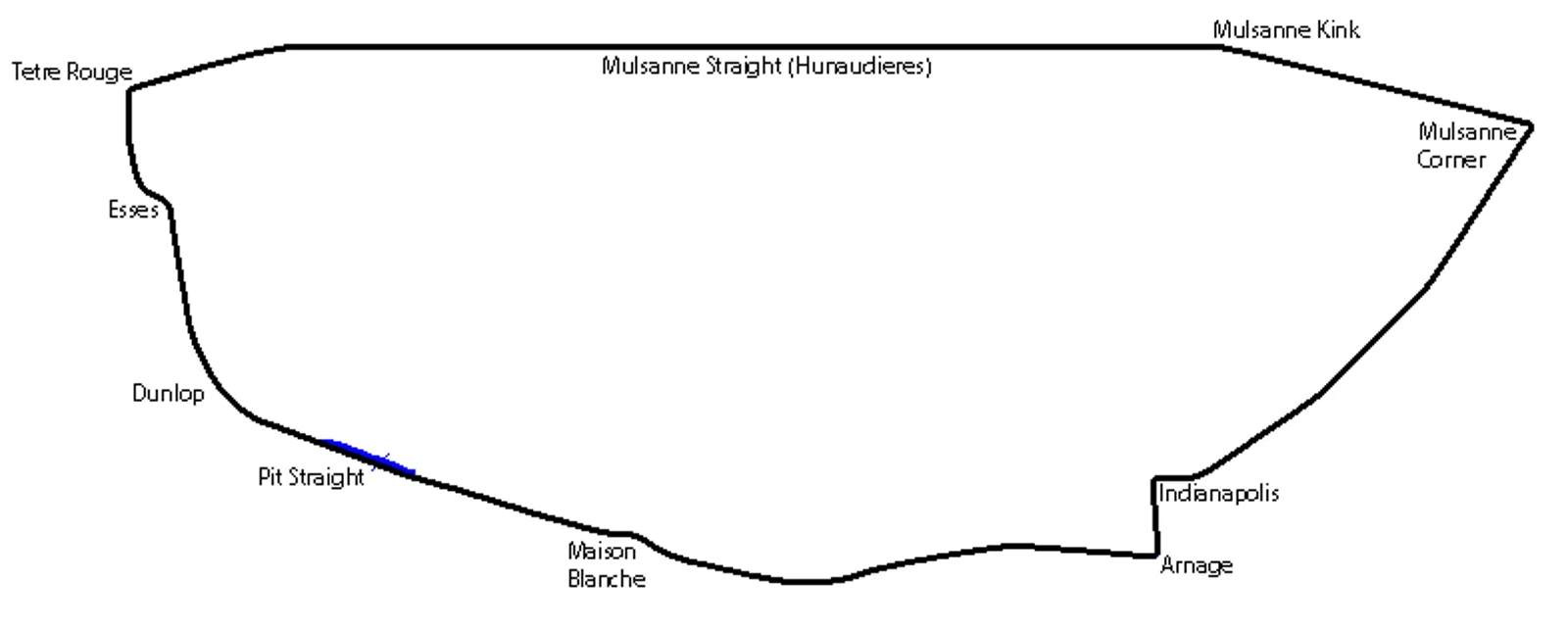
Tragedy struck on lap 6. Jean Lariviere crashed his Ferrari 212 heavily into the sandbank at Tertre Rouge and was airborne for a moment. He was killed instantly when he struck a wire fence.
The race continued, and Moss pressed on. He repeatedly lowered Rosier's 1950 lap record, eventually by more than six seconds. By the end of the second hour he had put a lap on the whole field, and at the four-hour mark he led Fairman by more than two laps, with the works Jaguars running 1-2-3.
How did the rain change the race?
Soon after the four-hour mark, the rain returned and stayed for the rest of the night. Both Allards went off the track, and repairing the damage put them well down the order. Chaboud's Talbot was out with radiator trouble, and Biondetti's Jaguar stopped with a loss of oil pressure.
The pace was taking its toll on the leaders. Moss's car had held the lead for more than seven hours when, just before midnight, a connecting rod broke, the result of a major loss of oil pressure. Rosier was then stopped by a split oil tank, which left the remaining works Jaguar in front.
Walker and Whitehead inherited the lead, a lap ahead of Gonzalez and Marimon's Talbot. The Britons extended their advantage to seven laps through the night, matching the Talbot's pace until it retired with a blown head gasket at the halfway mark.
Why did the Jaguars win when the favourites fell?
The Jaguars had the pace and the reliability to stay ahead when the leaders retired. Moss's connecting rod failed just before midnight, and the remaining works car of Walker and Whitehead inherited the lead and held it to the finish. The margin reached seven laps during the night.
The Cunninghams suffered in the greasy conditions. Huntoon slid off at Indianapolis, and Rand spun into the bank at the Dunlop curve, though he missed the other cars. The third Cunningham, of Fitch and Walters, had been in the top ten all race and rose to second when the Talbot retired.
Eddie Hall's Ferrari had been running as high as third during the night, but a flat battery stopped it in the morning and it would not restart. The remaining Gordinis were making good progress with a nine-lap lead in the junior classes when both retired late in the night with more engine problems.
How did the final hours unfold?
By dawn the Jaguar had an eight-lap lead over the Cunningham, the Macklin and Thompson Aston Martin and the Rolt and Hamilton Nash-Healey. The Talbots of Mairesse and Meyrat and Bouillin and Marchand followed, with an Aston Martin in between.
Around midday the Cunningham pulled into the pits with engine trouble and crawled around for the rest of the race. Mairesse and Meyrat made their early-morning charge past the Nash-Healey, and by about 11am they had also overtaken the Aston Martin for third, which turned into second when the Cunningham retired.
Meanwhile the Jowett, the sole survivor of the S1500 class, took more than an hour to overtake the leading Gordini on distance. It eventually cruised home to finish 21st.
Who finished the 1951 race, and in what order?
Walker and Whitehead won in the Jaguar C-Type with a nine-lap margin over the Talbot. Mairesse and Meyrat finished second, and the debutants Pierre Bouillin, racing as Levegh, and Rene Marchand finished fourth in the 1949 Talbot that Mairesse had raced.
| Place | Entry | Result |
|---|---|---|
| 1st | Jaguar C-Type, Walker and Whitehead | Nine laps ahead of the Talbot |
| 2nd | Talbot-Lago, Mairesse and Meyrat | Covered two more laps than the 1950 winner |
| 3rd | Aston Martin DB2, works car | Less than a lap behind the Talbot |
| 4th | Talbot, Bouillin and Marchand | Debutants, in the 1949 Talbot |
| 5th and 7th | Aston Martin DB2, works cars | Three works Aston Martins finished third, fifth and seventh |
| 6th | Nash-Healey, Rolt and Hamilton | Reliable run in a heavier car |
What did Jaguar's win mean for the sport?
The win paid off commercially as well. It was later estimated that the Le Mans win generated extra sales of US$12 million in the USA alone. The popular American saying of the time, win on Sunday and sell on Monday, was particularly apt for the company.
The Gordini failure, by contrast, was damaging. The negative press led Simca to withdraw its engine supply to the team, and the Porsche of Auguste Veuillet, the Paris Porsche agent, won its class at its first attempt. The Index of Performance and the Biennial Cup both went to Hernard and de Montremy in the Monopole.
Not every car finished the race. The Cunningham of Fitch and the second Allard could not finish their final laps in the minimum time, and the Bentley missed the minimum distance by four miles, half a lap. The Coupe des Dames went to Yvonne Simon and Betty Haig in a Ferrari 166MM.