A privately entered Talbot-Lago, driven by a father and son, won the 1950 race, and all three of the marque's cars finished.
The 1950 race went to the Rosiers, a father and son, in a privately entered Talbot-Lago T26. Mairesse and Meyrat took second in the sister car, and the event drew a record 112 entries to the ACO. The winning distance was 3,465.12 km.
Louis Rosier and his son Jean-Louis won the 1950 24 Hours of Le Mans in a privately entered Talbot-Lago T26, covering 3,465.12 km (2,153.12 miles). It was the 18th Grand Prix of Endurance, run on 24 and 25 June 1950, and all three Talbots finished, with the marque taking first and second places.
Why was 1950 a return to form for Le Mans?
The race came in the post-war revival, after the FIA had published its new rules for single-seater racing and launched the World Championship of Drivers. The ACO supplied 80-octane gasoline as standard, which removed the need for the hybrid ternary fuel that had caused problems the year before.
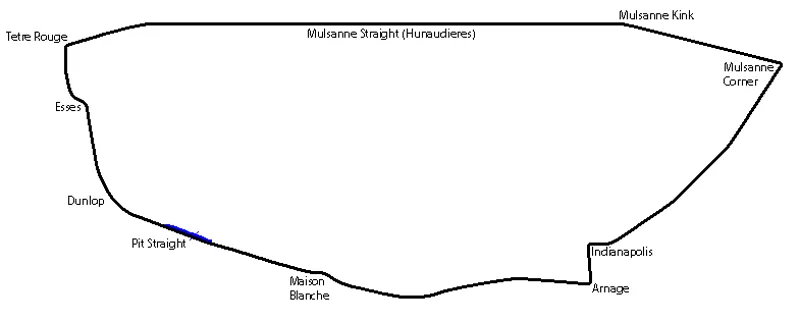
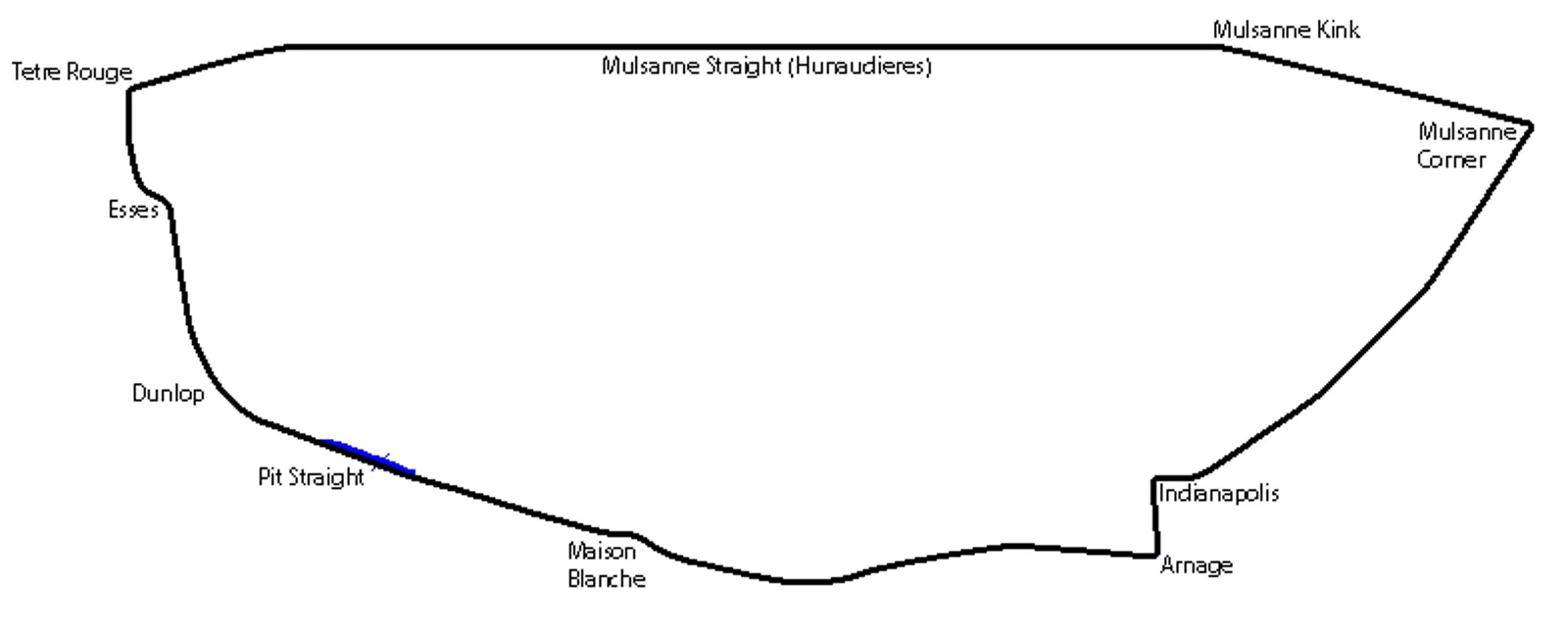
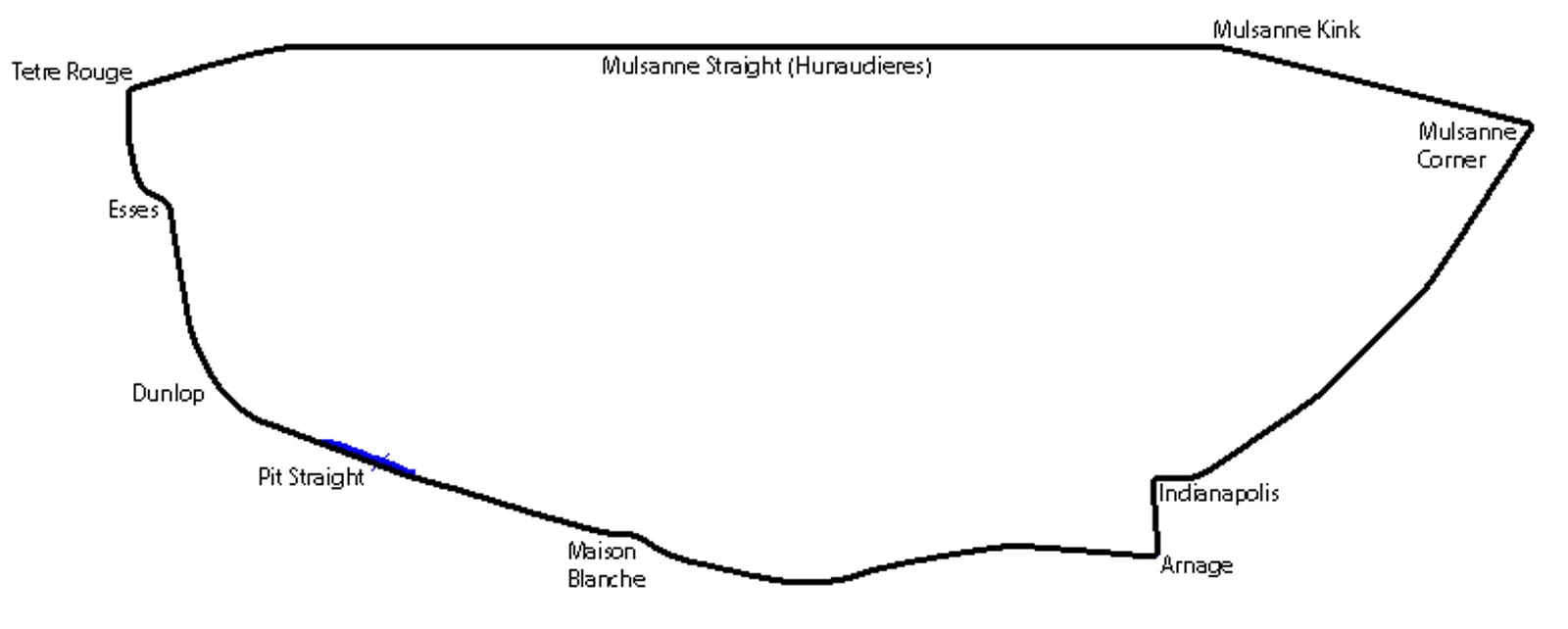
Appendix C of the regulations covered two-seater sports car racing and gave a definition for racing prototypes. The ACO kept the existing engine-capacity categories but added a top class for engines over 5.0L up to 8.0L. The track was widened, except on the run from Mulsanne to Indianapolis, and the surface was completed. The Dunlop bridge was rebuilt as a footbridge just after the first corner.
A privately entered Talbot-Lago won the 1950 race, and all three of the marque's cars finished.
How big was the field?
A record 112 entries were received, and the ACO accepted 60 for the start, another record. There were 24 entries in the S3000, S5000 and S8000 classes, and the field brought together Jaguar's debut, a works Aston Martin team and the Ferraris of Luigi Chinetti, the previous year's winner.
The biggest car carried number 1, a Manufacture d'armes de Paris MAP Diesel. It was the first car at Le Mans to carry its engine amidships, a supercharged 4.9L unit driven by the veteran Pierre Veyron, who had won in 1939. The Americans returned for the first time in 21 years, with two 5.4L Cadillac-engined cars from Briggs Cunningham.
The French nicknamed the two American cars Petit Petaud and Le Monstre. Briggs saw the joke and had both names written on the bonnets beside the American flags. One car was a standard Series 61 sedan, and the other had an aerodynamic bodyshell refined in the Grumman Aircraft wind tunnel.
Jaguar made its debut with three factory-prepared 3.4L XK120s, which were released to selected private entrants to test the waters. Chinetti's two 195 S cars had a 2.4L V12, and Fangio and Gonzalez made their Le Mans debuts in Gordini cars alongside Trintignant, Manzon and Behra.
The old Bentley saloon returned, along with an even older 1934 car. Aston Martin's three 2.6L DB2 works entries were now run by John Wyer. Charles Pozzi ran two 175 S Delahayes for his Ecurie Lutetia team, the Delettrez brothers brought back their diesel special, and Henri Louveau returned in an old Delage D6.
How did the first hours unfold?
In practice Raymond Sommer's Ferrari was the fastest, at five minutes exactly, ahead of the Talbot-Lagos. Auguste Veuillet crashed and rolled his Delahaye, and the car was ready for the race after overnight repairs, although it then refused to start with a flat battery.
The cars lined up by engine capacity, and Tom Cole's Allard was first away. Fangio's Gordini, which was misfiring, was the last car away. Sommer picked his way past about a dozen cars and was in front by the first lap's end. Cunningham's Le Monstre slid into the Mulsanne sandbank on lap 2, and it took 15 minutes to dig it out.
By the fifth lap Rosier had his Talbot in third and Chinetti had the other big Ferrari up to fifth. Sommer had been putting in very fast laps, averaging just under 99 mph, but he lost a cylinder and was forced into the pits with electrical trouble from a dislodged alternator.
How did the Talbots take control?
Rosier broke Sommer's new lap record in the cooler air of the evening, averaging over 100 mph on the first race lap at Le Mans. He took the lead in the third hour and kept pushing, and at the end of four hours it was Rosier, Chinetti, Sommer and Meyrat, a Talbot, Ferrari, Ferrari and Talbot in that order.
Through the night Sommer's car retired after midnight with no lights. A Pozzi Delahaye caught fire while refuelling in front of the second-placed Mairesse Talbot, and Flahault drove it out without even checking for damage. The Allard's three-speed gearbox also lost its two lowest gears and was jammed into third.
At the halfway point after 12 hours, the two Talbots of Rosier and Meyrat with Mairesse were six laps apart. Chinetti's Ferrari had retired by mid-morning with a failing differential, and the Ferrari challenge was over.
What happened in the morning?
At 5am Rosier pulled into the pits with a 7-lap lead and personally replaced a rocker shaft. His son took the car out for two laps, and then Louis got back in and drove on for the rest of the race. While Rosier was in the pits, his team-mate's Talbot led for three hours.
Rosier was not going to let the lead slip. Before 9am he had overtaken both cars and was back in front. He had to stop later in the morning after striking an owl, which smashed the tiny windscreen and gave him a black eye.
At 8am Jean Lucas crashed and rolled Lord Selsdon's Ferrari, which took the last of the prancing horses out of the race. The Nash-Healey of Rolt and Hamilton was punted off the track by Louveau's Delage, and 45 minutes of repairs dropped it a position. Pozzi's Delahaye, which had run as high as fifth through the night, was later disqualified after its radiator cap blew, which the stewards ruled an illegal breakage of the security seals.
Who won the 1950 race, and by how much?
Louis Rosier won, with Guy Mairesse and Pierre Meyrat second in the other Talbot-Lago and the Allard third. All three Talbots finished, and the first five finishers beat the 1939 distance record. It was one of the greatest days in the marque's history.
Rosier's fastest lap was 4:53.5, or 165.49 km/h (102.83 mph). The fastest practice lap had belonged to Sommer at 5:00, but the race was decided on endurance and reliability rather than on a single lap.
| Place | Entry | Result |
|---|---|---|
| 1st | Talbot-Lago T26, Louis and Jean-Louis Rosier | 3,465.12 km (2,153.12 miles) |
| 2nd | Talbot-Lago T26, Mairesse and Meyrat | Second on distance |
| 3rd | Allard, co-driven by Sydney Allard, with a 5.4L Cadillac engine | Third on distance |
| 4th | Nash-Healey, Rolt and Hamilton | Fourth, ahead of two Aston Martins |
| 5th and 6th | Aston Martin DB2, John Wyer's works team | Ran like clockwork |
| 7th | Delage, Louveau | Seventh overall |
What became of the Ferrari challenge?
All five Ferraris retired, as did all nine Simca-engined cars, including six works Gordinis. Sommer's car had gone out after midnight with its lights failing. The Ferraris had been expected to challenge the Talbots, but electrical and mechanical faults ended their races one by one.
Sommer's car went out after midnight with its lights failing, and the Gordini works team lost its six cars to engine trouble. Eddie Hall, meanwhile, finished eighth in a Bentley as the only driver to complete the entire race alone. Louis Rosier drove one of the two Bentleys for all but two laps, and both Bentleys finished, along with both Cadillacs, which came tenth and eleventh.
The Index of Performance was shared. The Abecassis and Macklin Aston Martin had led the Index in the morning, but the Monopole-Panhard of Hernard and de Montremy, a 611cc car with 36bhp, exceeded its designated distance by exactly the same margin, so the two cars shared the victory.
What did the 1950 race leave behind?
The race was a triumph for the Talbot team and for the privateer. Among the lighter cars, the Czech Aero repeated its 1949 win in the S750 class, and the Frazer-Nash took the S2000 class. Sommer's 5:00 had been the fastest practice lap, but the Talbots proved the stronger over the distance.
Raymond Sommer, who had set the fastest practice lap, was killed later that year at a Formula 2 race at Cadours. A Jowett Javelin roadster won the S1500 class easily, by 12 laps, driven by the coincidentally named Wise and Wisdom.