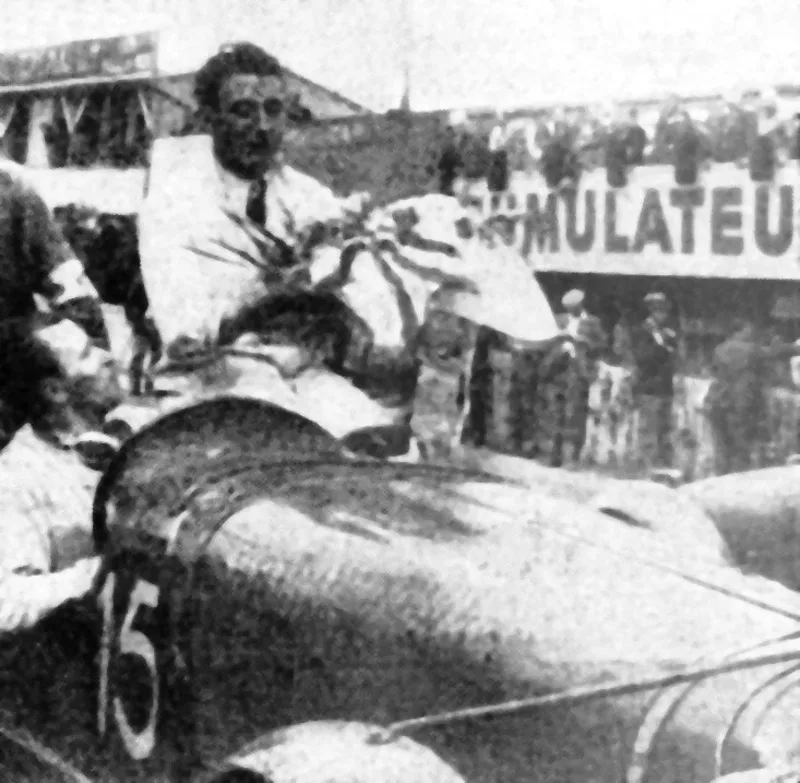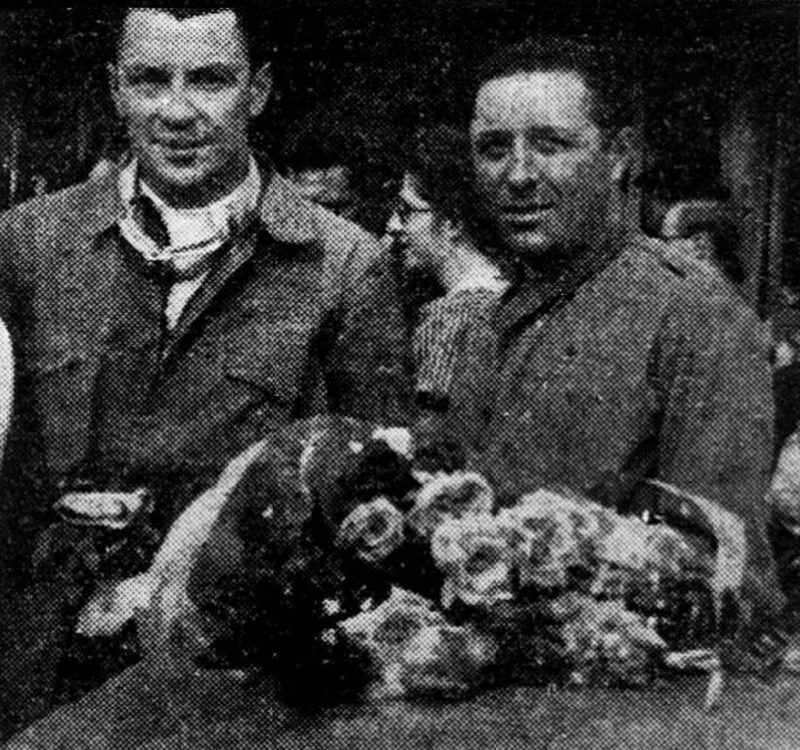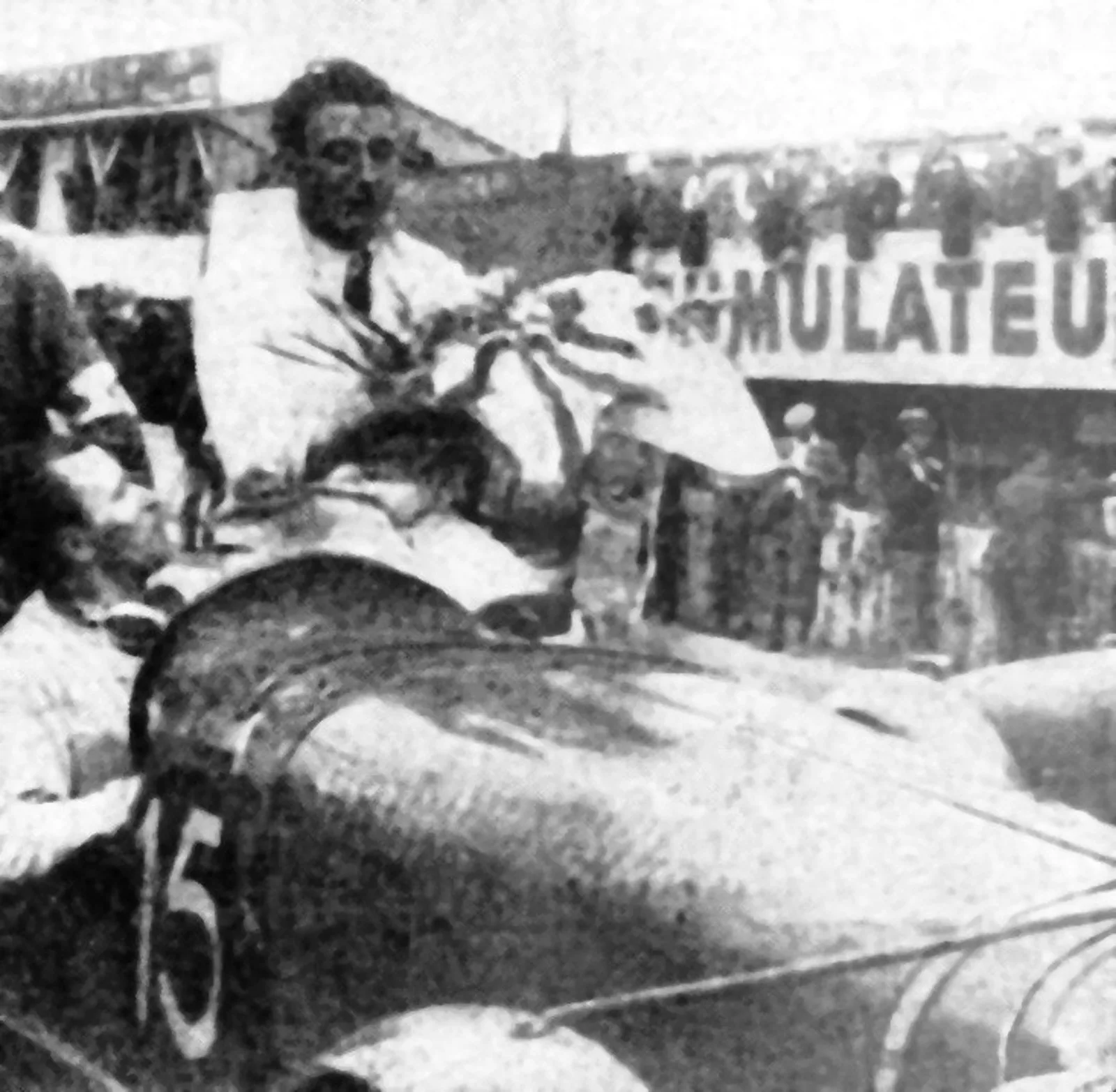
Chinetti's Ferrari barchetta took the 1949 race after nearly 23 hours at the wheel, a win that came on a circuit still repairing its war damage.
The 1949 race was won by a Ferrari shared between Luigi Chinetti and Lord Selsdon, who covered the distance in nearly 23 hours of driving. Louveau's Delage finished 15 km behind, and the race reopened the circuit after the Second World War.
Ferrari's first Le Mans win came in 1949, when Luigi Chinetti and Peter Mitchell-Thomson, Lord Selsdon, drove a barchetta to victory after nearly 23 hours at the wheel. It was the first race held at the circuit since the war, and it was Chinetti's third win at La Sarthe and the first victory for a V12 engine there.
Why was the 1949 race held at a circuit still scarred by the war?
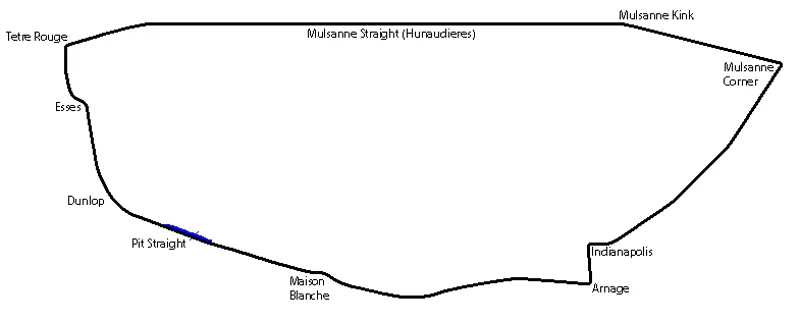
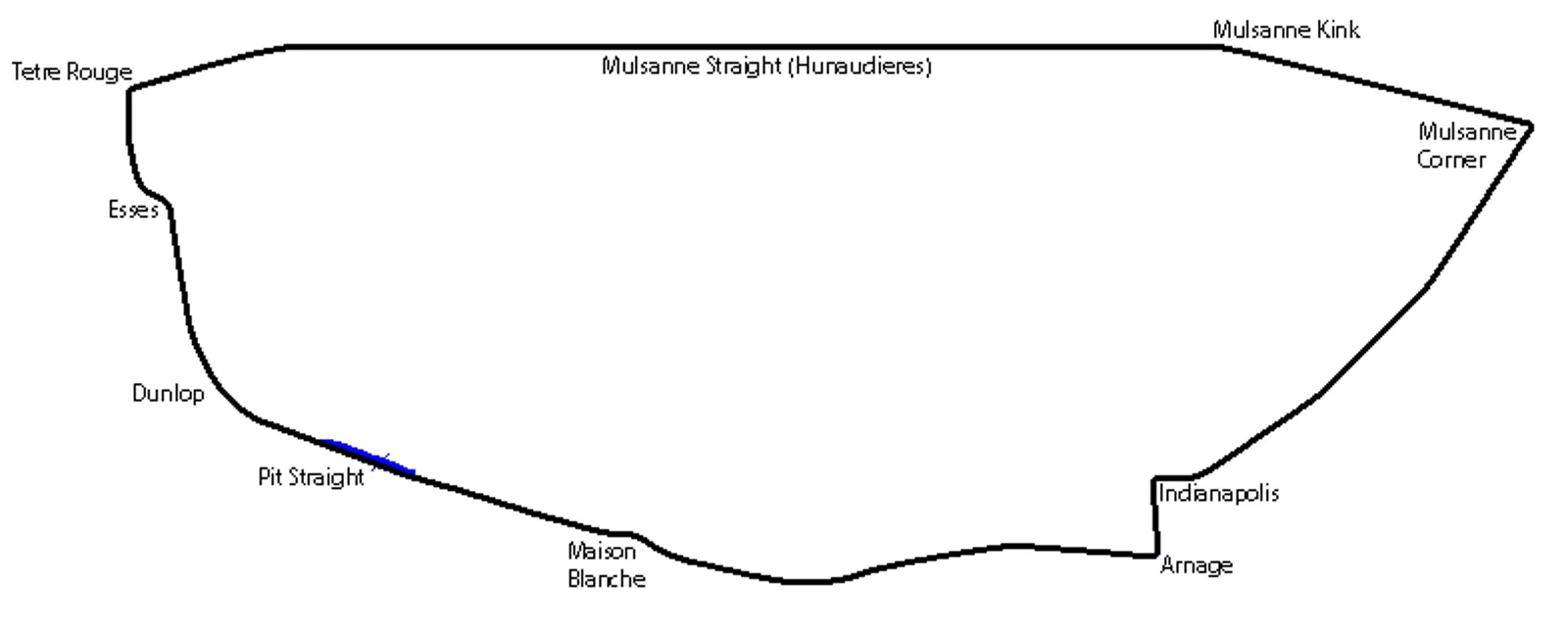
The race was the first held at the Circuit de la Sarthe since the Second World War. The RAF and then the Luftwaffe had used its airfield and the Hunaudieres straight during the war, which made the circuit a target. It took four years for the ACO to revive the event, because the bombing damage had to be repaired first.
Government money paid for much of the rebuild. The pits and grandstand were restored, a 1000-seat restaurant and an administration centre were built, and the whole track was resurfaced. A section of the surrounding land was still off-limits because it had not yet been cleared of landmines.
During the war the 5 km Hunaudieres straight had served as a temporary airstrip, which is one reason the circuit was bombed.
The first post-war Le Mans went to a Ferrari, and Chinetti drove it for nearly 23 hours.
How did the rules shape the race?
The ACO's regulations followed the new FIA rules of 1946, with ten classes set by engine size. Supercharged engines counted at a 2:1 equivalence for capacity. The ACO also reserved the right to disqualify any car not entered in the spirit of the regulations.
For this new start, sports-car prototypes were admitted for the first time. The French Service des Mines allowed them as an exceptional measure to help the revival of car manufacturing, which formalised a practice that had begun in the 1930s, when race-specific cars were entered for a win with no plan to build them for sale.
Fuel was a matter of choice. Entrants could run 68-octane gasoline, diesel or a ternary blend of 60% gasoline, 25% ethanol and 15% benzole, and the ACO supplied all of it. Fuel, oil and water could only be topped up after 25 laps, and inspectors sealed the radiator and oil caps after each refill.
Night-time was the hours between 9.30pm and 4.30am, when lights had to be on. The Hors Course rule meant that a car which had not completed 80% of its Performance Index distance by 12 hours was disqualified, A car also had to be running at the finish, and its last lap could take no more than 30 minutes.
Prize money was weighted heavily towards the Index of Performance. The Index winner was offered FF1,000,000, while the overall winner received FF100,000. The leader at the end of each hour took FF10,000, rising to FF200,000 at the 24th hour.
Who was on the grid?
The ACO trimmed a field of more than a hundred prospective entries to 49 starters. There were 18 cars in the S3000 and S5000 classes, 15 of them French and three British, and the French teams were led by Talbot-Lagos, Delahayes and Delages.
Charles Pozzi entered two new 4.5L 175 S Delahayes, one of them shared with Eugene Chaboud. Five privately entered pre-war 135 CS cars ran a 3.6L engine, and the Delettrez brothers brought their diesel, the first diesel-engined car to compete at Le Mans, which used an engine from an American Army truck.
Enzo Ferrari's two racing cars were versions of his first production car, with a two-litre V12 developing 140 bhp. He had been Alfa Romeo's team manager in the 1930s, and the cars were privately entered after success in the Mille Miglia, because he was not confident of their reliability as works entries.
Frazer-Nash entered a new High-Speed model for Norman Culpan and Harold Aldington, and HRG ran a works trio of lightened 1500s co-organised by John Wyer. David Brown, who had recently bought Aston Martin and Lagonda, fielded three works prototypes and three privately entered Astons.
A privately entered Renault 4CV became the first rear-engined car to race at Le Mans, and two Aero-Minors came from Czechoslovakia with 745cc two-stroke engines. One of them had to be driven all the way from Prague after its truck transporter broke down.
Two of the most significant new sports-car firms in post-war France were those of Amedee Gordini and of Charles Deutsch and Rene Bonnet. Gordini was overcommitted that year, and his 1500cc cars did not make the start, but two new DB cars were present, one of them driven by the team's owners themselves.
The small-engined classes were a traditional rivalry between Monopoles, Simcas, Gordinis and, later, DBs, all using Citroen, Simca or Panhard engines at various times. Half a dozen Simcas took part with a variety of bodystyles, and one of them, for Mahe and Crovetto, carried the race's first pit-to-car radio, a feature pioneered in American motor racing.
What did the British entries bring?
The three British cars were a Healey Elliott saloon that made the trip from England under its own wheels, a one-off 1938 Bentley sedan built for the Greek tycoon Nico Embiricos, and a brand-new Aston Martin DB2 prototype. That DB2 prototype carried a 2.6L Lagonda engine designed by W.O. Bentley.
How did the race unfold in the first hours?
The race started at 4pm in blazing sunshine, and the cars lined up by engine size rather than by practice time. Pozzi's new Delahaye took an early lead, and by the end of the first hour Chaboud and Flahaut led in the Delahayes, ahead of Dreyfus, Rosier, Chinetti and Vallee in one of the big Talbots.
Louis Rosier had set the fastest practice lap in his Talbot T150. In practice Jean Lucas had been forced to swerve to miss a small child on the track, and in the collision the Dreyfus Ferrari was badly damaged. Mechanics worked through the night to have it ready for the start.
Rosier stopped at Arnage after 21 laps with an overheating engine. He had not yet completed 25 laps, so the rules forbade topping up the water, and that ended his race.
Just before dusk, Chaboud stopped at Mulsanne with a fire that burned out the electrics. The sister Delahaye of Andre Simon briefly took the lead, until overheating dropped it to 18th, and Chinetti's Ferrari moved up to the front.
What happened during the night?
Chinetti stayed in the car through the night, since Mitchell-Thompson was unwell. Just before 10pm Dreyfus crashed and rolled near Maison Blanche while trying to pass two cars at once, and the Talbot-Lago of Mairesse and Vallee inherited the lead ahead of Chinetti.
Dreyfus was uninjured, but his car was wrecked. Through attrition the Delage of Veuillet and Mouche and the Culpan and Alderton Frazer-Nash rose to third and fourth, and by midnight Chinetti held a narrow lead over Mairesse and Veuillet, all on the same lap.
In the early hours Mairesse's Talbot retired with engine trouble, and the Delage of Veuillet arrived at the pits with an engine fire. The Simon and Flahaut Delahaye, driven hard through the night, moved back into contention, while Chinetti remained in front as the darkness ended.
How did the Ferrari hold on through the morning?
At 4.30am, as dawn broke, Chinetti reached the pits with a three-lap lead and handed the Ferrari to Mitchell-Thompson. He managed only 72 minutes before handing it back for the rest of the race, and Chinetti then nursed a slipping clutch.
The Delages of Louveau and Gerard closed in on the exhausted Ferrari. Flahaut's engine gave out mid-morning, and the little DB-5 had reached sixth before its camshaft seized. The Delettrez diesel also stopped, its fuel lines blocked, while running 23rd.
At 1pm the leading Aston Martin of Pierre Marechal lost its brakes coming into the Maison Blanche curves. The car rolled, its engine was torn away and its roof was crushed. Marechal was taken to hospital in critical condition and died the next day of spinal injuries.
Who won the 1949 race, and by how much?
Chinetti and Mitchell-Thomson finished just over a lap ahead of Louveau's Delage, by 15 km, after nearly 23 hours of driving. Louveau had chased hard all afternoon, and the Ferrari was slipping to the finish with a clutch that had been failing for hours.
Over the course of the race Louveau had gained back two laps on the slowing Ferrari, drifting through the corners to thrill a growing crowd. Chinetti nursed the car home with just enough pace, and at 4pm Charles Faroux, the originator and director of the race since 1923, waved the chequered flag while the new French President, Vincent Auriol, looked on.
The big Talbot-Lago SS saloon, carrying number 1, had been running well all race and had moved comfortably into fourth place. It stopped on the circuit on the last lap with engine failure, or possibly out of fuel. The Delage of Gerard inherited that fourth place and finished trailing a plume of oil smoke.
The Frazer-Nash of Culpan and Alderton had moved up to third after midday. Ten laps behind the leaders, it kept third place despite gearbox trouble and virtually no clutch by the end.
| Place | Entry | Result |
|---|---|---|
| 1st | Ferrari, Chinetti and Mitchell-Thomson | Covered 3,178.299 km (1,975.00 miles) |
| 2nd | Delage, Louveau | 15 km behind, matching the marque's best Le Mans result |
| 3rd | Frazer-Nash, Culpan and Alderton | Ten laps behind the leaders |
| 4th | Delage, Gerard | Trailing a plume of oil smoke |
| 5th | Delahaye, Grignard and Brunet | Won the S5000 class |
| 6th | Bentley, Hay and Wisdom | Finished after two punctures |
What were the race's records and standout numbers?
The fastest practice lap was Louis Rosier's 5:02 in the Talbot T150C, while the fastest race lap was set by Andre Simon in a Delahaye 175S at 5:12.5. The race covered 3,178.299 km (1,975.00 miles) at an average speed of 132.420 km/h, and only 16 of the 49 starters were classified.
Ternary fuel was blamed for a number of engine problems during the race. Both Aero-Minors finished, the only manufacturer to get a complete team to the flag, and one of them finished second in the Index of Performance.
Jack Fairman's HRG, which had been ten laps adrift of the leaders, inherited the 1500cc class lead after the DB retired, and it held that lead to the finish.
What did the 1949 result mean for Ferrari?
The win gave Ferrari a clean sweep of the silverware in its very first Le Mans, with the Index of Performance and the Biennial Cup going to the same car. The 1995cc Ferrari remained the smallest engine to win Le Mans outright until Porsche's 2.0L hybrid-turbo in 2015.
Chinetti was 47 when he drove for nearly 23 hours, and he had emigrated to America after the war. His win came in the reverse of his first Le Mans victory in 1932, when he had been ill and Raymond Sommer had done most of the driving.
Dreyfus's Ferrari, repaired after its crash, won the Spa 24 Hours the following weekend, driven by Chinetti and Simon. Mitchell-Thomson also took the Biennial Cup, completing the Ferrari success.