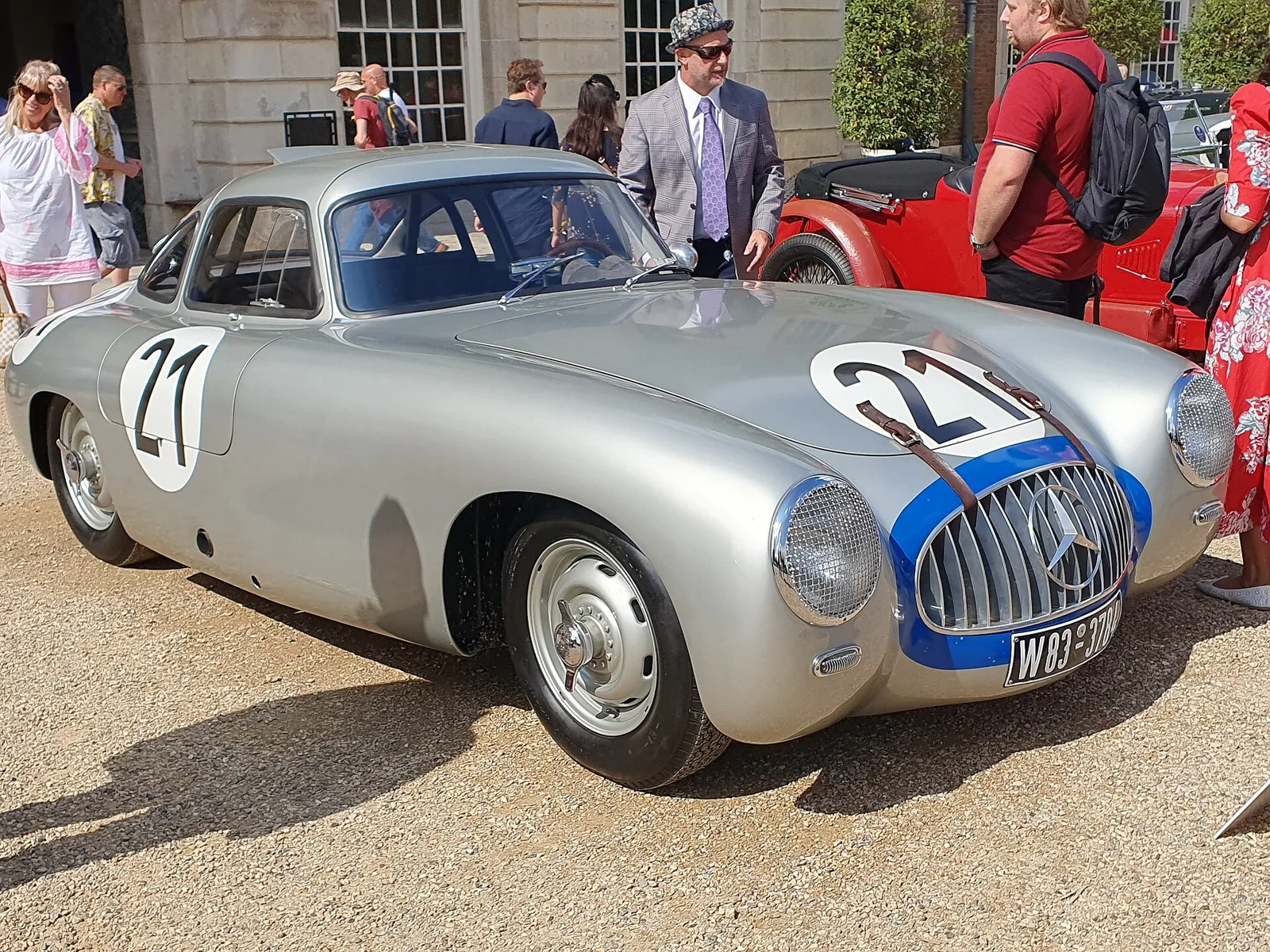
Mercedes-Benz came back to La Sarthe after 22 years and took a 1-2 with the gullwing W194, while Pierre Levegh's lead ended with a broken connecting rod an hour from the finish.
Lang and Riess won the 1952 race in a Mercedes-Benz W194, with Helfrich and Niedermeyer second in another Mercedes. Mercedes took the 1-2, and the victory was the first for a German manufacturer and the first for a closed-body car.
Mercedes-Benz returned to Le Mans in 1952 after 22 years and took a 1-2 finish with its W194 sports cars. Hermann Lang and Fritz Riess headed the result, and a record 40 of the 57 starters retired before the flag.
Why was the Mercedes return so significant?
Mercedes-Benz had been absent from Le Mans for 22 years when its W194 300SL sports cars arrived. The team was run by the pre-war figure Alfred Neubauer, and the cars had already competed in the Mille Miglia and the Swiss Grand Prix. Their first Le Mans outing ended in a 1-2 finish.
The W194 was a racing version of a limousine engine. The 3.0L S6 was tilted at a 50 degree angle and race-tuned as the M194, still fed by carburettors. Its tubular frame carried high sides, and the engine was tuned down a fraction to 165 bhp so that it would last 24 hours rather than 12.
The early Mille Miglia cars had small gullwing windows, which the ACO judged too small for the race. New chassis were built with doors that cut halfway into the sides. Mercedes also tested air brakes above the roof, but these were not permitted to race.
A gullwing sports car from a team returning after 22 years was the first closed-body winner at Le Mans.
What rules did the ACO set for 1952?
The ACO decreed that mudguards had to be integral with the bodywork, which ended the cycle-type guards of the pre-war era. Cars now had proper sports-car bodies rather than modified grand prix cars, and that change mattered more than any single engine detail.
The ternary fuel was made up of 75% petrol, 15% alcohol and 10% benzole. The minimum replenishment of fuel, water and oil rose from 25 laps to 28, and the target average speeds for each class were increased.
Prize money was also reshaped. The winner's purse was raised to match that of the Index of Performance winner, which reflected the stature the teams and spectators had always placed on the overall win.
Who was driving for Mercedes-Benz, and who was missing?
Of the three pre-war drivers Neubauer could call on, only Hermann Lang was still able to race, after Rudolf Caracciola broke a leg in Switzerland in May, an injury that ended his illustrious career. Luigi Fagioli, who had won the 1935 Monaco Grand Prix for Mercedes, was critically injured before the Monaco sports car race and died after Le Mans.
Karl Kling was the other post-war team leader, and a third car went to lesser-known drivers. Neubauer's strict pace was designed to protect the cars, so the Mercedes ran just inside the top ten through the early hours.
Who else was on the grid in 1952?
Over a dozen multi-car works teams took part, and fewer than 20 genuine private entries were among the 60 starters and reserves. Jaguar brought three C-Types, Ferrari entered eight cars, and Talbot ran four privately entered T26s. Aston Martin ran three new DB-3 cars plus two privately entered DB-2s.
Jaguar's C-Types had been hurriedly redesigned after Ferrari and Mercedes-Benz beat them for speed at the Mille Miglia. The new shell brought a smaller radiator and a relocated header tank, and the cars overheated throughout the race. Walker and Moss shared one car, Whitehead and Ian Stewart another, and Rolt with Hamilton the third.
Ferrari's entries included the 340 America and the new 250 Sport, a 3.0L V12 developing 220 bhp. Lancia returned with two updated B20 Aurelias, and OSCA's first sports car, the MT-4, arrived with a 1.3L engine producing 90 bhp, set against the Jowetts and Porsches in its class.
Cunningham's three C-4R roadsters used 5.4L Chrysler V8s of 320 bhp, and they were over 500 kg lighter than the 1951 C-2. Gordini ran a 1100cc car and a 2.3L special for Behra and Manzon, which was very nimble. Alfa Romeo and Pegaso had both been scratched from their possible works entries because of doubts about their durability.
Talbot's four privately entered T26s had enclosed bodies. Andre Chambas had twin superchargers fitted to his 4.5L car, which gave it the largest effective capacity and put it at the head of the grid. The French fielded 20 cars, the largest national group, with the British close behind on 18.
How did practice go?
Practice was marked by overheating Jaguars, a heavy crash by Griffith's Aston Martin into the Tertre Rouge sandbank, and a piston failure that forced one of Rosier's Ferraris out. The fastest practice lap was set by Hermann Lang at 4m 40.0s, while the Ferrari of Ascari was only a tenth slower.
Griffith's crash meant that team manager John Wyer swapped in the spare car without the officials noticing. The new DB coupe also needed a full rebuild after a practice accident. A future Le Mans star, Phil Hill, drove one of the Cunninghams in practice, but he did not take part in the race.
Lang's Mercedes was also the fastest car on the Mulsanne straight, at about 150 mph, in unofficial speed checks.
How did the race open?
Phil Walters led the first lap in the Cunningham coupe, with Moss chasing him in the Jaguar. Ascari soon took the front, but his Ferrari's clutch failed after six laps, and the Ferraris were to fight clutch problems for the rest of the race.
The Jaguars had all gone by nightfall, their overheating proving too much. Two of the Aston Martins had retired early with differential problems. Simon's Ferrari had been running in front, but its clutch began to slip and the Gordini of Manzon moved up behind it. Walters had handed the Cunningham to Duane Carter after four hours, and Carter put it into the Tertre Rouge sandbank on his second lap out. The car's engine trouble followed soon afterwards.
By the third hour Robert Manzon's Gordini had taken the lead, and he and Behra kept it through the early evening.
What happened through the night?
Levegh's Talbot was four laps clear by midnight, and he was driving alone rather than handing over to his co-driver, Rene Marchand. Levegh had decided against a handover because the engine had developed a vibration, and he did not want to risk Marchand on a breakdown.
A Gordini brake drum jammed, and the team retired the car at half-time. Chinetti's Ferrari had been disqualified for refuelling a lap early, and the Mairesse and Meyrat Talbot lost its oil pump around the halfway point. In the S2.0 class the Lancias ran 1-2 for most of the race, ahead of the Frazer-Nash.
Helfrich and Niedermeyer, and Lang and Riess, were running behind Levegh in the Mercedes-Benz cars through the night.
What happened in the fog and the early morning?
Dawn was masked by a heavy fog so thick that the Mercedes drivers had to open their gullwing doors to see the road. Alexis Constantin crashed a supercharged Peugeot at Tertre Rouge, narrowly missing Jack Fairman's Allard, and Arkus-Duntov's Allard had no brakes at the end of the Mulsanne straight and ended up on the escape road.
Later in the morning the Frazer-Nash of Stoop and Wilson broke a halfshaft and retired. The Porsche, which had been leading the S1500 class, was disqualified after it came into the pits with its engine left running in case it stalled, which broke the safety rules. The OSCA lost its clutch soon afterwards, and its driver pushed the car three kilometres back to the pits, only to be told the damage was terminal.
Neubauer finally told his drivers to push, but the gap was already too large to close. Levegh, who had been out all night, still held a good lead. Near noon a wheel problem cost Helfrich time and dropped his car to third.
How did Levegh's lead end?
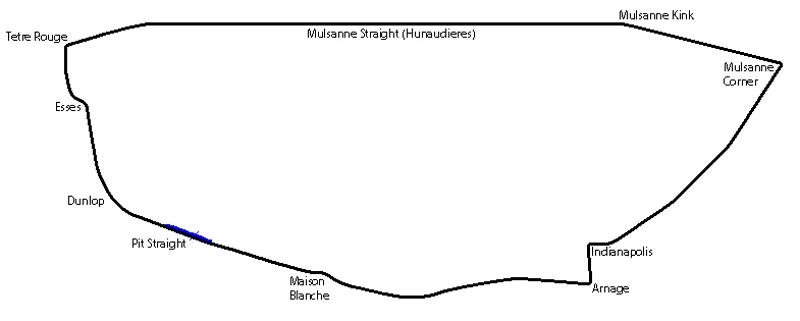
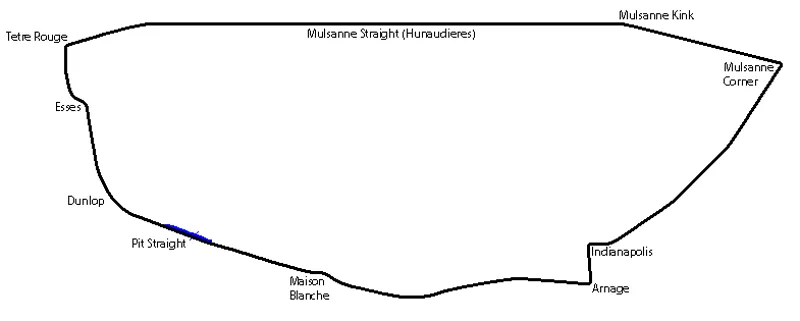
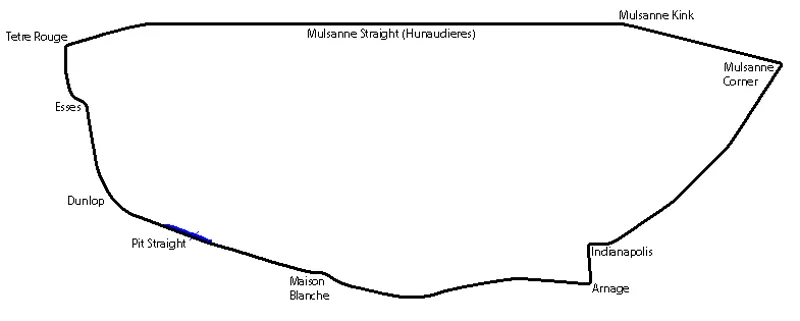
With just over an hour left, a connecting rod broke in Levegh's Talbot. The car stopped at Maison Blanche, about a mile from the pits, after he had driven almost the entire race alone. The second-placed Mercedes-Benz took 20 minutes to get ahead on distance.
Levegh was driving without a working rev-counter when the engine failed. Nobody can say for certain whether the engine problem broke the car or whether exhaustion caused him to miss a gear and over-rev it, but the result was the same. The lead he had held for hours disappeared in a few minutes.
Who finished the 1952 race?
Lang and Riess won in their Mercedes-Benz W194, and Helfrich and Niedermeyer were second in another. Johnson and Wisdom's Nash-Healey took third after the Aston Martin retired, and the lone Ferrari of Simon and Vincent recovered to fifth overall. Chambas's supercharged Talbot was the only Talbot to finish, in ninth place.
| Place | Entry | Result |
|---|---|---|
| 1st | Mercedes-Benz W194, Lang and Riess | 3,733.8 km (2,320.2 miles) covered |
| 2nd | Mercedes-Benz W194, Helfrich and Niedermeyer | Second on distance |
| 3rd | Nash-Healey, Johnson and Wisdom | Moved up after the Aston Martin retired |
| 6th and 8th | Lancia B20 Aurelia | Team won the 2-litre class again, a successive class win |
| Last | Renault 4CV, Jean Redele | Last finisher, by a Le Mans debutant |
Briggs Cunningham, who had nursed a slipping clutch for most of the race, drove for about 20 hours himself and gradually moved up the order. Porsche repeated its S1100 class victory from the previous year, with the same drivers as in 1951: the Paris Porsche agent Toto Veuillet and Edmond Mouche.
There were no female drivers that year, so the Coupe des Dames went to Mme Denise Bouillin. Attendance was estimated at about four hundred thousand at the start and around two hundred thousand during the race.
The Frazer-Nash that was the Lancias' closest rival finished tenth, having lapped for the last three hours with a loose wheel mounting.
What did the 1952 result change for Le Mans?
Mercedes-Benz had run undersized, underpowered engines, and the team was as surprised as anyone to take the 1-2. The victory also marked the first time a closed-body car had won the race, and the first win for a German manufacturer.
Mercedes-Benz went on to win the Nurburgring and the Carrera Panamericana later in the year. Le Mans, together with the Sebring 12 Hours and the Mille Miglia, was run again the following year as part of the inaugural 1953 World Sportscar Championship.
Pierre Hemard won the Index of Performance for the third year running, with his co-driver Eugene Dussous in the little Monopole-Panhard. The Monopole-Panhard also romped home in its S750 class, 13 laps ahead of the closest Renault. Jowett won the S1500 class for the third successive year, outlasting faster but more fragile rivals. Jean Redele, a 30-year-old Renault dealer, was the last finisher in a 4CV, and he later founded Alpine with rear-engined Renault cars.
Behra's Gordini beat the Ferrari 500s in the Grand Prix de la Marne at Reims two weeks after Le Mans, a result that gave the small French team its own triumph that summer.