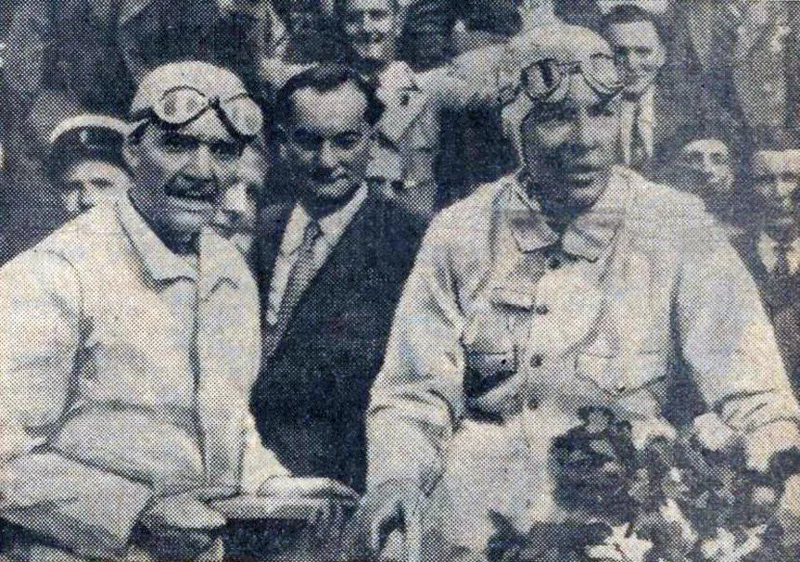
Tony Rolt and Duncan Hamilton took a works C-Type to victory on the first Le Mans cars fitted with disc brakes, after a practice disqualification and a race of attrition.
Rolt and Hamilton won the 1953 race in a works Jaguar C-Type, with disc brakes that gave the British cars an edge over their drum-braked rivals. Their 304 laps covered 4,088.06 km, and they finished ahead of Moss and Walker.
Tony Rolt and Duncan Hamilton won the 1953 24 Hours of Le Mans in a works Jaguar C-Type, the first cars ever to race at Le Mans with disc brakes. They covered 304 laps and averaged 106.46 mph (170.336 km/h), a result the brakes helped to secure.
Why did disc brakes matter at the 1953 Le Mans?
Jaguar's C-Types were fitted with Dunlop disc brakes, and the efficiency of those brakes gave the cars a distinct advantage over their drum-braked rivals. The discs had been tested in 1952, but they were swapped out that year because of radiator problems, so the team could concentrate on one issue at a time.
The cars were also lighter and more powerful than the previous year, with about 218 bhp, and the nose and tail were revised to the earlier aerodynamic shape. That change followed the 1952 problems, when the revised body had hurt stability above 120 mph.
The disc brakes were the story, but a practice disqualification and a fatal crash also shaped the 1953 race.
What rules shaped the 1953 race?
The race was the third round of the first FIA World Sports Car Championship, after the 12 Hours of Sebring and the Mille Miglia. The organisers used the championship to draw together the endurance races of Europe and North America, which drew manufacturers in a way the earlier seasons had not.
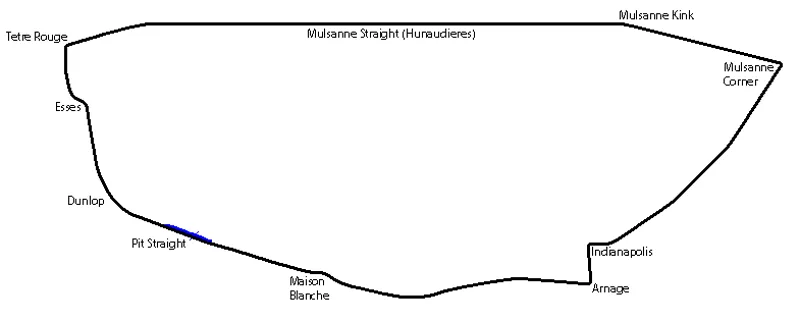
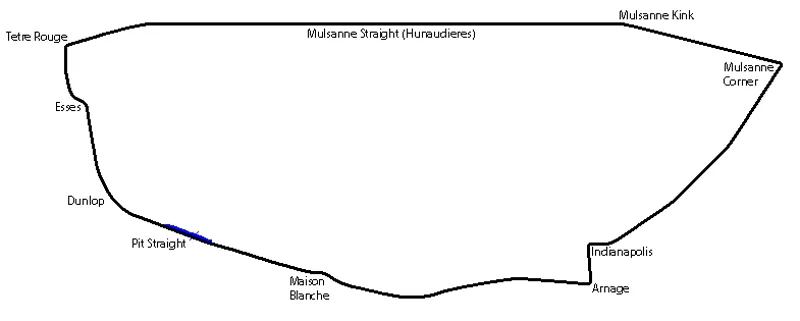
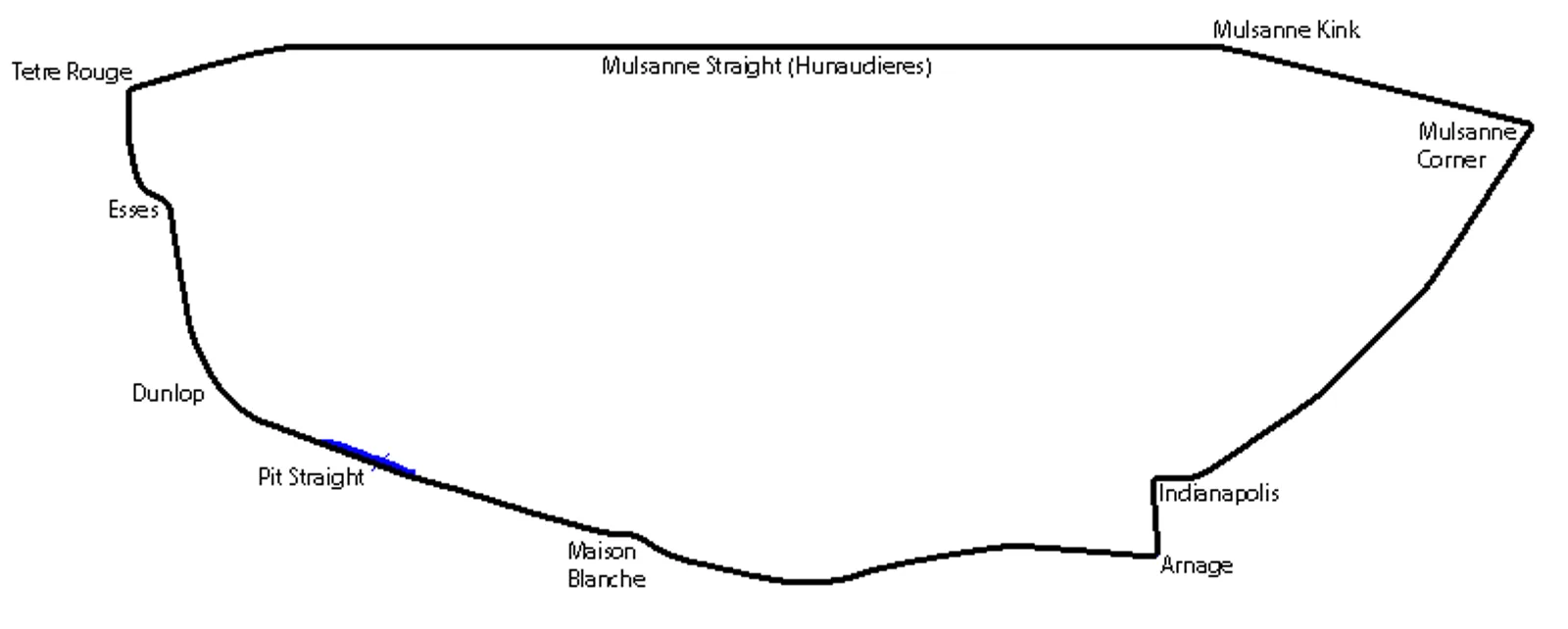
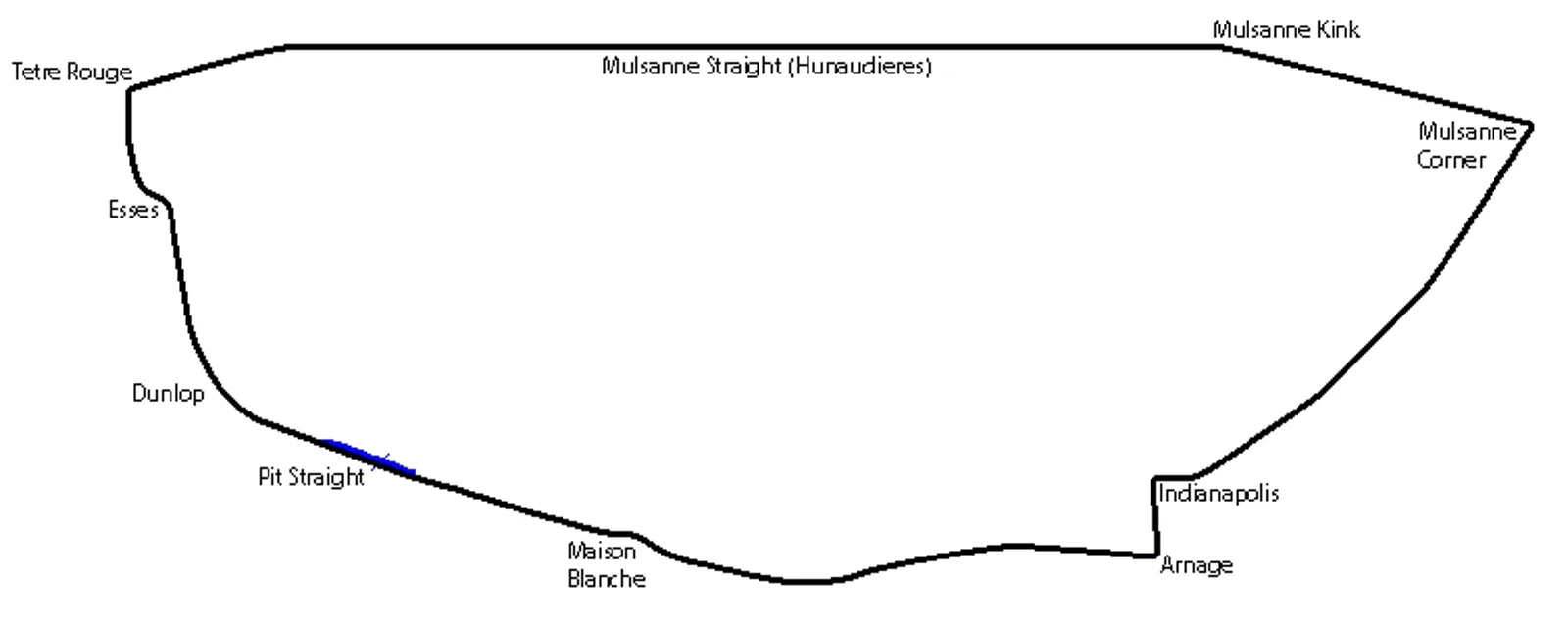
The ACO also set limits on driving spells after the earlier solo efforts of Chinetti, Rosier, Hall, Levegh and Cunningham had left drivers exhausted. Each driver was limited to 80 consecutive laps and 18 hours in total. A radar gun was used for the first time to measure speeds over a flying kilometre on the Hunaudieres straight. The Cunningham would touch almost 156mph, six mph faster than the previous year's winning Mercedes-Benz gullwing, which showed how much aerodynamics now mattered to top speed.
Which teams were the favourites in 1953?
Of the 69 entrants and reserves, nineteen marques were present, and 56 works-entered cars were officially represented. Mercedes-Benz did not return, so the overall contest looked likely to be between Italy, England, the United States and the French dark horses.
Drivers included all three Formula One world champions to date, Ascari, Fangio and Farina, along with over 30 other current and up-and-coming grand prix racers. Six other Ferraris were left off the starting list, a measure of how strong the entries were.
Ferrari entered two lightweight 340 MM Berlinettas with 4.1-litre V12s, plus a 375 MM converted to 4.5 litres for Ascari and Villoresi. Alfa Romeo returned with a 6C/3000CM and a 3.5L S6 engine developing 270 bhp, while Lancia entered three D.20 coupes with supercharged 2.7L engines that were no match for the rival speed. Lancia had just won the non-championship Targa Florio with a 3.0L V6, but the supercharged engines proved a mistake. The Lancias had the least luck and never made the top ten.
Jaguar's team was the strongest of the British entries. Walker and Moss, Whitehead and Stewart, and Rolt and Hamilton drove the three works cars. A standard production-body C-Type was entered by the Belgian Ecurie Francorchamps team, and the Jaguars were the fastest cars in practice, all three going under the lap record.
Aston Martin entered DB3S cars for Parnell and Collins, Abecassis and Salvadori, and Thompson and Poore, The Aston Martins used the same 3-litre engine as the DB3 in a newly shortened chassis, but they had been little tested and were well down on speed. Donald Healey ran a Nash-engined long-tail and an Austin-engined car with a 2.7L engine and 100 bhp. Bristol brought two rear-engined 450 coupes, whose 2-litre engines could push them to nearly 230 km/h, and the team was managed by Sammy Davis, a former Bentley Boy and Le Mans winner.
Briggs Cunningham brought three cars with 310 bhp 5.5L Chrysler V8s. The C-5R, nicknamed Le Requin, the shark, by the French, was driven by Walters and Fitch. The Talbot works team ran three blue T26 GS cars, with Mairesse and Grignard, Rosier and Bayol, and Levegh and Pozzi. Gordini had intended to debut a 3.0L T24S but scratched it because of atrocious handling. Instead it ran a T26S with a 2.5L engine, and an older T15S with a 2.3L engine that was lighter and just as quick.
Without Mercedes-Benz, German representation fell to works teams from Borgward, which were there for the first and only time, and Porsche, which stepped up from the S1100 class with a purpose-designed race car, the 550 Coupe. Its flat-four 1488cc engine made only 78 bhp, but the car could approach 200 km/h. The Spanish Pegaso team withdrew both of its entries after Juan Jover crashed a Z-102 Spyder in practice at over 200 km/h.
How did the race begin?
The flag fell at 4pm on the Saturday. Moss was quick away, but Sydney Allard's car took the lead on the Mulsanne straight and was ahead at the end of the first lap. Within the first hour the order had settled, with Moss, Villoresi, Cole, Rolt, Fitch and Kling in the top six.
Hawthorn and Farina were disqualified after a Ferrari mechanic topped up the brake fluid before 28 laps had been completed. Moss, meanwhile, lost time when a misfire set in after only 20 laps, and the car dropped to 21st after an unscheduled plug change and a clogged fuel filter.
By 5pm the order had shaken out, and it was clear that the Jaguars, Ferraris and Alfa Romeos were the teams to beat. Rolt lifted his lap times by five seconds, and Sanesi's Alfa Romeo set a new lap record of its own. By the three-hour mark, Rolt and Hamilton led Ascari and Villoresi, followed by Cole with Chinetti, Sanesi with Carini, and the Kling car.
What happened in the night?
The Ferrari-Jaguar battle continued through the dark hours, with the Alfa Romeos close behind. Ascari and Villoresi kept the fight going, but their car was held back by a sticking clutch, and the big engine began to stretch the rest of the powertrain. By the early hours Rolt and Hamilton's Jaguar had a lap in hand over the Ferrari.
The Gordinis punched above their weight. The smaller car ran as high as seventh overall before its rear axle seized just after midnight. Porsche's 550s had the measure of all the smaller cars and were even running ahead of some of the larger S2.0 and S3.0 entries.
Tommy Wisdom's Bristol caught fire just after midnight, and Wisdom was trapped for a short while before being rescued with minor burns and a dislocated shoulder. Shortly before 3am the rear suspension of the Sanesi and Carini Alfa Romeo collapsed, and George Abecassis and Roy Salvadori's Aston Martin lost its clutch to leaking oil.
What happened at dawn when the race was at its most dangerous?
Tom Cole, running seventh, lost control at the Maison Blanche corners just after 6.30am. His Ferrari ploughed into a roadside ditch, rolled and struck a wooden hut nearby. Cole was thrown out in the initial impact and died at the scene, and the race carried on under a mist that made driving very tiring.
The windscreen on the leading Jaguar had been broken by a bird strike earlier in the race, and Rolt and Hamilton were buffeted by the wind. They kept up the pace nevertheless, averaging well over 105 mph, and by the time the mist cleared they were still a lap clear of the struggling Ferrari.
Moss and Walker, back in the race after a hard drive through the field, went on to challenge for second. The Cunningham of Fitch and Walters was third, a lap further back, with the fast Whitehead and Stewart Jaguar also in the picture.
How did the race end for the Ferrari and the Cunningham?
The leading Ferrari dropped back after clutch trouble forced a long stop, and it was around 9am before it was back in fifth. Shortly before 8.30am, the leading Jaguar and Ferrari had made routine refuelling stops at the same time. Hamilton pulled out in front of a DB-Panhard coming into its own stop, and
The lame Ferrari retired just before 11am, having dropped down the order to sixth. The Marzotto car, which had been running in the top ten all race, then finished fifth. The Lancias never made a dent in the top ten, and the last of them, driven by Gonzalez and Biondetti, gave up its engine just after midday.
Who won the 1953 24 Hours of Le Mans?
Rolt and Hamilton won in a Jaguar C-Type after 304 laps. Moss and Walker finished four laps adrift in second place, and Walters and Fitch's Cunningham C-5R took third, a lap further back. The fastest car in the speed trap was Cunningham's C-4R at 249.14 km/h (154.81 mph), and the fastest race lap was Ascari's 4m 27.4s.
Hamilton took over from Rolt for the final stage. They crossed the line in their British-plated Jaguar, covering 4,088.06 km, well over 2,500 miles. The Marzotto brothers' Ferrari finished fifth with virtually no clutch left, and the Gordini was a lap back in sixth.
| Place | Entry | Result |
|---|---|---|
| 1st | Jaguar C-Type, Rolt and Hamilton | 304 laps |
| 2nd | Jaguar C-Type, Moss and Walker | Four laps behind |
| 3rd | Cunningham C-5R, Walters and Fitch | A lap further back |
| 4th | Third works Jaguar | Two laps behind the Americans |
| 5th | Ferrari, Marzotto brothers | Virtually no clutch left at the finish |
| 6th | Gordini | A lap back |
| 7th | Cunningham C-4R, Briggs Cunningham | Owner-driver finish |
What did the 1953 race leave behind?
The first six finishers averaged over 100 mph, which had not happened at Le Mans before. Every class broke its record and a new lap record was set, and the Jaguars' Dunlop disc brakes had given them a distinct advantage over their rivals.
The Panhard works team staged a formation finish to win the Index of Performance by a narrow margin. A streamlined Panhard won it on a countback, after another DB-Panhard had been on course for the win until a misfire cost it fuel on the last lap.
The disc brakes were the story, but the race was also a test of nerve. Rolt and Hamilton's car was disqualified in practice after another Jaguar with the same race number had been on track at the same time, which had sent the Ferrari team to protest. Jaguar chairman Sir William Lyon agreed to pay the ACO fine, and the car was reinstated. Hamilton's account of the night before the race has become a motor-racing legend, though Tony Rolt later said it was fiction. When England found the pair at Gruber's restaurant the next morning, they were nursing hangovers over copious amounts of coffee. England said later that he would never have let them race under the influence.
After the race Alfa Romeo withdrew from motor racing, and Jowett was already in receivership. It was also the last Le Mans for Allard, Lancia and Nash-Healey. Championship points went 8-6-4-3-2-1 for the first six places, but the manufacturer scores counted only the highest finisher from each make.