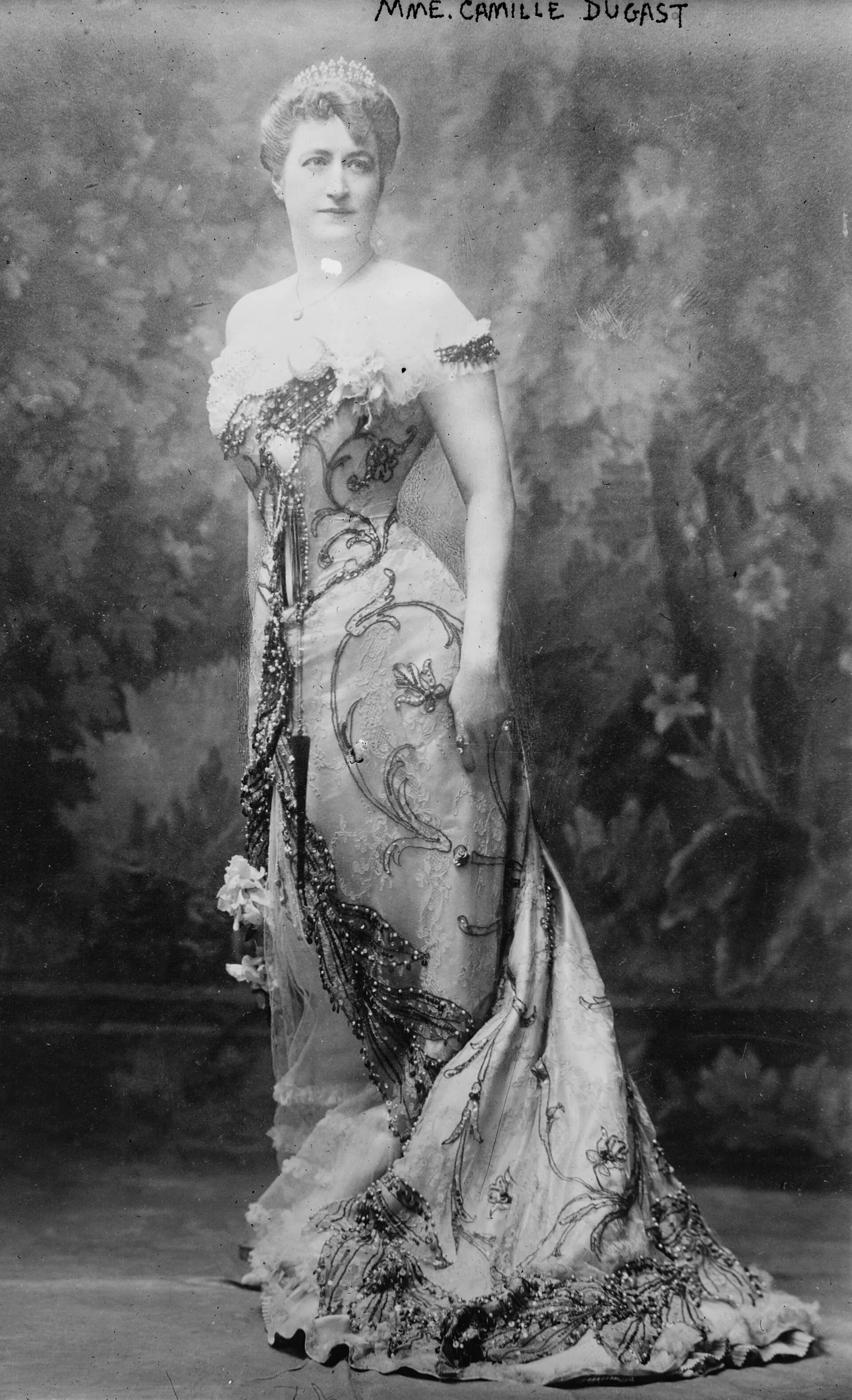
A pioneering French motorist who raced cars and boats, then turned her fame into charity work for animals and disadvantaged women.
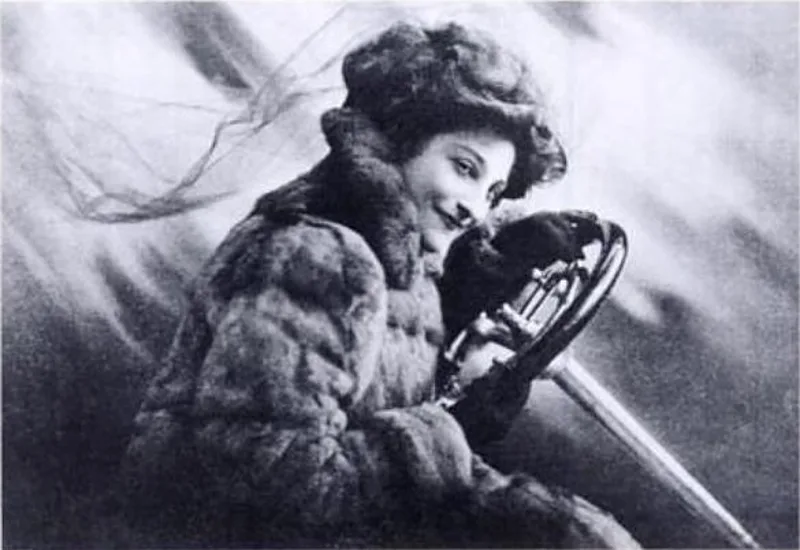
Camille du Gast was a sportswoman, balloonist and motorist from Paris who competed in the 1901 Paris-Berlin race and later served on the Automobile Club de France. Her later years were spent leading the French animal welfare society and supporting women and children in need.
Camille du Gast belonged to a group of three pioneering French women in Belle Epoque motoring, alongside Baroness Helene van Zuylen and the Duchess of Uzes. Born in Paris in 1868, she raced cars and boats, flew by balloon, and later gave her energy to animal welfare and to disadvantaged women.
Who was Camille du Gast?
Camille du Gast was a French sportswoman and motorist whose pursuits included ballooning, fencing and skiing. She was only the second woman to race in an international event, held an official post in French motor sport from 1904, and later led the French animal welfare society, the SPA, for many years.
She was born Marie Marthe Camille Desinge du Gast and was the youngest of her siblings, with an elder brother twelve years older. As a girl she was a tomboy. In 1890 she married Jules Crespin, who managed the Dufayel department store in Paris, and after his death in the mid-1890s she was a wealthy widow with a young daughter.
Her range of sport was unusual even among her wealthy circle. She ballooned and parachuted, fenced, tobogganed, skied, shot rifles and pistols, trained horses and performed as a concert pianist and singer. Gordon Bennett called her a sportswoman without equal.
A woman who raced cars and boats in the Belle Epoque, then spent her later years fighting for animals and for women in need.
How did she get into motoring?
She had watched the 1900 Gordon Bennett Cup get under way from Paris to Lyon, and by 1901 she had a Peugeot and a Panhard et Levassor in her garage. Reports say she was among the earliest women to hold a driving licence, following the Duchess of Uzes. On 1 December 1904 she became the club's only female official.
Her access to the sport's governing circles came at a time when women were being pushed out of competition. The club post sat alongside her own record as a driver.
What was the 1901 Paris-Berlin race?
In 1901 du Gast and Baroness Helene van Zuylen were the only two women entrants in the Paris-Berlin race, run over three legs. Du Gast drove a 20 hp Panhard, started last of 122 entrants and finished 33rd in 25 hours 30 minutes 23 seconds. That made her only the second woman to have raced in an international event of this kind.
The legs ran 459 km (285 mi) from Paris to Aachen on 27 June, 447 km (278 mi) from Aachen to Hanover on 28 June, and 299 km (186 mi) from Hanover to Berlin on 29 June. Her riding mechanic was the Prince du Sagan, Helie de Talleyrand-Perigord, who was also a close friend.
Her car was under-powered for racing. Baroness Zuylen retired on the first day with technical problems, so much of the praise for finishing went to du Gast. She was already planning to do better in the next event.
How did her 1903 Paris-Madrid race end?
She drove one of Adrien de Turckheim's works De Dietrich cars in the 1903 Paris-Madrid race, starting 29th and rising to eighth before stopping to help Phil Stead, a fellow driver pinned beneath his machine after it rolled into a ditch. She was running 77th by the time the race was halted at Bordeaux.
Near Libourne she nursed Stead until an ambulance arrived, and doctors later credited her with probably saving his life. The race ended at Bordeaux after fatal accidents, and the French government stopped it there, with the cars towed by horses to the railway station.
The Autocar said that the gallant Frenchmen had applauded, but it doubted whether fierce long-distance racing was suitable for ladies. The event made the authorities wary of women drivers, and in 1904 the government barred women from motor racing.
Why did she turn to boats?
After the 1904 ban, du Gast took up motor-boat racing. In 1905 she competed in the trans-Mediterranean Algiers to Toulon race in a 13 metre steel-hulled boat named Camille, and the boat sank in a storm. Two months later she was declared the winner, because she had come nearest to finishing before the sinking.
The race was organised by the Paris newspaper Le Matin, with support from Mercedes Paris and the French Minister of Marine, who provided a prize and torpedo destroyers to escort the competitors. The fleet left Algiers at 6 am on 7 May, and the Camille reached Mahon on Menorca second after 16 hours.
Bad weather held the boats at Mahon until 13 May. On the rough second leg the Camille was taken in tow by a battleship but broke free and sank, and du Gast and her crew had to be rescued. The New York Times reported on 21 May that she had sent ten thousand francs to the sailor who rescued her.
In July 1905, back on land, she entered the inaugural Brighton Speed Trials, taking part in the handicap class with a 35 hp car. Dorothy Levitt beat her there, racing an 80 hp Napier that set a women's world speed mark.
Earlier that year she had entered the Monaco meeting in April, racing the 150 horse-power Panhard-powered La Turquoise in the 100 km race for racers. She did not finish, and the race was won by S. F. Edge in the Napier II.
How did her travels in Morocco shape her?
In September 1906 du Gast set off on horseback to explore Morocco, travelling alone through areas that the French regarded as dangerous. The French government commissioned her to visit Morocco in 1910 and again in 1912, and she wrote for French magazines about the journeys.
She published an account of the Morocco ride, titled Ce que m'a dit le Rogui, in Je sais tout in 1909. The historian Laura Godsoe, who studied women's travel writing, noted that she handed out medicine and sweets to women in small hamlets, working to present French rule in a favourable light.
She also attended the Algeciras Conference in 1906. A women's journal of the day suggested that a woman's diplomacy might succeed where the diplomats had not, and she continued to publish travel narratives in La Vie heureuse, later known as Femina.
What was the La Femme au Masque affair?
In 1885 the painter Henri Gervex produced La Femme au Masque, a nude study of a model whose face was hidden by a domino mask. In 1902 a barrister wrongly suggested during family court proceedings that du Gast had posed for it, and the claim led to three court cases in Paris and wide press coverage.
During the hearing Barboux had passed a photograph around the court. Gervex and Renard both appeared in court on her side, but the outcome went against her, possibly because such character attacks were regarded as normal practice in France.
She sued the barrister and lost, while the Prince de Sagan punched him in the face. Both men were prosecuted in September 1902, and the Prince was fined 500 francs while de Marcilly paid 100 francs. Newspapers in New Zealand and Australia followed the scandal in detail.
How did her life change after 1910?
Around 1910 her daughter tried to have her murdered at home. Du Gast escaped the attempt, and from then on she devoted herself to animals, orphans and women. In 1910 she became president of the SPA, the French animal welfare body, and held the post until her death in 1942.
The writer Jean-Francois Bouzanquet, in his book Fast Ladies about female racing drivers from 1888 to 1970, described the daughter as someone who had tried for years to extract money from her famous mother. He wrote that the attempt on her life was carried out by the daughter's associates, and that Camille escaped at home in the middle of the night.
Animal welfare and charity
A refuge in Paris for stray and injured dogs had been founded in 1903 by Gordon Bennett, and du Gast worked there. In 1927 she paid from her own pocket to expand the Gennevilliers animal shelter.
She campaigned against bullfighting, which the authorities tolerated although it was not formally legal. In Melun on 29 May 1930 she staged a protest against a bullfight staged to raise money for local schools. Thirty young people jumped into the arena blowing whistles, followed by roughly 400 demonstrators and smoke bombs, and police cleared the ring.
Her charity also reached women and children. She set up centres for orphans and impoverished women, and during the German occupation of Paris she continued her medical help until she died in 1942.
How did she influence feminism?
Du Gast was a feminist, a frequent traveller and a devoted republican who wanted women's emancipation advanced. After the First World War she became a vice-president of the league that fought for women's rights in France, the Ligue Francaise du Droit des Femmes.
A 1921 book published by that league discussed her standing and the role sport had played in the feminist victory.
Career milestones at a glance
| Year | Event or role | Result |
|---|---|---|
| 1901 | Paris-Berlin race | 33rd of 122 entrants |
| 1903 | Paris-Madrid race | Stopped at Bordeaux; reached the city 77th |
| 1904 | Automobile Club de France | Only woman official, from 1 December |
| 1905 | Algiers to Toulon race | Declared winner after the Camille sank |
| 1910 | SPA, the French animal welfare society | President until her death |
| 1930 | Melun demonstration | Protest against a bullfight staged for schools |
| 1942 | Death | 24 April, Paris |
Legacy and commemoration
She was buried in the Crespin family tomb at Pere Lachaise Cemetery in Paris. The Crespin tomb in the 36th section holds her remains, and it has a bust of Jacques Crespin plus statuary by Jules Dalou and others.
In 1929 a Paris street, the rue Crespin du Gast in Menilmontant, was given her name, and the name survives today. A technical school at Chalon-sur-Saone also carries her name.
The writer Elisabeth Jaeger Wolff wrote a fictionalised biography of her, published in French as La derniere Amazone and in English as The Last Amazon.