Half a Formula One point, a rally win that left rivals speechless and a 1929 Indianapolis 500 owner who watched from the grandstand: the women who raced anyway.
Women have raced since the 1890s but have faced barriers, including outright bans. Maria Teresa de Filippis started in Formula One in 1958, Lella Lombardi scored the only half point in 1975, and in 1981 Michele Mouton took Sanremo, the first world championship rally won by a woman.
Only one woman has ever scored a point in a Formula One world championship race, and she got half of one. Lella Lombardi finished sixth in the shortened 1975 Spanish Grand Prix, and that remains the best result any woman has recorded.
Who were the first women to race?
The first recorded races involving women took place in French-speaking Europe in the late 1890s. In 1897 the Championnat des Chauffeuses was held at the Longchamp Racecourse in Paris, with eight women from the theatre racing motorised tricycles in head-to-head heats. Costume designer Lea Lemoine won all three events.
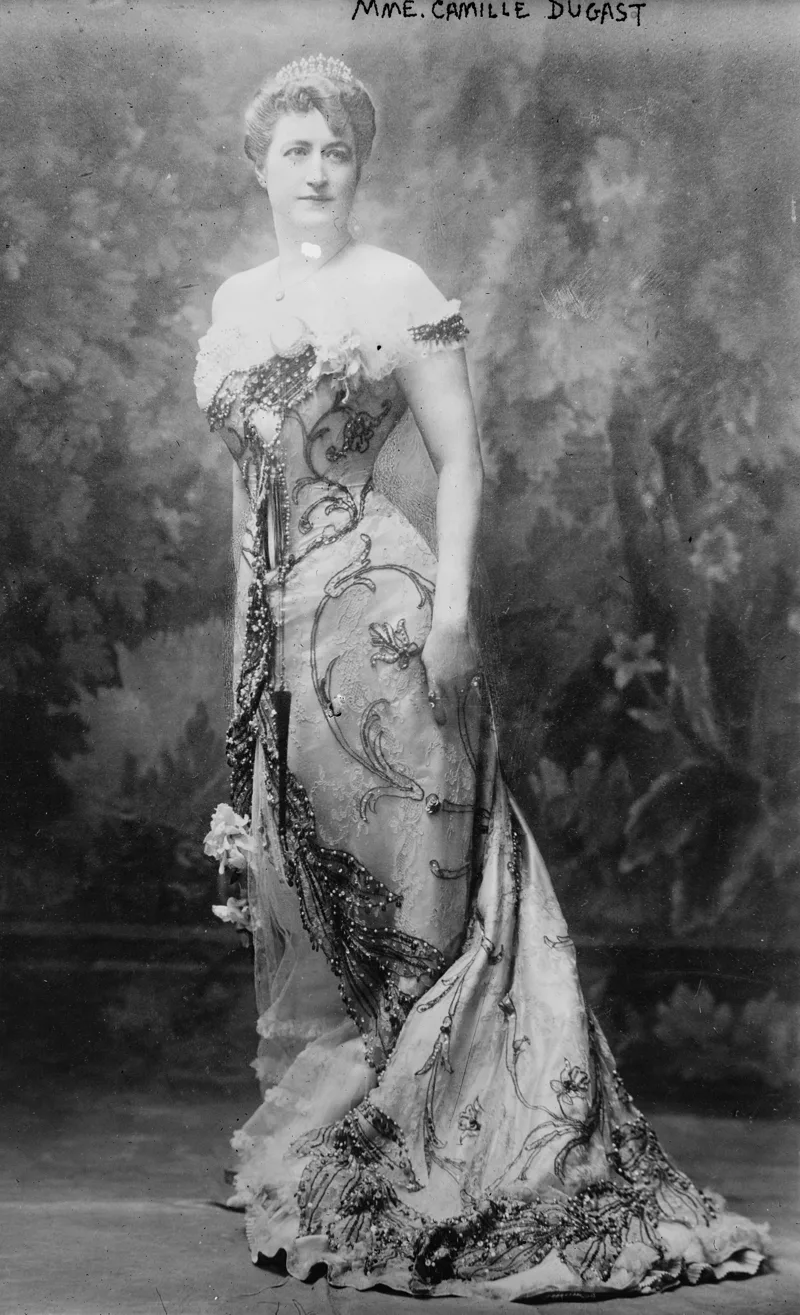
The first woman in a car race was a Madame Labrousse, who drove a three-seater Panhard in the Brussels-Namur-Spa race over 1 and 2 July 1899 and finished third in class in 8 hours, 30 minutes and 29 seconds. As the new century opened, socialite Camille du Gast and baroness Helene de Zuylen used their connections to enter the great road races organised by the Automobile Club of France. Du Gast's career was briefly derailed by the La Femme au Masque scandal in 1902. After the 1903 Paris-Madrid, where several people died, France barred women from racing cars.
Britain's Dorothy Levitt, a secretary introduced to motoring by publicity-minded driver S.F. Edge, won the 1903 Southport Speed Trial straight away, shocking Edwardian high society. She collected medals at speed trials across the British Isles and Europe, set and reset women's world speed records and wrote a book for would-be female motorists. In 1908 Brooklands hosted the Ladies' Bracelet Handicap, a race for women only, which Scot Muriel Thompson won in her brothers' Austin.
Across the Atlantic, Joan Newton Cuneo became the first woman to take part in a race on the American continent when she was reluctantly accepted into the 1905 Glidden Tour. A collision put her out, but the press praised her resilience and the publicity launched her career. She earned a medal for a perfect score in the 1908 Glidden Tour and finished second to Ralph DePalma in a fifty-mile race at New Orleans in 1909. After those races the American Automobile Association banned women from its competitions, ending her career.
Women have never been officially banned from Formula One, yet fewer than ten have raced.
Which women raced between the wars?
Many women competed between the wars, in mixed races and women-only events. Canada's Kay Petre raced in a handful of non-championship Grands Prix in 1937 and finished sixth in the Grosvenor Grand Prix in South Africa. Brooklands had taken to segregating its events, and Jill Scott and Violette Cordery attacked speed and distance records there. Cordery won the Dewar Trophy twice, in 1926 and 1929.
Eliska Junkova became a household name in her native Czechoslovakia through hillclimb successes, and she and Maria Antonietta Avanzo were among the first women to take part in the Targa Florio. Tennis star Lili Alvarez, a three-time Wimbledon finalist, won the 1924 Catalonian Automobile Championship at 19.
Who was the first woman in Formula One?
Maria Teresa de Filippis was the first, entering six Grands Prix in 1958. One was the non-championship Syracuse Grand Prix, where she finished fifth. At the French Grand Prix the race director barred her, remarking that a woman's only helmet belonged in a hair salon. Her only completed world championship race was the 1958 Belgian Grand Prix, where she came tenth, two laps behind.
In 1959 she failed to finish either of the two races she started, and she left the sport after Jean Behra's fatal crash at AVUS. Scholar Olivia R. Howe notes that women have never been officially prohibited from Formula One, yet fewer than ten have driven in it since the beginning. As of 2026, five women have qualified or tried to qualify for a world championship Grand Prix.
| Driver | Years | Result |
|---|---|---|
| Maria Teresa de Filippis | 1958 and 1959 | Tenth in the 1958 Belgian Grand Prix |
| Lella Lombardi | 1974 to 1976 | 17 events; sixth in the 1975 Spanish Grand Prix |
| Divina Galica | Late 1970s | Three attempts, did not qualify |
| Desire Wilson | 1980 | One attempt at Brands Hatch, did not qualify |
| Giovanna Amati | 1992 | Brabham, first three races, did not qualify |
What did Lella Lombardi achieve?
Lombardi entered 17 world championship Grands Prix between 1974 and 1976, more than any other woman, and remains the only woman to score points. She was born in 1941 in Frugarolo, in Piedmont, and her father, a butcher, gave her a job as a delivery driver. He found her passion for racing hard to accept at first, then embraced it after she finished runner-up in a 1968 race.
She bought her first car in 1965 and raced in Formula Monza, moved to Formula Three in 1968 and won the Italian Formula 850 series in 1970. In 1974 she finished fourth in Formula 5000 in a Lola, and she tried unsuccessfully to qualify for Formula One in a privately entered Brabham. It carried sponsorship from Radio Luxembourg, which broadcast on 208 metres mediumwave, so she took 208 as her race number. Count Vittorio Zanon then sponsored her entry, and for 1975 she joined March with backing from Lavazza.
At the opening race in South Africa she became the first woman since de Filippis to qualify for a Grand Prix. In Spain the race was stopped early, following a crash in which four spectators died. Lombardi, running sixth, was classified in that place, but with the race ended before three-fifths of its scheduled distance, points were halved, and she took half a point. She also finished seventh in the German Grand Prix at the Nurburgring. In 1976 March replaced her with Ronnie Peterson after a 14th place in Brazil, and she moved to RAM Racing, with 12th in Austria her best result.
Lombardi's career went well beyond Formula One. She won the 6 Hours of Pergusa and the 6 Hours of Vallelunga in 1979 and the 6 Hours of Mugello in 1981. At Le Mans in 1976 she finished 20th overall and second in the GTP class in a Lancia Stratos Turbo. In 1977 she started the Firecracker 400 NASCAR race at Daytona, with Janet Guthrie and Christine Beckers also in the field, and finished 31st. She retired in 1988, founded Lombardi Autosport the next year, and died in Milan in 1992 aged 50. A 2020 film, Beyond Driven, tells her story.
How did Michele Mouton change rallying?
Michele Mouton, a French driver for Audi, became the first woman to win a world championship rally when she took victory at the 1981 Rallye Sanremo. She won four WRC events in all and finished runner-up in the 1982 drivers' world championship. Earlier that weekend, Ari Vatanen had said he would never lose to a woman.
Born in 1951 in Grasse, on the French Riviera, Mouton began driving her father's Citroen 2CV at 14 but only turned to rallying in 1972, after a friend asked her to practise the Tour de Corse. She co-drove in the 1973 Monte Carlo Rally, the first ever WRC event. Her father offered to buy her a car and give her one year to prove herself, and in an Alpine-Renault A110 she soon did. In 1975 she won the two-litre prototype class at Le Mans in an all-female crew with Christine Dacremont and Marianne Hoepfner.
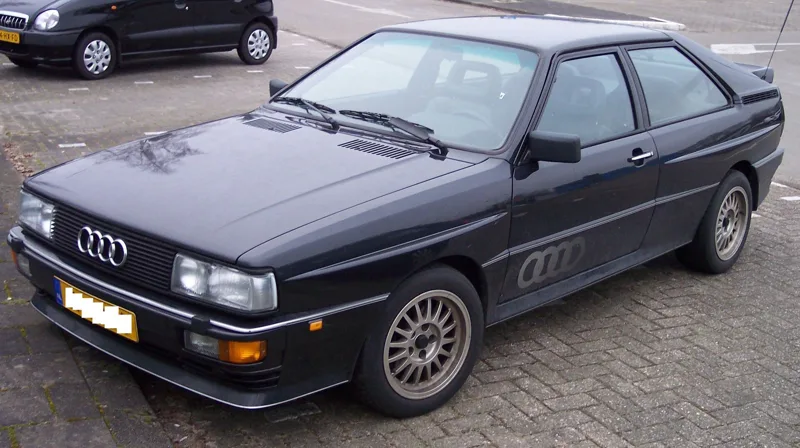
After Fiat France signed her in 1977 and she won the 1978 Tour de France Automobile, Audi Sport called in 1980. The decision to sign her instead of established male drivers drew great publicity. Her new car, the Audi Quattro, was the first rally car with more than 300 bhp and both a turbocharger and four-wheel drive. She started a long partnership with co-driver Fabrizia Pons at the 1981 Rally Portugal, took seven stage wins and finished fourth, which ended criticism of Audi for signing a woman. Then came Sanremo, where she held off Henri Toivonen and Vatanen.
In 1982 she won in Portugal, Brazil and Greece and finished second to Walter Rohrl in the title race, helping Audi to its first manufacturers' title. She recorded 18 stage wins in Portugal and survived a crash at 110 km/h (70 mph) into a stone wall at the Monte Carlo Rally. She won the Pikes Peak hill climb in 1985 in record time, and in 1986, with Peugeot, became the first woman to win a major rally championship, the German Rally Championship. She retired soon after, when Group B was banned.
Her influence continued off the stages. In 1988 she co-founded the Race of Champions in memory of her former rival Henri Toivonen. In 2010 she became the first president of the FIA's Women in Motorsport Commission, and in 2011 she became the FIA's manager in the World Rally Championship.
Which women raced in American open-wheel racing?
Before the 1970s women were excluded from the American open-wheel paddock as professionals, though two women entered cars in the 1929 Indianapolis 500. Maude Yagle bought a Miller 8 and hired Ray Keech, who won the race. That made her the first woman to own a winning car, and as of 2026 she is still the only one. She watched from the grandstand. The ban on women in the paddock was lifted in 1971 through the efforts of journalist Denise McCluggage.
Janet Guthrie became the first woman to qualify for the Indianapolis 500 in 1977, a year after her first USAC Championship Car race, and finished fifth at Milwaukee in 1979. Lyn St. James was a regular at Indianapolis in the 1990s. In the 2000s Sarah Fisher scored two podiums for Walker Racing, and Danica Patrick finished fourth in her first Indianapolis 500 in 2005 after leading laps. She later won the 2008 Indy Japan 300, the last race before reunification, which remains the only top-class American open-wheel race win by a woman as of 2026.
After reunification came a boom. A record five women entered the 2010 Indianapolis 500, and Simona de Silvestro was named Rookie of the Year. In the centennial race all four women who entered qualified, and the feat was repeated in 2013. De Silvestro scored four top-five finishes, including second at Houston in 2013. Numbers then fell, with only one woman starting subsequent 500s and none in 2020 or 2025. In 2022 Angela Ashmore became the first woman on a winning crew when she was data engineer for Marcus Ericsson. Women have won Indy Lights races too: Ana Beatriz de Figueiredo, Pippa Mann and Jamie Chadwick.
Why has the grid stayed so male?
Historically, women's participation has been held back by perceptions that they lacked the ability or physical strength of men, despite efforts to counter this. The record shows direct bans as well: France barred women from racing cars after the 1903 Paris-Madrid, the American Automobile Association banned women in 1909, and Brooklands separated its events.
Access to professional paddocks came late. De Filippis walked away after Jean Behra's fatal crash, Joan Newton Cuneo's career ended with the AAA ban, and in the junior ladder, no woman drove in International F3000 or the GP2 Series after 1992 until Tatiana Calderon completed a full Formula 2 season for Arden in 2019. Divina Galica was the only woman to compete in the original European Formula Two Championship, between 1977 and 1980.
What do dedicated programmes and tests add?
Programmes can open doors that ordinary careers do not. Beth Parettas, a former Dodge Motorsport director, ran a short-lived programme that brought De Silvestro and Calderon select IndyCar starts in 2022. Formula E has held three female-exclusive test days: in Diriyah in December 2018, at Jarama in November 2024 and in Valencia in October 2025. Three women have raced in the series itself.
Women have also advanced away from the cockpit. Monisha Kaltenborn became Formula One's first female team principal at Sauber in 2012, and Claire Williams ran her family's team day to day from 2013. Hannah Schmitz has won multiple championships as Red Bull's head of race strategy, and Laura Muller became the first female chief race engineer in 2025, assigned to Esteban Ocon at Haas.
Where this goes next
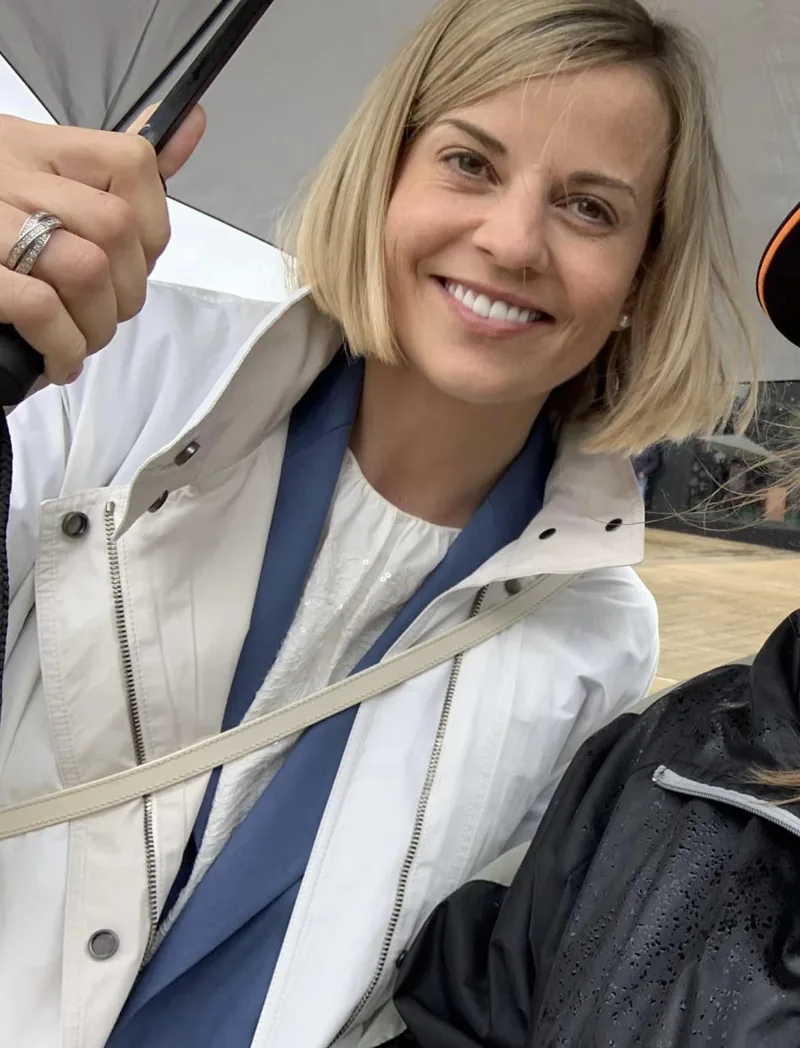
Women continue to test Formula One cars, among them Susie Wolff, who drove in official practice for Williams in four Grands Prix in 2014 and 2015, Katherine Legge with Minardi in 2005, Tatiana Calderon with Sauber in 2018 and Doriane Pin with Mercedes in 2026. Juju Noda became the first Japanese woman in Japan's top formula series in 2024, though she has had no points finishes in three full seasons.
Formula E held its third female-exclusive test day in Valencia in October 2025, and Jamie Chadwick won an Indy Lights race at Road America in 2024. In Formula One, no woman has bettered Lombardi's sixth place of 1975.