Founded by Henry Kaiser and Joseph Frazer, the company sold cars at home and abroad from Willow Run, then left the passenger car market after buying Willys.
Kaiser-Frazer was an American car maker that traded under that name from 1947 to 1953. Henry J. Kaiser and Joseph W. Frazer set it up, and it built cars at Willow Run, sold the Darrin and Henry J, and quit passenger cars after 1955, once Willys-Overland had been bought in 1953.
Kaiser-Frazer built cars in the United States from 1947 to 1953 under that name, and it was founded by Henry J. Kaiser and Joseph W. Frazer. It was among the few American car makers to find success after World War II, though only for a few years. Its operations later stretched from Willow Run in Michigan to plants in Argentina, Israel and the Netherlands.
How did Kaiser-Frazer start?
Kaiser-Frazer was founded on 25 July 1945. In 1946 it displayed prototypes of two new cars at the Waldorf Astoria Hotel in New York City, and in 1947 it acquired the automotive assets of Graham-Paige, where Frazer had become president near the end of World War II. The company's two marques, Kaiser and Frazer, were meant to offer a fresh start while the Big Three were still selling pre-war designs.
The Kaiser prototype used a forward-thinking front-wheel drive layout, whereas the Frazer was a conventional rear-drive model with a more upmarket feel. Costs and development time kept the front-wheel drive design out of production, so the 1947 model year Kaiser and Frazer sedans shared bodies and powertrains. Both marques went on sharing bodies and engines until 1950, though their trim differed inside and out.
Kaiser had no background in car marketing, while Frazer had worked for Packard, GM, Chrysler and Willys-Overland. Kaiser favoured pushing ahead regardless of setbacks, and Frazer took the more cautious view. That mix of temperaments drove the company's early energy and its later quarrels.
A postwar car maker that sold its own cars at home, then built them from Argentina to Israel before the Jeep took over.
Why did Kaiser-Frazer struggle after 1949?
Demand fell in 1949 once the Big Three launched new designs. Kaiser still pushed for more output, and the surplus took until mid-1950 to clear. Frazer and Kaiser argued again and again over production, and the disputes ended with Frazer's departure.
The Frazer nameplate was dropped after a short run of 10,000 units in 1951, which used up the remaining 1949-50 bodies. The company still produced a Frazer Manhattan convertible in 1951, which was the last four-door American convertible until the 1961 Lincoln Continental. By then the business was under heavy pressure from the larger makers.
How did Kaiser-Frazer become Kaiser Motors?
In 1953 the Kaiser-Frazer Corporation was renamed Kaiser Motors Corporation, and it continued building passenger cars through 1955. Two years later the firm became Kaiser Industries, a holding company that gathered the main assets of the Henry J. Kaiser Company. That group spread into many fields, including a set of television stations.
In 1953 Kaiser also bought the ailing Willys-Overland company for US$63,381,175, mainly for its Jeep brand. The two operations were merged under the name Kaiser-Willys Corporation. The car side was left behind, and the passenger car line ended with the 1955 model year.
From 1956 Willys Motors made utility vehicles only, many of them for export, and it earned steady profits as a wholly owned unit of Kaiser Industries. Its holdings included stakes in Willys-Overland do Brasil and Industrias Kaiser Argentina. The unit became Kaiser Jeep Corporation in 1963, was sold to American Motors in 1970 and passed to Chrysler in 1987 when American Motors was sold.
Where did Kaiser-Frazer build its cars?
Most cars came from Willow Run, Michigan, a building that was then the largest in the world. The government had raised it shortly before World War II to build B-24 Liberator bombers for Henry Ford. After the war Ford showed no interest, and the War Assets Administration offered Kaiser-Frazer a five-year lease on terms it found attractive. The site later went to General Motors.
Kaiser-Frazer also operated plants in Jefferson, Michigan, Long Beach and Portland, Leaside in Ontario, Haifa in Israel, Kawasaki in Japan and Mexico City, plus the Rotterdam works in the Netherlands, known as Nekaf. US production moved to Toledo, Ohio, when Willys-Overland was bought in 1953. General Motors later took over the site, because it needed room after a fire at its Livonia transmission plant.
What models did Kaiser-Frazer sell?
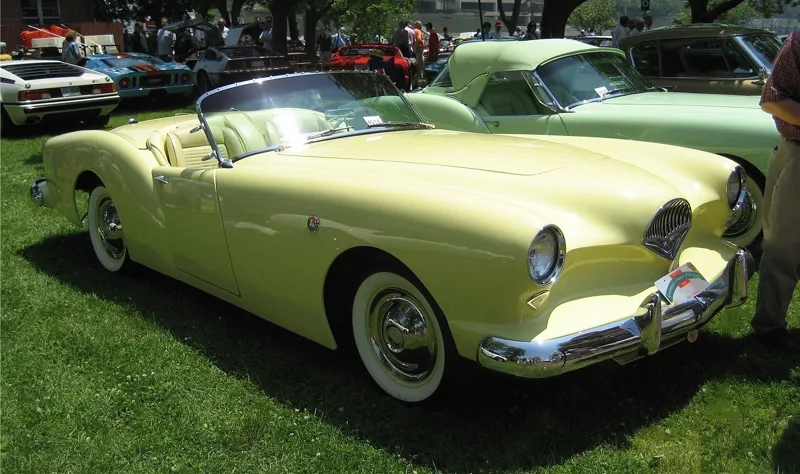
Kaiser offered Custom, Deluxe, Virginian, Carolina and Manhattan sedans, along with the Traveler and Vagabond three-door hatchback utility sedans. The 1954 Kaiser Manhattan was the first post-war production car to offer supercharging. The Henry J was a small economy car, and the Darrin was a fiberglass sports car that reached the market a month ahead of the Corvette.
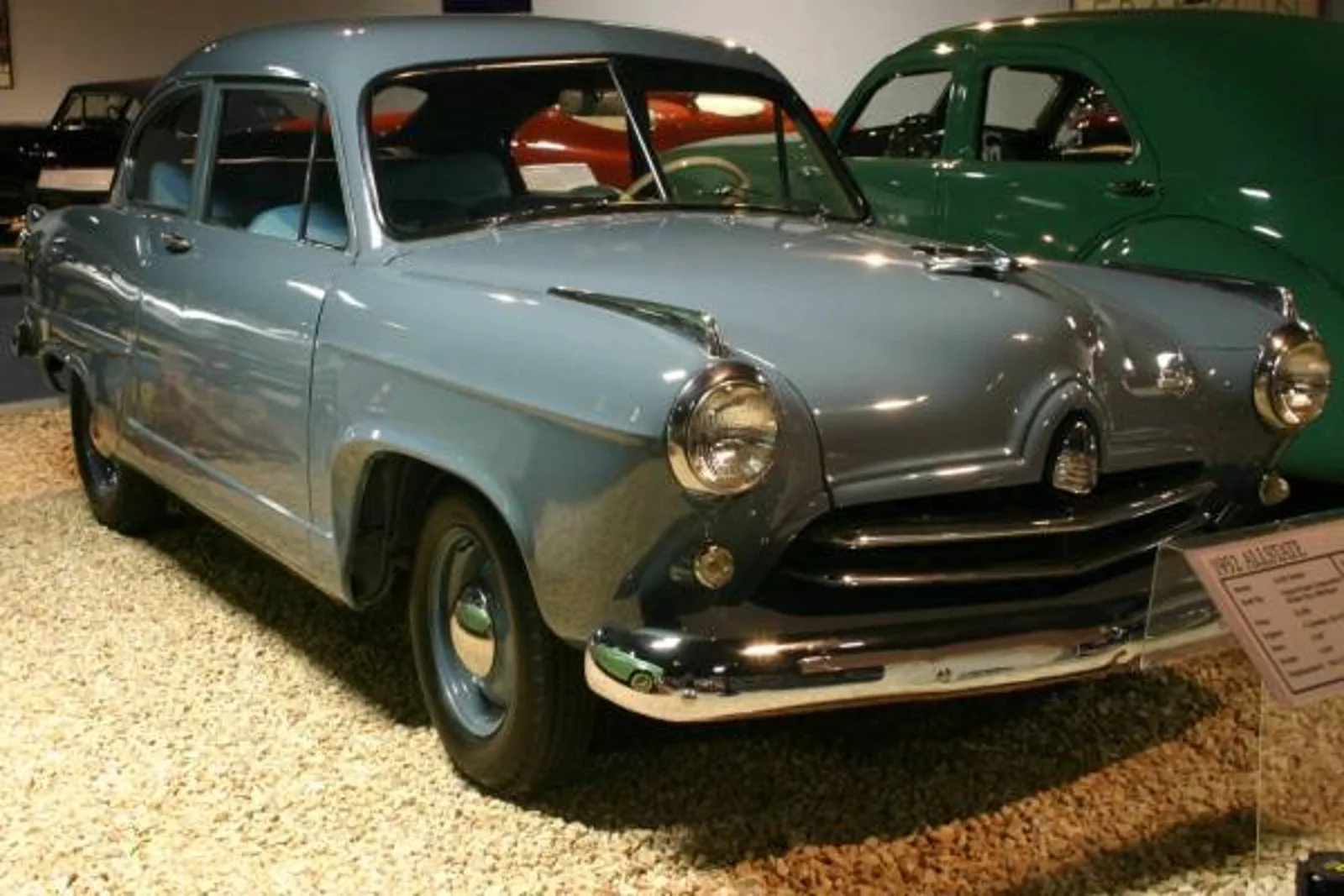
Frazer sold Standard, Deluxe and Manhattan sedans and a Vagabond hatchback, and early 1947 Frazers were marketed as a Graham-Paige product. The Allstate was a slightly restyled Henry J, designed to sell through Sears, Roebuck department stores in the southern United States, with Sears products such as tyres and batteries fitted. Its modest changes were executed by Alex Tremulis, the stylist of the 1948 Tucker Sedan.
The company also built the C-119 Flying Boxcar aircraft under licence from Fairchild, at Willow Run from 1951 to 1955. It produced 71 of them. Fairchild did not like Kaiser-Frazer making the aircraft, and it blocked the purchase of Pratt and Whitney R-4360 engines, so Kaiser-Frazer bought Wright 3350 duplex cyclone engines, which were plentiful after the B-29 bomber was retired.
What was the Carabela in Argentina?
In 1951 Argentina sent Brigadier General Juan Ignacio San Martin to the United States to persuade a car maker to build cars in Argentina. In 1954 Kaiser was the only one to accept, because the others thought the market too small and Kaiser's rugged products suited the country. On 19 January 1955 Kaiser and the Argentine government signed an agreement, and Kaiser Automotores was formed as the holding company.
The partner in Industrias Kaiser Argentina, known as IKA, included the government-owned vehicle maker IAME as well as private investors. An import licence allowed 1,021 completed cars to be brought in, and groundbreaking for the factory came in March 1955. The first Jeep rolled out on 27 April 1956. The plant was built at Santa Isabel in Cordoba province, where the Kaiser Manhattan became the Kaiser Carabela, after a Portuguese sailing ship.
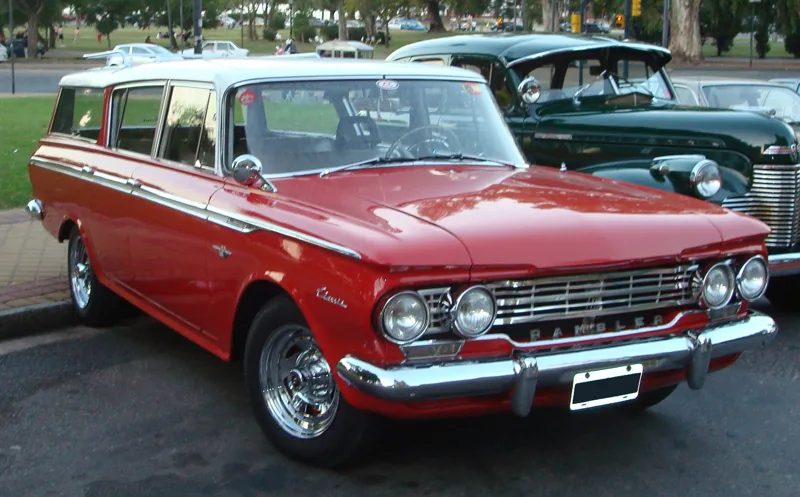
The Carabela was changed for local roads. Its speedometer read kilometres, its interior was rugged leather, and its springs were stiffened. Production started on 25 July 1958, and 2,158 cars were built in the remaining months of that year. IKA assembled 20,454 Jeeps in 1958 alone, and the combined total of 22,612 units was 81 per cent of all vehicles made in Argentina that year. The Carabela ended in 1962 after some 15,000 cars, and Rambler variants licensed from AMC replaced it.
How did Israel and the Netherlands fit into the story?
In 1948 Ford planned to build an assembly plant in Israel, but Arab League threats of a boycott led it to pull out. Lord Marcus Sieff of London put the Israeli government in touch with Efraim Ilin, and Ilin met Hickman Price of Kaiser-Frazer. They negotiated a 2.5 million dollar project, with Kaiser-Frazer investing half a million dollars and Ilin's group investing the other two million.
Production in Israel started in 1951, and by 1955 the plant supplied 20 per cent of the country's industrial exports, with 90 per cent of its output sent abroad.
In the Netherlands, Nederlandse Kaiser-Frazer Fabrieken (NEKAF) was created in 1947 with a factory in Rotterdam. It assembled 6,000 Kaiser knock-down kits from the 1949 range, with some local content, and kept assembling Kaiser cars through 1954. In January 1955 NEKAF signed a contract with the Royal Netherlands Army for 4,000 M38A1 jeeps, and the first arrived on 28 May 1955.
The NEKAF jeeps differed from the US version in their side reflectors and extra signals. Cabin heaters were deleted to cut costs, which raised the price to some 12,000 Dutch guilders each. The jeeps stayed in service well into the 1990s, and one surviving UNIFIL vehicle from South Lebanon is now in the Legermuseum Delft.
Kaiser-Frazer models and output at a glance
| Programme | Years | Output or detail |
|---|---|---|
| Kaiser and Frazer cars, US | 1947 to 1955 | Passenger cars built through 1955 |
| Frazer | 1947 to 1951 | Nameplate dropped after a 10,000 unit run in 1951 |
| C-119 Flying Boxcar | 1951 to 1955 | 71 built at Willow Run |
| NEKAF Kaiser cars | 1949 to 1954 | 6,000 knock-down kits in 1949 |
| Israeli plant, Kaiser-Ilin | 1951 onward | 20 per cent of Israeli industrial exports by 1955 |
| NEKAF army jeeps | 1955 to 1963 | 4,000 M38A1 contract, then 1,624 more and 2,237 more |
| Carabela, Argentina | 1958 to 1962 | Some 15,000 cars built |
| Jeep, Argentina | 1958 | 20,454 assembled in 1958 alone |