An American-derived family that replaced the Kaiser cars, a fish-mouth grille, a Tornado Jet engine and an IKA flagship that followed it.
Built by Industrias Kaiser Argentina from 1962, the Rambler family took its designs from the American Classic and Ambassador. It replaced the older Kaiser models, went through three generations, and ended as a regular model in 1973, with made-to-order cars following to 1975.
The IKA Rambler was a family of passenger cars that Industrias Kaiser Argentina built from 1962. Derived from the American Rambler Classic and AMC Ambassador, it replaced the Kaiser Carabela and Bergantin, and it ran through three generations until its regular production ended in 1973.
Where did the Argentine Rambler come from?
The Argentine generations followed the American ones closely. The second arrived after the 1963 American second generation, and the third after the American third generation of 1965.
The Rambler replaced the Kaiser models, the Carabela and the Bergantin. It was introduced in Argentina in 1962 and drew on North American designs. The Classic derived from the first, second and third generations of the North American Rambler Classic, while the Ambassador derived from the third and fourth generations of the AMC Ambassador.
IKA's aim was to offer Argentine buyers a new option in a market where rivals were already moving. Its reasoning was competitive. Ford and General Motors had begun importing the first compact cars from the United States, and IKA had already shaken up the market with the Kaiser Carabela, a large car that was still smaller than the cars common in Argentina. When the Ford Falcon and the Chevrolet 400 appeared, IKA decided by 1961 to replace the Kaiser line with the Rambler.
The line was presented in Argentina under the Rambler brand, one more option beside Kaiser, Jeep and IKA's own marque.
Built from American Rambler designs, the Argentine line gave its maker a luxury range and then a flagship in the Torino.
What was the first-generation Rambler?
The first generation was officially presented in 1962 as a four-door unitary saloon for six passengers on two rows of bench seats. It used a Continental-brand in-line six of 226 cu in (3,700 cc), producing 119 PS (117 hp) at 4,000 rpm, with a 3-speed gearbox operated by a lever at the side of the steering wheel.
The first-generation car was, in effect, a replica of the North American Rambler Classic that American Motors Corporation had launched in 1961.
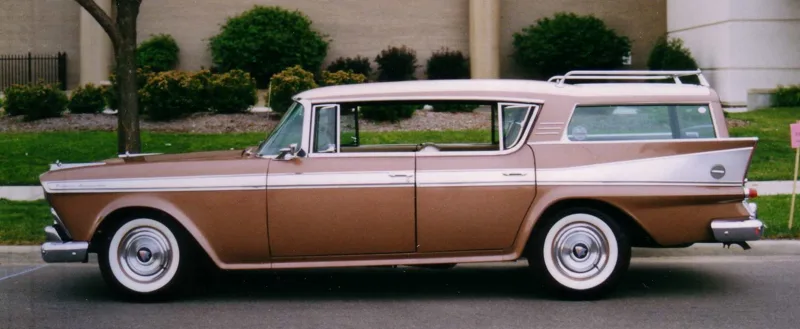
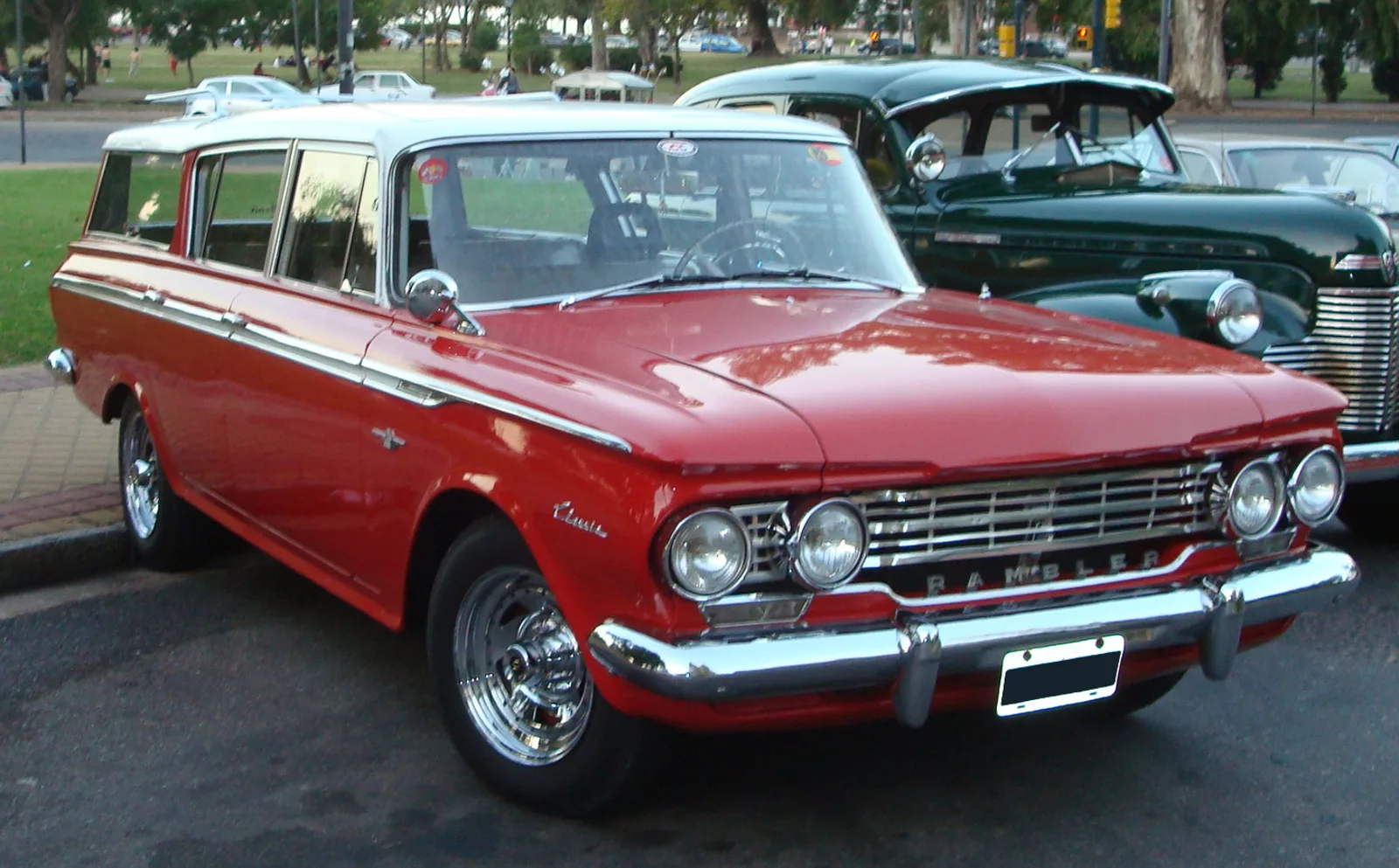
Two body styles came out, saloon and estate. The saloon was sold as the Classic Custom, the basic version, the Classic Custom De Luxe, the intermediate version, and the Ambassador 440, the luxury version. The estate was the Rambler Cross Country.
A curious detail was that both body styles shared exactly the same dimensions. The saloon's large boot was as long as the load bay of the estate.
The design soon looked dated. Its features recalled the styling of the fifties, and as the American Rambler line moved on, the first generation was replaced by a more modern generation.
What changed in the second generation?
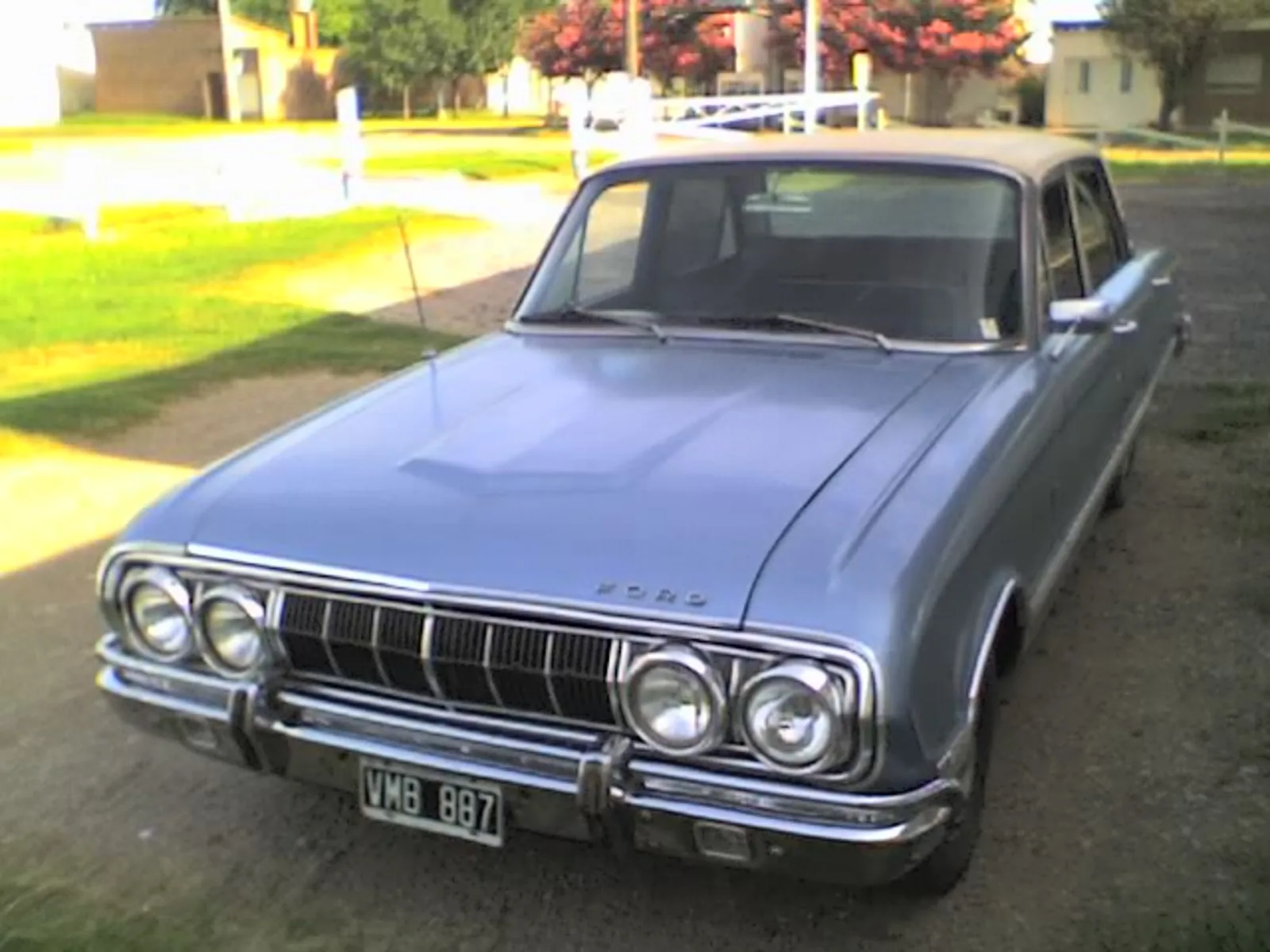
The second generation began production in 1963, at the Santa Isabel plants in Cordoba Province, after the second-generation Rambler Classic appeared in the United States. It was a radical change, with straight lines on the waistline, a semi-pyramidal roof and pillars, and a body several centimetres wider than its predecessor. At 4.92 m (16.1 ft) it was one of the longest cars ever built in the Argentine market.
The front grille was angular, and it earned the car the nickname fish mouth in Argentina. This was the physical feature that set the generation apart.
Across the whole line the engines were in-line sixes, either the Continental of 226 cu in (3,700 cc) or, in later cars, the Tornado Jet of 230 cu in (3,770 cc), with three-speed gearboxes, rising to four speeds in the Ambassador 990 Tornado.
Mechanically the new line kept the 226 cu in Continental six with 119 PS (117 hp) and the 3-speed manual gearbox. The names stayed the same, but numerical designations were added: 550 for the Classic, 660 for the Classic Deluxe and 990 for the Ambassador.
The numbers 400, 440, 550, 660, 990 and 380 marked the equipment level of each car, so the number told a buyer how a car was specified.
The Ambassador 990 changed the market. Hydraulic steering, electric windows on all four doors and full air conditioning made it the first car in history to offer these levels of equipment.
Rambler replaced the second generation in turn, after two years of Argentine production, once the American third generation arrived in 1965.
How did the third generation differ?
The third generation, built from 1965 to 1972, was a total change in looks and mechanics. Differences between the generations were visible at a glance: the grille, the headlamps and the rear fins. The fish-mouth grille gave way to two new designs. The Classic received a flat grille, flush with the front line, and horizontally aligned dual headlamps, while the Ambassador had a sharp-sectioned grille with vertically aligned dual headlamps.
The rear saw the strongest redesign. The boot was longer than the second generation's, and small sections protruded at the sides, forming little fins. The car went beyond 5 m in length, reaching 5.077 m (16.7 ft), and it placed the line in an exclusive market segment as the first model sold with those characteristics.
For its time the equipment list was ahead of the field. Buyers got central locking, air conditioning and power windows on all four doors, and the driver's switch could work any of them. A three-speaker radio, chosen by a knob, sat alongside a horn and light-flash control built into the steering wheel ring.
The car also had an automatic choke, since carburettors were the only fuel system in use at the time, plus servo brakes and factory hydraulic steering.
Which engine did the third generation use?
All models adopted the Tornado Jet, an in-line six from the AMC Jeep line with an overhead camshaft. It displaced 230 cu in (3,770 cc) and produced 132 PS (130 hp) at 4,200 rpm. The Classic kept the classic 3-speed manual, while the Ambassador moved to a new 4-speed manual, both operated by a lever beside the steering wheel.
Front disc brakes were another advanced solution, but they were optional only on the Ambassador 990. The Cross Country stayed in production to complement the saloons, as it had in earlier generations.
| Item | Detail |
|---|---|
| First-generation engine | IKA Continental, 226 cu in (3,700 cc), 119 PS (117 hp) at 4,000 rpm |
| Third-generation engine | Tornado Jet, 230 cu in (3,770 cc), 132 PS (130 hp) at 4,200 rpm |
| Gearbox | 3-speed manual, or 4-speed on the Ambassador 990 Tornado |
| Second-generation length | 4.92 m (16.1 ft) |
| Third-generation length | 5.077 m (16.7 ft) |
| Model numbers | 400, 440, 550, 660, 990 and 380 |
Why did IKA launch the Torino?
The third generation was tied to a larger decision. Rambler presented it after the American third generation of the Rambler American appeared in the United States, and that car became the brand's flagship saloon. The Classic and Ambassador pair was left in a higher segment, with the Ambassador classed as a Premium model.
The regeneration also gave IKA the initiative to build a car developed entirely in Argentina on the basis of the Rambler American. In 1966 that became the IKA Torino, a unitary saloon offered as a four-door saloon or a Coupe Hardtop, and equipped with the Tornado Jet engine first used in the Rambler line. That engine therefore linked the Torino to the Rambler family.
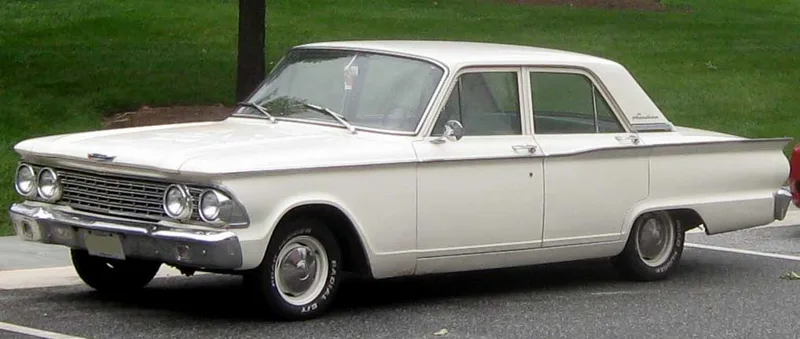
With this generation IKA also opened the Premium segment of the Argentine market. Later it gained the Ford Fairlane and the Dodge Coronado as its first competitors.
How did the Rambler line end?
Production of the Rambler line ended as a regular model in 1973, and the cars continued only to order. That practice finally ended in 1975, after IKA was absorbed by Renault to form Renault Argentina S.A.
Made-to-order Ambassador 990s kept going until 1975, and one of them was set aside as a presidential car. The Rambler line itself was dropped by the new owner, which, like others derived from American Motors Corporation production, shed the range apart from the IKA Torino.
The IKA Torino was the exception. It continued to be produced under the Renault brand until 1980.