From Ford kits in 1913 to a 1959 decree that drew in more than 20 companies, and the two homegrown cars, one a racer and one a taxi, that came out of it.
Argentina built its car industry from a 1913 Ford kit plant, a 1955 joint venture called IKA and a 1959 decree that virtually banned assembled imports. IKA's Torino, built 1966 to 1981, became the national car, while the Ford Falcon ran from 1962 to 1991.
In 1930, Argentines owned cars at a higher rate than the French, the British or the Danes: one vehicle for every 27.6 inhabitants. Almost all of those cars came from abroad, and it took decades of crisis, decrees and strikes before the country learned to build its own.
Two models came out of that struggle and stayed in the national memory: the IKA Torino, often called Argentina's national car, and the Ford Falcon, a taxi, police car and family saloon with a darker side.
The route from one to the other runs through import bans, a 1959 decree that drew in more than 20 foreign and domestic companies, and a long run of boom and bust. It also leaves Argentina today as the third largest car producer in Latin America.
How did Argentina build up a car industry?
The first sparks were small. A local entrepreneur, Horacio Anasagasti, ran a workshop from 1906 to 1911 that made custom vehicles from imported European parts. A real commercial industry began in 1913, when Ford opened a plant in the Barracas district of Buenos Aires to put together imported kits. By 1920 Ford's Argentine operations employed 1,500 people, and General Motors started its own assembly in 1925.
Demand was strong. By 1930 Argentina was the second largest foreign market for the American motor industry after Canada. The parts trade began to emerge during that decade as well, with foreign names such as Goodyear, Pirelli, Firestone and Michelin dominating tyres, while small local workshops made replacement parts and became the seed of a home-owned supplier base.
Almost every vehicle on the road was still imported, whole or in kit form, and that left buyers at the mercy of events overseas. Imports averaged 60,000 vehicles a year from 1925 to 1929, then fell below 10,000 a year in 1932-33 during the Great Depression and below 500 a year from 1943 to 1945 during the Second World War. Under Juan Peron, imports jumped to 80,000 in 1947 and then averaged only 9,000 a year from 1949 to 1955 amid recurring balance of payments crises. Strict quotas and limits on sending profits abroad led Ford to stop assembling in January 1948.
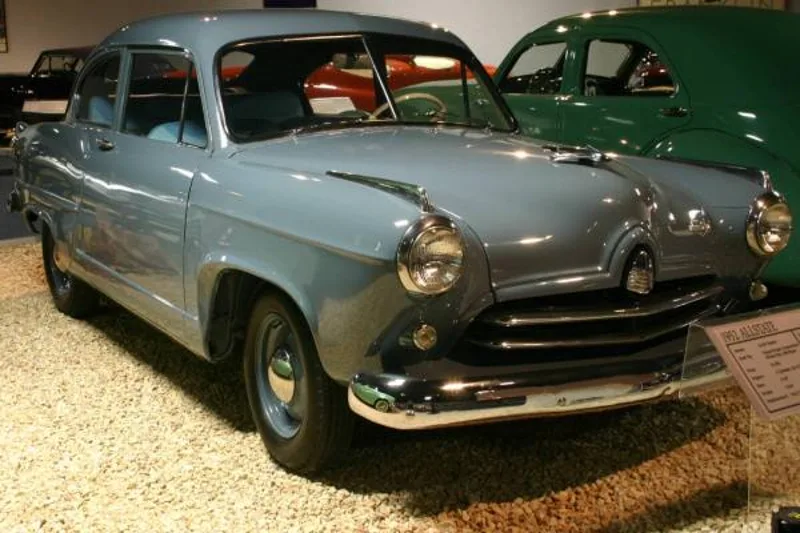
Real domestic production started in 1952, when the truck division of Mercedes-Benz opened a chassis plant at Gonzalez Catan, its first integrated production plant outside Germany. Three years later came the large-scale passenger car effort. The Peron government teamed up with the American industrialist Henry J. Kaiser to create Industrias Kaiser Argentina, or IKA, a venture that joined the state-owned IAME with Kaiser-Frazer. Kaiser contributed second-hand equipment, IAME put in cash, and a local share offering filled the gap. The first Argentine-made Jeep rolled off the line at the IKA plant in Cordoba in April 1956.
A fourth place at the Nurburgring in 1969 made the Torino a source of national pride and proof of what the whole Argentine industry could do.
Why did the 1959 decree start a boom and then a squeeze?
Even with IKA in place, fewer than 30,000 vehicles were built in 1958. The government of Arturo Frondizi then backed a policy of developmentalism that favoured cars alongside steel, chemicals and machinery. Decree 3693/59, passed in 1959, virtually banned imports of assembled vehicles and offered duty-free machinery to makers willing to invest and to raise their share of local content step by step.
Companies rushed in. During 1959 the government approved applications from more than 20 foreign and domestic companies to build car and truck assembly plants, and from 1959 to 1964 more than 20% of all private foreign investment in the country went into the sector. Output rose by more than 30% a year, from 33,000 units in 1959 to 195,000 in 1965, which made Argentina the second largest vehicle producer in the developing world after Spain.
The price of that rush was inefficiency. An American manufacturer estimated in 1967 that a car built in Argentina cost about 2.5 times its American equivalent at the factory gate, against 1.7 in Brazil and 1.6 in Mexico. Plants ran at 70 to 80% of capacity at the peak of the economic cycle and only 20 to 60% otherwise. A tangle of models meant short production runs and long stoppages, and many makers brought second-hand machinery rather than cash.
The weaker, domestically owned firms struggled out of the 1962-63 recession in poor shape, and the industry consolidated around global groups. Chrysler bought IASF, the licensee of DKW, in 1965. Peugeot took over its Argentine licensee IAFA in 1966. Renault acquired IKA in 1967, two years after IKA had merged with the automotive arm of the Siam di Tella conglomerate. By the middle of the decade local content had passed 90% by value, yet the industry still drained foreign currency: the Central Bank estimated in 1965 that it cost US$250 million a year.
Exports offered a way out. Managed trade deals within the Latin American free trade zone allowed duty-free shipments of finished vehicles in exchange for imported parts, and vehicle exports climbed from under 2,000 units in 1971 to 15,500 in 1974.
What did turbulence do to the car makers?
The industry sat in the middle of Argentina's political fights. The autoworkers' union SMATA had a name as one of the country's most combative. In 1964 the Plan de Lucha saw 3.9 million workers occupy more than 11,000 factories, among them Ford's General Pacheco site. In 1969 SMATA members in Cordoba started and led the Cordobazo protests that brought down the dictator Juan Carlos Ongania, although military rule itself lasted until 1973.
Foreign ownership made car makers targets. In 1972 the guerrilla group ERP abducted and killed Oberdan Sallustro, the head of Fiat's Argentine subsidiary. Ford and Mercedes-Benz have both faced accusations of working with the military dictatorship, including over the abduction of union leaders and the supply of vehicles to death squads. Two former Ford Argentina executives were convicted in 2018 of involvement in human rights abuses committed during the Dirty War.
Economic trouble pushed several brands out. General Motors liquidated its Argentine subsidiary in 1978 and laid off 4,000 workers, and Citroen and Chrysler both left in 1979, with Volkswagen taking over Chrysler Fevre. Local players stepped in: in 1982 Franco Macri took control of Sevel, which built Fiat, Peugeot and Chevrolet models under licence.
The recovery was dramatic. Output fell to 99,600 units in 1990, the lowest since 1960, then hit a record 342,000 in 1993, more than 15% above the previous peak in 1973. It reached 408,000 in 1994, dropped by 30% in the 1995 Tequila crisis, and recovered to around 450,000 a year in both 1997 and 1998. General Motors returned in 1993 with a US$100 million joint venture with Cidea, and Chrysler and Toyota opened plants in 1997, Toyota's at Zarate.
How big is Argentina's car industry today?
It is the third largest in Latin America. In 2024 the sector accounted for 3% of GDP, 9% of industrial production and 11% of exports. A dozen global multinationals and more than 200 parts companies operate there, and over 27,000 people worked for vehicle makers that year, with another 43,000 in parts firms and 4,000 in motorcycle plants.
Exports in 2024 passed US$9 billion across passenger vehicles, commercial vehicles, trucks, motorcycles and parts, with Brazil, Chile, Colombia, Peru and Central America the main buyers. Light trucks are popular with Argentine consumers, and that has made the country the world's fourth largest producer of pickups. Models built there include the Hilux from Toyota, the Ranger from Ford, the Frontier from Nissan and the Amarok from Volkswagen.
Three trade bodies speak for the industry. ADEFA, founded in 1961, represents vehicle makers and belongs to the Paris-based international organisation OICA. AFAC, founded in 1939, represents parts makers, and a motorcycle chamber formed in 2013 when three separate groups merged.
What was the IKA Torino, and why is it called the national car?
The IKA Torino was IKA's first national product, a mid-sized car built from 1966 to 1981 under an agreement with American Motors. Renault later took over IKA and continued building it. Renault bought IKA in either 1967 or 1975, depending on the telling, and the later date is tied to the creation of Renault Argentina.
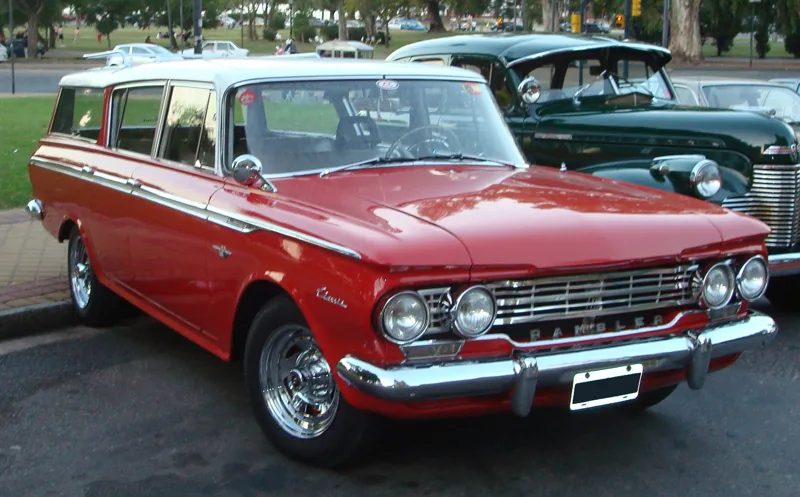
The recipe was deliberate. In 1961 IKA wanted a car that paired American dependability with European style, and it sent two 1965 Rambler Americans, a hardtop coupe and a sedan, to Pininfarina for a restyle. The Italian firm kept the general shape but gave the car a new interior and a European-style grille and rear end. The result, on a hybrid American Motors platform, came in a two-door hardtop and a four-door sedan, and it was presented on 30 November 1966 at the Juan y Oscar Galvez racing circuit, marketed as the quintessential Argentine car.
All engines were made in Argentina. The Tornado Special powered the 300, while the Tornado Interceptor went into the 380 range, including the 380W with its three Weber 45 DCOE carburettors, and into the TS, SE and GS200. A later Torino 233 engine used a new block and cylinder head. The GS200 replaced the 380W and became the first Argentine car to pass 200 km/h (124 mph), topping out at 203 km/h (126 mph).
A total of 99,792 Torinos were built. By 1978 the market had slowed sharply just as trade restrictions eased and foreign-made cars arrived. The Torino could not match the newer, cheaper and more reliable imports, and production ended in 1982. By then it was the only non-Renault product the French company made, and arguably the final Renault with its engine at the front driving the rear wheels.
How did the IKA Torino do at the Marathon de la Route?
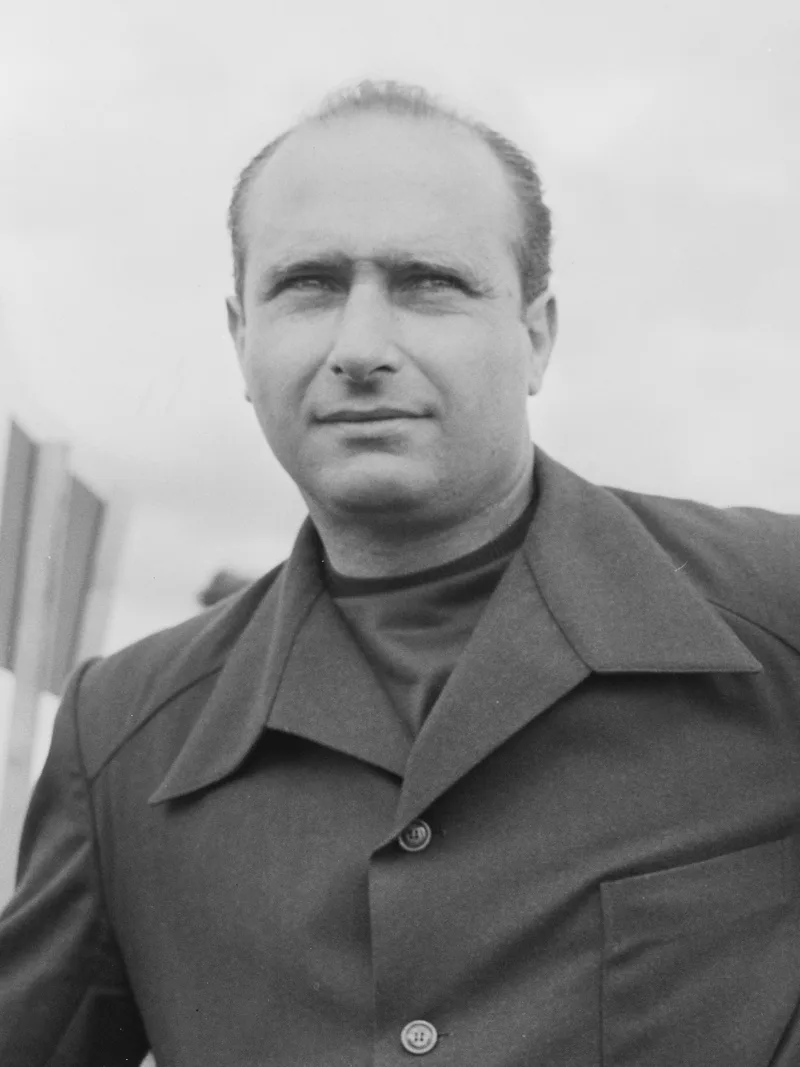
Racing was part of the plan. IKA ran a marketing effort called the Argentine Mission of 1969, coordinated by the engineer Oreste Berta and led by Juan Manuel Fangio, on the view that motorsport was an investment in brand image. The target was the 84-hour Marathon de la Route at the Nurburgring.
The factory prepared three cars, cutting their weight from 1,407 kg to 1,365 kg (3,102 to 3,009 lb), lifting output to 250 hp (186 kW; 253 PS) at 5,200 rpm and fitting wider tyres and revised suspension. Top speed was put at 230 km/h (143 mph). They were numbered 1, 2 and 3 because of Fangio's standing in Europe.
After three and a half days, the best finish was fourth. The number 3 car, driven by Eduardo Copello, Alberto Rodriguez Larreta and Oscar Mauricio Franco, covered more laps than any other, 334, but lost the lead to penalties. The result is still remembered in Argentina as one of the great feats of its motorsport, and that car now sits in the Fangio Museum in Balcarce.
Fangio's own daily car was a 1970 Torino 380S four-door, a gift after the race. He used it daily until 1974, the year he took the presidency of Mercedes-Benz Argentina, and it stayed in his family until 2013. It sold at auction in Birmingham in 2022 for GBP 28,175, about US$45,000.
The Torino also won the national touring car series Turismo Carretera in 1967 with Eduardo Copello, in 1969 with Gaston Perkins, in 1970 and 1971 with Ruben Luis di Palma, and in 2022 with Jose Manuel Urcera. It still races today, in silhouette form with Jeep Cherokee engines.
Why did the Ford Falcon last until 1991?
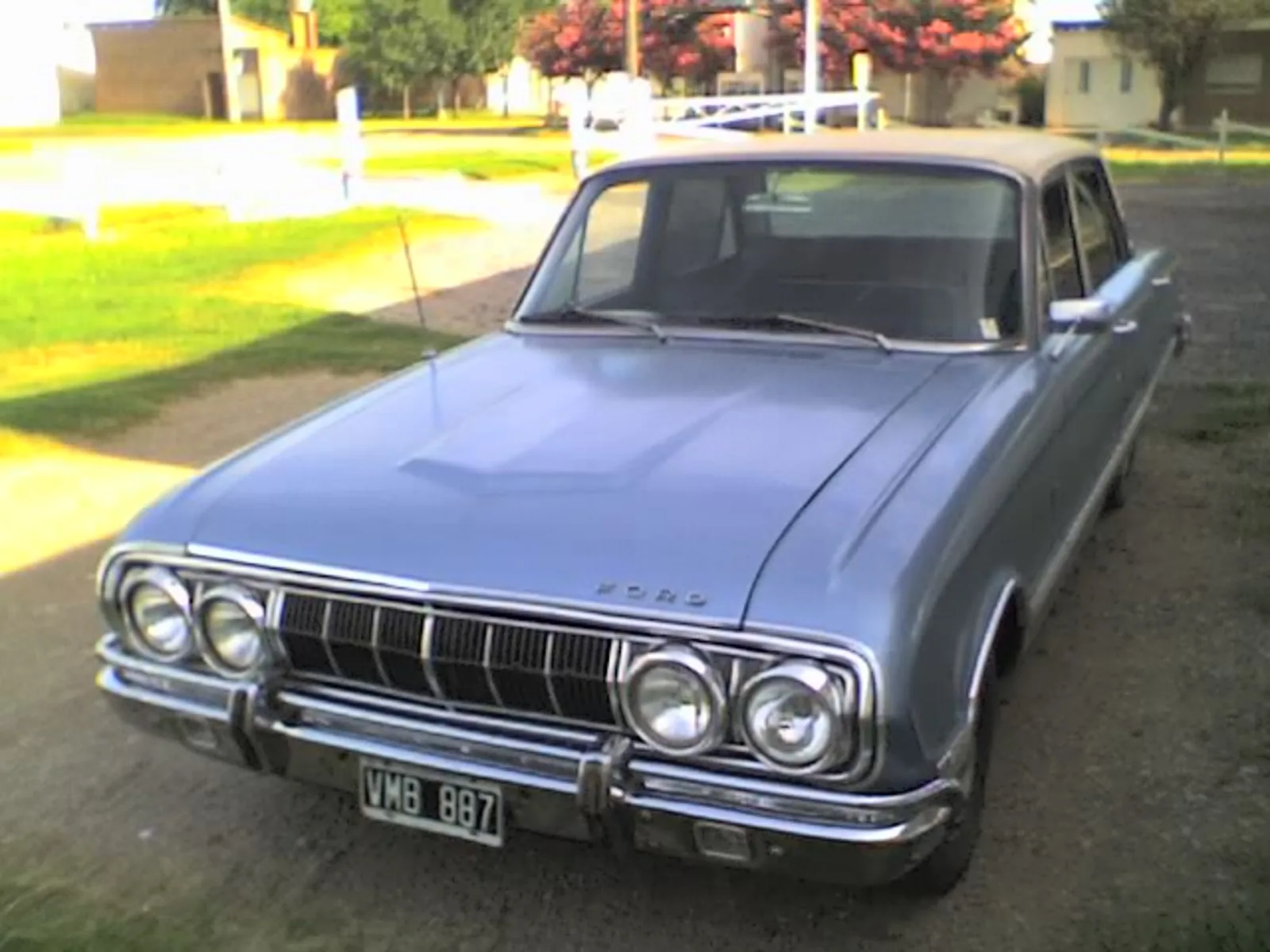
Ford Argentina built the Falcon from 1962 to 1991, a large family car based on the first-generation American Falcon. The company imported two for testing in 1961, began local production in 1962 from kits assembled in La Boca, and unveiled the car at the Gran Rex theatre in February 1962. The first cars were sedans only, in Standard and Deluxe trim, with a 170 cubic inch six.
The body style never changed. Six restyles brought a more European flavour and kept it in step with contemporary Fords, but decades later the car was plainly a 1960s design with a 1980s grille. The 1963 update added a horizontal aluminium grille. A taxi model came in 1964 and the better-equipped Futura in 1965, with a vinyl roof, bucket seats and a 187 cubic inch (3,060 cc) engine rated at 116 hp (87 kW). That same year it took the top sales spot in Argentina for the first time, with an 11.6% share.
The Falcon Rural station wagon arrived in late 1967, riding on the same wheelbase as the sedan unlike the North American wagon. In 1969 a 3.6-litre, 132 hp engine became an option, and 1970 brought quad headlights and disc brakes. The 1973 car added the sporting Falcon Sprint with 166 bhp (124.5 kW) from its 221-SP engine, and the Ranchero pickup, which later carried a maximum load of 715 kg (1,576 lb).
The final restyle came in 1982, to bring the Falcon in line with the Taunus, Sierra and Escort sold beside it. The Taxi and Sprint were dropped and the Futura became the Ghia, whose Ghia SP version made 140 PS (103 kW) from twin carburettors. A 2.3-litre four-cylinder with 90 PS (66 kW) was unpopular because it used more fuel than the 3-litre six. A rare 2.4-litre diesel of 70 hp (52 kW) came in 1988 but its supplier could not keep pace with Ford. The Falcon was finally discontinued after 1991, by which time about 98 percent of its parts were made locally.
Total sales reached 494,209 Falcons, a figure that includes 33,493 Rural wagons. Black-and-yellow Falcon taxis and white-and-blue police cars were a familiar sight. Falcons are still raced in Turismo Carretera.
What darker meaning did the Falcon carry?
The same toughness gave the car a grim second life. Dark green Falcons were used by paramilitary forces such as the Argentine Anticommunist Alliance in the 1970s and by the junta's secret police. Contractors working outside the armed forces acquired the cars used by the military by illegitimate means, repainted them and swapped their number plates, then delivered them to paramilitary groups for secret operations in the Dirty War.
How do the Torino and Falcon compare?
| Detail | IKA-Renault Torino | Ford Falcon (Argentina) |
|---|---|---|
| Maker | Industrias Kaiser Argentina, later Renault Argentina | Ford Argentina |
| Years built | 1966 to 1981, line ended 1982 | 1962 to 1991 |
| Basis | Rambler American restyled by Pininfarina, American Motors agreement | First-generation American Falcon |
| Bodies | Two-door hardtop, four-door sedan | Sedan, Rural wagon, Ranchero pickup |
| Units | 99,792 | 494,209, wagons included |
| Racing | Fourth at the 1969 Marathon de la Route; Turismo Carretera winner | Still raced in Turismo Carretera |
| Everyday roles | Described as Argentina's national car | Taxis and police cars |
What does this mean for someone who wants an Argentine classic?
Many Argentines still see the Torino as their national car. Spare parts can still be found, and fan clubs exist. Outside Argentina its appeal to collectors is limited, because exporting one is difficult under numerous registration and ownership rules. The Falcon, with a production life that ran from 1962 to 1991 and about 98 percent local parts by the end, still takes part in Turismo Carretera racing.
Where this goes next
Local money came back into the car business on a large scale in 2025. Prestige Auto, which has the backing of the entrepreneur Pablo Peralta, bought the domestic brand operations of Mercedes-Benz Argentina. They include the Virrey del Pino plant, where the focus is Sprinter van production, and a sales and service arm for premium vehicles shipped in from Germany. Local companies also take part in niches such as motorcycle assembly, small-scale electric vehicle assembly through firms such as Coradir, Sero Motors and VOLT Motors, and specialist car building.