From a homemade special and Camoradi's 1960 Maseratis to one Formula One start at Monza and the rise of Goodyear's racing tyre division.
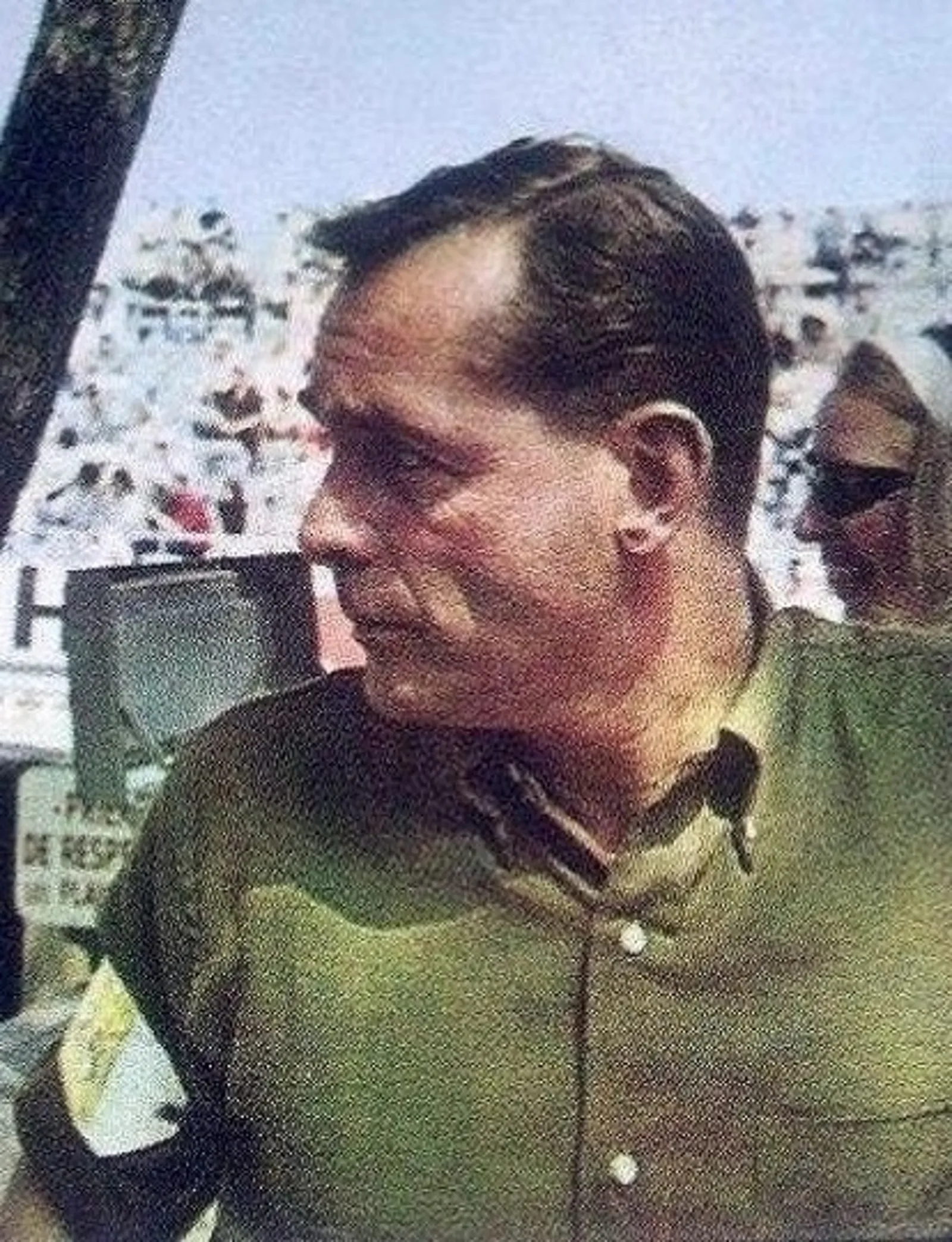
Fred Gamble was an American driver, journalist and motorsport executive who made one Formula One start in 1960. He ran Camoradi's European operation, worked for Carroll Shelby and Triumph, and helped found Goodyear's International Racing Tire Division.
Fred Gamble's career spanned the late 1950s and the 1960s, from sports car racing and a single Formula One start to a central role in Goodyear's racing tyre programme. He began as a self-built special driver, worked as a motoring journalist, and then helped organise Camoradi, the American privateer team that ran Maseratis against the European factories. He ended up directing Goodyear's international racing operation.
Who was Fred Gamble?
Frederick Kesner Gamble was born in Pittsburgh, Pennsylvania, on 17 March 1932, and died in Honolulu, Hawaii, on 30 March 2024, aged 92. He raced sports cars and Triumph sedans, made one Formula One start, wrote for American motoring magazines, and later directed the tyre company's racing division.
His family moved to Fort Lauderdale, Florida, after the Second World War. There he was exposed to sports cars and found work at a local race track, where he sold refreshments and met racing people.
After finishing Fort Lauderdale High School in 1950, he served as a radio operator in the Air Force during the Korean War. Afterwards he attended California Polytechnic State University and then the University of Florida, where he took part in racing clubs at both colleges.
From a homemade special to the man who built Goodyear's racing tyre effort in Europe, Gamble's career ran through the sports car era.
How did Gamble get into racing?
His first machine was a homemade special. He swapped a Zundapp motorcycle for a disassembled Crosley Hot Shot, discarded its body, and built a lightweight aluminium replacement around a stock 750cc engine. He called the car the Gambini MK1.
His first national race was held at Gainesville, Georgia, in May 1958, where he finished second in H Modified after a long duel with a Le Mans DB. Soon afterwards Jarrard Motors of Pensacola, which imported Renault, Triumph, AC Cars and Borgward, took him on as assistant advertising manager and as a Triumph race driver.
Jarrard ran a team of three TR3s, and Gamble was given the new TR10 for Sedan class battles against Volkswagens, Renault Dauphines and Morris Minors. When the firm decided not to run its factory Triumph team at Sebring in 1959 and to end its SCCA racing, Gamble resigned and went back to South Florida to race an MGA for a University of Miami student.
Writing ran alongside all of this. From the mid-1950s he contributed to National Speed Sport News, the SCCA magazine Sports Car, Competition Press and Road and Track.
What was Camoradi?
Camoradi was the racing operation built around Lloyd 'Lucky' Casner, a former airline pilot and car dealer who wanted an American team to race in Europe. Its name came from the Casner Motor Racing Division, and the professional team was incorporated as Camoradi USA, which was America's first industry sponsored racing team.
Gamble met Casner at a mid-summer SCCA race in Miami. Casner had asked fellow amateurs to contribute money for a European project and drew laughter from the crowd. Gamble offered to go along as helper, publicist and motoring journalist, paying his own way, and Casner proposed a partnership.
The big idea was Gamble's. Inspired by Ecurie Ecosse, the Scottish team that had produced Jim Clark and later Jackie Stewart, he proposed an American Olympic Team of motor racing that would challenge the Europeans for world titles.
Goodyear, which had only just entered sports car racing in January 1959, signed up with money and tyres. Two Corvettes came through a Miami dealership with covert backing from Chevrolet's president, Ed Cole, and the engineer Zora Duntov, because the industry frowned on racing support at the time.
Casner went to Europe in September 1959. He approached Maserati, which had the Birdcage T61 but lacked the money to race a factory team. After forming an alliance with Porsche's Huschke von Hanstein, he bought two cars from the estate of Jean Behra, a Carrera and a Behra-Porsche F2.
How did Camoradi perform in 1960?
The Camoradi Maseratis led every race in the World Sports Car Championship in 1960, and they won the 1,000 km Nurburgring with Dan Gurney and Stirling Moss. The team's roster also included Carroll Shelby, Masten Gregory and Jo Bonnier, and Gamble was its only full-time principal in Europe.
Camoradi fielded eight cars at Sebring, the largest team entry the race had seen. Three were Maseratis, two were Porsche Carreras and two were Corvettes. One of the Corvettes was driven by Gamble, who completed the twelve hours alone, one of only two known to have done that.
The press nicknamed him iron man Gamble after the Corvette drive.
Not every outing went well. At the 1,000 km of Buenos Aires, Gurney and Gregory retired after a mechanical failure and an accident. At the Nurburgring, Gamble qualified the Corvette known as the Yank Tank third among the big GT cars, but his co-driver Lee Lilley started the race and retired with a wheel bearing failure.
Camoradi's role in Europe was mainly financial. Gamble lived in Modena and ran the operation day to day, while Casner was often back in Miami. The Maseratis were prepared and maintained by the factory, and Maserati handled race management in Europe.
Did Gamble race at Le Mans?
Yes. He finished tenth overall in the 1960 24 Hours of Le Mans with Lee Lilley in a Corvette. The result was announced at the awards and they received medals, but they were later excluded, because the car had not covered sufficient distance under the index of performance rules.
The Le Mans race itself had gone differently for the Camoradi Maseratis. Gregory and Daigh led in the streamlined Birdcage, setting a lap record for three-litre cars, before its engine failed. The two other long-tail Maseratis retired with electrical faults.
Gamble and Lilley drove their Corvette conservatively to tenth. Years later he learned of the exclusion, which removed a finish that had been announced at the time.
Did Gamble drive in Formula One?
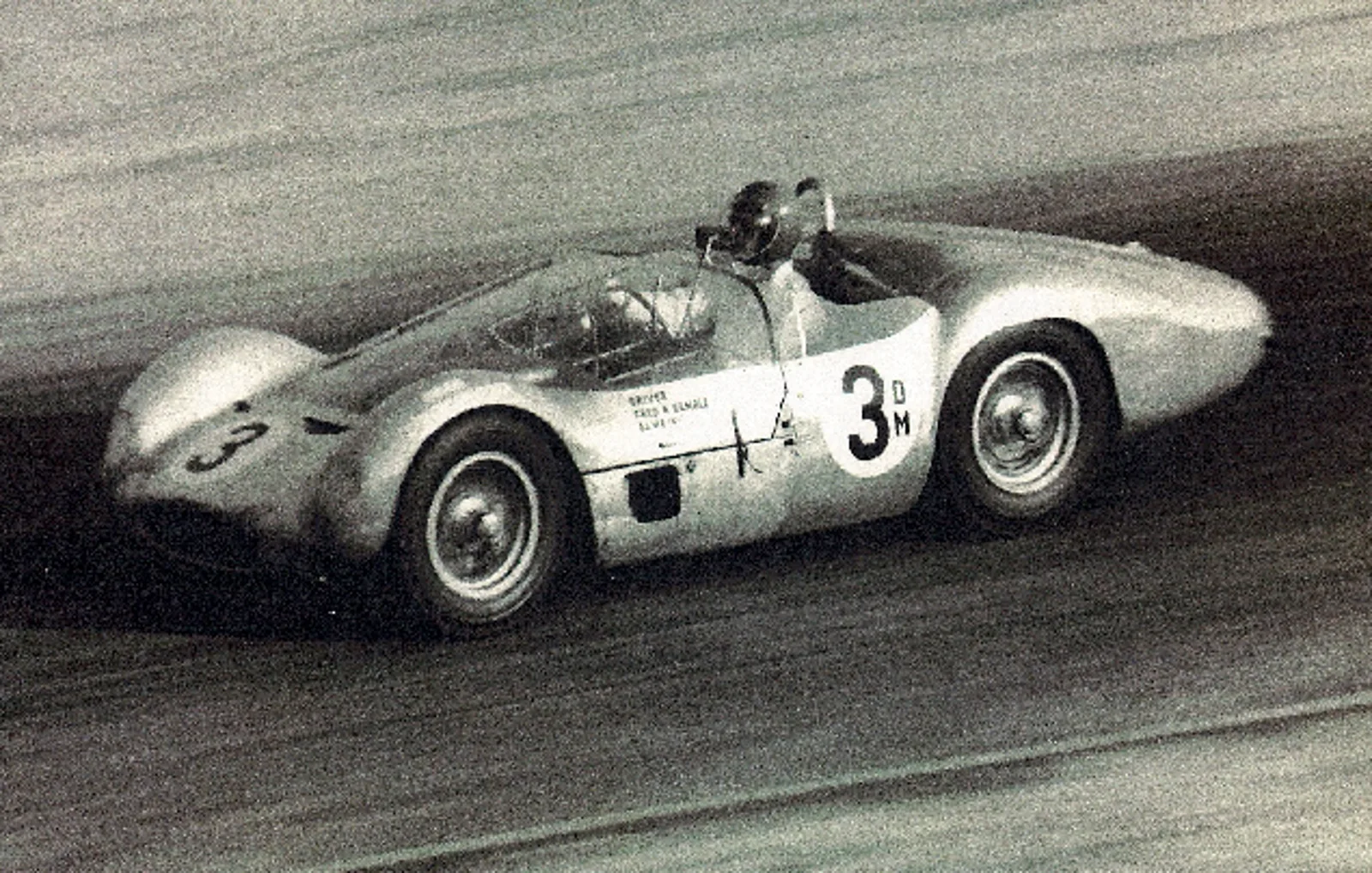
Gamble made one Formula One start, at the 1960 Italian Grand Prix at Monza on 4 September 1960. He drove a Behra-Porsche entered for Formula Two cars and finished tenth, scoring no championship points, while Phil Hill won the race for Ferrari.
The race had an unusual entry list. Ferrari had pushed the organisers to use the rough high banks at Monza to keep out the British rear-engined cars. Chapman of Lotus led a boycott of the banks, which left the field open to Formula Two cars.
Gamble entered the Camoradi Behra-Porsche for himself, partly for the starting money. Designer Collotti and builder Neri were in his pit, and they were sure the car could run the 500 km race non-stop on fuel.
He paced himself 500 rpm below the redline to save fuel. At one point he ran eighth overall and first privateer in Formula Two, before he ran out of fuel. He reached the pits for a can of petrol and crossed the line in tenth place.
What did Gamble do after Camoradi?
Gamble left Camoradi in October 1960, dismayed by Casner's spending and the way the team's sponsors were being treated. In December he was at Nassau as a journalist, where Frank Harrison of Chattanooga offered him a ride.
Harrison had bought the ex-Camoradi Le Mans Streamliner and had just won the US professional sports car championship with Carroll Shelby and Jim Jeffords. His offer was for Gamble to drive the Streamliner Birdcage and the 450S Maseratis in SCCA events in 1961, and to step up to a national championship bid in 1962.
At Sebring in 1961 Gamble was the reserve driver for Denise McCluggage, who had her 250GT Ferrari entered with Alan Eager. The car won the GT category. Gamble started the season with a second place at Marlboro, Maryland, and led the points after several races before the Harrison operation came apart.
The team broke up over a difficult shop manager, and Gamble left both the operation and racing. He took a job in New York as assistant advertising manager at Standard-Triumph North America, and at the end of 1961 he finished third in the SCCA season points behind Roger Penske and Walt Hansgen.
At Triumph he and his boss, Mike Cook, pioneered a competition programme for the company, one that other manufacturers later copied. The two of them also helped to launch Bob Tullius, whose team evolved into the successful Group 44.
The Cobra connection came in 1962. Carroll Shelby presented his first Cobra to Ford that summer and hired Gamble as the first sales manager of his Cobra company. Two months later, at the Riverside Sports Car Grand Prix, the pair met Goodyear's racing general manager, Tony Webner.
How did Gamble shape Goodyear's racing tyre programme?
Goodyear hired Gamble after the Riverside meeting, and he became founding director of its International Racing Tire Division. In February 1964 he set up headquarters at the company's plant in Wolverhampton, England, with his chief engineer, Walt DeVinney.
Shelby, Goodyear's racing tyre distributor in the western states, wanted the company's backing to take Cobras to Europe and challenge Ferrari for the World GT Championship. Gamble, Webner and Shelby spent the 1963 season persuading management to approve the division.
In its first five years the division's record was striking. Gamble's team had racked up seven world championships and three Le Mans victories, with Ferrari winning in 1965 and Ford in 1966 and 1967.
The programme also secured Goodyear's first Formula One win, when Ginther won in a Honda in Mexico in 1965. In 1967 Dan Gurney's victory at the Belgian Grand Prix was another landmark for the company, and it was described as an all-American result.
In 1968 Gamble handed the racing operation to Leo Mehl and moved into general management. His collection of photographs, video and memorabilia is held at the Watkins Glen research centre in New York state, in sections on Goodyear's early years, Camoradi USA and his personal papers.
Fred Gamble career summary
| Year | Event or role | Team or company | Result |
|---|---|---|---|
| 1958 | First national race, Gainesville | Own HM special | Second in H Modified |
| 1959 | Triumph racing with Jarrard | Jarrard Motors | Left after the factory team was withdrawn |
| 1960 | Sebring 12 Hours | Camoradi | Drove the full twelve hours alone |
| 1960 | 24 Hours of Le Mans | Camoradi, with Lee Lilley | Tenth overall; later excluded |
| 1960 | Italian Grand Prix | Camoradi Behra-Porsche | Tenth; his only Formula One start |
| 1961 | SCCA national season | Harrison team | Second at Marlboro; third in season points |
| 1961 | Sebring 12 Hours | Reserve for Denise McCluggage | Car won the GT category |
| 1962 | Cobra sales | Shelby Cobra company | First sales manager |
| 1963 | International Racing Tire Division | Goodyear | Founding director |
| 1968 | Goodyear racing operation | Leo Mehl | Handed over; moved to general management |